

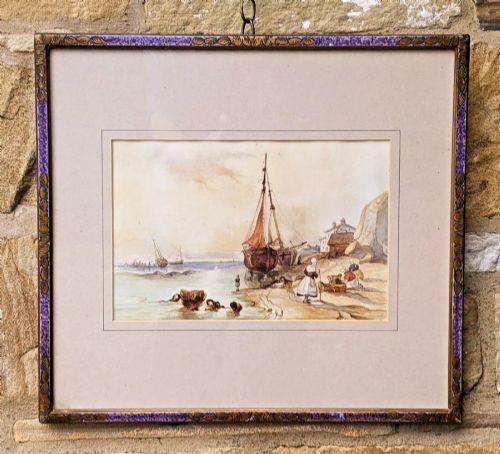


British School Marine Painting
British school marine painting captures the maritime heritage of the coast and rivers through nineteenth and twentieth century works.
British School Marine Painting
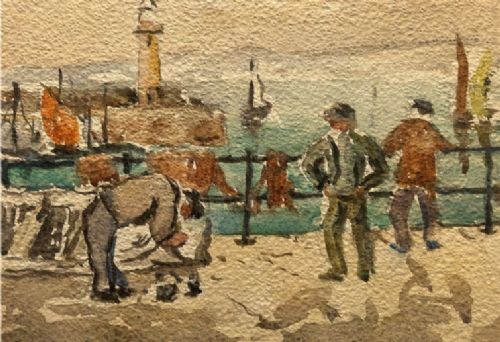
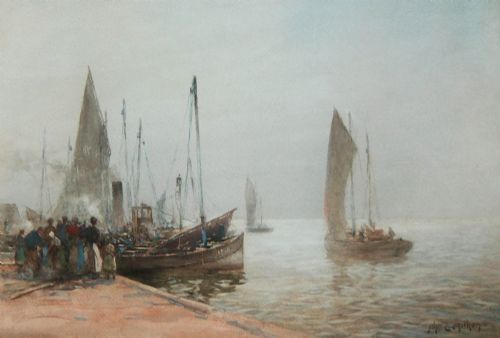
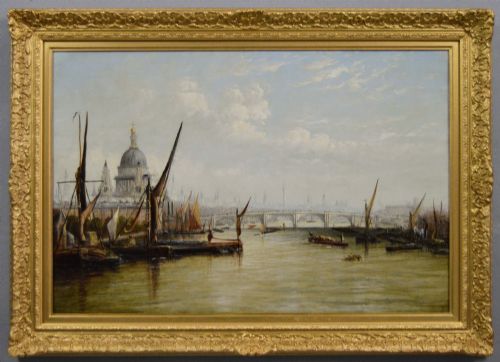
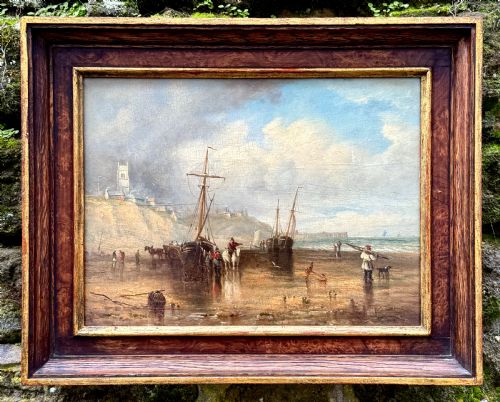
A british school marine painting portrays coastal views, shipping scenes, harbours and open seas across the nineteenth and twentieth centuries. These works range from detailed depictions of clippers and frigates to atmospheric impressions of fishing boats on stormy waters.
Buyers encounter both oil paintings on canvas and delicate watercolours on paper. The selection includes works by named regional artists as well as anonymous coastal views attributed simply to the british school.
The subjects span bustling trading rivers like the Thames and Medway alongside quiet fishing ports in Cornwall and Yorkshire. Works from the Victorian era sit alongside later pieces influenced by the Newlyn school and british impressionism.
Materials and techniques
Artists painted primarily with oil on canvas or oil on card, as well as watercolour on paper. Oil paint allowed for rich textures and deep tones suitable for stormy seas and dramatic skies, while watercolours captured the translucent light of coastal harbours.
Frames often incorporated gold leaf to complement the composition. Canvases were stretched over wooden frames, and works on paper were mounted for protection.
British School Marine Painting Retail Price Guide 2026
Typical asking prices for british school marine painting among the pieces listed under this phrase on Sellingantiques today, from the lower quarter to the upper quarter. They describe what is for sale here now, not the wider market.
The listings feature works created across the nineteenth and twentieth centuries, using oil and watercolour on canvas, paper, and wood.
Assessing quality and execution
Quality rests upon the artist's ability to render water, light and atmospheric conditions convincingly. Superior works demonstrate a confident handling of brushwork or pigment, creating genuine depth in the sea and sky rather than a flat surface.
The precision of maritime detail, such as the rigging of a frigate or the architecture of a harbour town, distinguishes finer professional output from more basic topographical sketches. Strong composition and the preservation of the original medium further elevate an individual piece.
James E. Aitken·Francis Moltino·Thomas Creswick·William Frederick Settle·Frank H. Mason·William Wyld·Percy Brooke·William Lambert Bell·Thomas Bush Hardy·William Lee Hankey·S. J. Lamorna Birch·Alec Caruthers Gould·Rowland Henry Hill·Walter Williams·Gordon Meadows·Edmund John Niemann
The British School Marine Painting Glossary
- Watercolour
- A paint consisting of colour pigment suspended in a water-based solution, applied to paper. It allows for delicate washes and translucent effects.
- Newlyn school
- An art colony based in Cornwall during the late nineteenth and early twentieth centuries. Artists focused on plein air painting of local fisherfolk and coastal life.
- Frigate
- A medium-sized warship with three masts, frequently featured in nineteenth century naval and coastal art. These vessels tested an artist's precision in rendering rigging and hull structure.
- Impressionism
- A style of painting that emphasises light and its changing qualities rather than minute detail. British impressionist marine works often capture fleeting atmospheric conditions on water.
British School Marine Painting: Frequently Asked Questions
What subjects appear in these paintings?
The works depict coastal scenes, stormy seas, fishing harbours, and river views with shipping traffic. Common settings include the Thames, the Medway, and ports in Cornwall and Yorkshire.
Artists recorded commercial clippers, naval frigates, and local fishing boats at work. These subjects reflect the maritime focus of nineteenth and twentieth century british art.
How do oils and watercolours differ?
Oil paintings utilise pigment bound in oil on canvas, card, or wood, providing rich texture and opacity. Watercolours use water-soluble pigments on paper to create lighter, transparent effects.
Oils suited dramatic storm scenes and night views, while watercolours captured bright coastal light and harbour details.
How should I display marine art?
Keep works away from direct sunlight to protect watercolours and oil pigments from fading. Stable room temperatures prevent warping in wooden frames and canvases.
Ensure adequate wall space allows the composition and frame to be viewed clearly without overcrowding.
How can I tell the period of a painting?
Stylistic clues such as Victorian academic realism differ from later Newlyn school or british impressionist approaches. Costume details on figures and the style of framing also provide chronological markers.
Artist signatures, dates, and inscriptions on the reverse of the canvas or paper often confirm the exact period.