


British Pastoral Scene Painting
British pastoral scene painting captures rural English life through the quiet rhythm of farming, rivers and countryside vistas.
British Pastoral Scene Painting
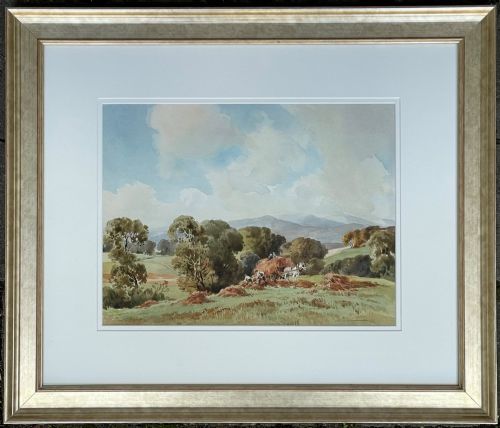
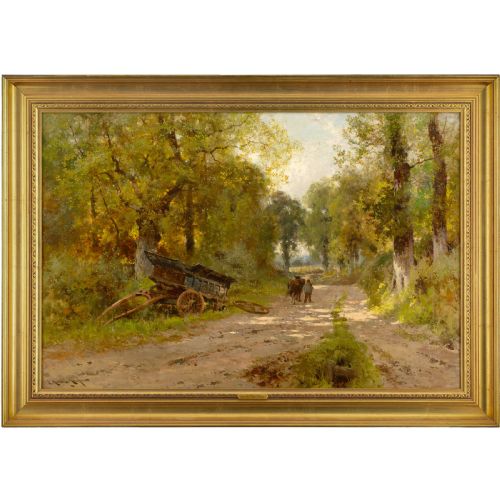
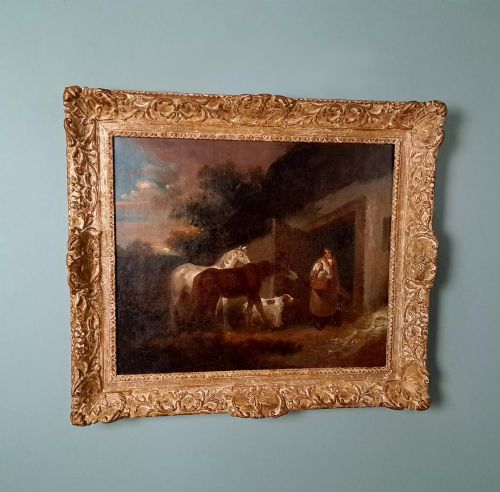
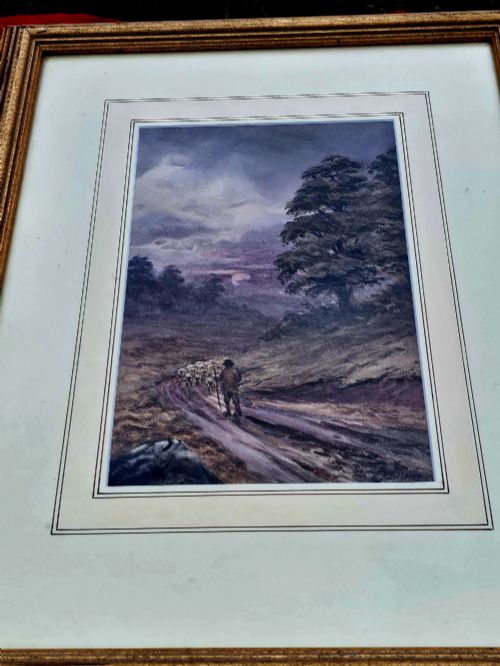
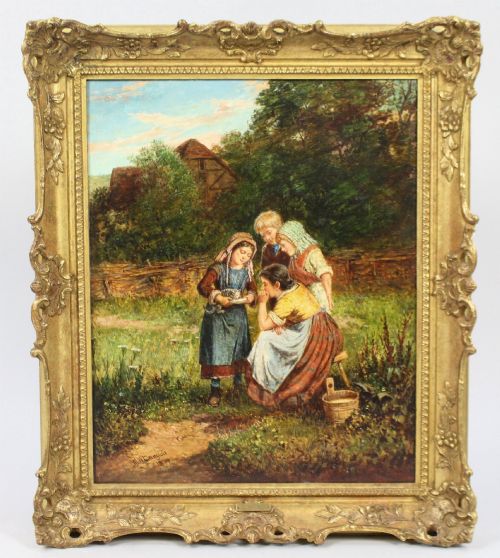
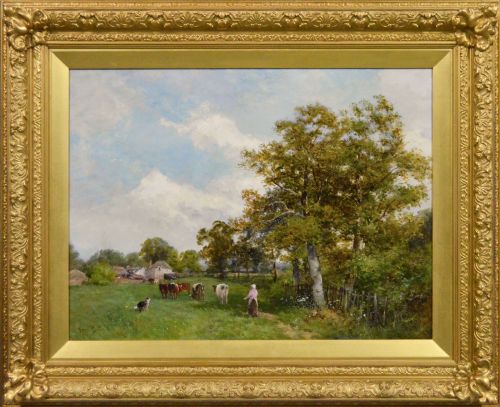
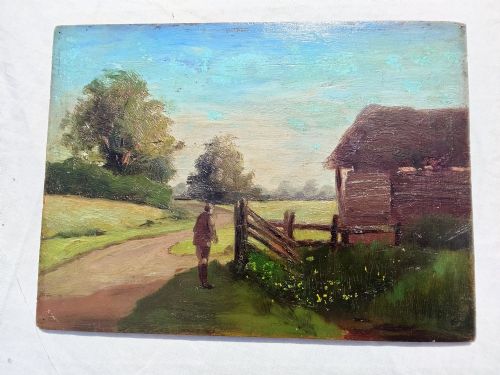
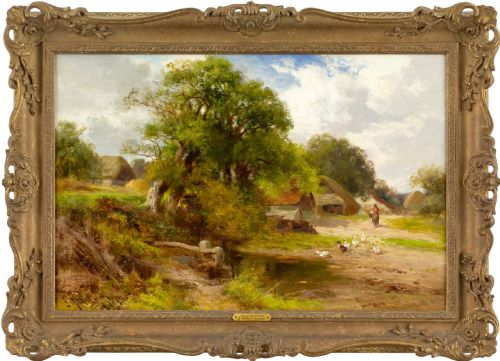
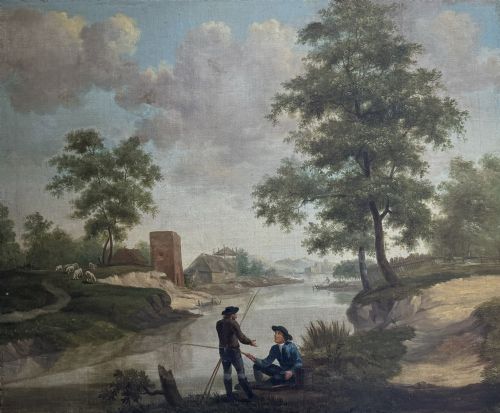
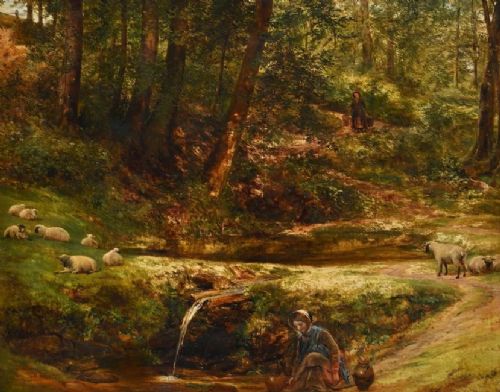
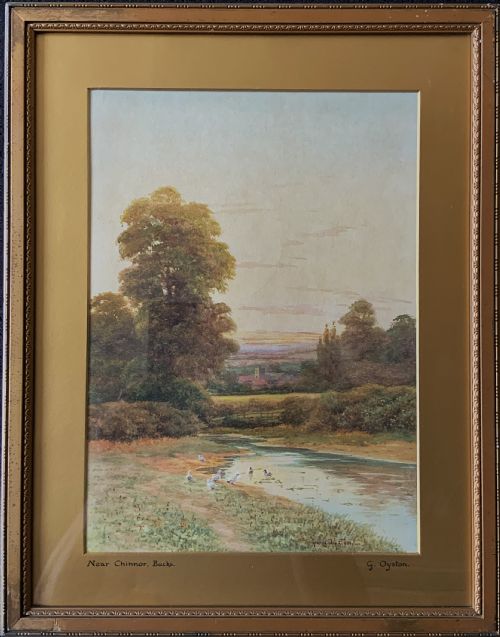
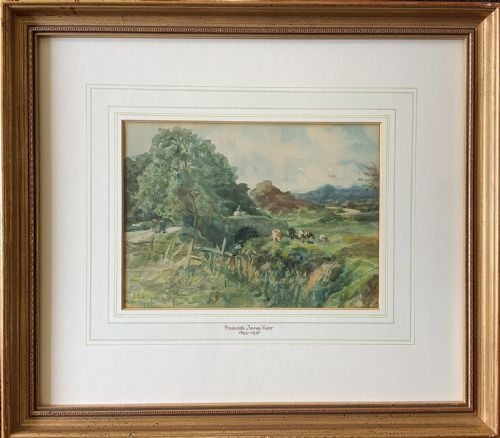
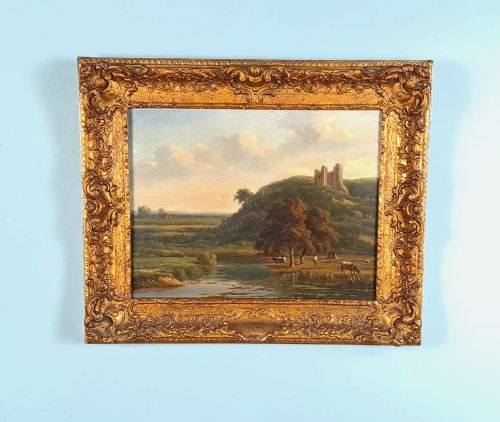
A british pastoral scene painting typically presents traditional rural subjects such as cattle herding, harvesting, riverbanks and thatched cottages. These works reflect a romanticised view of the countryside that held strong appeal for Victorian and Edwardian collectors. Buyers encounter oil paintings on canvas and board alongside delicate watercolours on paper.
The pieces on this page span from the nineteenth century into the twentieth century, taking in Edwardian and Victorian Realism styles. Works by named artists sit alongside examples from the broader English School. The most frequent compositions depict agricultural labourers, grazing animals and quiet waterways.
Rural landscapes served domestic interiors by bringing a sense of calm and orderly nature indoors. Painters focused on the changing light of harvest time, river fishing and pastoral quietude. Each canvas or paper sheet records a vanished or fast-changing rural economy.
Materials and technique
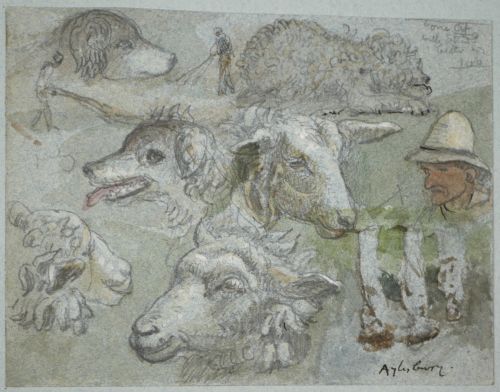
Artists painted primarily in oil on canvas or wooden board, or applied watercolour pigments to paper. Oil paints allowed for rich layering and depth in depicting foliage, water and cattle. Watercolours offered a lighter, more translucent medium suited to capturing atmospheric skies and river mists.
Supports ranged from stretched canvas and prepared wooden boards to heavy rag paper. Frames were generally wood, often gilt or moulded to complement the domestic display of the artwork. Pigments were worked with brushes of varying fineness to render intricate details like distant cottages and grazing sheep.
Several paintings record cows stubbornly refusing to hurry along country lanes toward market.
Assessment of quality
Quality rests in the artist's command of light, composition and the natural movement of figures and animals. Stronger pieces display confident brushwork and balanced perspective that draw the viewer into the landscape. Weaker examples often rely on formulaic foliage and stiffly rendered livestock.
The handling of atmospheric conditions, such as sunset light or river haze, separates accomplished painters from minor practitioners. Original frames and clear signatures or documentation further elevate a piece's standing within the tradition.
William H Myers·George Graham·Percy Lancaster·James Smetham·John Horace Hooper·William Joseph Shayer Senior·EJ Letheren·Mark William Langlois·David Bates·George Oyston·Frederick James Kerr·T C Hofland·Henry H Parker·Thomas Baker of Leamington·Ernest Higgins Rigg·John Sanderson Wells·Henry John Kinnaird·Owen Bowen·Frederick Septimus Lewis·Ernest Pile Bucknall·Henry John Boddington·Robert John Hammond·Frederick James Knowles·Robert Thorne Waite·John Atkinson
The British Pastoral Scene Painting Glossary
- English School
- A term used to classify works by British artists whose specific training or individual attribution is unrecorded. It groups together paintings sharing stylistic traits of a period.
- Pastoral
- An artistic genre depicting rural life, agriculture and shepherds or labourers in an idealized landscape. These scenes emphasise tranquility and harmony with nature.
- Canvas
- A heavy woven fabric stretched across a wooden frame to serve as a support for oil paintings. It provides texture and durability for the pigment layers.
- Watercolour
- A painting method in which pigment is suspended in a water-soluble binder and applied to paper. It yields transparent washes of colour.
- Realism
- An artistic movement focused on depicting everyday subjects and situations accurately and truthfully. In this context, it applies to lifelike renderings of farm work and rural scenery.
British Pastoral Scene Painting: Frequently Asked Questions
What subjects appear in these paintings?
These works commonly feature agricultural labourers, cattle, sheep, rivers and cottages. Artists focused on the daily tasks of the countryside, including harvesting and fishing.
Scenes are set against recognizable English landscapes, from Berkshire roads to the River Severn.
How do I date a pastoral painting?
Dating relies on stylistic clues, clothing of the figures, and artist signatures or exhibition records. Victorian and Edwardian works often bear distinct framing and pigment characteristics.
Many pieces carry dates or artist biographies that place them securely within the nineteenth or early twentieth century.
How were these artworks displayed?
Owners historically hung these paintings in domestic reception rooms and studies to evoke rural tranquility. They were almost universally fitted within wooden frames suited to Victorian and Edwardian interiors.
Original framing often includes gilt moulding designed to complement the tones of the oil or watercolour within.
What is the difference between oil and watercolour?
Oil paintings utilise pigments suspended in drying oils applied to canvas or wood boards, allowing for heavy texture and deep layering. Watercolours use water-soluble pigments on paper for a lighter, translucent effect.
Oils were typically framed behind glass less frequently than works on paper, which required protection from moisture.