


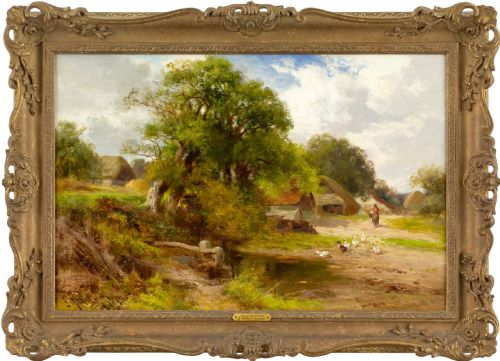
British Pastoral Painting
British pastoral painting captures the quiet rhythm of the countryside through rural landscapes, river scenes, and farm animals.
British Pastoral Painting
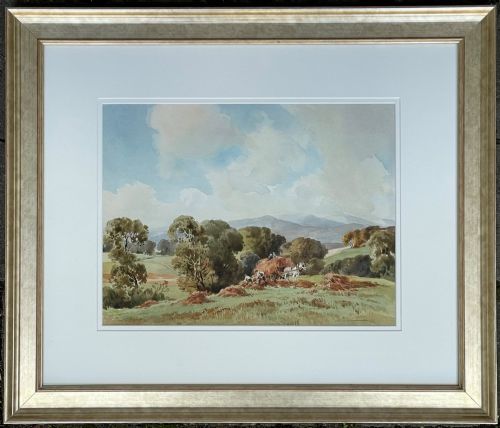
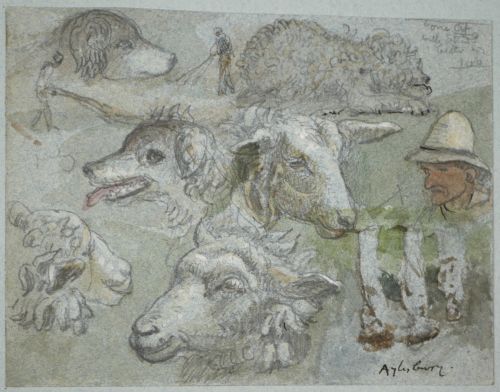
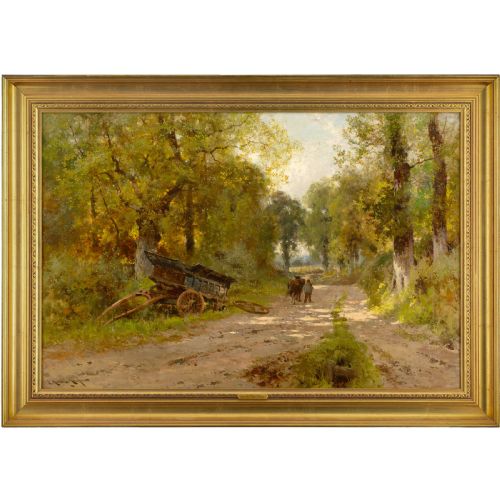
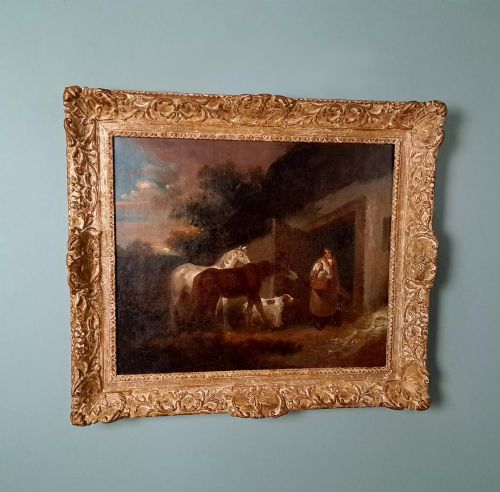
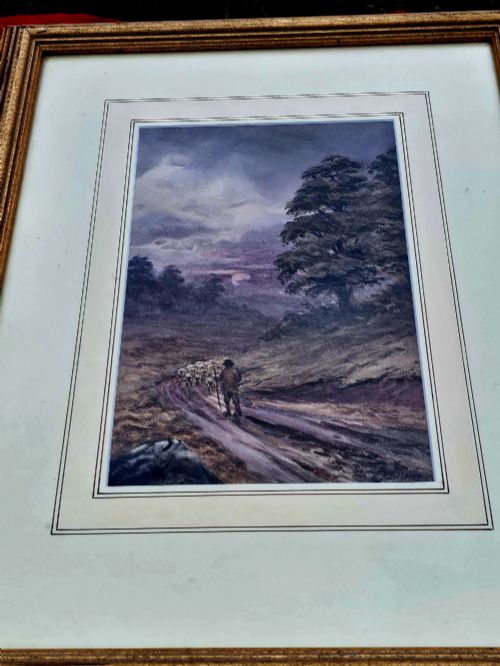
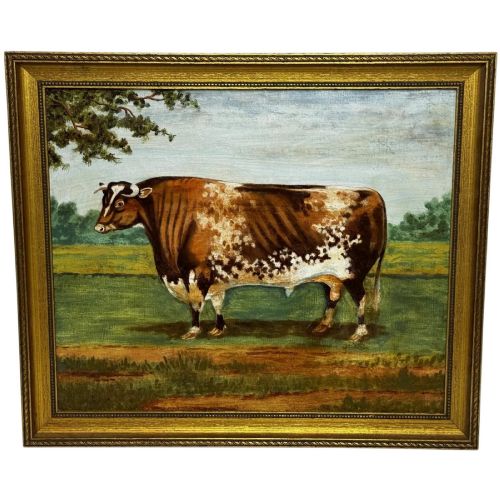
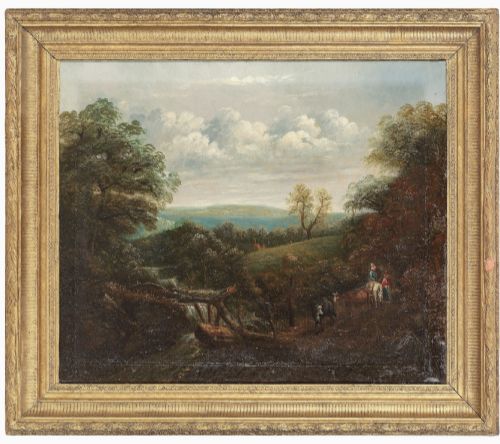
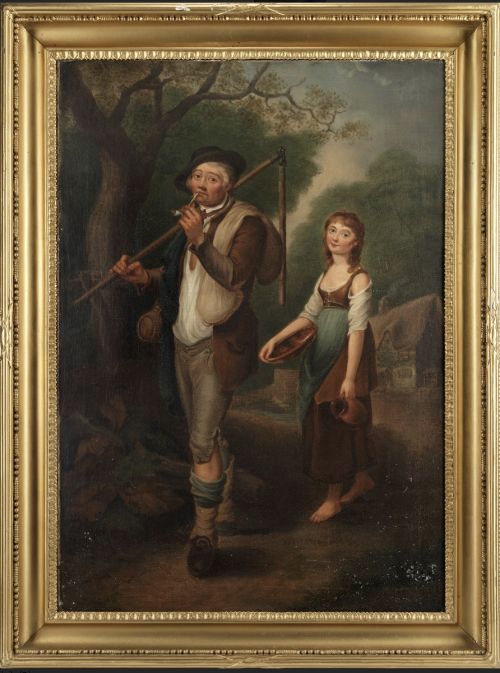
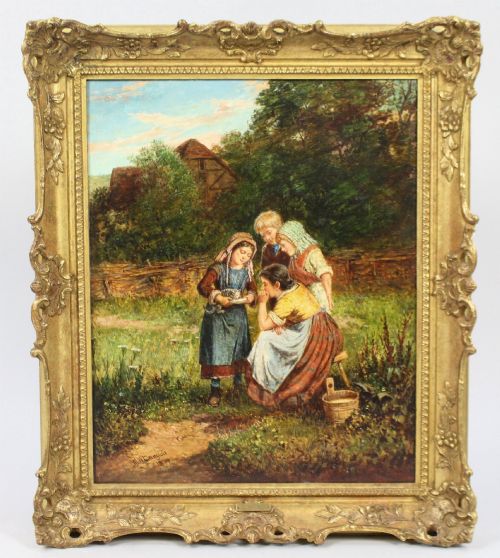
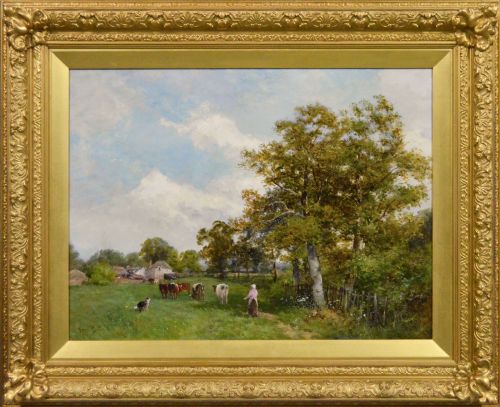
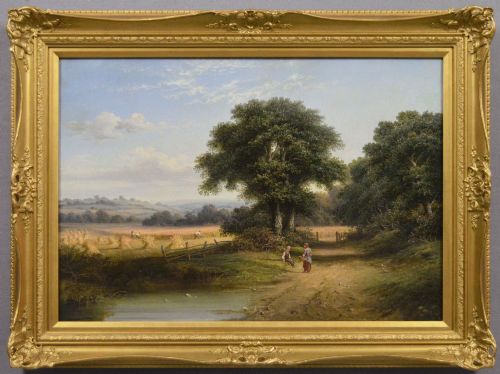
A British pastoral painting portrays the idyll of rural life, featuring cattle, sheep, harvest fields, and riverside cottages across the nineteenth and early twentieth centuries. These works belong to a long tradition of celebrating the English and Scottish countryside through the brush.
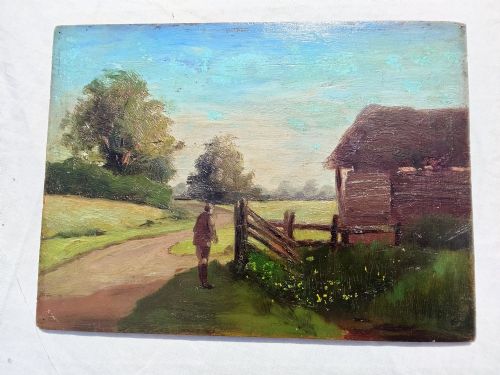
The pieces on this page are dominated by oils on canvas or wood panel and watercolours on paper, spanning periods from the late eighteenth century through the Victorian and Edwardian eras into the nineteen-thirties.
Most examples record specific local settings such as Berkshire, Dorset, or the Scottish Highlands, often populated by figures tending livestock or gathering the harvest.
How They Were Made
Artists painted primarily with oil paint on stretched canvas or wooden board, and with watercolour upon paper, utilising pigments that captured the changing light of river valleys and woodland paths.
Support materials varied from traditional wooden panels and heavy canvas weaves to delicate paper sheets, often mounted within period frames.
Several canvases manage to capture cows standing knee-deep in wild garlic.
What Varies in Quality
Quality rests upon the handling of light and atmospheric perspective, distinguishing loosely observed plein-air studies from rigid studio copies.
The definition in animal anatomy and the vitality of human figures separate routine topographical records from masterly works by recognised school painters.
William H Myers·George Graham·Tom Campbell·Percy Lancaster·James Smetham·John Horace Hooper·William Joseph Shayer Senior·EJ Letheren·Mark William Langlois·David Bates·Walter Heath Williams·Lucy Pratt·Richard Redgrave·Ernest Higgins Rigg·George Oyston·Frederick James Kerr·Russell Sidney Reeves·T C Hofland·Henry H Parker·Charles Edward Wilson·Frederick Hines·John Emms·M A Gauci·Owen Bowen·Oswald Garside
The British Pastoral Painting Glossary
- Watercolour
- A painting method where fine pigment is suspended in water-soluble binders on paper. It offers transparency and luminous washes.
- Canvas
- A heavy woven fabric used as a surface for oil painting. It is typically stretched tightly over a wooden frame.
- Pastoral
- A genre of art concerning the rural life of shepherds, farmers, and country landscapes. It evokes a simple and idyllic existence.
- Wood Panel
- A rigid wooden board utilised as a primary support for oil paintings before and alongside stretched canvas.
British Pastoral Painting: Frequently Asked Questions
What subjects appear in these paintings?
The compositions show river views, woodland paths, and harvest fields populated by cattle, sheep, and rural workers.
Scenes frequently capture specific countryside locations across England, Wales, and Scotland during the Victorian and Edwardian eras.
How do I date a pastoral painting?
Dating relies on costume details, framing styles, artist signatures, and recorded exhibition dates from the nineteenth and early twentieth centuries.
Period annotations on the reverse of canvases or wooden panels also help establish when the work was created.
Where should I hang these artworks?
These landscapes suit traditional living spaces, studies, or hallways where natural light complements the earthy tones of oil and watercolour.
Protective placement away from direct sunlight preserves the delicate pigments found in nineteenth-century watercolours and canvas works.
What is the difference between oil and watercolour?
Oils use pigment suspended in drying oils on canvas or wood, allowing for rich textures and deep colour layering.
Watercolours employ water-soluble pigments on paper, creating bright, translucent washes that highlight the texture of the sheet beneath.