


British Military Watercolours
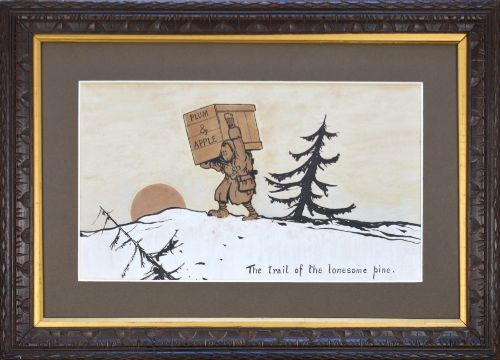
British military watercolours capture centuries of service, campaign life, and regimental portraiture on paper and agate.
British Military Watercolours
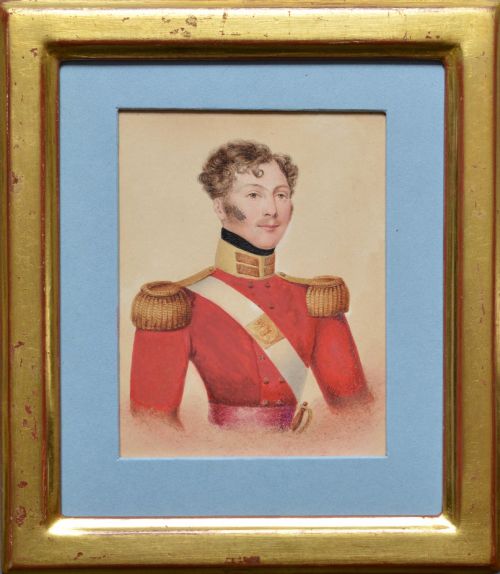
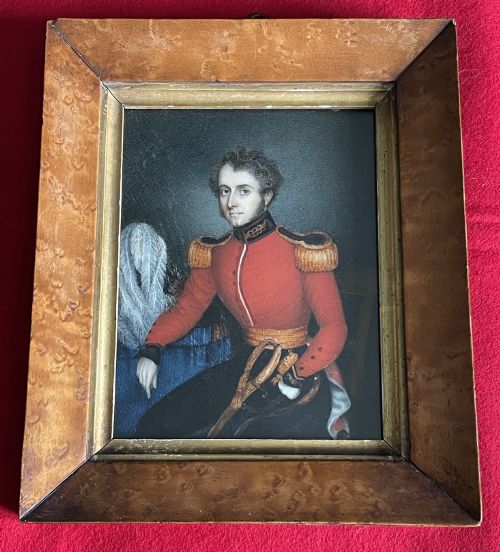
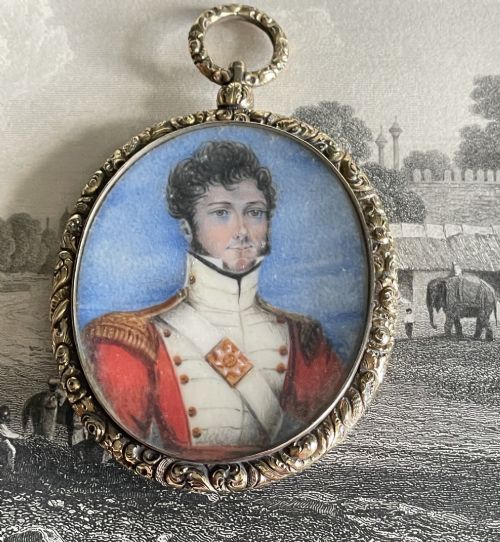
British military watercolours encompass painted records of officers, soldiers, and naval personnel spanning the eighteenth, nineteenth, and early twentieth centuries. These works range from intimate miniature portraits on paper to detailed depictions of regiments during the Georgian, Victorian, and Edwardian eras.
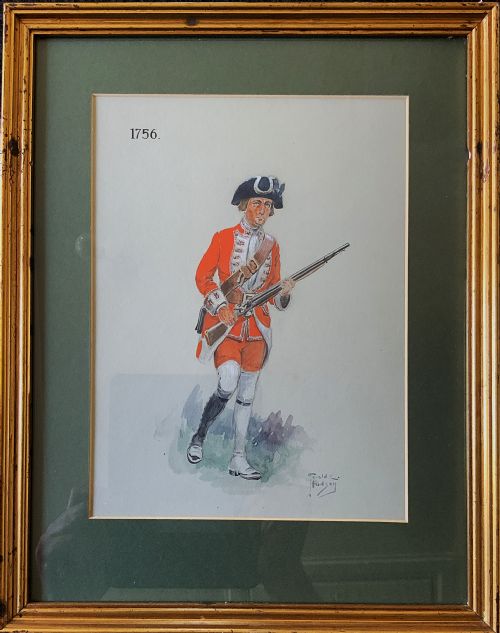
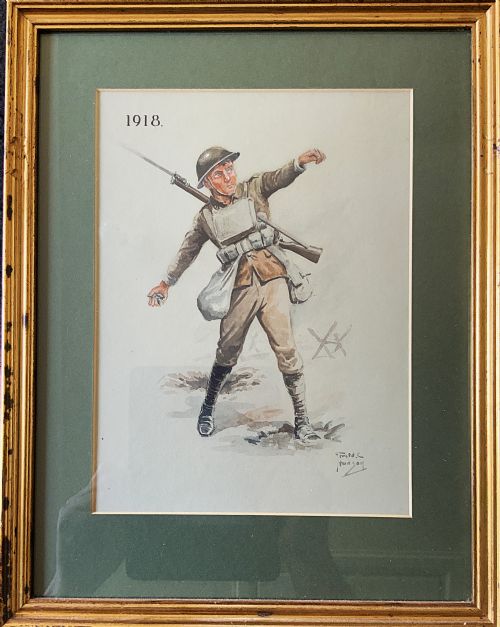
Buyers encounter individual framed paintings alongside portrait miniatures and multi-part sets showing cavalrymen, infantry officers, and naval figures. The selection includes works dated from the seventeen-fifties through to the First World War.
Portraits of named commanders and regimental officers form a significant portion of these holdings, alongside uniformed studies executed in watercolour and wash.
Materials and technique
Artists applied watercolour and ink pigments onto paper surfaces, occasionally employing wash techniques to establish tone and depth for military uniforms. Certain miniature portraits utilise agate panels rather than standard paper sheets.
Surviving pieces typically retain their period framing materials, incorporating wood, giltwood, and glass to protect the delicate painted surfaces from atmospheric damage.
Several military gentlemen take time out from campaigning to exercise their King Charles Spaniels.
Assessing quality
Quality rests upon the precision of the uniform details, the clarity of the facial likeness, and the skill demonstrated in rendering insignia and regimental accoutrements. Works by recognised artists show superior control of pigment and wash.
The preservation of the paper surface, combined with the integrity of the original frame and glass, distinguishes finer examples from heavily worn or later-restored items.
Bruce Bairnsfather·J. Hardy·Thomas Mackay·Snaffles·Frank Dadd·Frederick Tayler·Sir William John Newton·Leslie Moore·Sir William Charles Ross
The British Military Watercolours Glossary
- Watercolour
- A painting method where fine pigments are suspended in a water-soluble binder and applied to paper. It allows for translucent washes and delicate tonal gradations.
- Portrait Miniature
- A small, highly detailed painting on paper, ivory, or agate. These intimate works often depict specific officers or family members.
- Giltwood
- Wood carved and coated with gold leaf or a gold-coloured finish. This material is standard for period frames enclosing fine artwork.
- Wash
- A thin, semi-transparent layer of diluted watercolour pigment spread evenly across paper. It provides background tones and atmospheric depth in military studies.
British Military Watercolours: Frequently Asked Questions
What periods do these paintings cover?
The works span from the eighteenth century through the Victorian and Edwardian eras up to the First World War.
Pieces reflect the changing styles of military uniform and portraiture across these successive centuries.
How were miniature portraits framed?
Miniatures typically feature specialised enclosures incorporating wood, giltwood, and protective glass panels.
These housings preserved the fragile pigment and paper or agate surfaces from dust and handling.
Are uniform details historically accurate?
Artists working contemporaneously rendered regimental facings, lace, and insignia with precise attention to military regulations.
Portrait commissions often record specific campaign uniforms worn by named officers of the era.
Where should I hang watercolours?
Works on paper require positioning away from direct sunlight to prevent the watercolour pigments from fading.
Stable indoor humidity protects both the paper support and the period wooden framing.