




British Military Chest
A British military chest is a sectional piece built for travel, offering officers solid storage that breaks down cleanly into two manageable parts.
British Military Chest
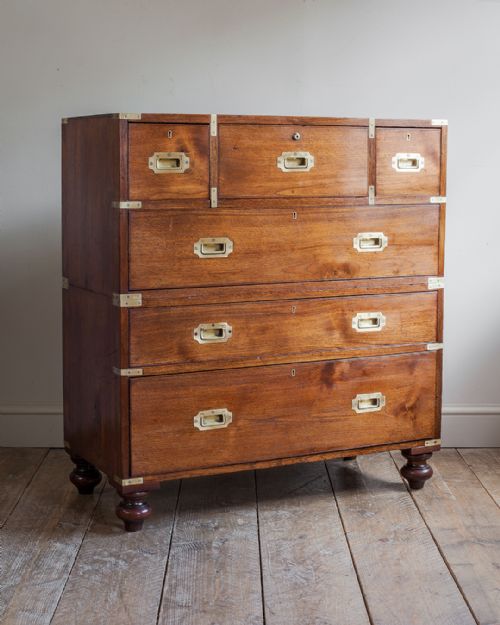
When you search for a British military chest, you enter a field defined by nineteenth-century campaign furniture designed for officers on the move. These pieces divide into two distinct stacking sections fitted with flush brass handles to prevent snagging during transport.
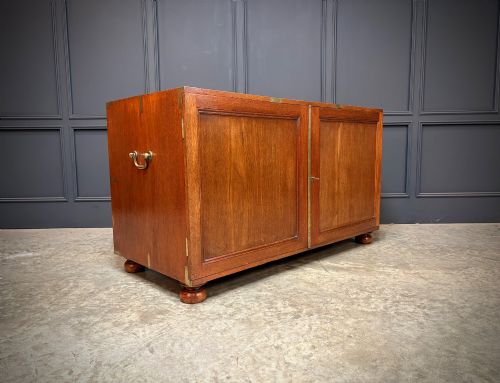
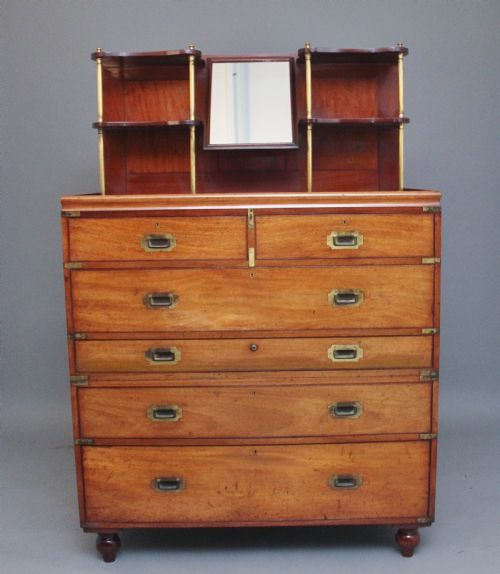
The versions most commonly met on this page belong to the Victorian era, spanning the mid-nineteenth century around 1860 and 1870. They appear predominantly as chests of drawers, often incorporating secretaire desks or side cabinets suited to colonial service.
How they were made
Joiners built these chests in dense timbers like teak, mahogany, camphorwood, and padauk wood to withstand tropical climates and rough handling. These hardwoods resist warping and swelling while providing a sturdy frame for frequent dismantling.
Brass corners, straps, and corner brackets reinforce every joint against the shocks of sea voyages and overland wagon journeys. Iron and brass hardware, including recessed carrying handles, secure the sections together without protruding beyond the wood surface.
Listings feature nineteenth-century pieces constructed from teak, mahogany, camphorwood, and padauk wood, with brass and iron mounts.
What varies in quality
The distinction between ordinary utility items and superior pieces rests on the precision of the joinery and the selection of timber. Fine examples display carefully matched grain patterns across the drawer fronts and tightly fitted secretaire interiors with secret compartments.
Hardware weight and fastening method also set standards apart, with high-grade chests utilising thick brass plates screwed firmly into rebated mounts. Secondary woods hidden inside drawers, such as pine, reveal the underlying construction standards of the workshop.
Army And Navy
The British Military Chest Glossary
- Campaign chest
- A portable set of drawers manufactured in two or more stackable sections for military transport. Recessed hardware and protective brass corners prevent damage during travel.
- Secretaire
- A cabinet or chest featuring a pull-out drawer with a drop-front writing surface. It conceals small pigeonholes and letter drawers inside.
- Two-part
- A carcass construction divided horizontally into an upper and lower chest. Each section has carrying handles on the sides for two-person lifting.
- Padauk wood
- A heavy, durable tropical timber with a reddish-brown hue used in colonial furniture. It offers exceptional stability and resistance to moisture.
- Flush brass
- Hardware inset level with the timber surface so nothing catches on ropes or packing crates. It defines the utilitarian aesthetic of campaign pieces.
British Military Chest: Frequently Asked Questions
What is a military chest?
A military chest is a modular set of drawers designed for nineteenth-century officers who needed sturdy furniture that packed down easily for transport. The design relies on sectional construction and protective metal hardware.
These pieces break into two separate halves held together by corner straps and locking pins, allowing troops to load them onto wagons or pack animals during campaign movements.
How were campaign chests used?
Officers used them to store uniforms, documents, and personal belongings while stationed abroad or in field encampments. Many examples include a fitted writing drawer that doubled as a campaign desk.
The robust construction protected contents against humidity, dust, and rough handling, serving both as a wardrobe and a portable office during colonial service.
How do you identify a Victorian military chest?
Look for two-part stacking carcases, flush brass drawer pulls, and protective brass corner braces on the edges. The timber is typically dense tropical hardwood like teak or mahogany.
Interior construction often reveals secret compartments, recessed side carrying handles, and maker stamps associated with nineteenth-century outfitters and army suppliers.
Why are some chests made of camphorwood?
Camphorwood was selected for its natural insect-repelling properties, which protected uniforms and woollens from moths during long sea voyages. The aromatic timber also resisted dampness in tropical climates.
Chests built from this wood combine the standard brass-bound campaign architecture with the practical benefits of a fragrant, pest-resistant interior.