
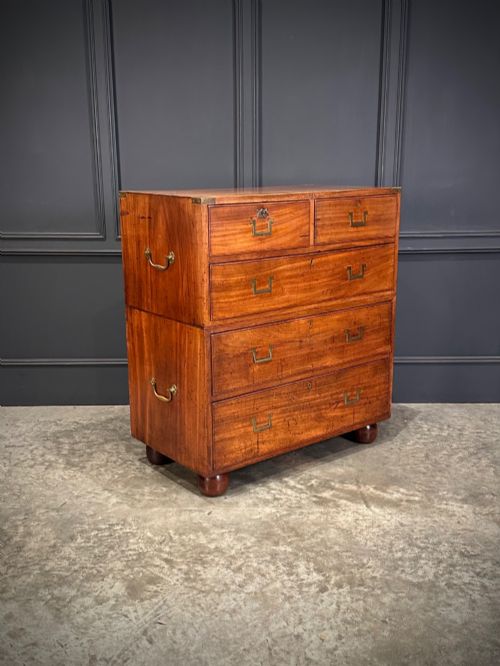
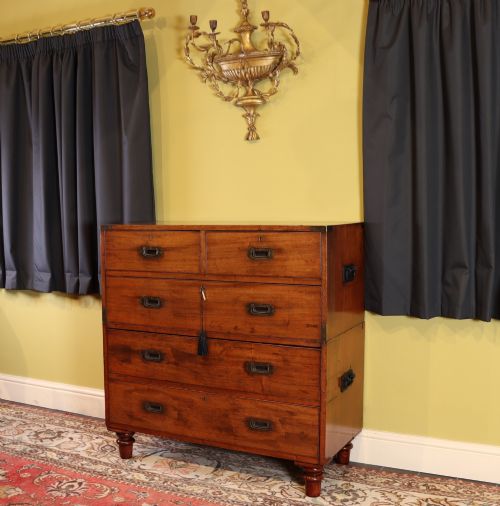
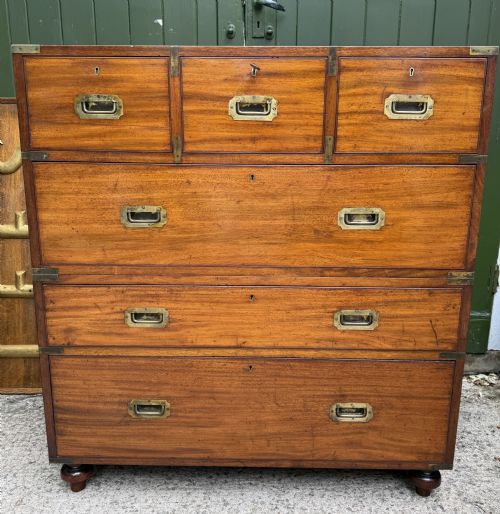
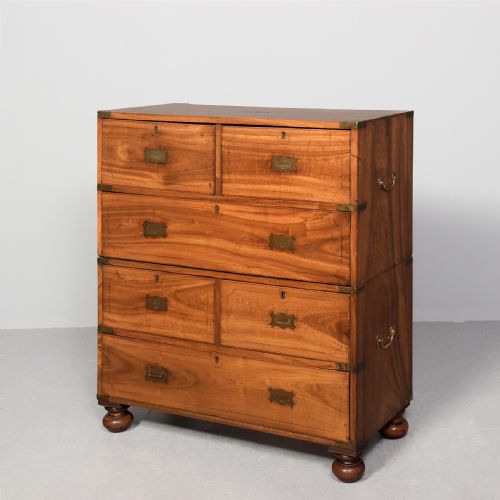
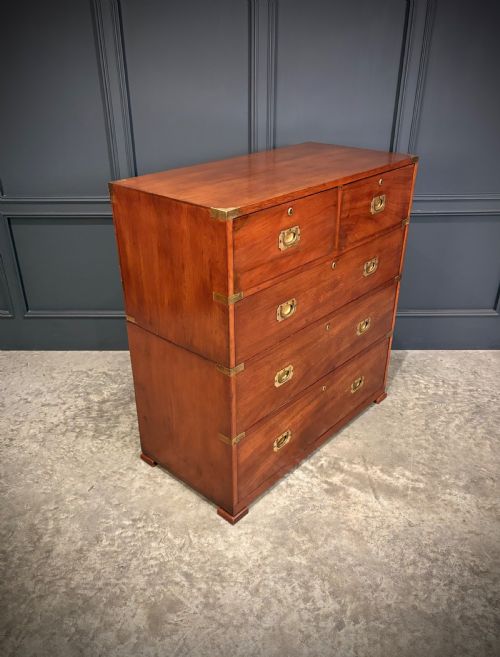


Flush Handle Drawers
Flush handle drawers deliver clever packing for travel, utilising brass hardware set flat into timber to survive long journeys at sea.
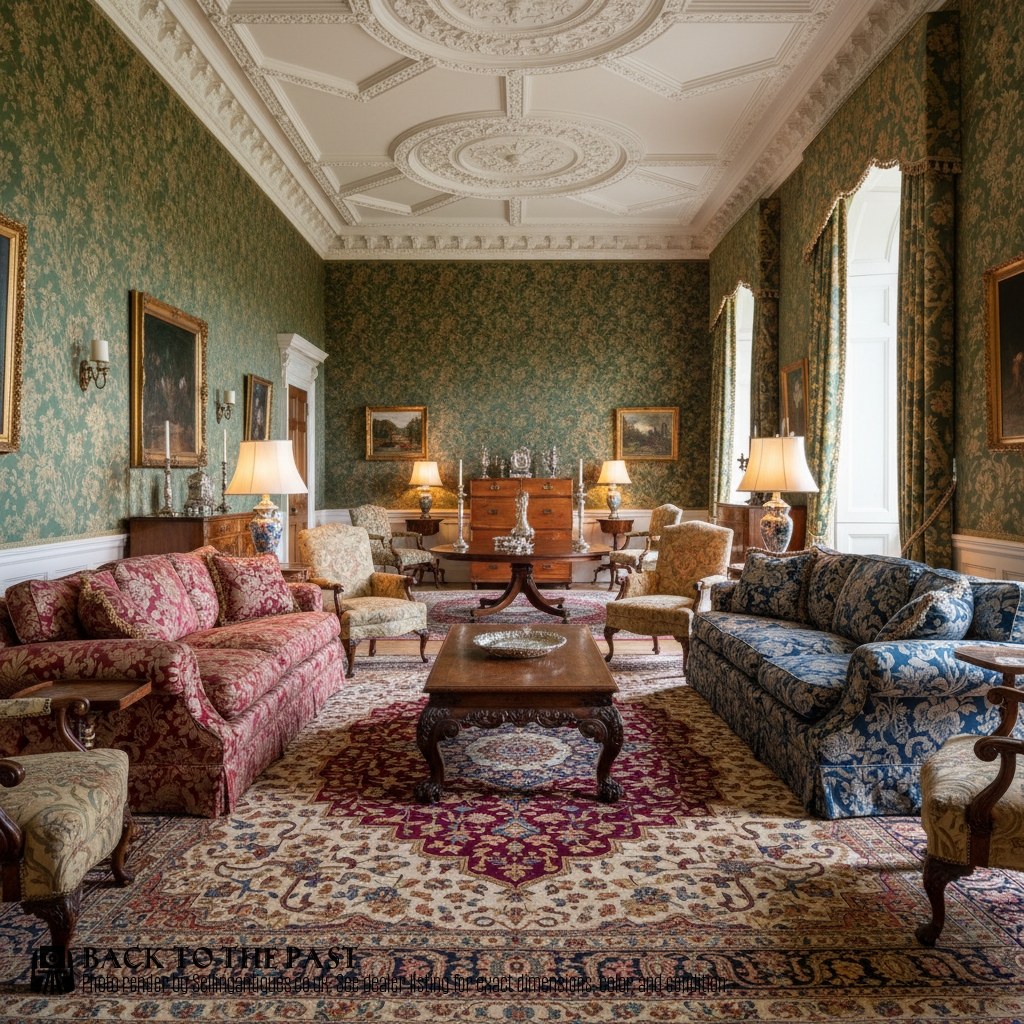
Flush Handle Drawers
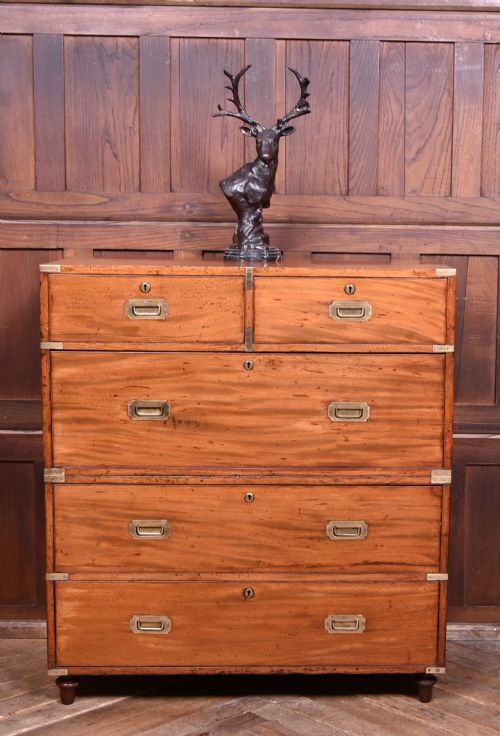
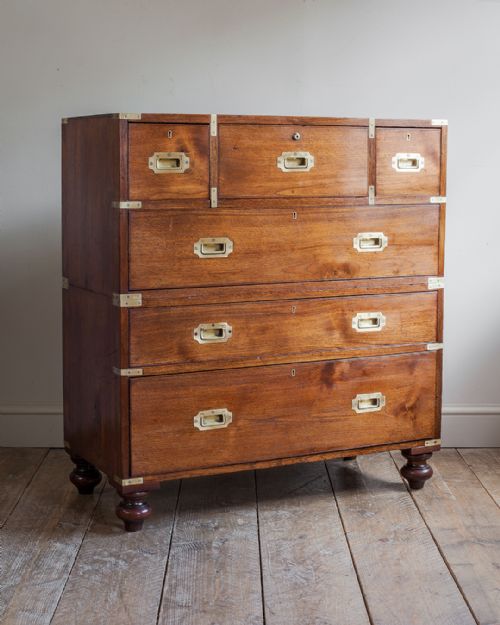
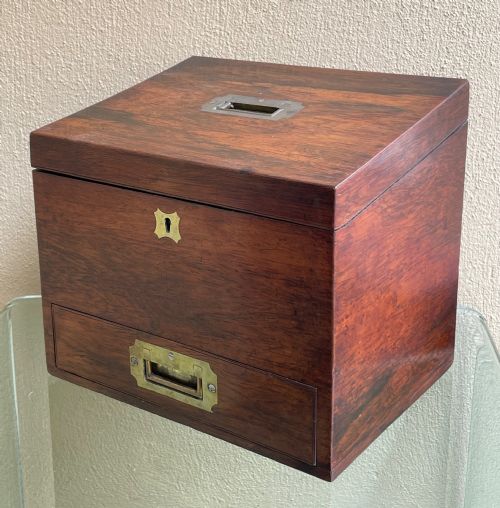
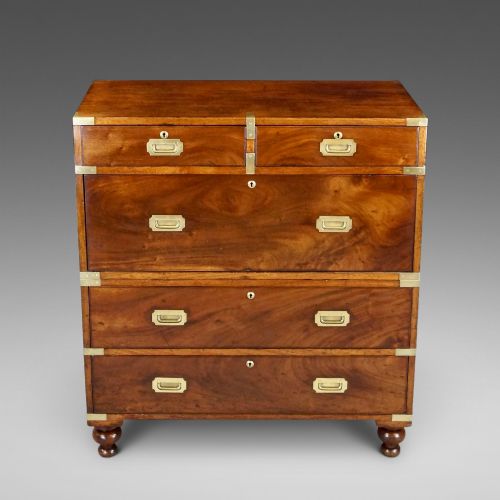
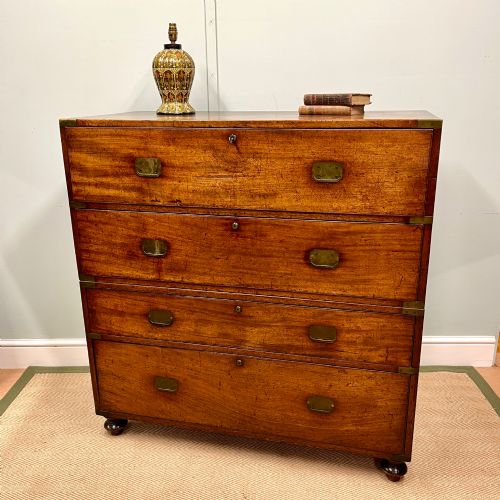
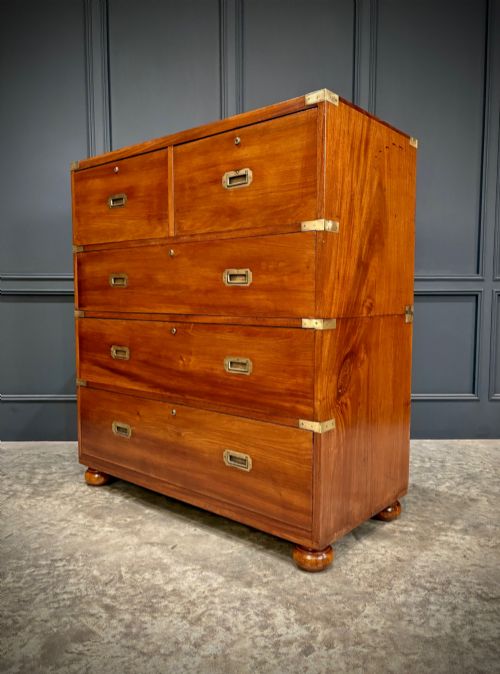
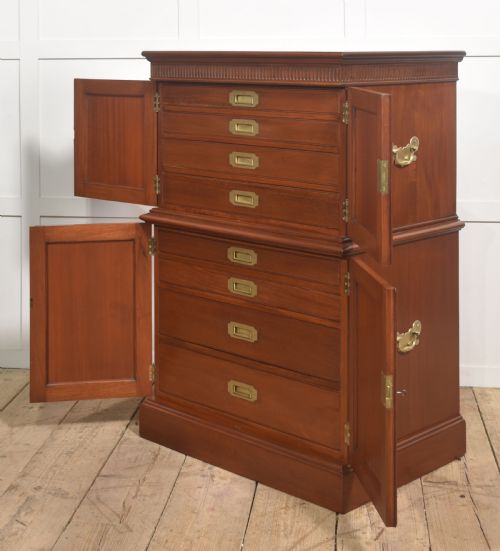
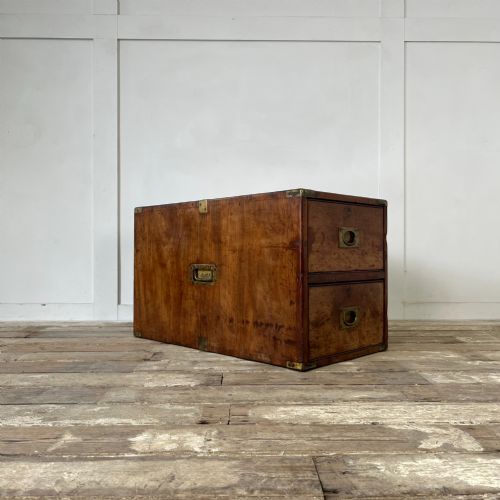
Flush handle drawers comprise campaign furniture made for officers on the move, designed to split into sections for easy transport. The pieces appear primarily as chests of drawers, secretaire chests with fitted writing desks, and compact desktop storage from the nineteenth century.
Mahogany, teak, and camphor wood dominate the selection, often reinforced with brass corners and straps. Buyers encounter two-part chests most frequently, built to withstand the rigours of military relocation.
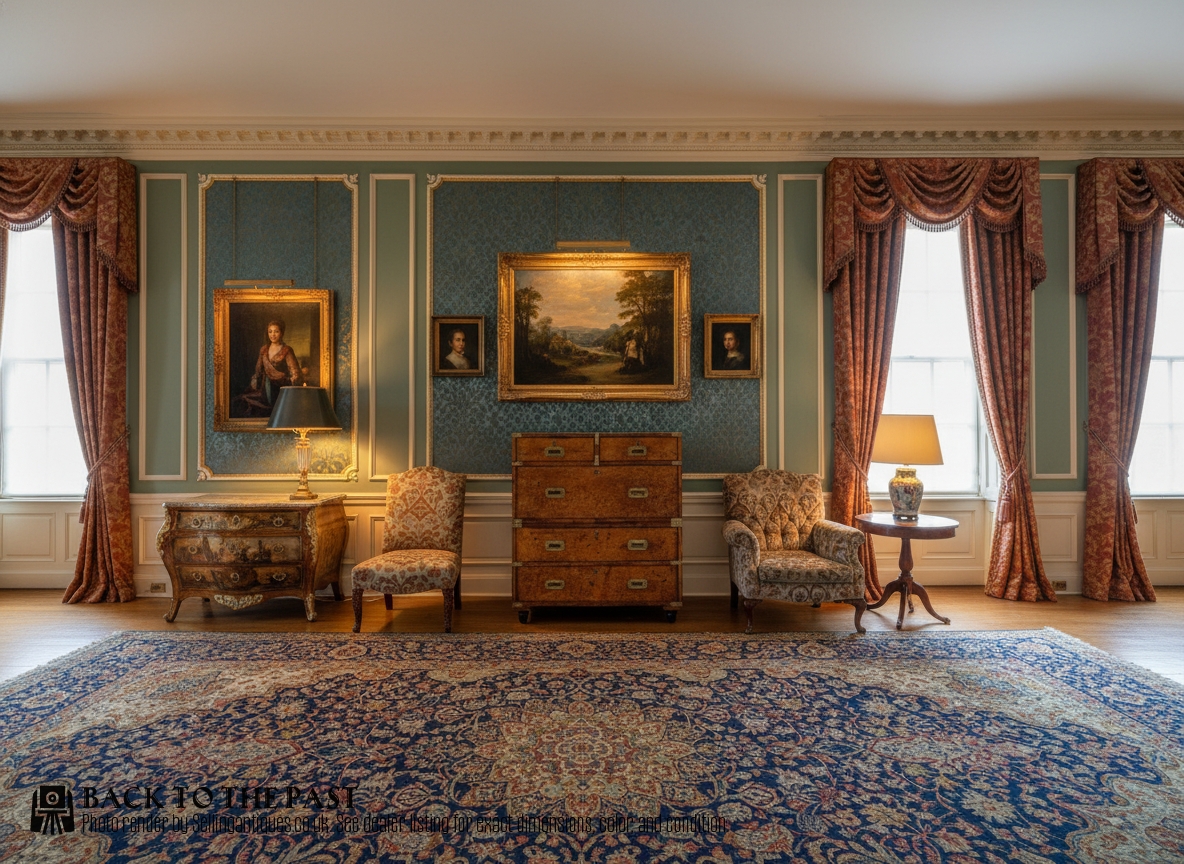
Materials and construction
Cabinet makers utilised dense hardwoods like mahogany, teak, and camphor wood to resist warping in tropical climates. These timbers provide the structural strength needed for heavy use on campaign.
Brass corners, straps, and flush-fitting recessed handles protect the edges and prevent snagging during transit. Master joiners constructed these chests in two separate modular sections to facilitate stacking and carrying.
Listings span the nineteenth century, showcasing Victorian campaign chests in mahogany, teak, and camphor wood alongside Anglo-Chinese colonial items.
Assessing quality
Quality rests in the precision of the recessed brass hardware and the tightness of the drawer joints. Superior pieces feature well-integrated secretaire drawers with fitted pigeonholes and hidden compartments.
The choice of timber grain and the integrity of the original two-part brass binding separate standard utility pieces from finer examples made for senior officers.
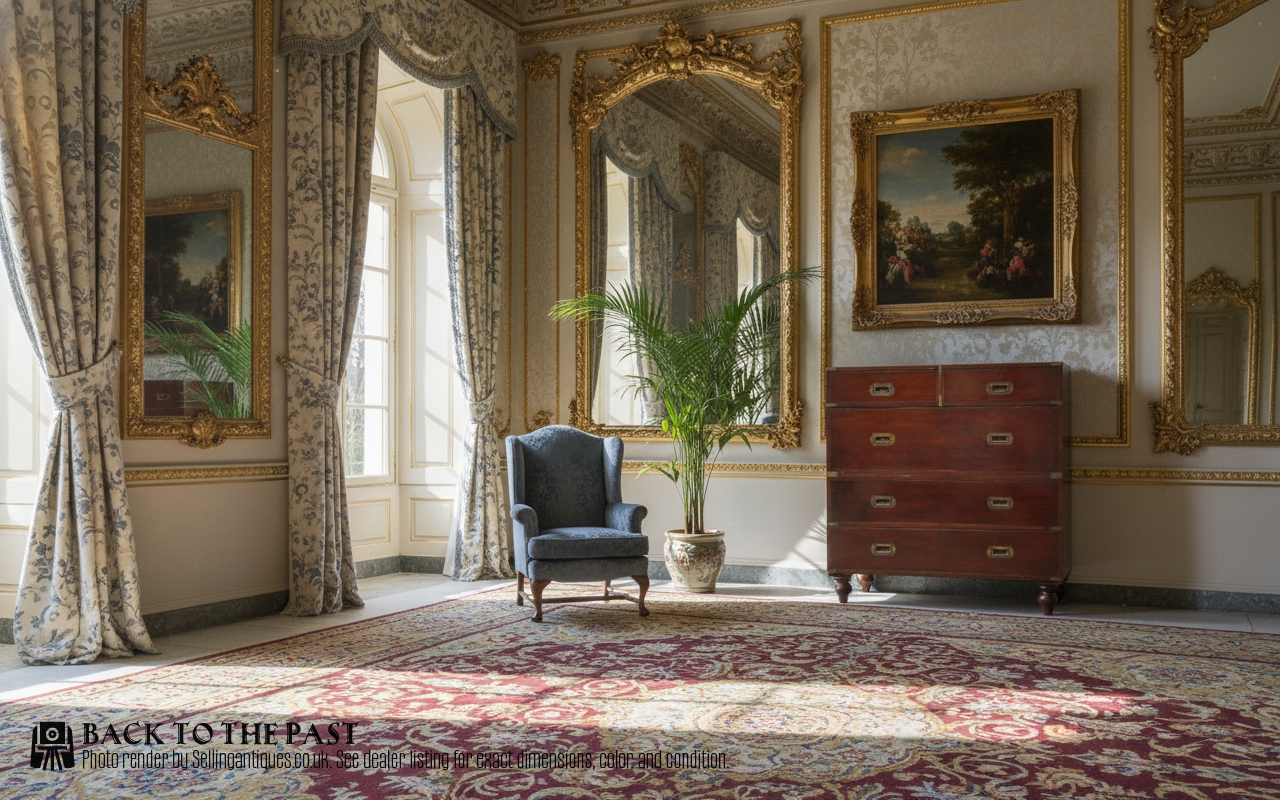
S. W. Silver & Co. London & Liverpool·Ross & Co.·Army and Navy
The Flush Handle Drawers Glossary
- Campaign chest
- A portable set of drawers built in two or more stackable sections for military travel. These pieces feature recessed handles and protective brass corners.
- Secretaire chest
- A chest of drawers containing a pull-out writing drawer with a fall front and internal pigeonholes. This integrates a desk into the storage unit.
- Brass-bound
- Edges and corners reinforced with brass plates and straps to prevent impact damage. This technique also accommodates wood movement in humid climates.
- Two-part chest
- A modular cabinet design splitting horizontally into upper and lower sections for transport. Each section sits flush upon the other using locking pins.
- Recessed handle
- A pull handle inset into the drawer face so it sits level with the wood. This prevents projections from catching during transit.
Flush Handle Drawers: Frequently Asked Questions
Why do these chests split in two?
Modular construction allowed officers to pack and transport their belongings easily across rough terrain during nineteenth-century campaigns. Each half travelled independently as a manageable load.
This two-part system also simplified loading onto ships, wagons, and pack animals where space and weight limits applied.
What is a secretaire chest?
A secretaire chest combines standard drawer storage with a dedicated writing desk concealed behind a drop-front drawer facade. Inside, you find small drawers and pigeonholes for correspondence.
Officers utilised these fitted compartments to write letters and manage documents while stationed abroad.
How do flush handles work?
Flush handles sit within a recessed cavity carved into the drawer front so the metal surface remains level with the wood. This clever design stops the pulls from catching on clothes or canvas covers.
Users pull out a small ring or swing bar from the recess whenever they need to open a drawer.
Where were these pieces made?
Cabinet makers constructed campaign furniture in British workshops as well as colonial outports such as Anglo-Chinese and Anglo-Indian centres. Makers utilised local exotic timbers alongside traditional European hardwoods.
Workshops in London and provincial hubs supplied regiments heading overseas with durable travel furniture.