


British Maritime Watercolour Art
British maritime watercolour art captures coastal harbours, fishing boats and shipping scenes from the nineteenth and early twentieth centuries.
British Maritime Watercolour Art
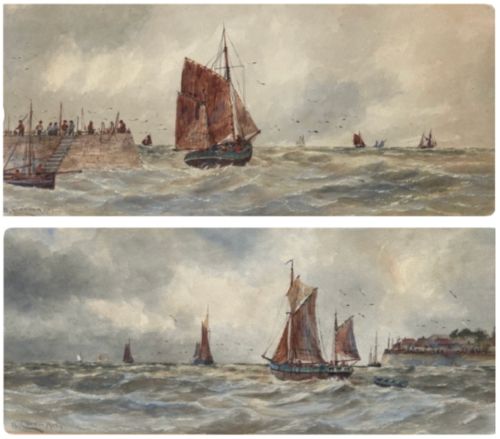
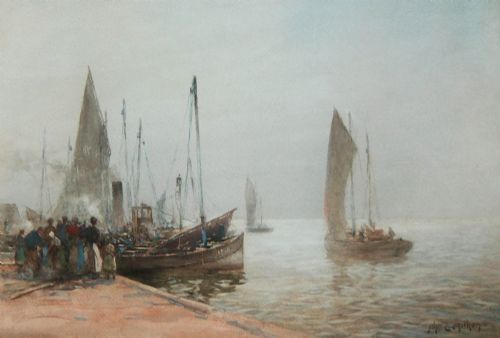
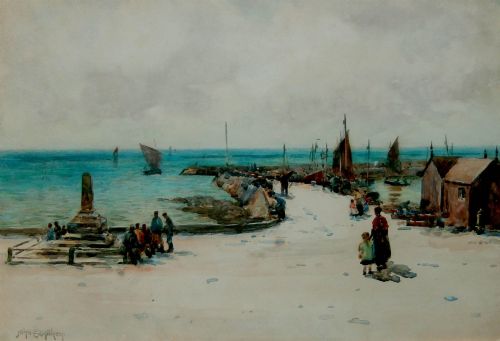
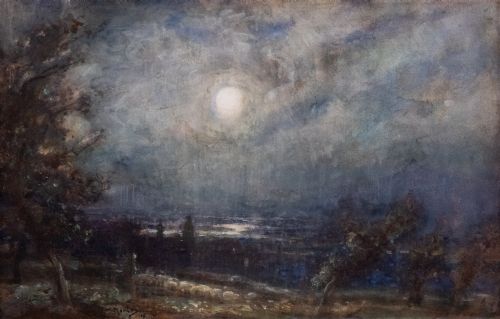
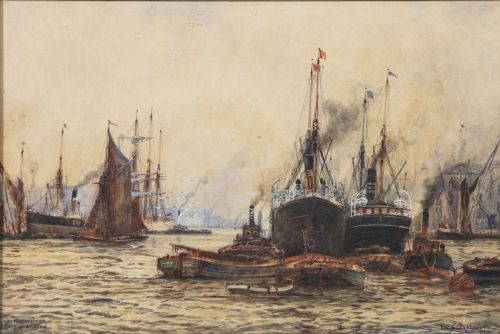
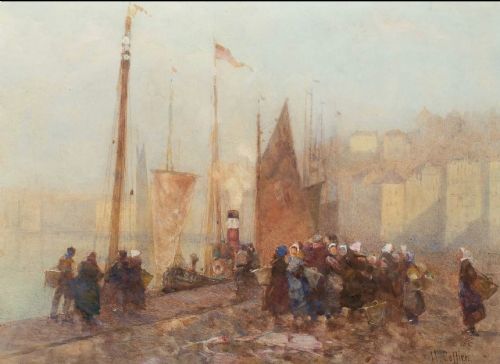
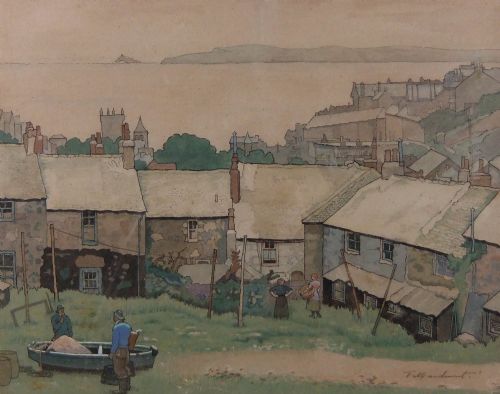
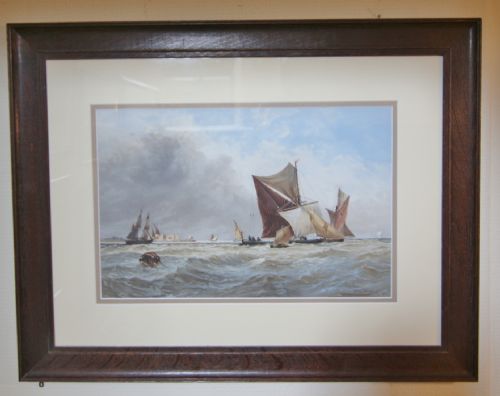
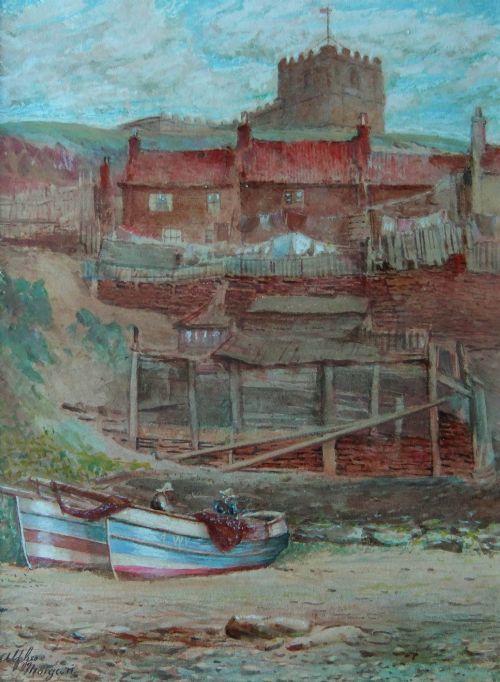
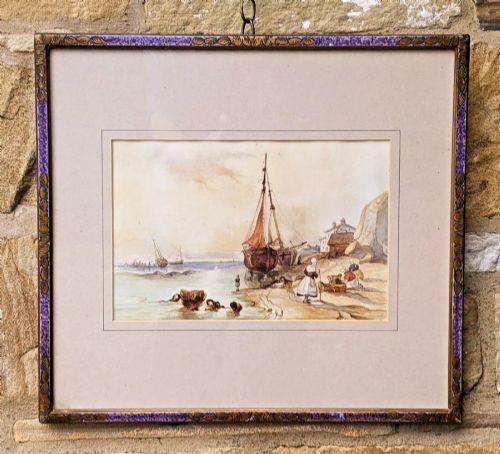
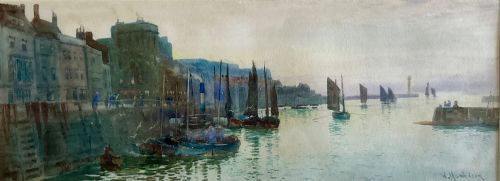
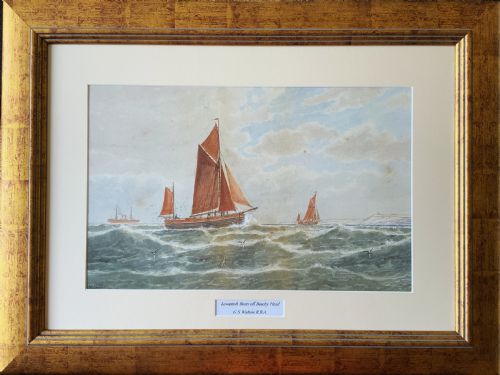
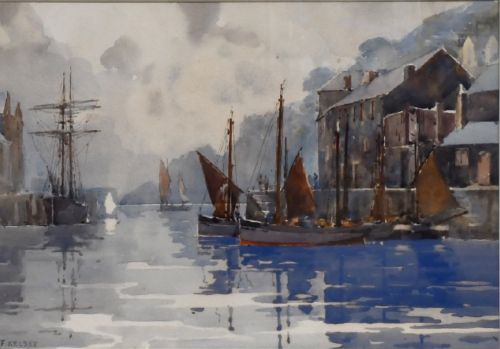
British maritime watercolour art encompasses original works on paper depicting coastal scenes, harbours, and shipping from the nineteenth and twentieth centuries. These paintings frequently record specific locations such as Whitby, St Ives, Scarborough, and the Thames, capturing the working life of ports and coastal waters.
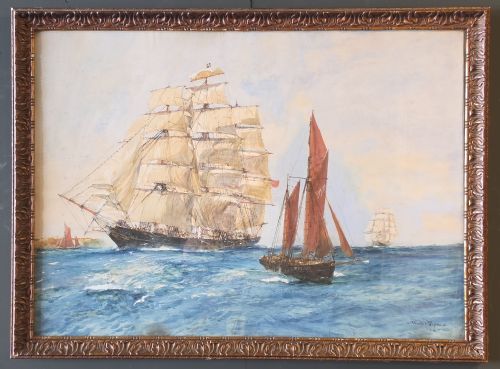
The works appearing here range from Victorian depictions to mid-century views by British artists. Collectors encounter traditional harbour scenes, fishing boats at anchor, and coastal landscapes executed in watercolour pigment on paper, often preserved behind glass within wood or gilt wood frames.
How they were made
Artists applied watercolour paint and pigment to paper surfaces, utilising transparent washes to build luminous skies and shifting coastal light. Many works rely on precise brushwork combined with fluid washes to capture the motion of water and the intricate rigging of sailing ships.
Framing materials such as wood and gilt wood enclose the watercolours, frequently paired with glass to protect the delicate paper medium from environmental damage.
Materials documented in these works include paper, watercolour pigment, glass, wood, and gilt wood frames.
What varies in quality
Quality rests upon the artist's command of the medium, the atmospheric depth of the composition, and the clarity of the paper support. Superior works display confident handling of light and water without excessive fading or pigment degradation.
The sensitivity of the draughtsmanship and the strength of the topographical or maritime detail distinguish finer examples from standard decorative watercolours.
James Orrock·William Cannon·James E. Aitken·Charles Edward Dixon·Thomas William Morley·Frank William Scarbrough·Hector Caffieri·Thomas Maidment·Thomas Bush Hardy·Alfred G. Morgan·William Matthison·George Stanfield Walters·Frank Kelsey·Henry Barlow Carter·F A Roylance·George F Pennington·William Frederick Settle·Charles William Adderton·William Lee Hankey·J. Hardy·Edward Seago·Arthur Tucker·Robert Leslie Howey·Tom Clough·F J Aldridge
The British Maritime Watercolour Art Glossary
- Watercolour
- A painting method in which the paints are made of pigments suspended in a water-based solution. The paper surface often shows through the translucent layers to create luminous effects.
- Seascape
- A work of art depicting the sea, coastal views, ships, or maritime activities. These subjects formed a central focus for nineteenth and early twentieth-century British artists.
- Gilt wood
- Wood coated with a thin layer of gold leaf or metallic gilt. Such frames frequently encase Victorian and Edwardian watercolours.
- Wash
- A thin, transparent layer of diluted watercolour pigment spread across the paper. Artists use washes to create expansive skies and open water.
British Maritime Watercolour Art: Frequently Asked Questions
What subjects appear in these watercolours?
These watercolours primarily depict British coastal scenes, working fishing boats, harbours, and shipping vessels. Common regional subjects include Yorkshire ports, Norfolk broads, and Cornish fishing villages.
Artists frequently recorded specific locations, documenting historical maritime activity, docks, and coastal landscapes along the British and European shores.
How should I frame and display them?
Watercolour paintings require protection behind glass to prevent atmospheric moisture and pollutants from damaging the paper. Acid-free mounts keep the paper from touching the glass directly.
Display these works away from direct sunlight to prevent the watercolour pigments from fading over time.
Which periods are best represented?
The selection is dominated by nineteenth-century Victorian works and early twentieth-century Edwardian pieces. Artists active between the 1870s and the 1950s provide the core of these marine depictions.
Victorian maritime paintings often emphasise dramatic seas and detailed shipping, while later twentieth-century works lean towards impressionistic coastal atmospheres.
How do I identify a maritime watercolour?
Maritime watercolours are identified by their primary medium of watercolour paint on paper and their nautical subjects, such as ships, waves, and coastal harbours. Signatures and dates often assist in attribution.
Framing styles, including period wood and gilt surrounds, frequently match the Victorian or Edwardian origins of the paintings.