





British Maritime Fine Art
British maritime fine art captures coastal life and naval scenes through oils and watercolours spanning the Victorian era to the mid-twentieth century.
British Maritime Fine Art
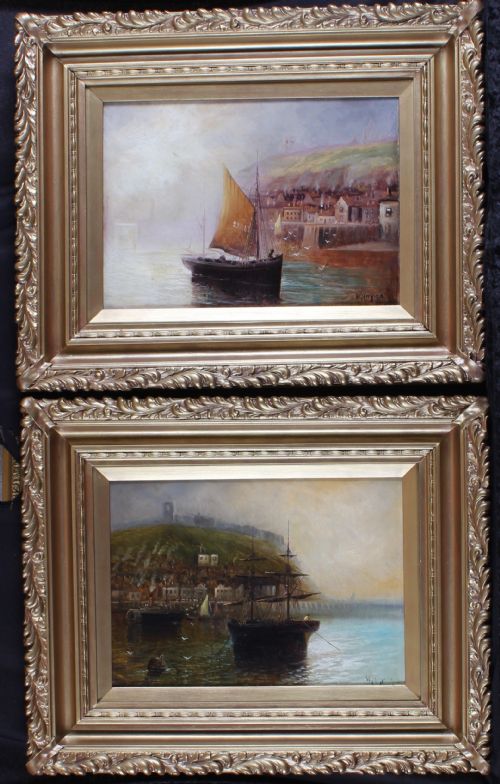
British maritime fine art encompasses oil paintings and watercolours depicting coastal landscapes, harbour scenes, and river views from the nineteenth and twentieth centuries. These works reflect changing artistic movements, ranging from Victorian romanticism to British impressionism and the St Ives school.
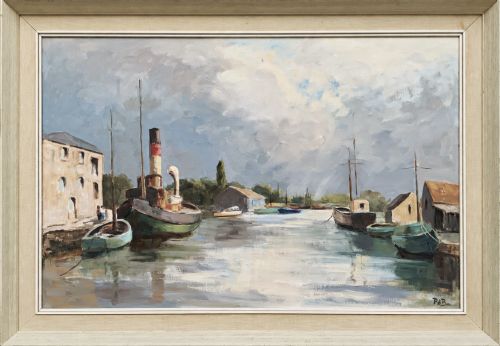
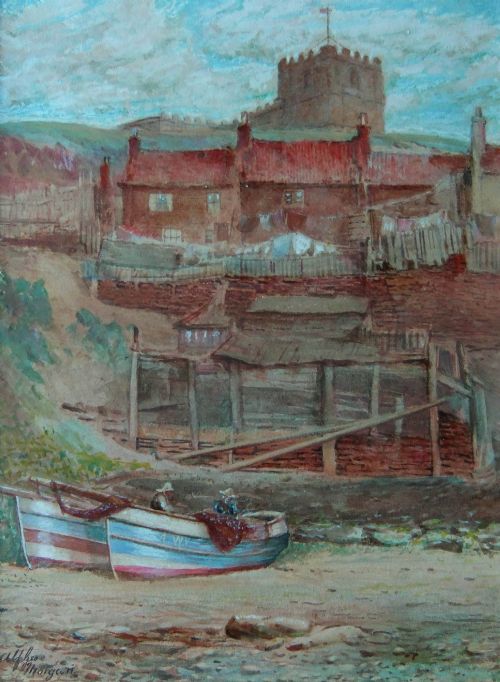
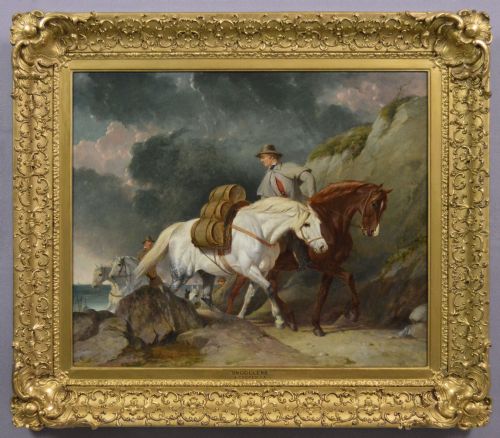
The most common subjects encountered on this page are coastal towns such as Whitby, river scenes along the Thames, and working boats returning to shore. Painters document everyday maritime life, from smugglers on coastal paths to grand processions on the water.
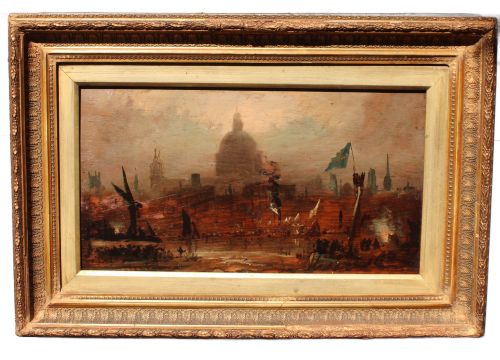
Pieces range from early nineteenth-century oil studies in the manner of J. M. W. Turner to mid-century modern interpretations of harbour life. Each era brings a distinct palette and handling of light, recording the enduring connection between Britain and the sea.
Materials and Technique
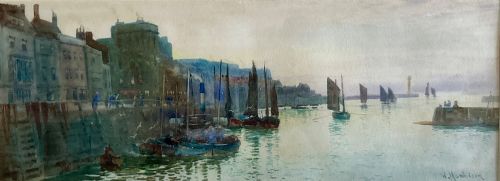
Artists working in this genre typically utilised oil paint on canvas or watercolour applied to paper, often mounted behind glass with gesso frames. Oil on canvas allows for rich texture and deep tonal variation in depicting turbulent seas and evening skies, while watercolour provides a transparent luminosity suited to coastal light and atmospheric haze.
Preparation of the support involved stretching canvas over wood frames or sizing paper to receive wet washes. Brushwork varies from the tight detail found in Victorian narrative watercolours to the looser, more expressive strokes characteristic of later impressionist and St Ives paintings.
British Maritime Fine Art Retail Price Guide 2026
Typical asking prices for british maritime fine art among the pieces listed under this phrase on Sellingantiques today, from the lower quarter to the upper quarter. They describe what is for sale here now, not the wider market.
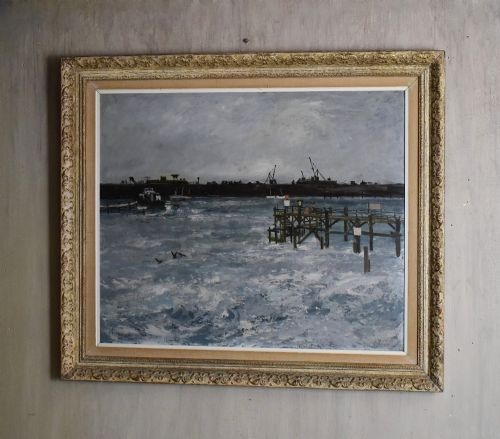
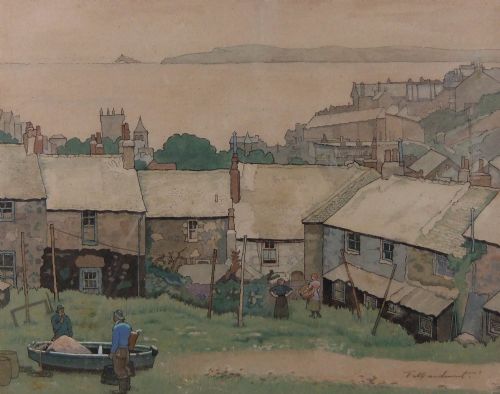
Listings feature works executed in oil on canvas and watercolour on paper, framed in wood and gesso across various historical periods.
Assessing Quality
Quality in these works rests on the artist's command of light, atmosphere, and spatial depth, particularly when rendering water and shifting weather. Stronger examples capture the movement of waves and the specific quality of coastal illumination rather than relying on formulaic compositions.
Condition and preservation of the paper or canvas also influence the standing of a piece. Works retaining their original pigments without excessive fading or discoloration demonstrate superior material integrity over time.
Peter Brannan·Thomas Maidment·Alfred G. Morgan·Abraham Cooper·William Matthison·Thomas Hodgson Liddell·J. Hardy·William Pitt·John McDougal·Thomas Bush Hardy·Frank W. Scarborough·Owen Bowen·H. Hadfield Cubley·John Sanderson Wells·William Knox·Walter Holmes·John D. Walker·Walter Meegan·John W. Gilroy
The British Maritime Fine Art Glossary
- Gesso
- A plaster-like mixture applied to wood frames to create a smooth surface for gilding or painting. It provides structural ornamentation around the edges of canvas works.
- Watercolour
- A paint consisting of pigment suspended in a water-soluble vehicle, traditionally worked on paper. It relies on the white of the paper to show through translucent washes.
- Oil on Canvas
- A medium using pigments bound with drying oils, spread across a stretched woven fabric. This combination permits slow blending and rich impasto.
- British Impressionism
- A late nineteenth and early twentieth-century painting style focusing on light and everyday subjects with rapid brushwork. It marks a shift away from rigid academic studio traditions.
British Maritime Fine Art: Frequently Asked Questions
What periods do these paintings cover?
The works span from the early nineteenth century through the Victorian period and into the mid-twentieth century. This timeline covers shifting styles from romanticism to mid-century modern approaches.
Key dates include Victorian examples alongside Edwardian and 1930s interpretations of British harbours.
How do I care for watercolour paintings?
Watercolours require careful placement away from direct sunlight to prevent the fading of delicate pigments on paper. Framing behind glass with conservation mounting protects the surface from atmospheric moisture and dust.
Keep the works in stable indoor environments with minimal humidity fluctuations to preserve the paper support.
What subjects are most common?
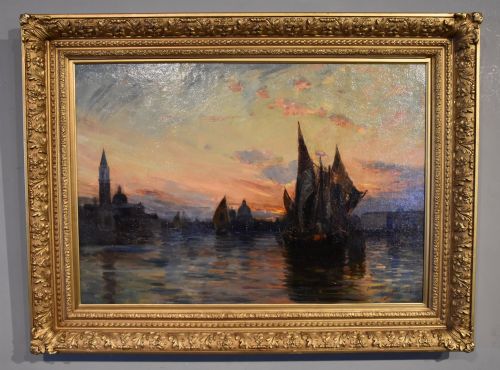
Harbour scenes, coastal paths, and estuary views dominate the subject matter, often featuring working fishing boats or local maritime architecture. Locations range from Whitby and Scarborough to Venice and the Thames.
Artists frequently documented daily coastal activities, capturing boats departing at evening or vessels navigating tidal waters.
How do oil and watercolour differ here?
Oil paintings utilise pigment on canvas stretched over wood, offering textured brushwork and deep, saturated tones suitable for dramatic skies and dark waters. Watercolours employ fluid washes on paper, achieving bright, luminous effects.
Both mediums were used concurrently by marine artists to capture different atmospheric moods along the coast.