





British Marine Landscape Art
British marine landscape art captures the changing moods of coasts, rivers and working harbours through the brush of artists working across past centuries.
British Marine Landscape Art
British marine landscape art encompasses painted records of coastal views, fishing ports, tidal rivers and busy estuaries across the British Isles. When exploring this selection, buyers frequently encounter works executed during the nineteenth and twentieth centuries.
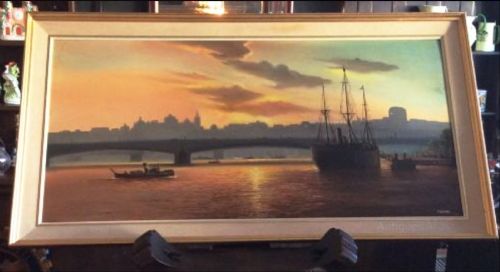
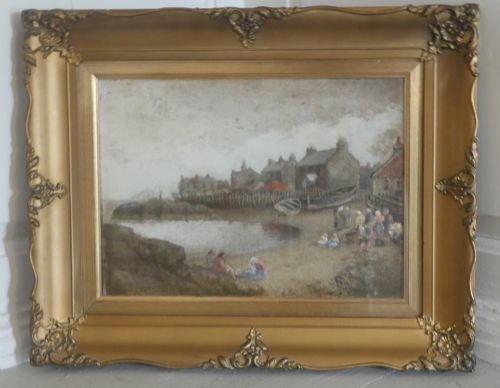
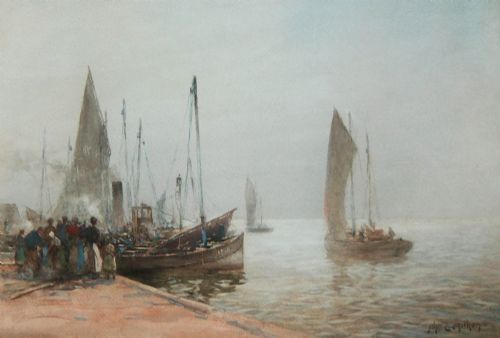
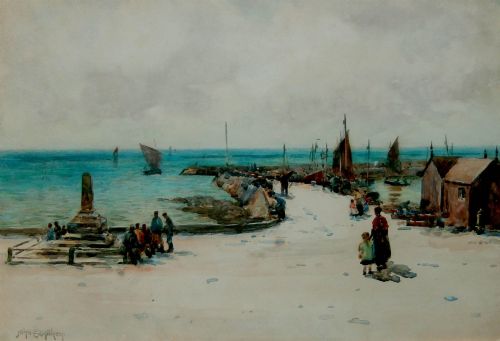
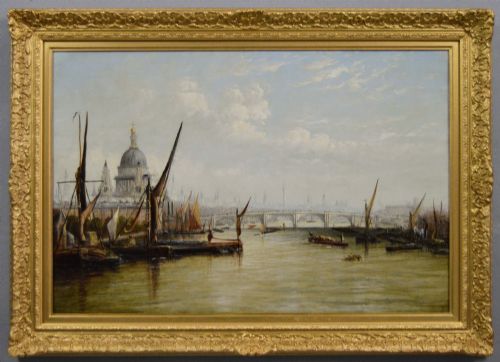
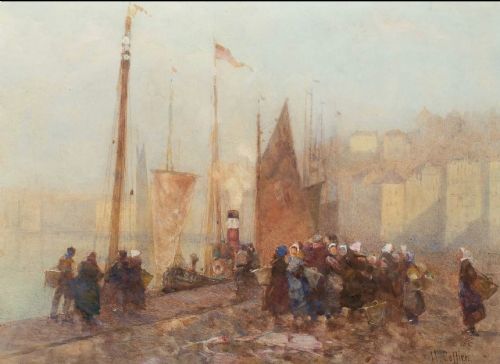
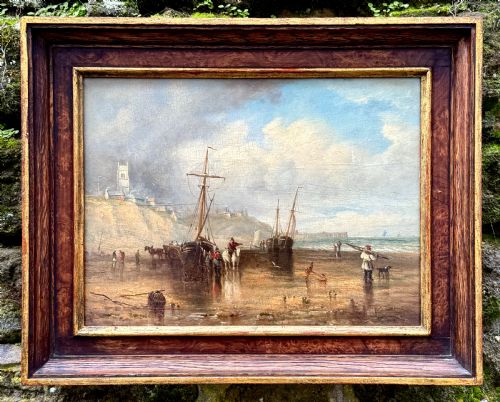
The subjects range from bustling Yorkshire harbours and Cornish fishing coves to panoramic views along the River Thames in London. These paintings document maritime life, coastal topography and historic shipping before modern development altered the shoreline.
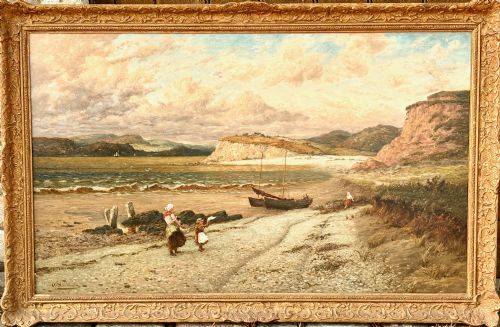
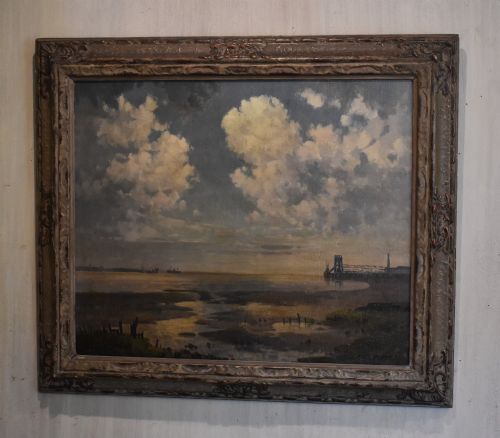
Most examples take the form of original paintings on canvas, paper or wood panels, framed behind glass or displayed directly within traditional gilt mouldings. Both intimate watercolours and expansive oils appear across the selection.
Materials and technique
Artists relied primarily upon watercolour pigment on paper or oil paint applied to canvas and board, capturing the shifting light of sea and sky. Watercolours offered immediacy for plein air sketching along the shore, while oils on canvas permitted rich layering and texture.
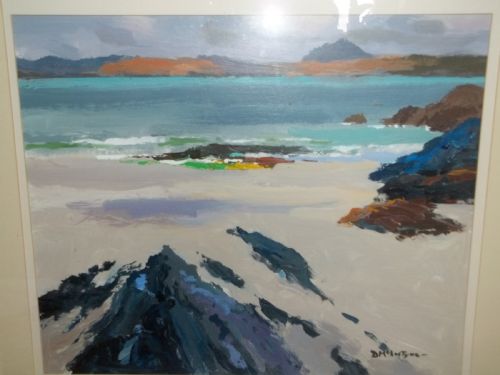
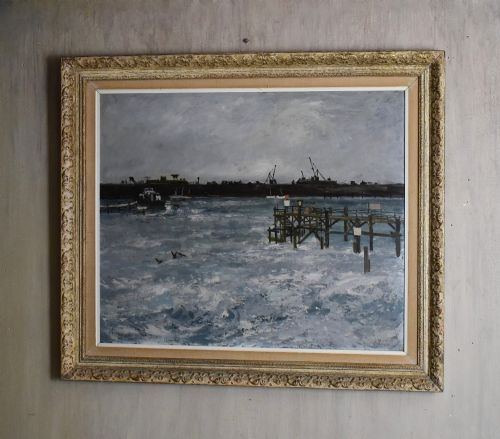
Impasto techniques appear in mid-twentieth-century works, building thick passages of pigment to suggest breaking waves or weathered stonework on harbour walls. Support materials vary from stretched canvas to wooden boards and heavy watercolour paper.
Artists frequently chased the shifting British tide, returning indoors with salt spray dried upon their cuffs.
Distinctions in quality
Quality rests upon the artist's command of atmospheric light, fluid brushwork and accurate topographical perspective in marine environments. Superior works convey the palpable moisture of sea air and the precise rigging of vessels without stiffness.
Compositional balance separates standard topographical records from accomplished artistic interpretations of coastal terrain. Stronger paintings integrate sky, water and shore into a cohesive visual rhythm.
James Orrock·Clifford Hanney·Sidney A Court·Francis Moltino·John Wilson Carmichael·William Henry Williamson·George Stanfield Walters·Henry Barlow Carter·Charles William Wyllie·Edward Seago
The British Marine Landscape Art Glossary
- Seascape
- A painting depicting the sea, coastal views or marine activity. This term forms the core of nineteenth-century maritime categorisation.
- Plein air
- Painting outdoors to capture natural light and transient weather directly from life. Practitioners worked straight onto canvas or paper by the shore.
- Impasto
- Paint applied thickly to a surface, leaving visible brush or palette knife marks. This technique adds tactile dimension to water and clouds.
- Watercolour
- Pigment suspended in water-based solution applied to paper supports. It remains a primary medium for British coastal views.
British Marine Landscape Art: Frequently Asked Questions
Where were these paintings created?
Artists travelled along the British coastline, recording specific locations from Cornwall and Dorset to Yorkshire, Scotland and the Thames.
Many works document working ports, shipyards and quiet estuaries where local maritime industries shaped daily life.
How do I hang a watercolour?
Watercolour paintings require protection from direct sunlight to prevent fading of the delicate pigments on paper supports.
Framing behind conservation glass and mounting away from damp exterior walls ensures the longevity of these works.
How are periods identified?
Stylistic markers, framing methods and artist signatures help establish the date of execution alongside recorded biographical spans.
Victorian works often display heavier gilt frames and detailed narrative realism, while mid-twentieth-century pieces favour looser brushwork.
What subjects are most common?
Fishing boats, harbour walls, tidal rivers and open coastal panoramas dominate the artistic output across these periods.
Depictions of specific vessels, shipping lanes and coastal towns reflect Britain's historical maritime connections.