
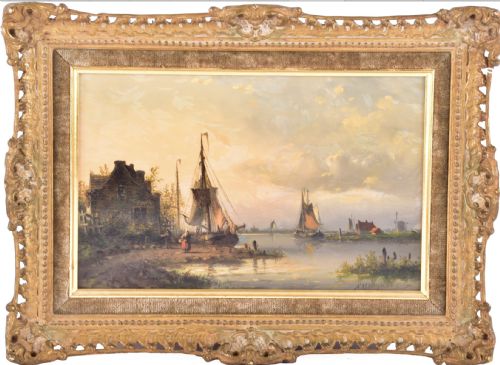
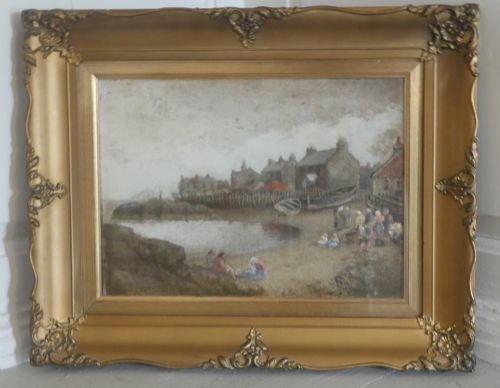
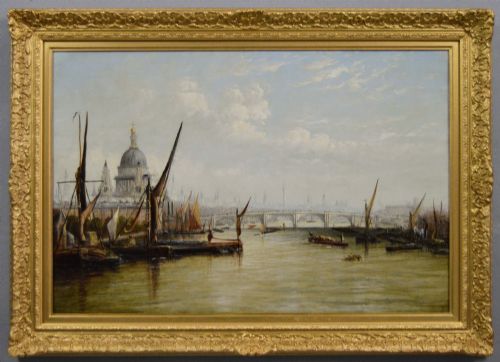
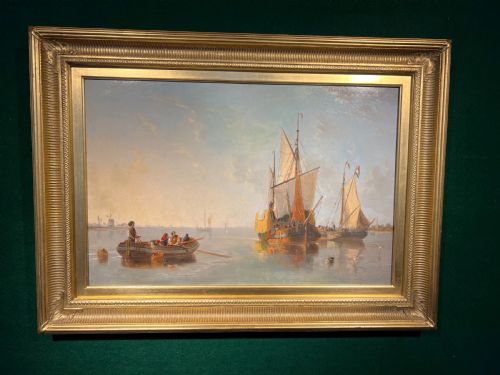
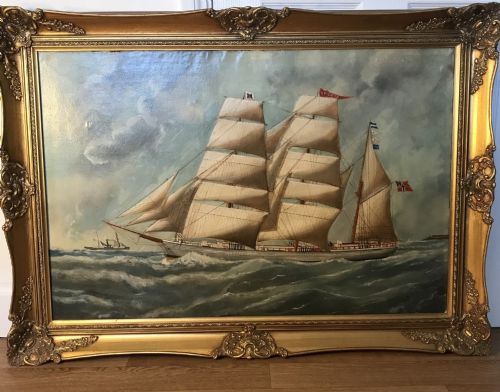
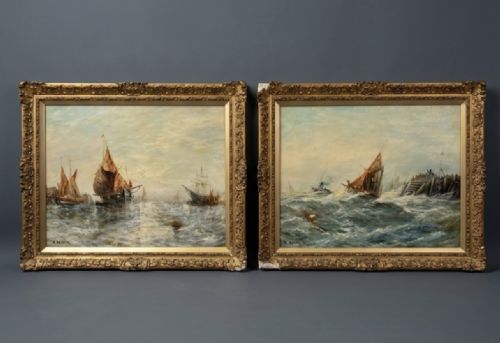
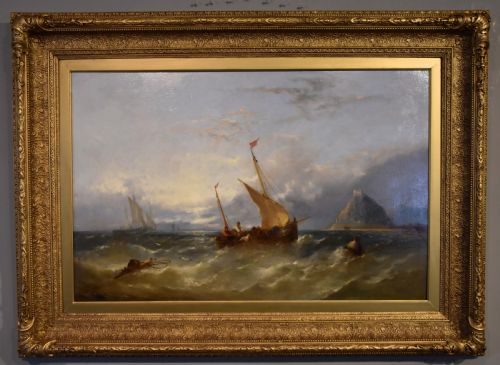
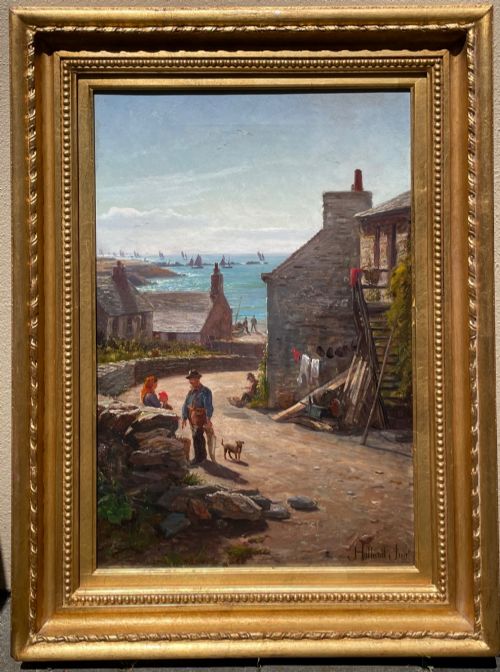
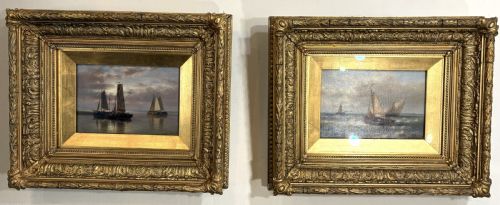


Gold Gilded Marine Painting
A gold gilded marine painting captures the drama of historic shipping and coastal life, enclosed within an ornate, luminous frame that elevates any room.
Gold Gilded Marine Painting
When you search for a gold gilded marine painting, you encounter historic depictions of coastal scenes, bustling harbours, and open sea voyages bound in brilliant frames. The selections span the nineteenth century, the Victorian era, and into the Edwardian period.
The subjects range from tranquil river views of the Thames and Venetian townscapes to dramatic shipwrecks and detailed portraits of three-masted schooners. Most examples on this page utilise oil on canvas or oil on board, paired with period giltwood or gesso framing.
Makers and artists from the Dutch School tradition alongside British painters populate the records, recording coastal topography from Cornwall to the Mediterranean. Buyers find both intimate watercolours and grand oil paintings preserved in their original decorative housings.
Materials and construction
Artists painted primarily with oil paint on stretched canvas or wooden panels, building up maritime atmospheres through layered pigments. Watercolours on paper also appear, offering crisp detail in marine watercolours.
The characteristic luminosity comes from the surrounding frames, constructed from wood and finished with gesso and gold leaf. Craftsmen moulded delicate decorative patterns onto these giltwood surrounds to complement the maritime scenes.
Listings span the nineteenth century to the Edwardian period, featuring oil on canvas, wood panels, and giltwood frames.
Distinguishing quality in maritime art
The division between standard works and exceptional pieces rests upon the artist's command of light, water movement, and maritime architecture. Master hands capture the exact rigging of a ship and the subtle atmospheric changes of coastal weather with absolute precision.
Frame craftsmanship dictates the overall presentation, as original period gilding with intact gesso moulding holds far greater visual harmony than later replacements. The depth of the oil pigment and the preservation of the canvas surface determine the long-term integrity of the artwork.
John Wilson Carmichael·Abraham Hulk I·Thomas Bush Hardy·Daniel Sherrin·James Webb
The Gold Gilded Marine Painting Glossary
- Giltwood
- Wood carved and coated with gold leaf or gold paint. This finish provides the bright metallic border characteristic of period art frames.
- Gesso
- A plaster-like mixture applied to wood frames as a base for gilding. Craftsmen sculpt intricate ornamental details directly into this material.
- Marine painting
- Artwork depicting ships, harbours, coastal views, and the open sea. These scenes document naval history and maritime commerce.
- Oil on canvas
- Pigment mixed with drying oils applied to a woven fabric support. This medium allows for rich colour blending and textured brushwork.
Gold Gilded Marine Painting: Frequently Asked Questions
What periods do these paintings date from?
The available selection primarily encompasses nineteenth-century works, stretching from the early 1800s through the Victorian height and into the Edwardian era. Artists of these periods recorded both commercial shipping and coastal topography with rigorous detail.
Later pieces extend into the twentieth century, maintaining traditional oil and canvas techniques. Each era brings distinct framing styles, ranging from heavy Victorian gesso to simpler Edwardian profiles.
How were these maritime scenes originally displayed?
These artworks were traditionally housed in prominent reception rooms of maritime merchants, naval officers, and coastal landowners. The heavy gilt frames were designed to catch the ambient light of gas lamps or natural windows, illuminating the dark tones of the sea.
Today, they serve a similar decorative purpose, anchoring the focal point of a wall arrangement. Their original gilt frames require stable indoor environments away from direct heat sources to preserve the gold leaf.
How do I identify a Victorian marine painting?
Victorian examples often feature dramatic coastal narratives, such as shipwrecks, bustling port activities, or royal yachts off the coast. The canvas support is frequently paired with elaborate, heavily moulded giltwood frames typical of the nineteenth-century aesthetic.
Signatures or attribution notes on the reverse often point to specific regional schools or named British and Dutch artists of the period. Documentation on the frame or stretcher bars can also confirm the nineteenth-century origin.