


River Thames Seascape
A river thames seascape brings the historic capital waterway into a room through nineteenth and twentieth century depictions of shipping and bridges.
River Thames Seascape
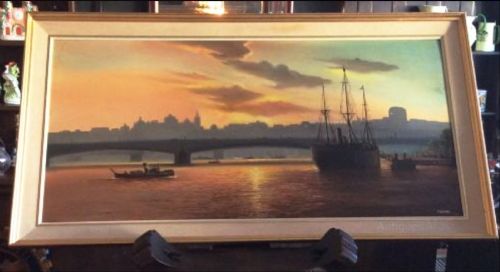
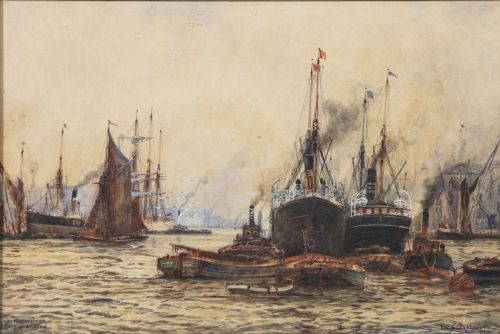
A river thames seascape captures the bustling waters, bridges, and maritime activity of London across the nineteenth and twentieth centuries. These works record city landmarks such as Tower Bridge, Waterloo Bridge, and the Houses of Parliament alongside traditional working vessels like Thames barges.
Most examples found here date from the Victorian, Edwardian, and mid-twentieth century periods, reflecting a sustained artistic interest in the tidal river. Buyers encounter both detailed oil paintings on canvas and expressive watercolours on paper, framed in wood or gilt.
The subjects range from busy morning port scenes near Billingsgate to quieter reaches around the Upper Pool. Each piece preserves a distinct era of river commerce and architecture before modern redevelopment transformed the shoreline.
Materials and technique
Artists captured the atmospheric light of the capital primarily through oil on canvas or watercolour on paper. Painters applied pigments with confident brushwork to render the shimmering water, hazy industrial air, and moving shipping traffic.
Many of these works are housed in their original wood frames, occasionally enhanced with gold leaf or gilt details. These period surrounds complement the maritime subject matter and protect the painted surface or paper sheet from damage.
Some Victorian artists painted the Thames so thickly with smog that you can almost smell the coal smoke and river mud.
What separates the finest works
The distinction in quality rests upon the artist's handling of light, scale, and topographical precision. Superior works convey the movement of water and the dense atmosphere of the port with convincing depth and assured composition.
The sophistication of the framing and the preservation of the original medium further define the standing of a piece. Finer examples display a careful balance between archival detail of London landmarks and artistic expression.
Frank William Scarbrough·Charles William Wyllie·Edward Henry Eugene Fletcher·Frances E Nesbitt·Francis Moltino·Hubert Thornley
The River Thames Seascape Glossary
- Oil on canvas
- A painting technique using pigments bound in a drying oil applied to a stretched cloth support. This medium allows for rich colour blending and textured brushwork.
- Watercolour
- A paint consisting of water-soluble pigments applied to paper. It produces translucent washes of colour well suited to capturing atmospheric river mists.
- Gilt
- A thin layer of gold or gold-like material applied to wood frames. It provides a decorative metallic finish that enhances the framed artwork.
- Victorian
- A period spanning the reign of Queen Victoria, associated here with nineteenth century maritime art. Works from this era often detail heavy shipping and industrial growth.
- Edwardian
- A style and period covering the early twentieth century up to the First World War. Paintings from this time frequently employ lighter palettes and looser brushwork.
River Thames Seascape: Frequently Asked Questions
What periods do these paintings date from?
The available works primarily date from the nineteenth century, the Edwardian era, and the mid-twentieth century. They reflect the changing artistic interpretations of the river over several decades.
Most pieces cluster around 1880 to 1910, capturing the height of commercial shipping on the Thames before modern changes took place.
How should I display a watercolour?
Watercolours on paper require careful placement away from direct sunlight to prevent the pigments and paper from fading over time. Glazing with protective glass helps guard against atmospheric dust and moisture.
Keeping them in stable indoor humidity conditions ensures the paper support remains flat and undamaged within its frame.
What subjects appear most frequently?
London landmarks such as Tower Bridge, Waterloo Bridge, and the Houses of Parliament dominate the urban river views. Working vessels, including Thames barges and shipping near the Pool of London, frequently anchor the compositions.
Scenes also extend to nearby waters like the Medway, focusing on hay barges and maritime trade.
Are the frames original to the pieces?
Many works retain their period wood frames, which often feature gilt or gold leaf finishes appropriate to their era of creation. These surrounds are chosen to complement the aesthetic of the painting.
Examining the backboards and mouldings usually reveals clues about the age and history of the framing.