



British Equestrian Portrait
A british equestrian portrait captures the dignity of horses and riders through oil paint and canvas across centuries of sporting tradition.
British Equestrian Portrait
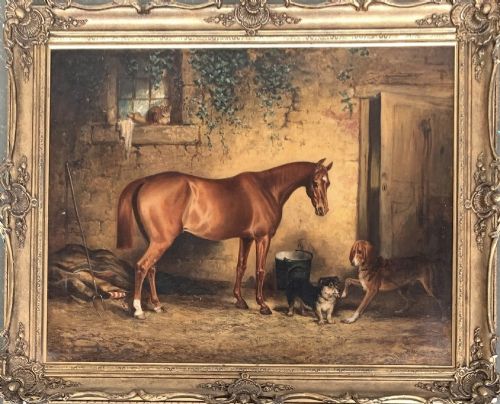
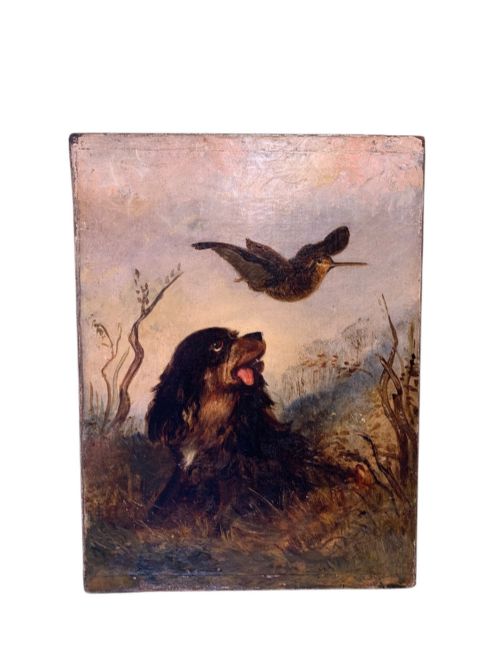
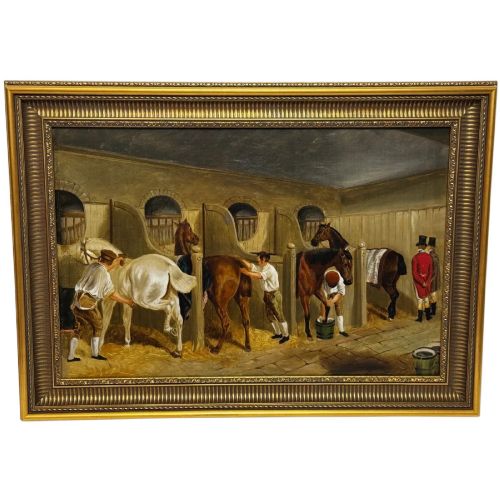
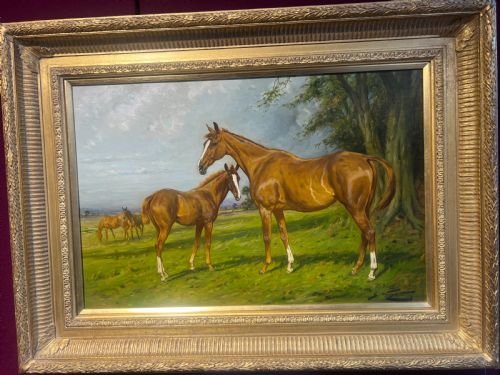
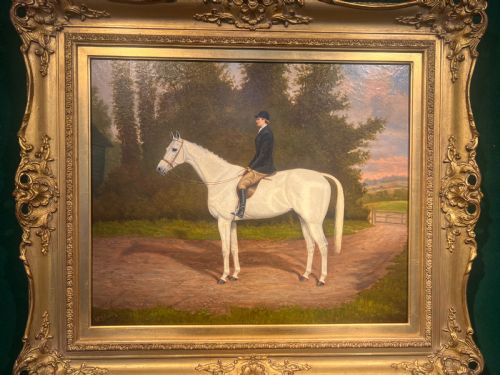
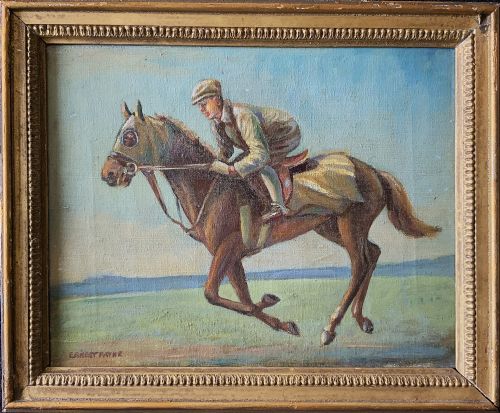
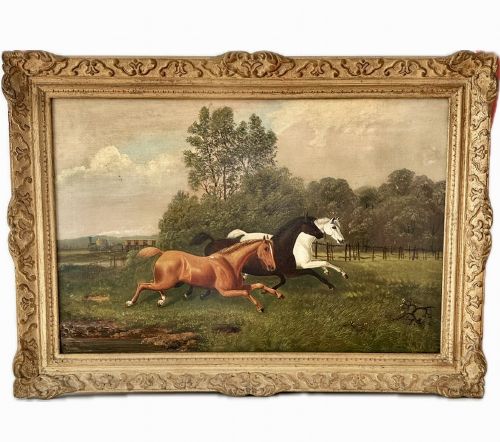
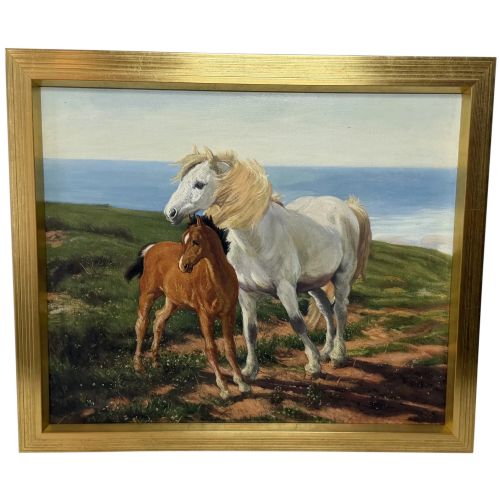
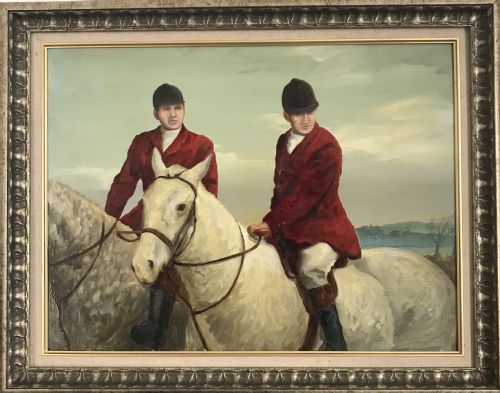
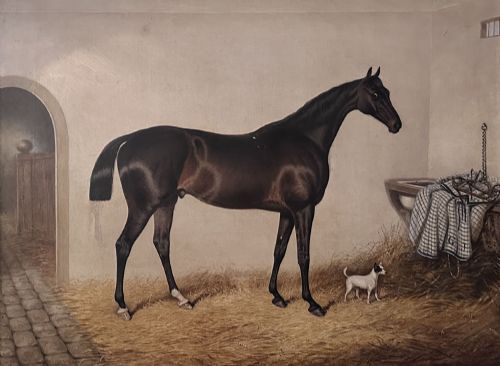
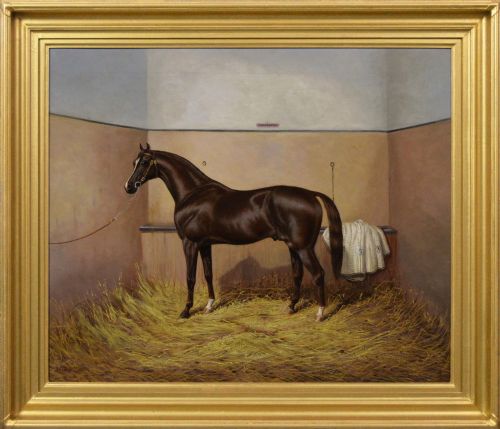
A british equestrian portrait focuses primarily on horses, hunters, and stable scenes executed in oil on canvas or wood. Buyers meet works spanning the Victorian period through the mid twentieth century, featuring named racehorses, champion mares, and mounted officers.
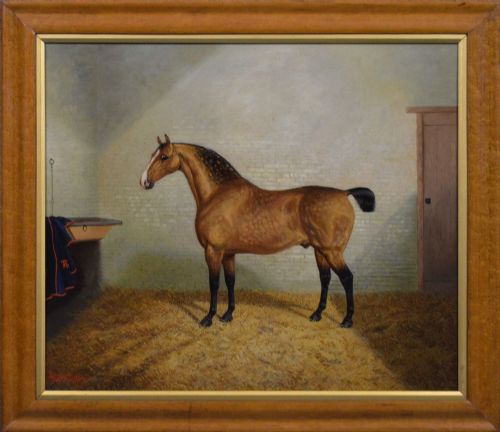
The compositions range from intimate stable interiors to expansive landscape settings with steam locomotives or hunt gatherings. Many works highlight specific animals like bay hunters and dappled buckskins alongside notable jockeys and military figures.
Materials and Technique
Painters relied principally on oil paint applied to canvas or wood panels, building rich textures for horse coats and landscape backgrounds. Gold leaf and gilt frames often complement the canvases, adding weight and traditional presentation to the sporting artwork.
Watercolour and paper appear in select drawings and studies, while gilt wood frames protect and complete the oil paintings. The handling of pigment captures the sheen of horse hair and the atmospheric light of nineteenth and twentieth century rural scenes.
Several Victorian horses gaze directly at the painter with more expression than the grooms standing beside them.
Evaluating the Work
Quality rests upon the anatomical accuracy of the horse and the fidelity of the landscape context. Skilled painters render muscle structure, posture, and light with precision, whereas weaker hands produce stiff forms and static backgrounds.
The reputation of the artist and the documentation of the subject elevate certain pieces above anonymous works. Masterful brushwork in the rendering of the animal coat and stable environment separates exceptional sporting art from standard decorative paintings.
Henry Barraud·Albert Clark·George Wright·John Ferneley Senior·Samuel Spode
The British Equestrian Portrait Glossary
- Bay
- A horse coat colour characterised by a reddish-brown body with black mane, tail, and lower legs. This coat appears frequently in nineteenth century sporting canvases.
- Gilt Wood
- Wood carved and coated with gold leaf or a gold-coloured metallic finish. This material forms the traditional heavy frames surrounding antique oil paintings.
- Sporting Art
- Genre of art depicting bloodstock, hunting, shooting, and equestrian subjects. It flourished across Victorian and Edwardian Britain.
- Canvas
- Heavy woven fabric stretched across a wooden frame to serve as a sturdy support for oil paintings. It remains the most common medium in these listings.
British Equestrian Portrait: Frequently Asked Questions
What is a british equestrian portrait?
A british equestrian portrait is an artwork depicting horses, riders, or stable scenes, created primarily in oil on canvas during the nineteenth and twentieth centuries.
These pieces document prized hunters, racehorses, and military chargers within landscapes or stable settings.
How do I date a horse painting?
Dating relies on costume details of riders, uniform styles of military officers, and the construction methods of the canvas and frame.
Signatures, artist life dates, and stylistic shifts from Victorian realism to later twentieth-century studies also help establish the era.
Where were these portraits displayed?
These paintings historically hung in country houses, estate libraries, and sporting clubs associated with hunting and horse breeding.
Today they suit studies, living rooms, and traditional hallway interiors where the rich oil colours complement period furnishings.
What subjects appear besides horses?
Portraits frequently include stable hands, grooms, military officers, and prominent jockeys alongside the animals.
Background elements often feature hunt packs, coaching scenes, rolling countryside, and rural river landscapes.