





British Coastal Seascape Artwork
British coastal seascape artwork captures the shores, harbours, and maritime weather of the British Isles through historic paintings.
British Coastal Seascape Artwork
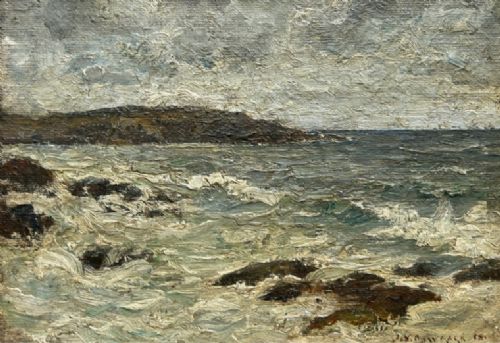
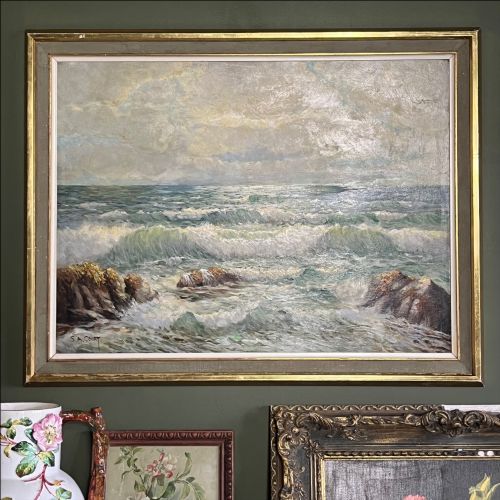
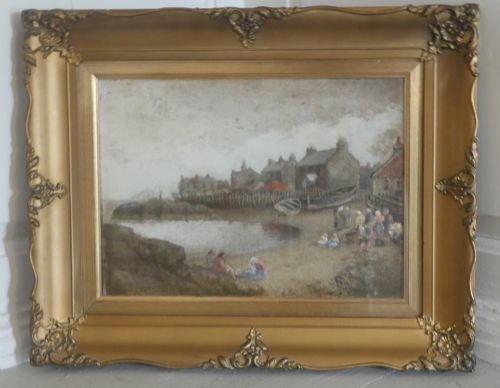
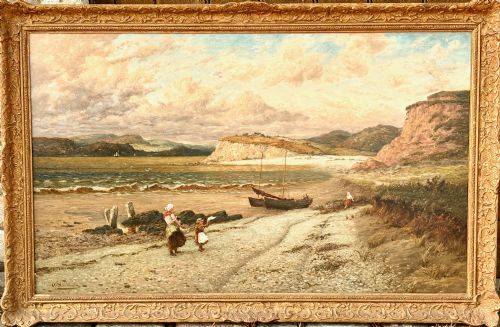
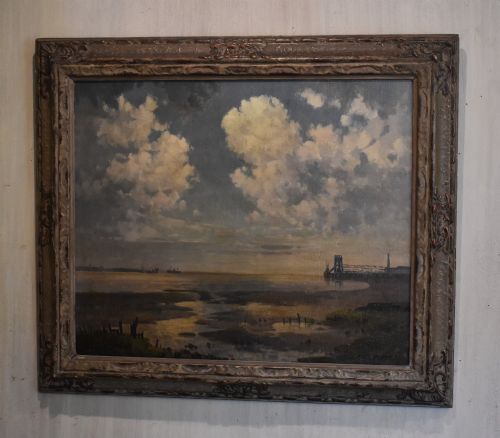
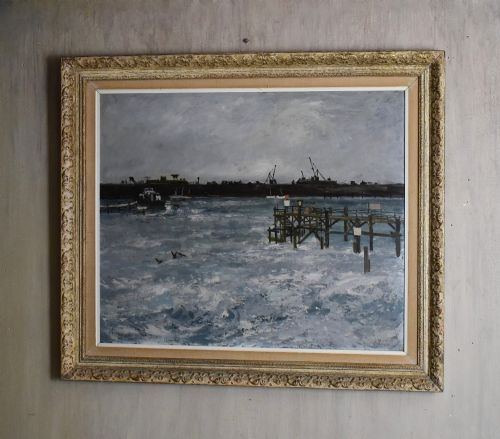
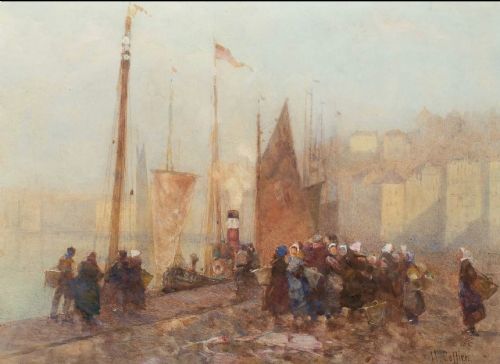
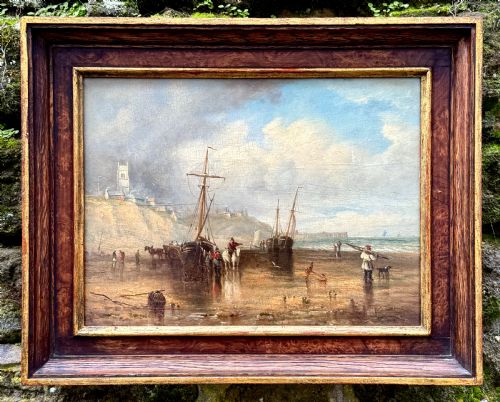
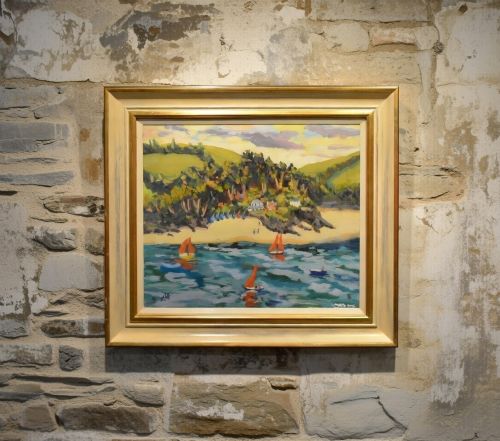
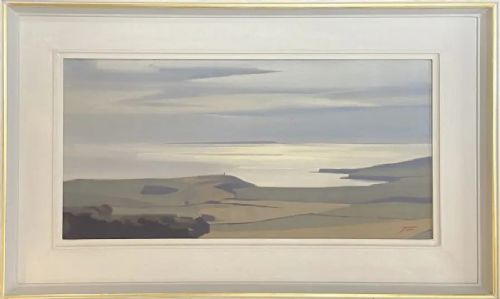
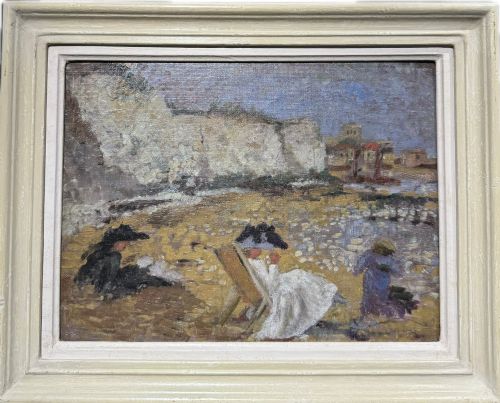
British coastal seascape artwork encompasses paintings depicting coastal scenes, harbours, estuaries, and fishing boats around Britain. These pieces record maritime life, coastal topography, and shipping from various periods.
The selections available on this page lean heavily towards nineteenth-century Victorian marine watercolours and oil paintings. Alongside these earlier depictions, mid-twentieth-century examples show post-war and modern British interpretations of the coast.
Subjects range from tranquil estuaries in Dorset and Devon to busy working harbours in Cornwall and Yorkshire. Works frequently record specific locations such as St Ives, Whitby, and Brighton Beach.
Materials and techniques
Artists painted primarily in oil or watercolour, applying pigments to canvas, wood panels, paper, or card. Oil paintings often utilise thick impasto strokes to build texture, particularly in depictions of stormy seas and rocky shores.
Watercolour paintings rely on transparent washes on paper to capture changing coastal light, tidal mudflats, and sky. Framed works preserve these fragile paper supports beneath glass, often within period wooden frames.
Several artists recorded local fishing boats with such precision that coastal historians can identify individual vessels by their hull numbers.
Distinctions in quality
Quality rests upon the artist's ability to render atmosphere, light, and maritime movement convincingly. Superior pieces demonstrate confident brushwork and accurate observation of rigging, water, and weather.
Compositional strength and the handling of light separate standard topographical records from accomplished artistic interpretations. Works by established practitioners display a surer command of tone and perspective across the canvas or paper.
Thomas Bush Hardy·Edward Seago·Charles Napier Hemy·John Wilson Carmichael·William Henry Williamson
The British Coastal Seascape Artwork Glossary
- Impasto
- Paint applied thickly to a surface, standing out in relief from the canvas. This technique adds tactile dimension to waves, cliffs, and clouds.
- Watercolour
- A painting method in which the paints are made of pigments suspended in a water-soluble vehicle. It produces luminous washes well suited to coastal light.
- Maritime art
- Depictions of the sea, ships, and shorelines. This genre encompasses both commercial shipping and coastal landscapes.
- En plein air
- Painting outdoors to capture direct observations of natural light and weather. Artists working this way record immediate atmospheric conditions on the coast.
- Estuary
- The tidal mouth of a large river, where the tide meets the stream. These areas provide subjects featuring mudflats, shipping, and shifting water levels.
British Coastal Seascape Artwork: Frequently Asked Questions
How do I date an antique coastal painting?
Dating relies on stylistic evidence, artist signatures, framing, and recorded exhibition dates. Victorian pieces often feature specific Victorian maritime clothing and vessel rigging.
Material supports such as card, millboard, or specific canvas stamps also offer chronological clues. Comparing works to documented output helps narrow the creation period.
What is the difference between oil and watercolour here?
Oil paintings use pigment suspended in oil on canvas, wood, or card, allowing for rich textures and deep tones. Watercolours use water-based pigments on paper to achieve luminous, transparent effects.
Watercolours require protection beneath glass to prevent environmental damage, whereas traditional oil canvases are displayed openly in frames.
How do I care for framed watercolours?
Watercolours on paper are sensitive to direct sunlight and high humidity, which can cause fading and foxing. Keep them away from sunny walls and damp environments to preserve the paper.
Glazing protects the delicate pigment surface from atmospheric dust and physical contact. Ensure the framing backing remains sealed against moisture.
Where were most of these coastal scenes painted?
The works depict locations around the British coastline, with particular concentrations in Cornwall, Yorkshire, Dorset, and the Thames Estuary. Popular painting destinations included St Ives, Whitby, and Scarborough.
Artists travelled to busy fishing ports and quiet bays to record local vessels, cobles, and daily maritime labour.