



Breakfront Side Table
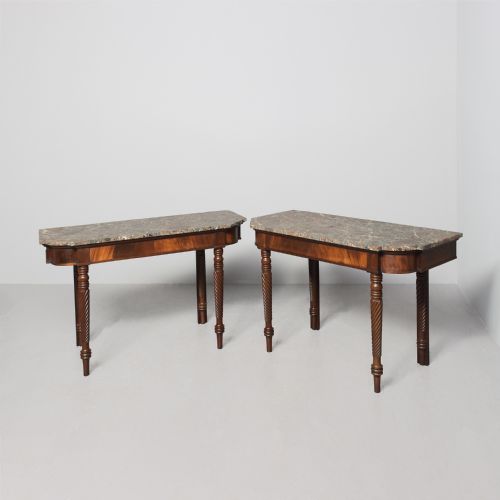
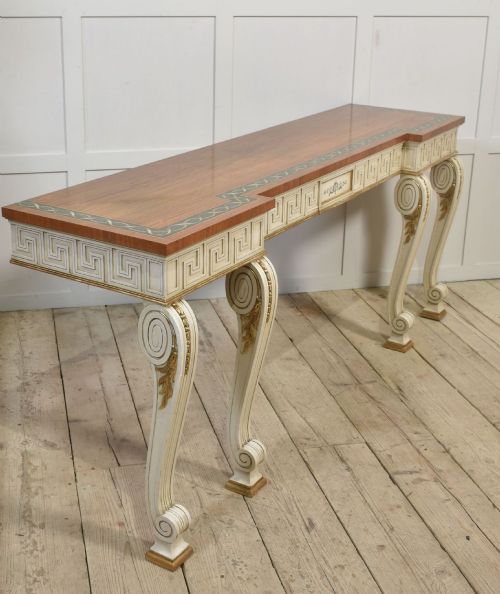
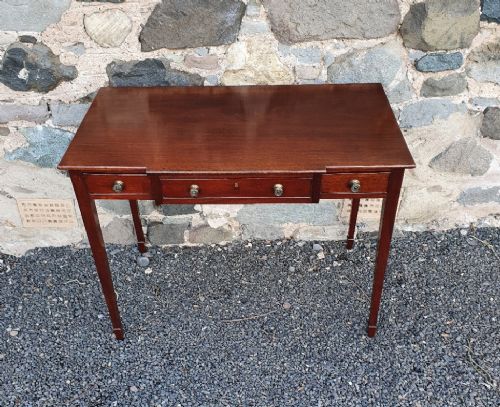
These breakfront side tables are architectural console and serving pieces in mahogany, burr walnut, and painted timber that anchor a formal room.
Breakfront Side Table
A breakfront side table projects forward centrally, creating a distinct architectural rhythm along a wall. The pieces on this page span the Georgian period, the Regency era, and the Victorian age into the early twentieth century.
The forms here include console tables, serving tables, and sideboards, alongside related side cabinets and wardrobes. Mahogany and painted wood dominate the listings, frequently paired with marble tops.
Makers and designers from the late eighteenth century onward utilised this projecting profile to catch the light and break up long expanses of timber in formal dining rooms and halls.
How they were made
Cabinetmakers constructed these tables using solid mahogany, beech, and burr walnut veneers over secondary timbers. Surfaces were frequently polished by hand or painted with neoclassical details.
Marble tops appear alongside timber panels, fitted directly onto the breakfront frame to provide a cool, durable surface for serving.
Materials across these records include solid mahogany, burr walnut, painted beech, and inset marble.
What varies in quality
Quality rests in the precision of the joinery at the corners where the breakfront steps forward. The crispness of the timber grain, particularly in figured mahogany and burr walnut, distinguishes finer examples.
The treatment of the secondary materials, such as the weight of an inset marble slab and the subtlety of painted neoclassical motifs, separates standard workshop production from important commissions.
The Breakfront Side Table Glossary
- Breakfront
- A cabinet or table front whose central section projects forward from the flanking wings. This architectural device creates dynamic shadow lines in a room.
- Console table
- A table designed to be fixed against a wall, often supported by front legs or brackets. Earlier examples rely on the wall for balance while later versions stand independently.
- Serving table
- A large dining room table used for holding dishes before service. These pieces frequently feature robust mahogany construction and generous proportions.
- Burr walnut
- Timber taken from the wart-like growths on walnut trees, yielding highly figured grain patterns. Cabinetmakers sliced this wood into thin veneers for decorative surfaces.
- Neoclassical
- A style drawing inspiration from classical antiquity, marked by restrained symmetry and geometric ornament. Painted finishes and classical motifs typify this design language.
Breakfront Side Table: Frequently Asked Questions
Where should I place a breakfront side table?
These tables suit hallways, dining rooms, and drawing rooms where a strong architectural focal point is needed against a flat wall. Their projecting centre section draws the eye and anchors large mirrors or artworks hung above.
Because many examples feature marble tops or finished backs, they also function well as freestanding console pieces in wider corridors or reception spaces.
How do I identify a Georgian breakfront table?
Georgian tables rely on dense, rich mahogany timbers, hand-cut dovetails, and understated proportions rooted in classical design. Look for unpretentious craftsmanship where the structure itself defines the aesthetic.
Later revival pieces often display heavier machine-cut elements or different secondary woods beneath the surface polish.
Can I use a marble-topped table for serving food?
Original marble slabs provide a cool, water-resistant surface that nineteenth-century households utilised for presenting dishes and drinks. They wipe clean easily and withstand daily use.
Take care to avoid placing extremely hot vessels directly onto older marble to prevent thermal shock or historic hairline fissures from expanding.
What is the difference between a console and a side table?
Console tables traditionally required wall fixings for stability, whereas side tables stood entirely on their own four legs. Over time, the terms merged as cabinetmakers adapted forms for flexible domestic use.
On this page, both types share the distinctive breakfront profile that projects forward at the centre.