



Breakfront Shelving Unit
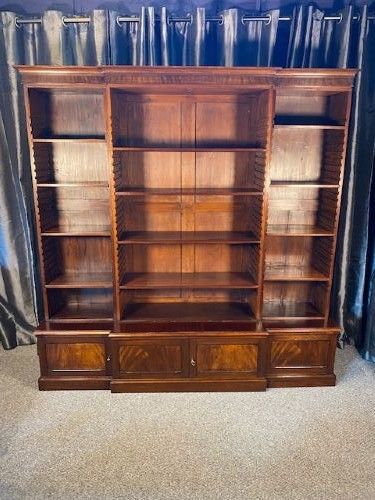
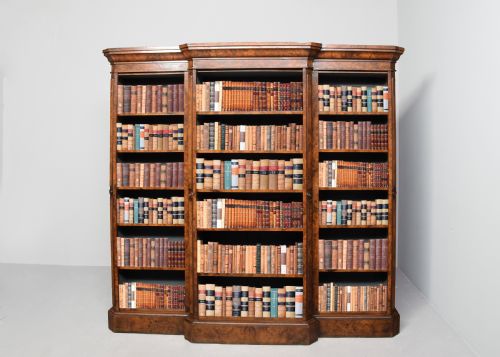
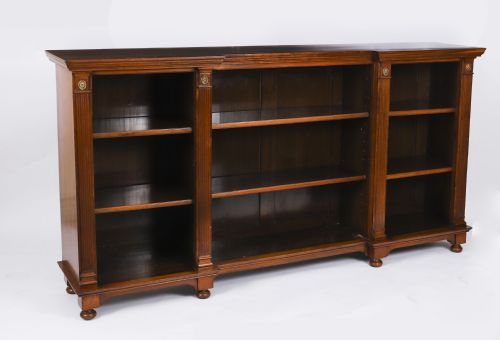
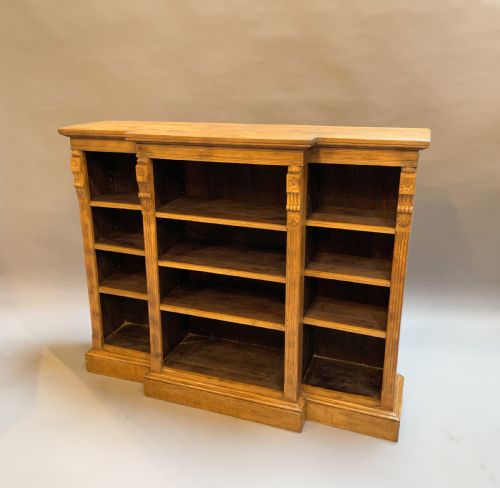
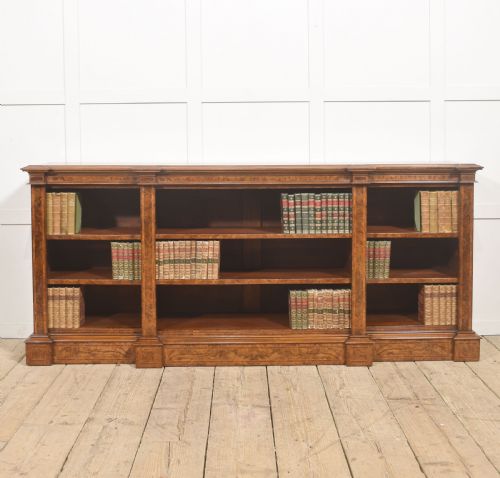
A breakfront shelving unit commands attention in a room, offering generous proportions and projecting central sections designed to house substantial libraries.
Breakfront Shelving Unit
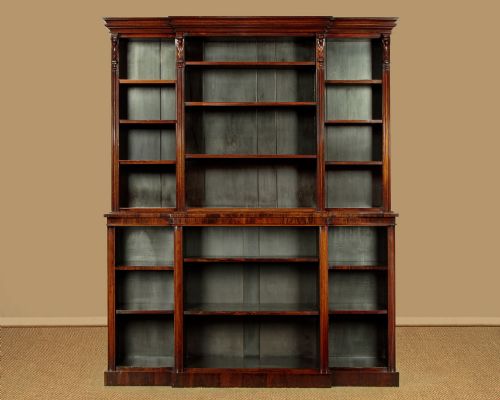
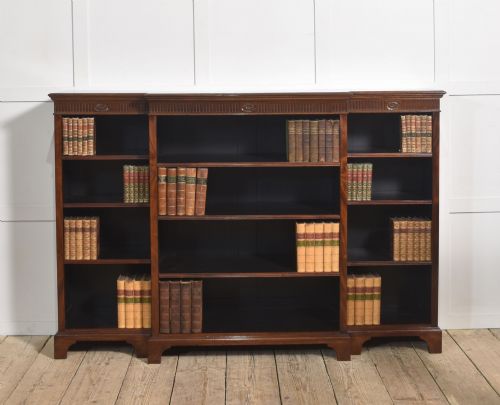
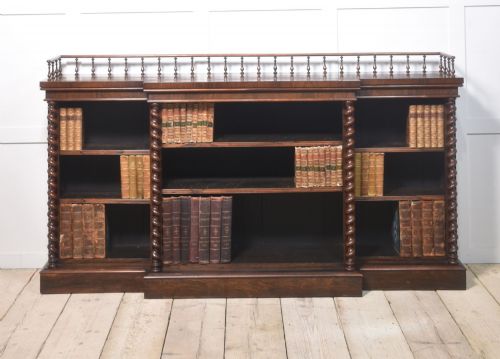
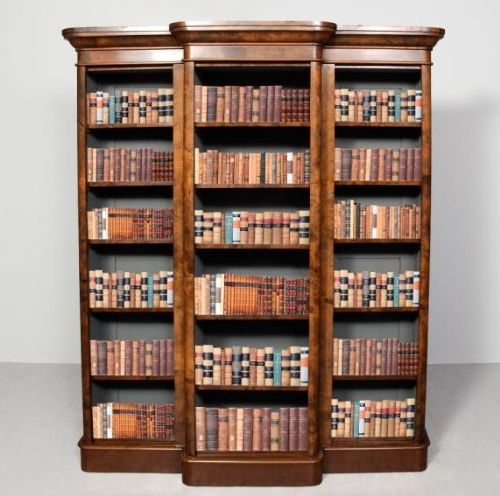
A breakfront shelving unit typically takes the form of a large bookcase or open bookcase, structured with a prominent central section flanked by slightly recessed wings. These architectural bookcases appear frequently from the Victorian and Regency periods, stretching into the early twentieth century through revival styles.
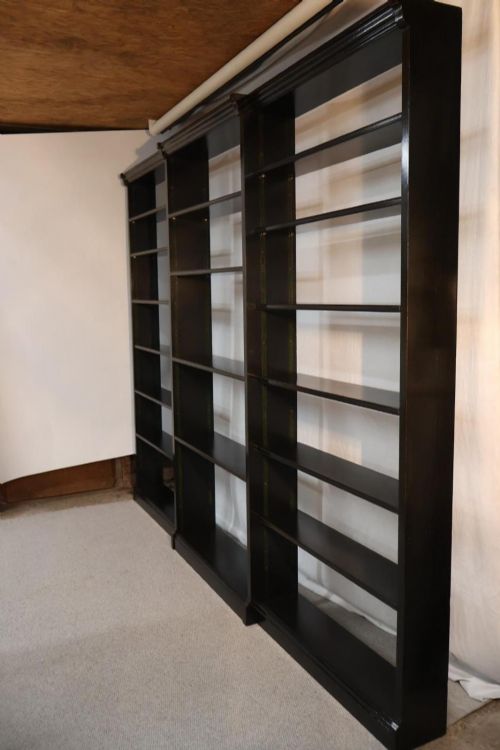
Most examples found in current selections are open bookcases featuring adjustable shelves rather than glazed doors, designed for accessible display and storage. The forms range from grand library bookcases to lower rosewood or mahogany units suited to domestic reception rooms.
How they were made
Cabinet makers utilised dense hardwoods such as mahogany, rosewood, and walnut, often selecting flame mahogany veneer and burr walnut to create striking, figured surfaces on the prominent facades. These timbers provided the structural stability required for heavy shelving and substantial proportions.
Fine decorative detailing involved ormolu mounts, brass inlays, and ebonised highlights, reflecting Neoclassical and Grand Regency influences. Open shelving sections frequently incorporated adjustable wooden supports to accommodate varying volumes.
Adjustable shelves in nineteenth-century bookcases were designed so readers could fit towering folios without abandoning their prized matching sets.
What varies in quality
Quality rests primarily on the selection of timber veneers and the sophistication of the architectural proportions. Cabinets featuring highly figured burr walnut or rich flame mahogany display a superior visual depth.
The integration of decorative mounts in brass and ormolu, alongside disciplined proportions across the three-section breakfront, distinguishes finer library pieces from simpler utilitarian shelving.
Robert Strahan
The Breakfront Shelving Unit Glossary
- Breakfront
- A cabinet design where the central section projects forward from the flanking wings. This configuration breaks the linear monotony of long walls.
- Burr walnut
- A prized wood grain harvested from the warted growths of walnut trees, displaying intricate, swirling patterns. Cabinet makers selected it for high-status furniture facades.
- Ormolu
- Gilded bronze ornamentation applied to furniture. It provides a bright metallic contrast against dark woods like walnut and rosewood.
- Flame mahogany veneer
- A thin slice of mahogany timber cut from the fork of the tree where the branches meet, creating a distinctive flame-like pattern. It was widely used on grand nineteenth-century bookcases.
- Ebonised
- Timber treated with a finish to imitate ebony. This dark staining method appears on select Victorian and later pieces.
Breakfront Shelving Unit: Frequently Asked Questions
Where should I place a breakfront shelving unit?
These substantial units require a long, uninterrupted wall where their projecting central section can be fully appreciated without obstruction.
They anchor a principal reception room or home library, providing both presence and extensive display space.
How do I adjust the shelves?
Most period open bookcases utilise traditional wooden support battens or metal pins inserted into vertical rows of interior slots.
This mechanism allows individual shelves to be repositioned easily to accommodate books of varying heights.
What is the difference between Victorian and Regency examples?
Regency and Regency style units often feature crisper classical lines, rosewood timbers, and delicate brass or ormolu mounts. Victorian iterations tend to be heavier in scale, frequently utilising burr walnut and mahogany with deeper architectural mouldings.
Both periods share the characteristic three-section breakfront profile.
How do I care for the wood finish?
Maintain the polished timber surfaces by dusting gently with a dry, soft cloth and avoiding direct exposure to strong sunlight. Occasional application of a suitable beeswax preserves the natural lustre of mahogany and walnut.
Keep the pieces away from direct heat sources to prevent timber movement.