



Wide Mahogany Bookshelf
A wide mahogany bookshelf gives a room grounded presence while holding a substantial library.
Wide Mahogany Bookshelf
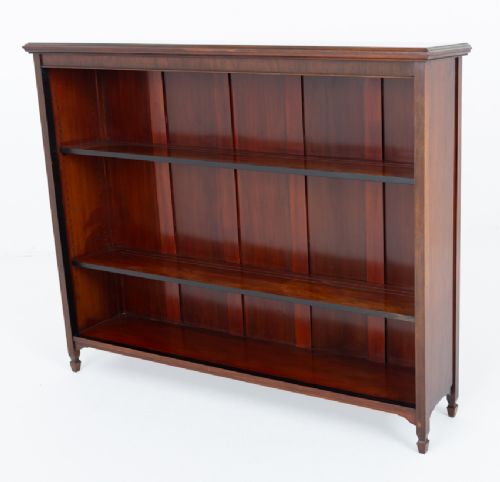
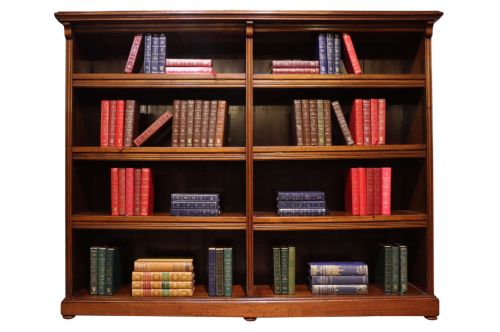
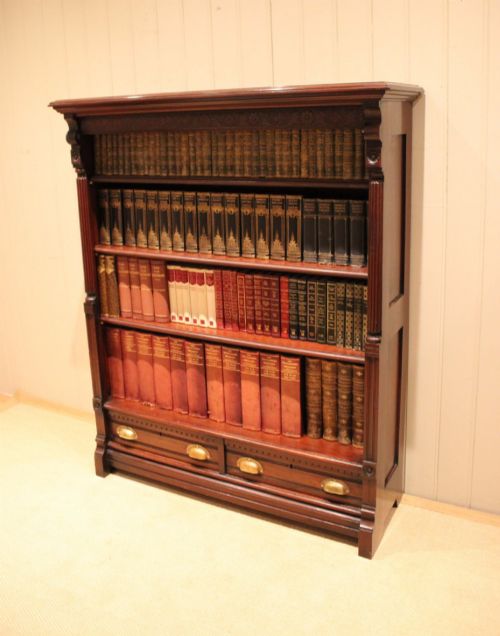
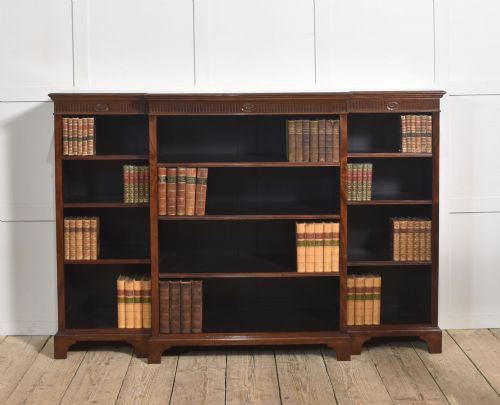
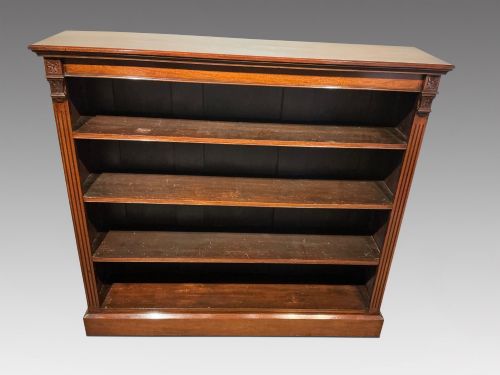
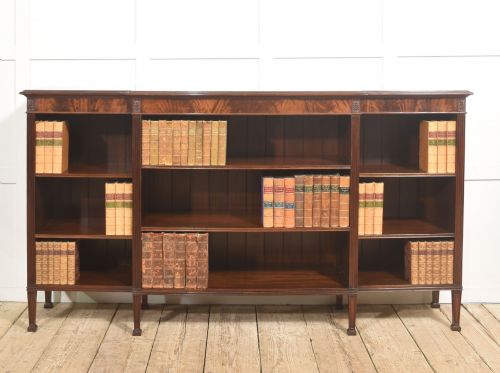
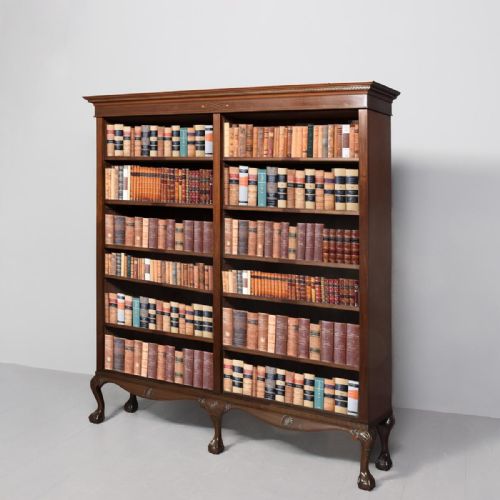
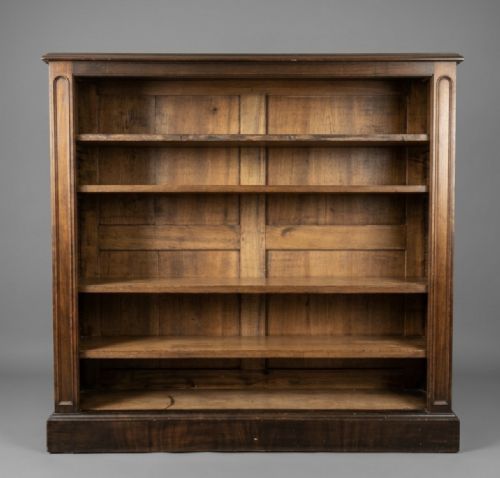
A wide mahogany bookshelf stands as a substantial piece of furniture designed to house extensive collections of books within domestic or library settings. These items appear primarily in Victorian, Edwardian, and Georgian style iterations, ranging from large breakfront forms to simpler open configurations.
The versions most commonly met on this page span the nineteenth and early twentieth centuries, particularly from the Victorian and Edwardian eras. Pieces often incorporate adjustable shelves and large proportions suited to substantial rooms.
How they were made
Construction relies primarily upon solid mahogany and flame mahogany timbers, sometimes supplemented by secondary woods such as pine. Artisans utilised wood veneer and delicate wood inlay to add decorative surface detail to the breakfront and open bookcases.
Functional elements frequently included brass hardware and adjustable shelving mechanisms to accommodate volumes of varying heights. Two-part tall constructions allowed for easier transport and assembly of large library furniture.
Wide Mahogany Bookshelf Retail Price Guide 2026
Typical asking prices for wide mahogany bookshelf among the pieces listed under this phrase on Sellingantiques today, from the lower quarter to the upper quarter. They describe what is for sale here now, not the wider market.
Listings span from the 1860s through the Edwardian period, featuring open front formats and brass hardware details.
What varies in quality
The selection of timber dictates much of the character, where standard mahogany gives way to highly figured flame mahogany veneers. Richness of grain and the subtlety of wood inlay separate standard utility pieces from finer examples.
Architectural presence defines the upper tier, seen in breakfront designs and well-proportioned breakfront open bookcase forms. Maker attribution, such as work originating from established workshops like Lamb of Manchester, elevates historical interest.
Lamb of Manchester
The Wide Mahogany Bookshelf Glossary
- Breakfront
- A piece of furniture having a central section that projects forward from the flanking wings. This architectural arrangement creates depth and shadow across large library bookcases.
- Flame mahogany
- A veneer cut from the fork of the mahogany tree where the branch meets the trunk. It produces a distinctive flickering flame pattern across wide surfaces.
- Adjustable shelves
- Shelving supported on a mechanism that allows the vertical spacing to be altered. This practical feature appears frequently in nineteenth century bookcases.
- Inlay
- A technique where pieces of contrasting wood are inserted into depressions in the base material to form a design. It marks more decorative Edwardian and Georgian style pieces.
- Two-part
- Construction method dividing a tall piece into an upper and lower section for easier movement. This occurs in taller Victorian examples.
Wide Mahogany Bookshelf: Frequently Asked Questions
How do I adjust the shelves?
Most period bookcases use traditional wooden bearer strips, brass studs, or shelf-slotted uprights.
You simply lift the shelf slightly and reposition the supports into the desired slots to fit larger volumes.
Where should I place a large bookcase?
These wide pieces demand stable wall space away from direct heat sources and strong sunlight.
Placing them in a study, drawing room, or library allows the timber grain to be appreciated properly while supporting heavy books.
Are these bookcases suitable for modern books?
Nineteenth and early twentieth-century shelving depths typically accommodate standard octavo volumes and modern hardbacks easily.
Adjustable shelf heights mean you can configure specific tiers for larger art monographs or smaller paperbacks.
How do I date a mahogany bookcase?
Dating relies on observing construction methods, timber choice, and stylistic cues like Edwardian inlay or Victorian proportions.
Makers' marks or stamps, when present, provide a precise attribution to workshops active during the nineteenth or early twentieth centuries.