

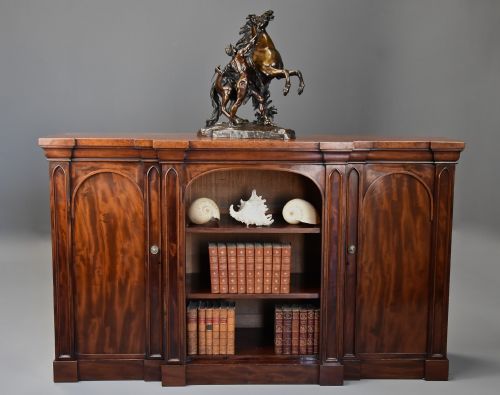
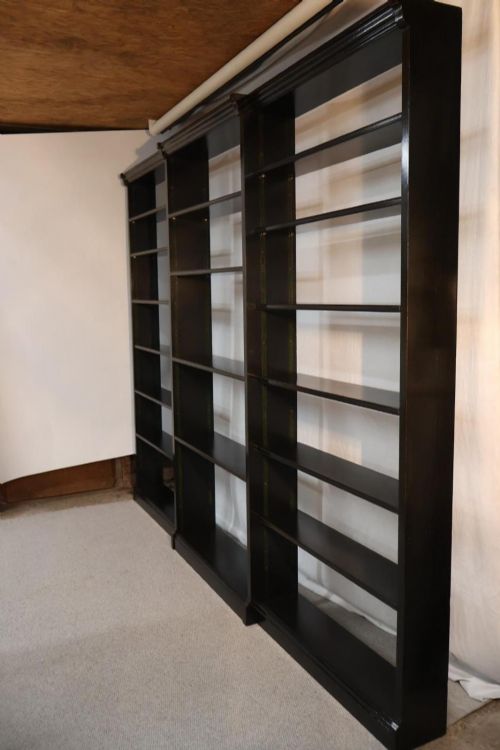

Breakfront Open Shelves
Breakfront open shelves are commanding pieces of furniture designed for libraries and reception rooms, offering accessible storage with a distinct architectural projection.
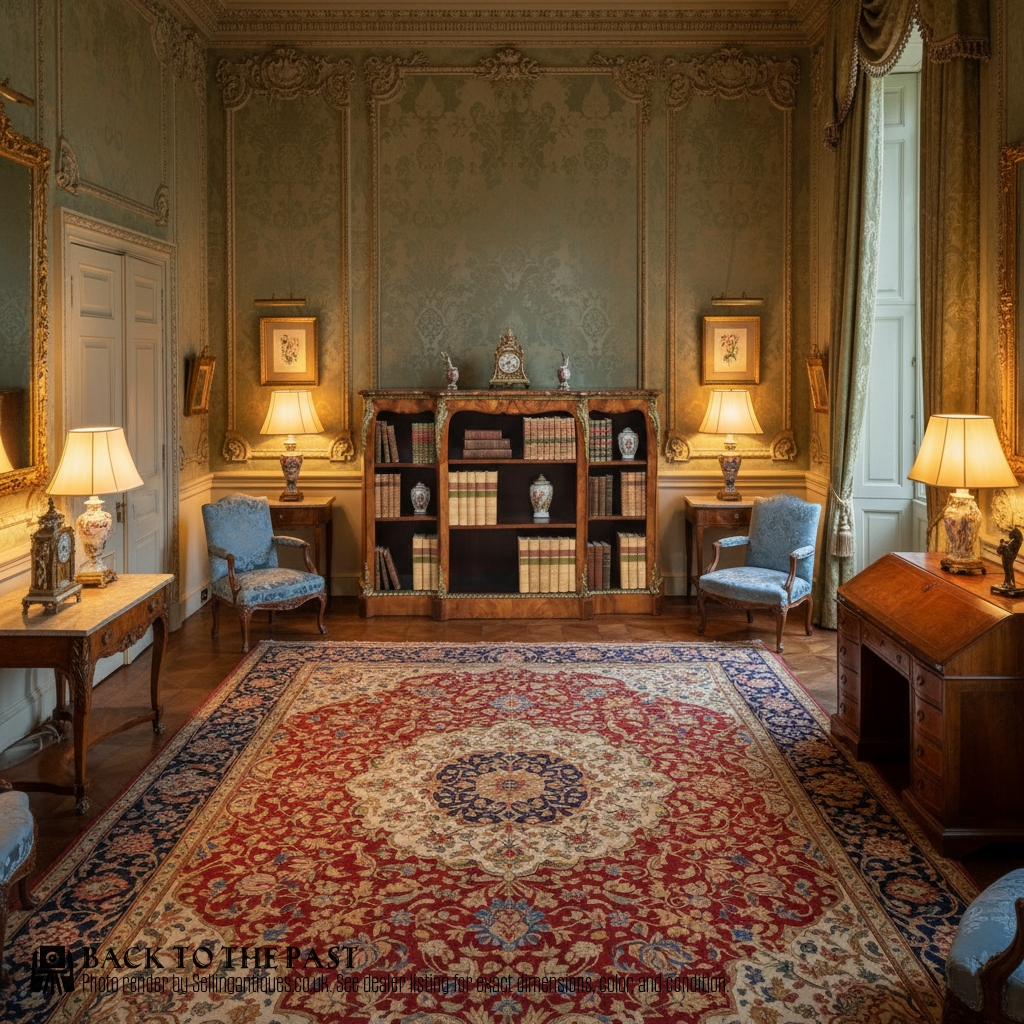
Breakfront Open Shelves
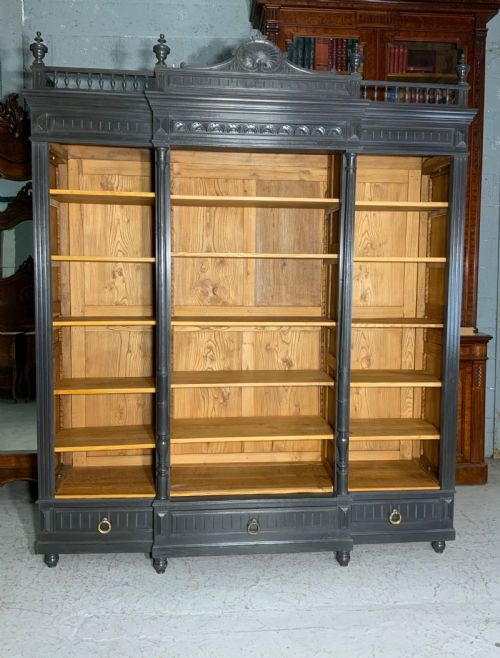
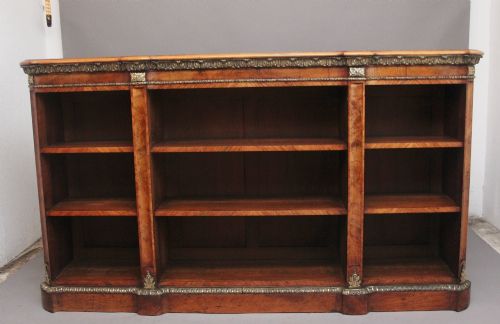
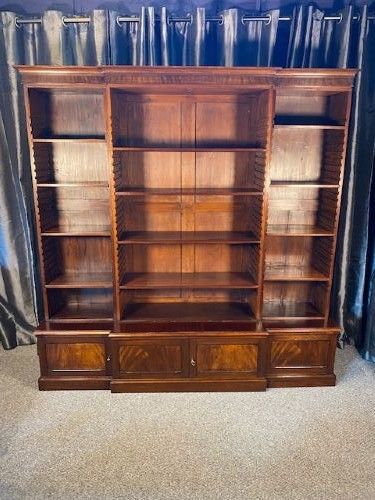
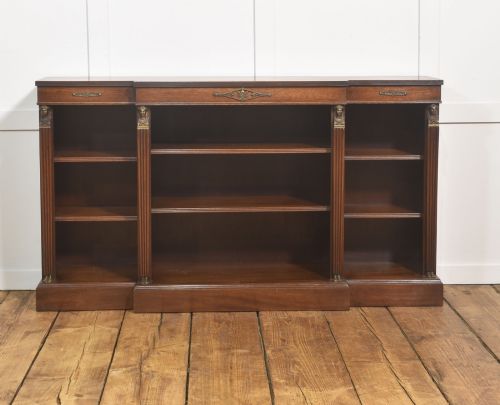
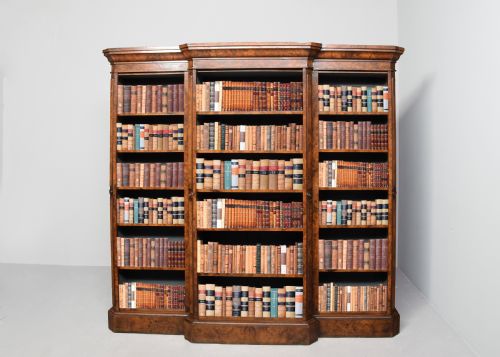
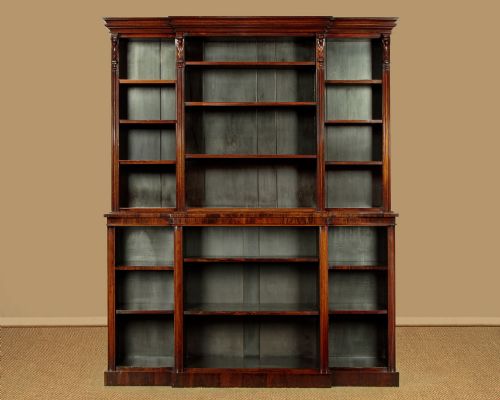
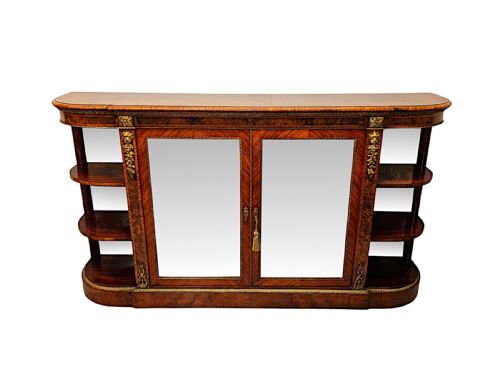
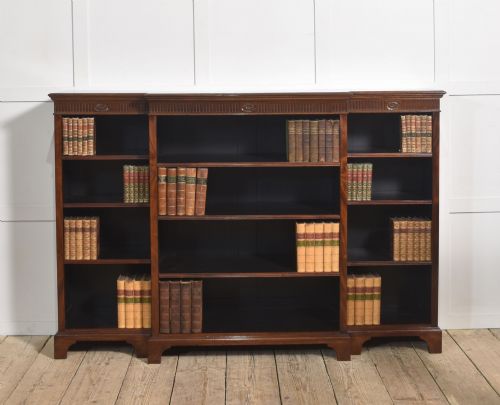
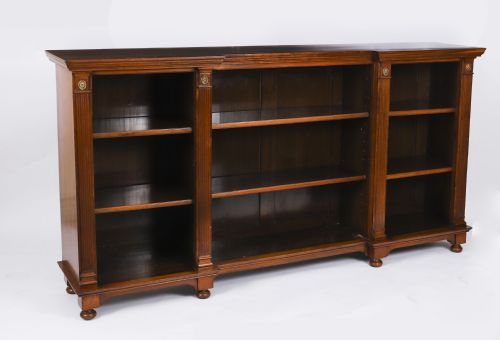
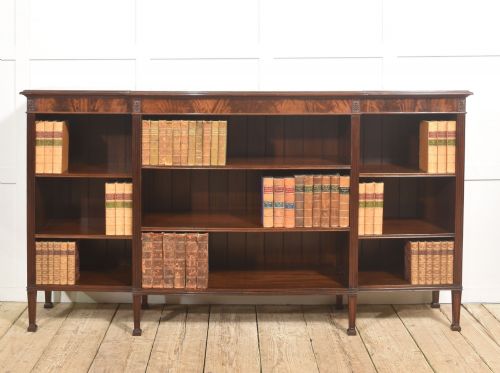
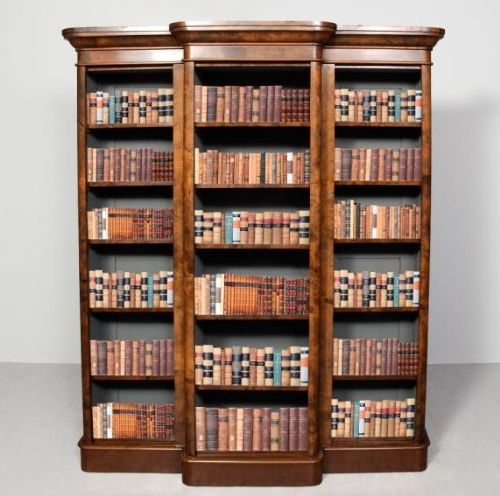
Breakfront open shelves present a tripartite format where the central section projects forward from the flanking wings, creating depth and shadow across the elevation. When you search for breakfront open shelves, you meet library bookcases, bookcases and shelving units, credenzas, and side cabinets built on this forward-stepping plan.
The majority of these pieces originate from the nineteenth century, spanning the Victorian and Regency eras, alongside Edwardian examples and later interpretations. Mahogany, walnut, and rosewood dominate the form, frequently configured with adjustable internal shelves to accommodate varied volumes.
Makers adapted the architectural breakfront outline into domestic scaled furniture, ranging from expansive library bookcases to lower dwarf stands. The open format prioritises immediate visibility of contents over enclosed cabinet doors, functioning primarily as display storage.
How they were made
Cabinet makers constructed the carcass of breakfront open shelves using dense hardwoods such as mahogany, walnut, and rosewood, often applying burr walnut veneers to the prominent surfaces for rich grain figures. Crossbanding in contrasting timbers and fine string inlay define the borders of panels and shelves.
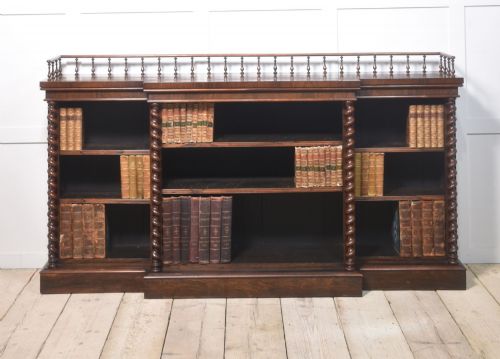
Ormolu mounts, brass galleries, and glazed elements appear on sophisticated iterations, providing metallic contrast against the polished timber. Adjustable shelf mechanisms rely on traditional wooden racks or brass studs set into the interior partition walls.
Listings feature breakfront open shelves spanning the nineteenth and early twentieth centuries, constructed primarily in mahogany, walnut, and rosewood.
What varies in quality
The hierarchy of quality rests on the selection of timber veneers and the precision of the joinery where the projecting central section meets the recessed wings. Burr walnut and flame mahogany exhibit deliberate grain matching across the entire facade, whereas lesser pieces utilise plain timber stocks.
Secondary details such as cast ormolu mounts, inlaid brass work, and the integration of adjustable shelving distinguish standard production from exceptional workshop output. The architectural proportion of the breakfront step dictates the visual balance of the entire piece.
Johnstone and Jeanes·Gillows·Maple and Co·Robert Strahan
The Breakfront Open Shelves Glossary
- Breakfront
- A cabinet design where the central section projects forward from the two side sections, creating a pronounced architectural stepped facade.
- Ormolu
- Gilded bronze ornamentation applied to furniture, frequently cast with foliate or classical motifs and screwed to the timber carcass.
- Crossbanding
- A strip of veneer applied across the grain of the main panel, creating a contrasting border that frames the primary timber.
- Credenza
- A low sideboard or cabinet, sometimes adapted with open shelving sections in nineteenth-century variants.
- Dwarf bookcase
- A low standing open bookcase designed to sit beneath dado height, allowing objects to be displayed on the top surface.
Breakfront Open Shelves: Frequently Asked Questions
How do I adjust the shelves?
Adjustable shelves in these pieces typically rest on wooden support fillets or engage with brass rack strips inset into the interior uprights. Lifting the shelf slightly allows it to clear the retaining pins and reposition to a new height.
Care must be taken not to force older timber runners that have settled over decades of use.
Were these always open?
While many breakfront bookcases originally featured glazed doors, a significant proportion were built as open standing bookshelves for immediate access to working libraries. Conversions from glazed doors to open shelves also occurred in later periods to suit changing domestic fashions.
Examination of the interior rebate edges reveals whether doors were once hung.
Where should I place this?
Breakfront open shelves require a substantial wall space that allows the projecting central section to sit without crowding architectural doorways or fireplaces. Placing them out of direct sunlight preserves the polished finish of the mahogany and walnut veneers.
Ensure the floor is level so the large carcass maintains its structural squareness.
What is a dwarf bookcase?
A dwarf bookcase is a low-standing version of the full-height library bookcase, designed to keep books at a comfortable reach while leaving the wall space above unobstructed. These frequently incorporate the breakfront configuration on a smaller scale.
They function well beneath windows or picture rails in reception rooms.