

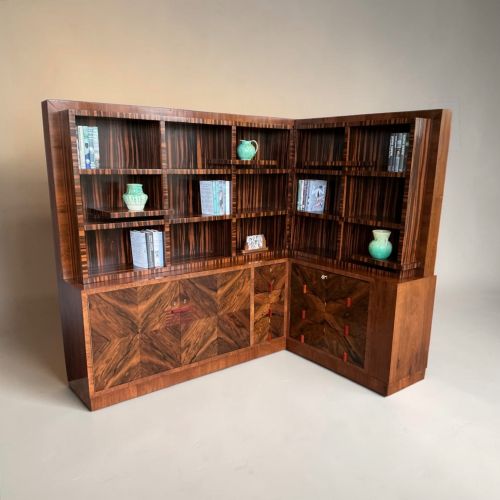
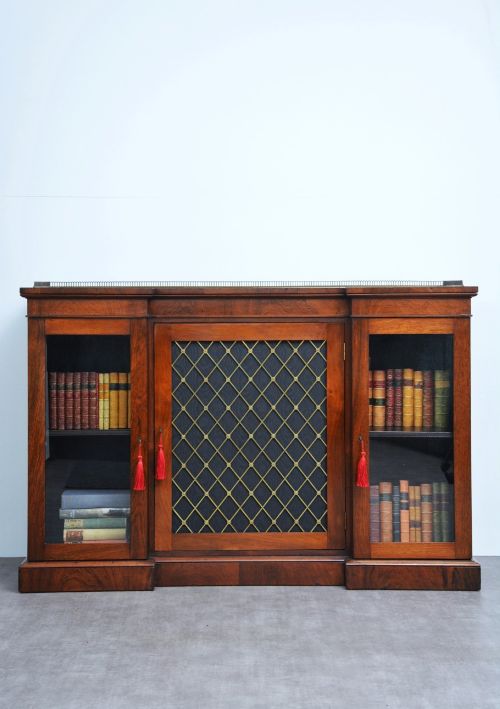
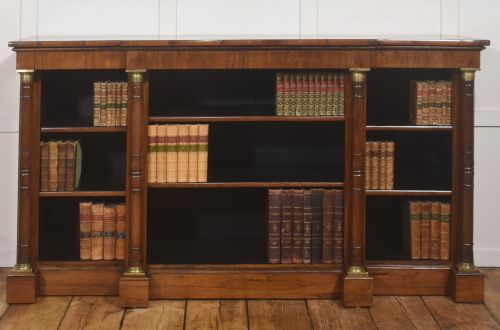
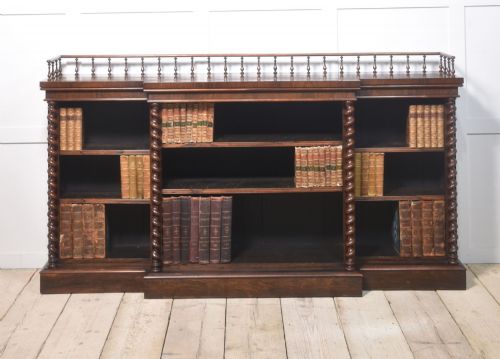


Rosewood Library Display
Rosewood library display pieces bring rich timber figures and practical shelving together for a serious interior.
Rosewood Library Display
A rosewood library display selection brings together refined shelving and cabinetry designed to hold books and display treasured objects. You will encounter open bookcases, glazed cabinets, side cabinets, whatnots, and library tables across these listings.
The pieces span the Georgian, Regency, and Victorian eras, alongside later revival iterations. Formats range from large breakfront open bookcases to compact pairs of whatnots and low bookcases suited to domestic spaces.
Makers such as Gillows and Howard & Sons appear among the pieces, marking high-end cabinet work from the nineteenth century. These forms show the persistent demand for dark, figured timbers in private libraries and studies.
Materials and construction
Construction relies primarily on dense rosewood, often enhanced with brass inlays, brass mounts, and glazed doors. Secondary elements include fabric and leather linings within specific cabinet and table designs.
Cabinetmakers utilised solid rosewood alongside finely figured veneers applied to robust carcases. Brass details range from delicate stringing and inlaid motifs to structural mounts that define Regency and George IV aesthetics.
Rosewood Library Display Retail Price Guide 2026
Typical asking prices for rosewood library display among the pieces listed under this phrase on Sellingantiques today, from the lower quarter to the upper quarter. They describe what is for sale here now, not the wider market.
The listings span the Georgian, Regency, and Victorian periods, alongside later twentieth-century revivals.
Judging quality in rosewood furniture
Quality rests in the selection of the timber figures and the precision of the cabinetwork. Pieces bearing attribution to established workshops display superior proportions and more intricate brass detailing.
The distinction between standard nineteenth-century production and exceptional cabinet making lies in the crispness of architectural mouldings and the integration of glazed doors or open shelving.
Gillows·Howard & Sons
The Rosewood Library Display Glossary
- Breakfront
- A cabinet or bookcase whose central section projects forward from the flanking wings. This architectural arrangement creates depth and visual rhythm in large pieces.
- Whatnot
- A tiered set of open shelves supported by slender pillars, designed for displaying ornaments or small books. They became popular in the Regency and Victorian periods.
- Gothic Revival
- A nineteenth-century style drawing on medieval architectural motifs such as pointed arches and trefoils. It brought ecclesiastical solemnity to domestic furniture.
- Regency
- A style period spanning the early nineteenth century defined by classical restraint and archaeological influence. Furniture from this era frequently incorporates brass inlay and elegant mounts.
Rosewood Library Display: Frequently Asked Questions
What defines a rosewood library display piece?
These items encompass bookcases, side cabinets, and whatnots constructed from rosewood for the storage and exhibition of books and objects. They range from open nineteenth-century shelves to glazed breakfront bookcases.
Most examples date from the Regency, George IV, and Victorian eras, reflecting formal library and study interiors.
How do I care for rosewood furniture?
Keep rosewood pieces away from direct sunlight and strong heat sources to prevent the timber and veneers from drying out. Regular dusting with a soft, dry cloth preserves the polished surface.
Avoid commercial silicone sprays and excess moisture, which can damage traditional finishes and brass mounts over time.
How can I tell a Regency bookcase from a Victorian one?
Regency pieces often feature crisp architectural lines, brass stringing, and classical proportions associated with George IV design. They tend to emphasise symmetry and refined mounts.
Victorian pieces frequently display heavier proportions or adopt revival styles such as Gothic Revival, showing shifts in nineteenth-century taste.
Were these pieces strictly used in libraries?
While designed primarily for scholarly rooms and grand libraries, many forms suited drawing rooms and studies. Whatnots and low bookcases functioned well in multiple domestic settings for displaying ornaments.
Library tables also served multipurpose roles for reading, writing, and displaying collections in prominent rooms.