
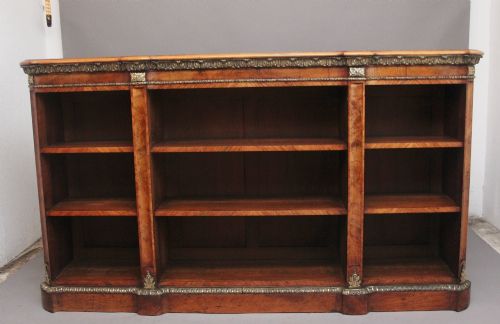
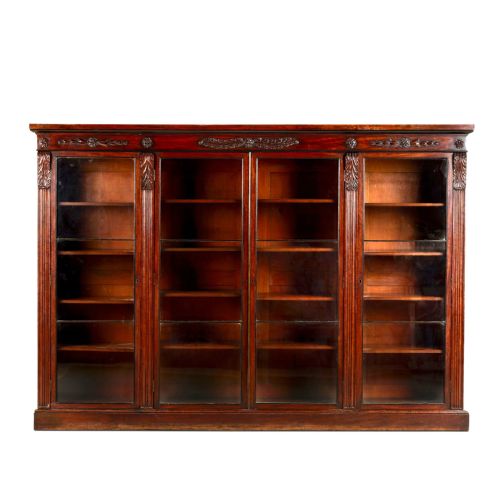
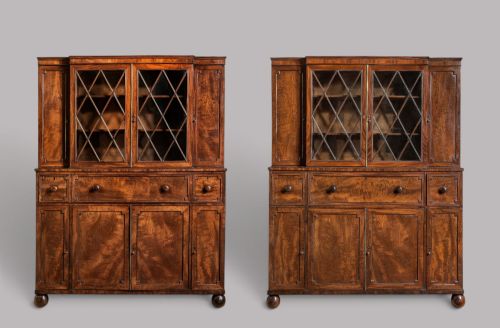
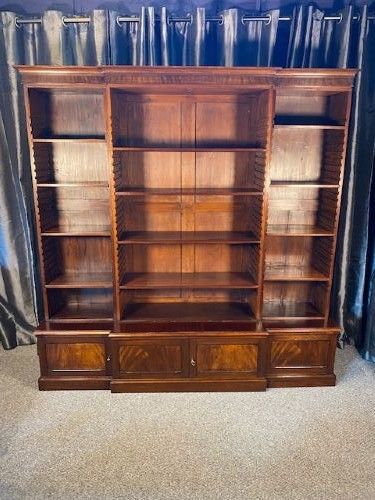
Breakfront Library Bookcase
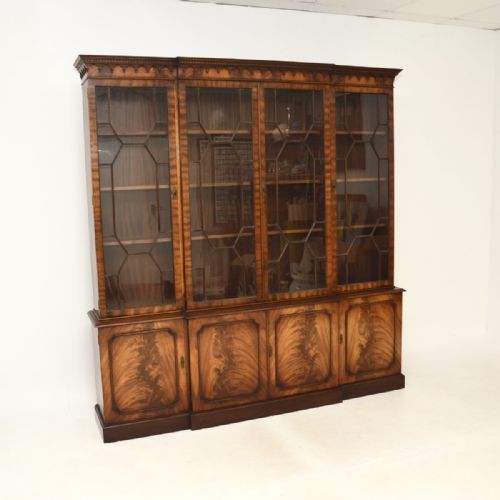
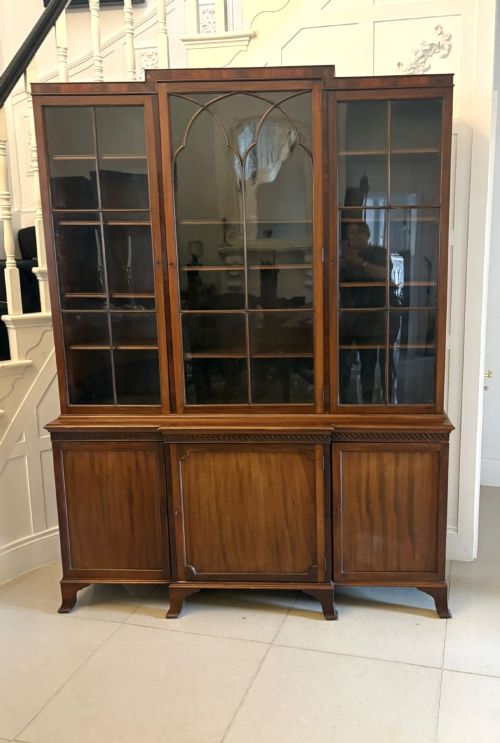
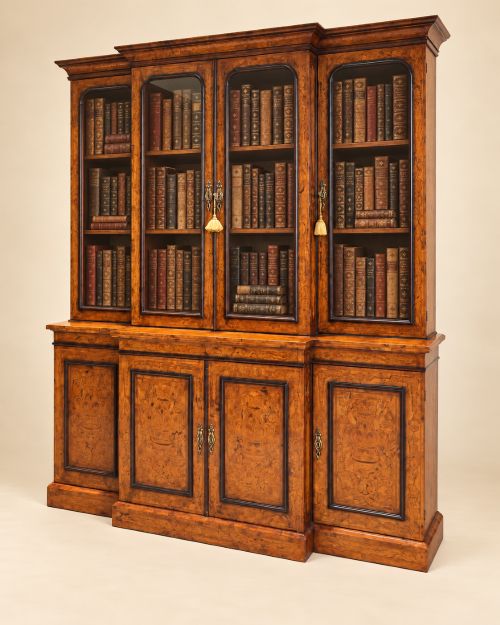
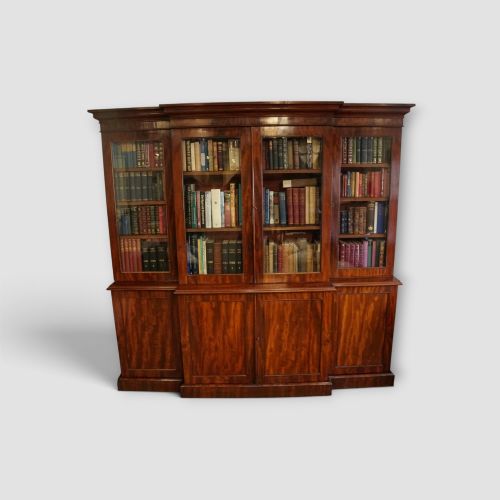
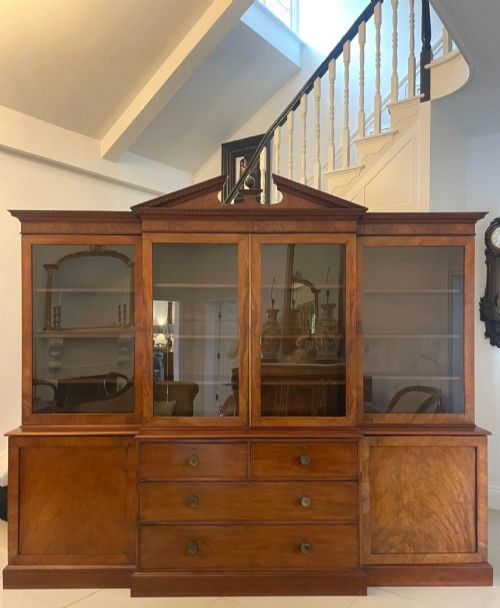
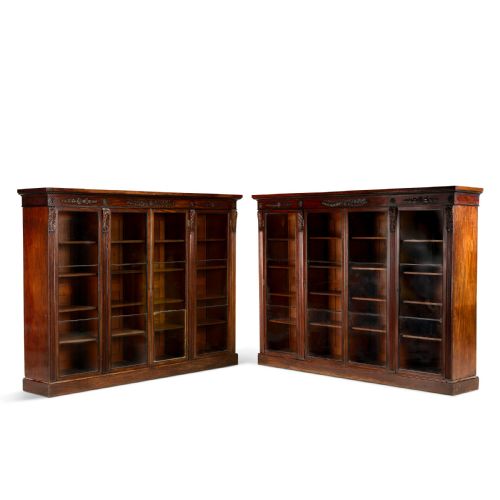
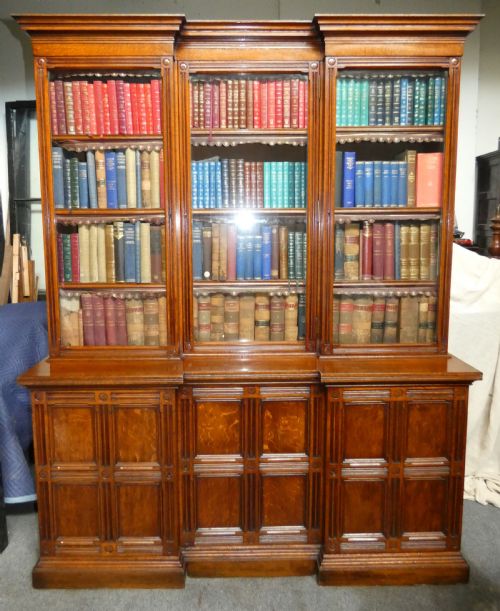
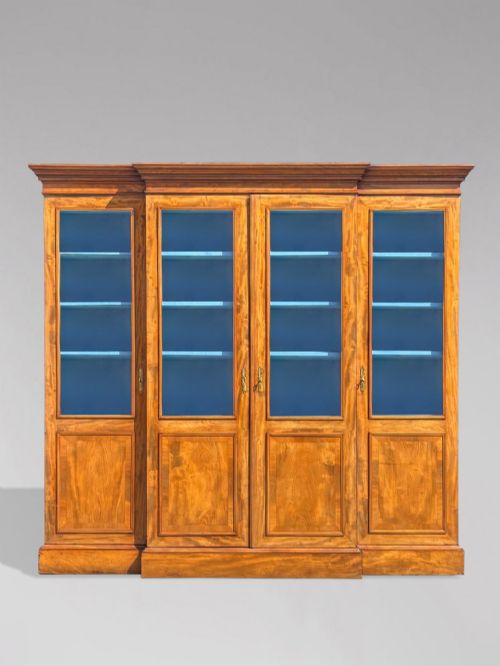
A breakfront library bookcase commands a room with its projecting central section, offering serious scale and grand architectural presence for a serious collection.
What They Are
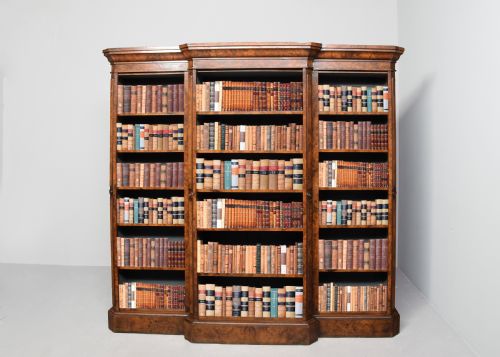
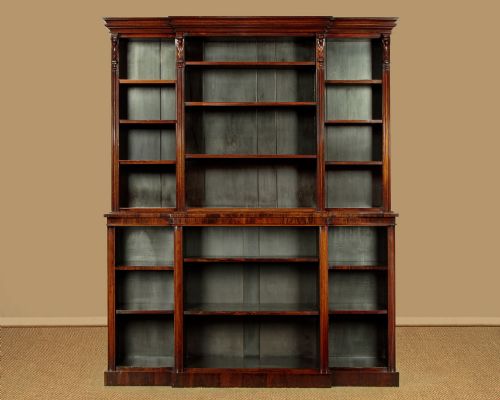
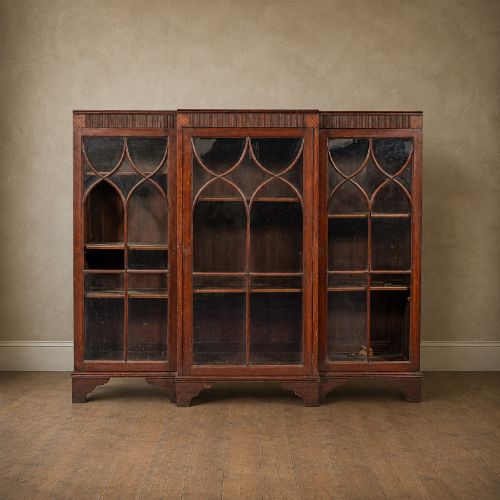
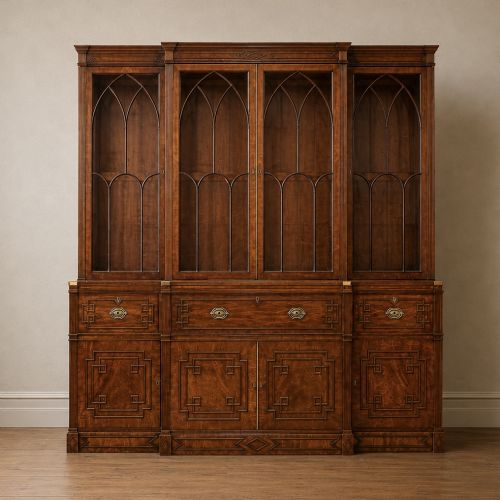
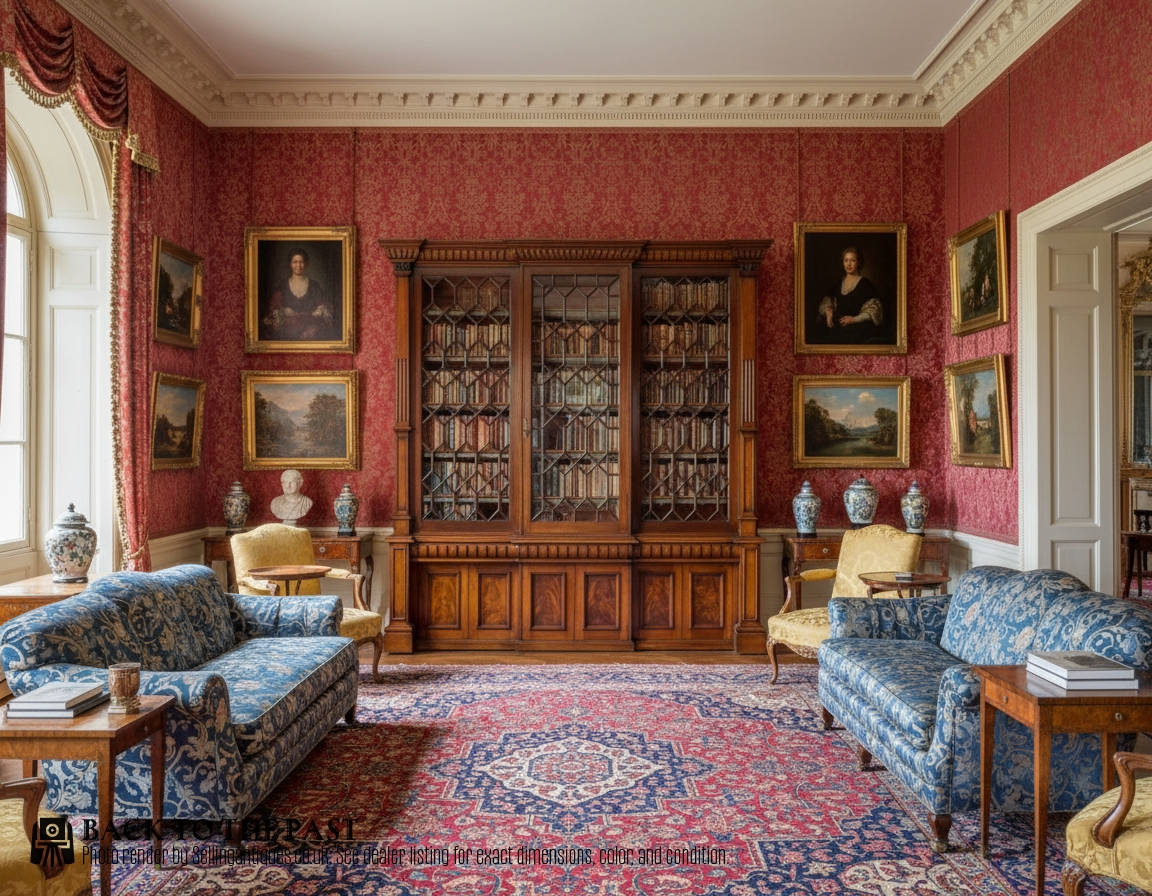
A breakfront library bookcase is a substantial piece of furniture designed to house extensive book collections behind glazed or open shelving. The defining architectural feature is the forward-projecting centre section, which breaks the linear plane of the facade.
Most examples encountered on this page date from the nineteenth century or the Edwardian period, though earlier Georgian styles and later revivals appear regularly. These pieces range from grand multi-door mahogany cabinets to warmer walnut variations.
Originating as practical storage for large country house libraries, these bookcases combine display space with lower cabinet storage. They suit high ceilings and spacious rooms where their linear presence balances architectural proportions.
How They Were Made
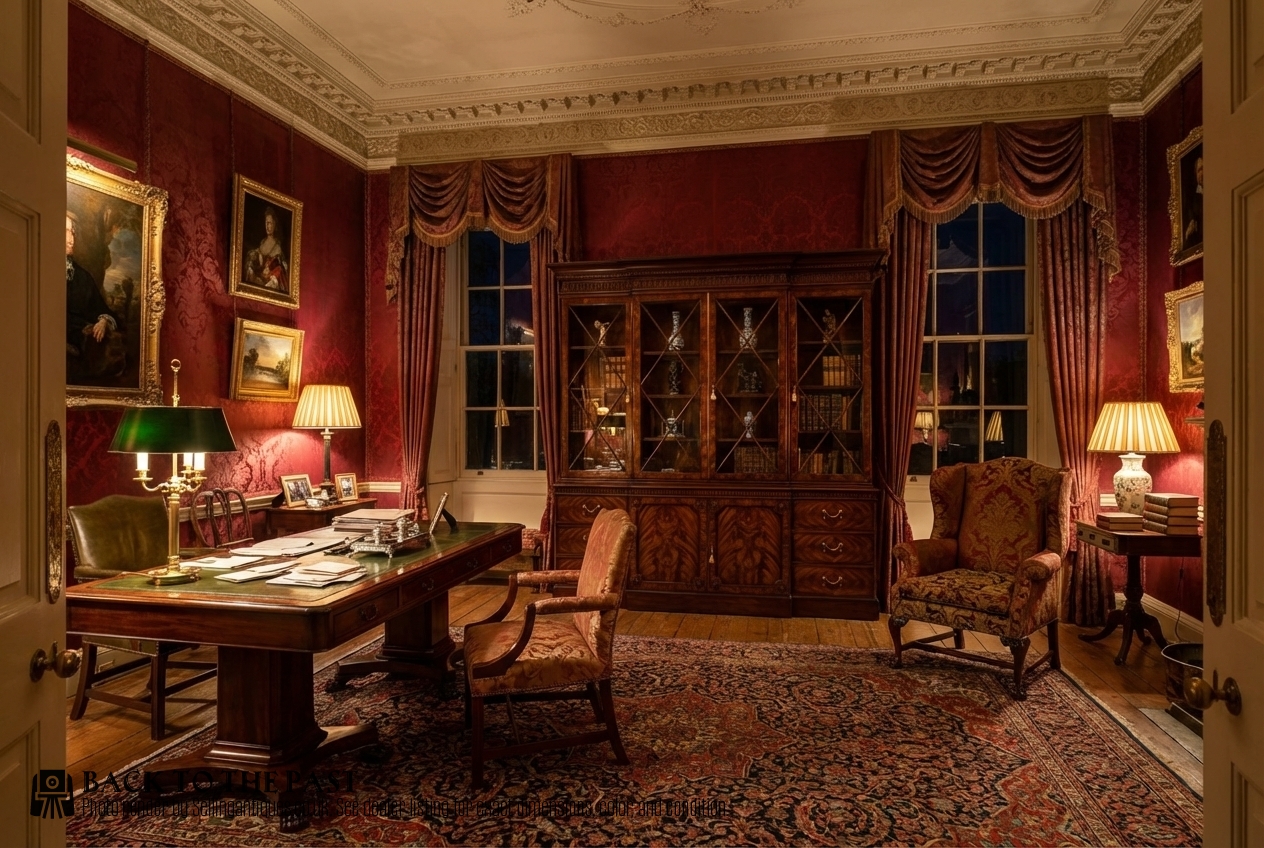
Makers built the foundational carcase from sturdy timbers, frequently applying flame mahogany veneer, burr walnut, or figured walnut to the exterior surfaces. Cabinetmakers selected these veneers for their rich grain patterns, often enhancing them with boxwood inlay.
Glazing bars divided the glass doors into geometric panes, while brass hardware secured the cabinet doors. Ormolu mounts and carved details occasionally decorated the architectural cornices and pilasters of the grander examples.
Retail Price Guide 2026
Typical UK retail prices for breakfront library bookcase, calculated from the Sellingantiques database of over a million retail prices indexed since 2003. This retail price guide relies exclusively on Sellingantiques data; no external sources or auction records are used, so the figures do not describe the wider market.
Some nineteenth-century makers included secret compartments hidden behind the plinth drawers for storing private library catalogues.
What Varies in Quality
The choice of timber underpins the overall impact, distinguishing standard production from exceptional cabinet work. Rich flame mahogany veneer and figured burr walnut display careful grain matching across the projecting central doors.
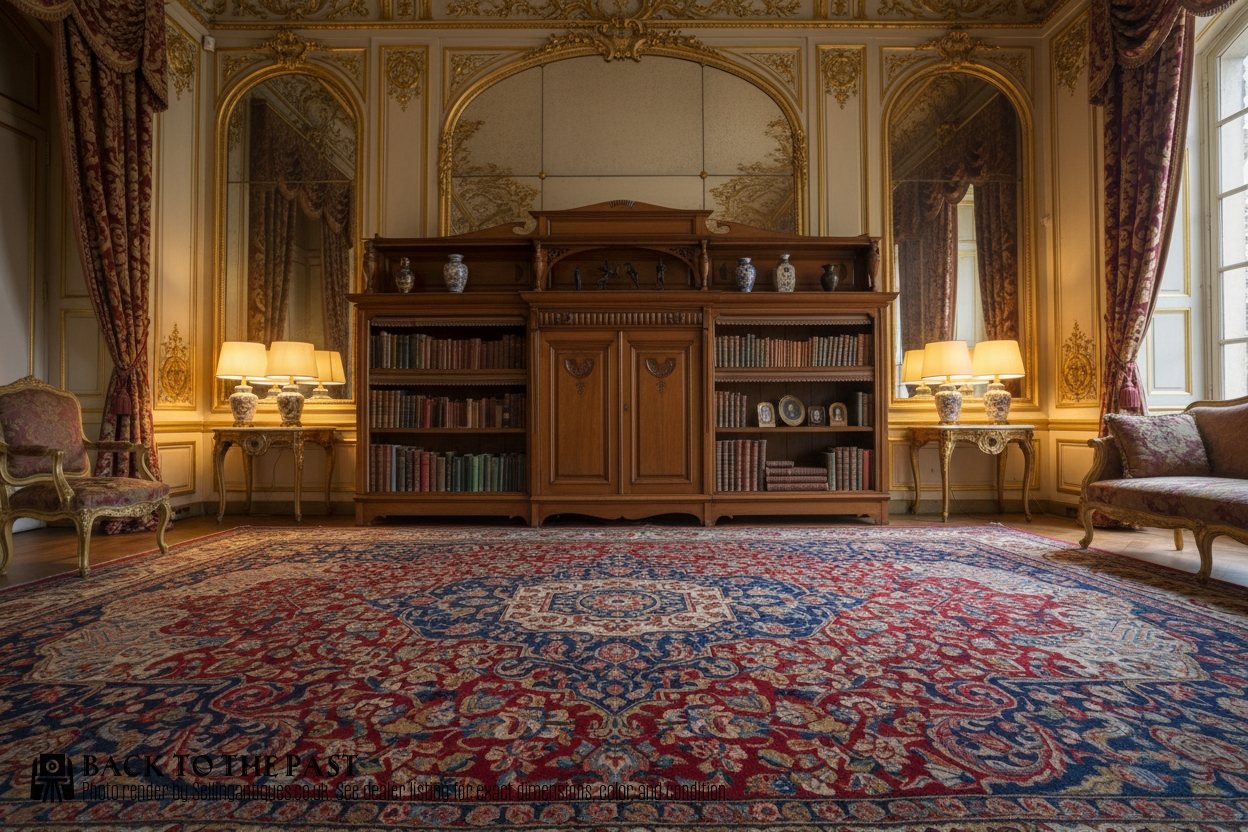
Architectural detailing dictates the refinement of the piece, from simple moulded cornices to carved sphinx supports or elaborate astragal glazing. The integration of well-proportioned breakfront sections reflects the skill of the original workshop.
Gillows·Holland and Sons
The Breakfront Library Bookcase Glossary
- Breakfront
- A cabinet design where the central section projects forward from the flanking wings. This creates a distinct architectural rhythm across the front elevation.
- Astragal glazed
- Glass doors divided into smaller panes by narrow wooden moulding bars. These bars form decorative geometric patterns across the bookcase front.
- Flame mahogany veneer
- A thin slice of timber cut from the fork of the mahogany tree to create a flickering flame pattern. Cabinetmakers laid this decorative grain across the primary doors.
- Burr walnut
- Timber taken from a walnut tree growth wart, producing a dense, swirling grain pattern. It provides a highly decorative surface on luxury library furniture.
- Ormolu
- Gilt bronze mounts applied as decorative ornaments to furniture surfaces. They appear on select refined library pieces from the nineteenth century.
Frequently Asked Questions
How do I measure for a breakfront bookcase?
Measure your ceiling height and wall space carefully, accounting for the projecting central section and the clearance needed to open wide cabinet doors.
allow extra clearance around the cornice and plinth to ensure the piece sits comfortably within the room proportions.
Are the shelves adjustable?
Many nineteenth-century and Victorian examples feature adjustable wooden shelving supported by traditional rackwork strips.
this allows you to configure shelf heights for various book sizes while maintaining the interior structural integrity.
How do I identify a Regency revival piece?
Regency revival bookcases replicate the classical proportions and ornamental motifs of the early nineteenth century, such as brass inlay or carved supports.
these pieces date from later periods like the Edwardian era but draw directly from earlier Regency design vocabulary.