


Brass Wooden Candle Holders
Brass wooden candle holders combine warm timber and cast metal, offering steady utility and traditional craft for any mantel.
Brass Wooden Candle Holders
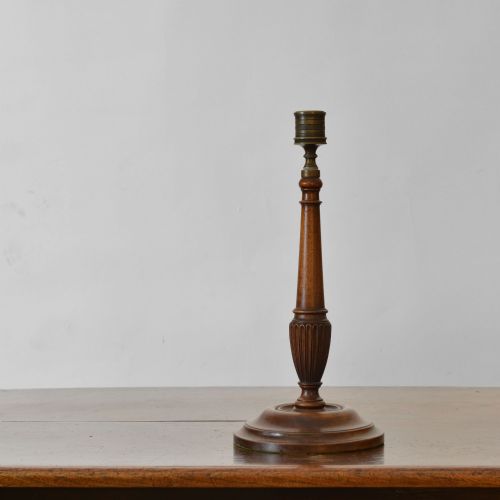
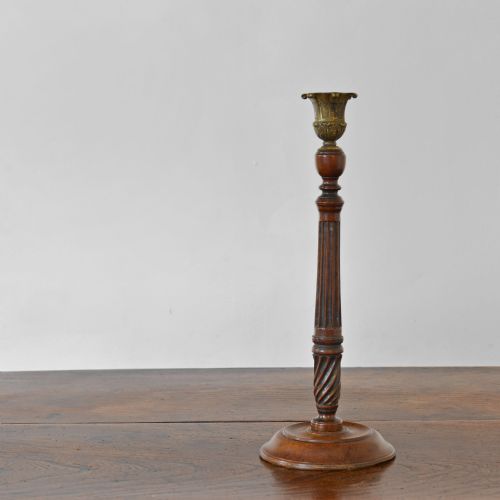
Brass wooden candle holders unite timber shafts with cast metal sockets and bases, appearing across multiple periods from the Georgian era through to the early twentieth century. Buyers seeking these items encounter forms ranging from simple turned columns to intricate barley twist designs and chamber sticks.
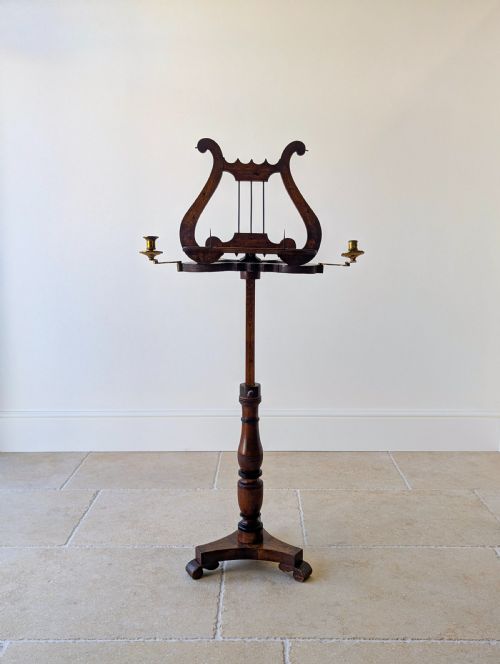
The materials span dense hardwoods such as mahogany, oak, walnut and teak, paired with polished brass components. Most examples function as candlesticks or sconces, while occasional variants incorporate adjustable stands or prickets.
How they were made
Turned timber sections form the main shafts, shaped on a lathe to create profiles like barley twists, bobbin turnings or plain tapered columns. Joinery connects these wooden bodies securely to turned brass sconces and weighted bases.
Metals are cast and polished, then fitted to the wood using threaded screws, pins or adhesives. Secondary materials like mirrored glass or treen occasionally appear to augment the primary brass and timber construction.
Listings span Georgian, Victorian, Edwardian and early twentieth-century periods, utilising mahogany, oak, walnut, teak and brass.
What varies in quality
Quality rests in the precision of the timber turning and the weight of the brass components. Denser hardwoods with crisp, deep twists command attention, alongside well-balanced bases that prevent tipping.
The integration between metal and wood reveals the maker's hand, where tight joints and clean finishing distinguish finer output from simpler workshop pieces.
The Brass Wooden Candle Holders Glossary
- Barley twist
- A spiral carving resembling a twisted barley sugar stick, popular in oak and walnut furniture and candlesticks.
- Bobbin turning
- A series of rounded wooden spheres or discs carved along the length of a shaft, resembling a string of beads.
- Pricket
- A sharp metal spike set in the centre of a drip pan to secure thick altar candles or large pillars.
- Chamber stick
- A low portable candlestick fitted with a handle and a wide drip tray, designed for carrying through dark rooms.
- Sconce
- A wall-mounted bracket holding one or more lights, often backed by wood, metal or mirrored glass.
Brass Wooden Candle Holders: Frequently Asked Questions
How do I date an oak candlestick?
Dating relies on timber selection, turning style and the construction of the brass fittings. Earlier pieces often display hand-turned irregularities, while later twentieth-century items show more uniform mechanical tooling.
Matching the period characteristics against known styles like Jacobean Revival or Arts and Crafts helps narrow the decade of manufacture.
Are these candlesticks safe for daily use?
Most solid timber and brass candlesticks safely hold standard taper candles if placed on level surfaces away from draughts. Checking that the brass nozzle is secure prevents movement of the burning candle.
Using dripless candles or metal inserts protects the wooden socket from direct heat and wax spillage.
Why do some have mirrored backs?
Mirrored sconces were designed to reflect and multiply the candlelight in dimly lit rooms before electric lighting. The combination of glass, brass and dark wood maximised illumination from a single flame.
Such pieces typically hung on walls in hallways or living spaces to brighten dark corners.
How should I clean the brass and wood?
Timber benefits from occasional feeding with a quality wax to maintain the grain and prevent drying out. Brass parts need gentle polishing with a soft cloth while avoiding contact with the surrounding wood.
Harsh chemical cleaners will damage both the polished metal surface and the historic timber patina.