

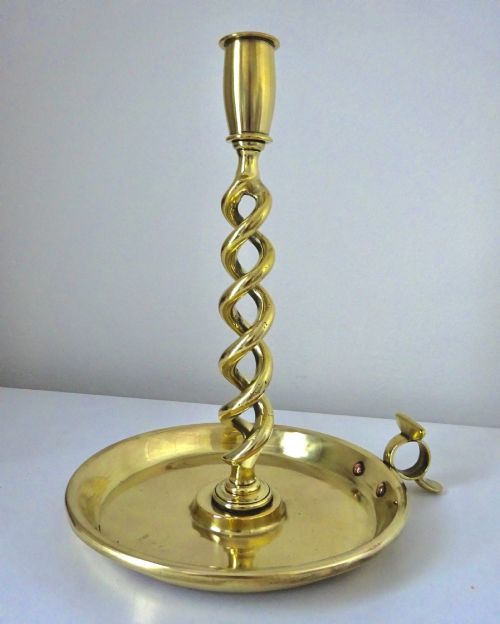


Spiral Candle Holders
These spiral candle holders twist light upward through brass, iron, and timber, bringing movement and rhythm to any table.
Spiral Candle Holders
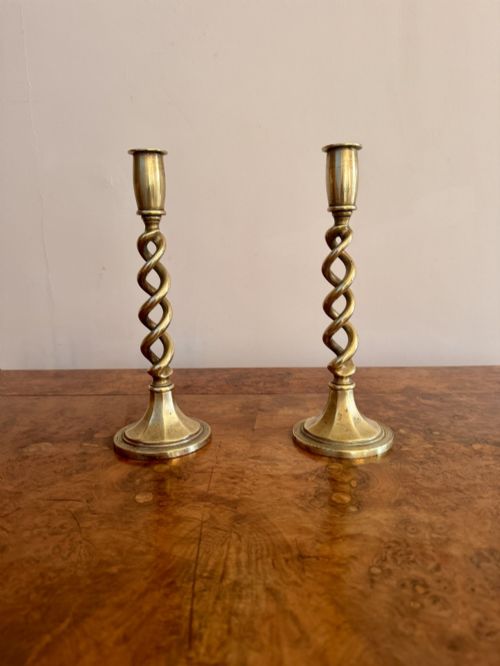
When you search for spiral candle holders, you enter a field of antique candlesticks where the shafts are shaped into twists, barley sugars, and open spirals. These pieces span from the Georgian and Victorian eras into the Edwardian period and the early twentieth century.
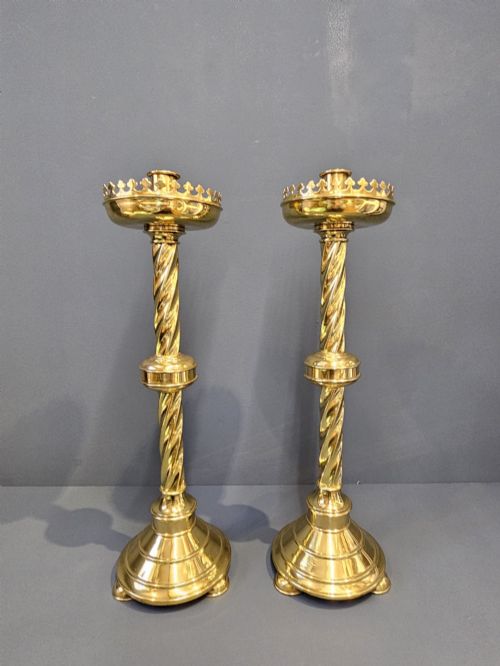
You are most likely to meet brass examples on this page, alongside turned timbers like oak, fruitwood, and mahogany. Iron spiral designs and copper-accented pieces also appear, ranging from domestic table lights to taller ecclesiastical and church candlesticks.
Makers shaped these forms for homes, churches, and travel, producing everything from simple turned wood desk sticks to large altar lights. The search brings together formal Georgian mahogany pieces, rustic folk-art sticks, and Arts and Crafts brass designs.
How they were made
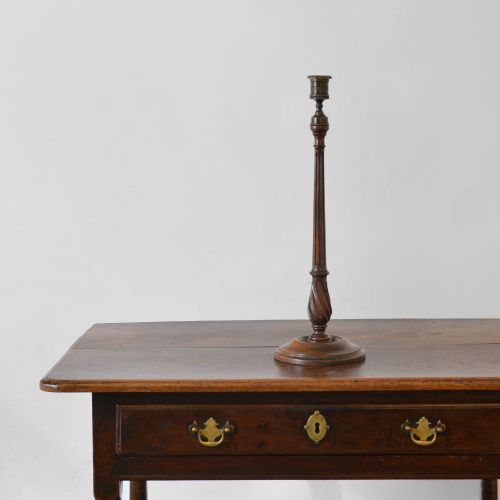
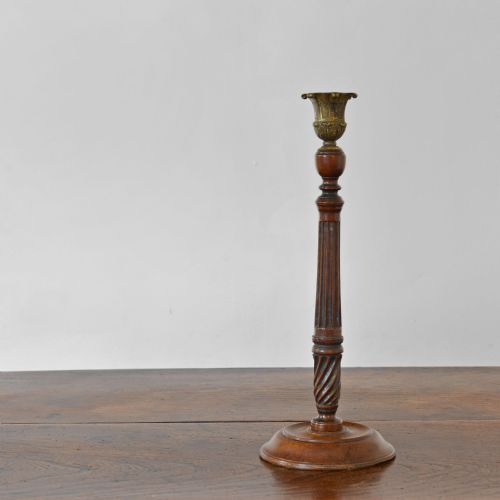
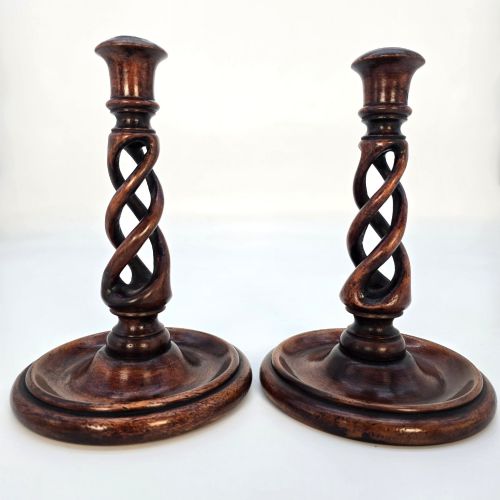
Makers shaped the wooden examples using lathes to cut precise twists and barley sugar columns into oak, fruitwood, walnut, and mahogany. Selected timbers show rich grain, while turned details create the rhythmic movement characteristic of the form.
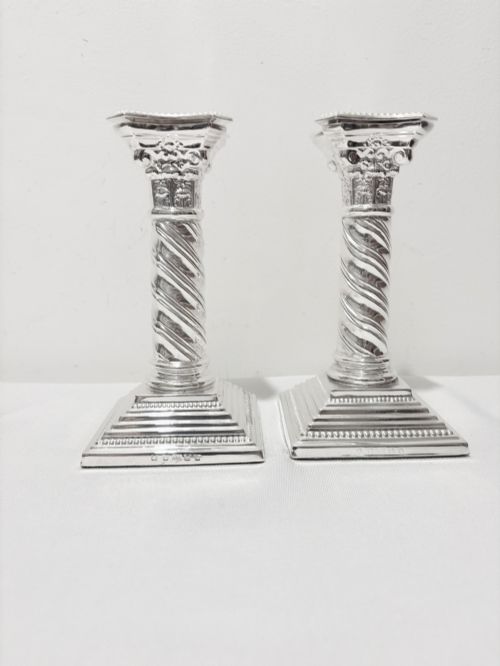
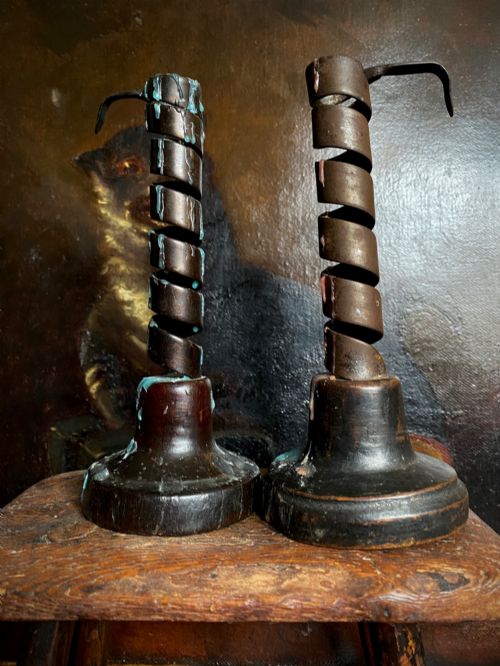
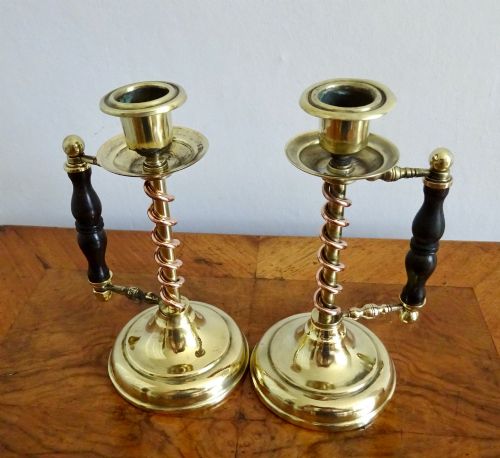
Metal versions rely on casting, forging, and soldering brass, copper, iron, and old Sheffield plate. Iron pieces demonstrate hand-forged spiral stems, while brass and copper examples often combine turned columns with fitted bases or drip trays.
Spiral Candle Holders Retail Price Guide 2026
Typical asking prices for spiral candle holders among the pieces listed under this phrase on Sellingantiques today, from the lower quarter to the upper quarter. They describe what is for sale here now, not the wider market.
Materials recorded on this site include brass, copper, wrought iron, oak, mahogany, walnut, fruitwood, and crystal glass.
What varies in quality
The distinction between ordinary production and finer work rests on the crispness of the twist and the proportionality of the base. Hand-forged iron and hand-turned timber display individual tool marks that separate them from later, uniform factory output.
Materials dictate presence, with heavy cast brass, solid oak, and substantial mahogany holding more authority than lighter gauge metals or thin veneers. Matched pairs with original fitted bases and undamaged drip trays command greater interest than single survivors.
T Thomason and Co
The Spiral Candle Holders Glossary
- Barley twist
- A carved or forged column that spirals upward like a twisted rope or a stick of barley sugar. This decorative motif appears frequently in seventeenth, nineteenth, and early twentieth-century woodwork and metalwork.
- Rat de cave
- A low candlestick, often featuring a spiral mechanism or a tray handle, originally designed for descending into dark cellars. The term translates from French as cellar rat.
- Ecclesiastical
- Pertaining to the church, describing larger brass or metal candlesticks made for altars and places of worship. These pieces often possess substantial height and heavy weighted bases.
- Old Sheffield plated
- A method of fusing a thin sheet of silver to a thicker copper core, used in eighteenth and nineteenth-century metalware. This technique precedes modern electroplating.
- Folk-art
- Objects created by self-taught or non-professional makers, usually from accessible materials like turned wood or forged iron. These pieces emphasise utilitarian function combined with individual decorative expression.
Spiral Candle Holders: Frequently Asked Questions
What is a spiral candle holder?
A spiral candle holder is a candlestick featuring a twisted shaft, column, or stem carved from wood or forged from metal. The design creates visual movement, catching candlelight along its ridges and grooves.
These pieces range from small domestic table sticks to tall church candlesticks. They appear in materials including brass, iron, oak, mahogany, and fruitwood across several centuries.
How do I date a wooden twist candlestick?
Dating relies on timber choice, turning technique, and overall form. Georgian and 18th-century pieces often employ fruitwood or mahogany with hand-cut turns, while Victorian and Edwardian examples frequently use oak.
Examine the base and underside for tool marks, fixings, and wear patterns. Oak and brass combinations typically point toward the later Victorian or Arts and Crafts periods around nineteen hundred.
Were iron spiral candlesticks used outdoors?
Iron spiral candlesticks were built for domestic interior use in workshops, kitchens, or cellars where sturdy, utilitarian lighting was required. Their weighted iron construction provided stability rather than weather resistance.
Many iron examples incorporate hooks, loops, or fitted trays for carrying or hanging. This made them practical for moving through dark hallways and domestic spaces.
How should I clean a brass twist candlestick?
Brass candlesticks benefit from gentle dusting with a soft cloth to preserve their aged surface and character. Aggressive polishing removes the historical patina accumulated over decades.
Avoid harsh chemical cleaners that strip the metal. Natural waxes can protect iron and wood components without altering their finish.