




Brass Wire Door Sideboard
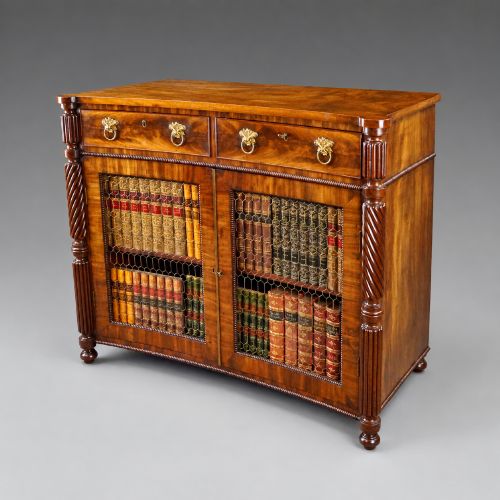
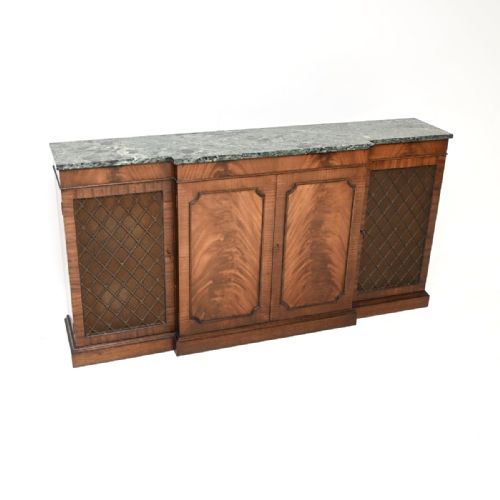
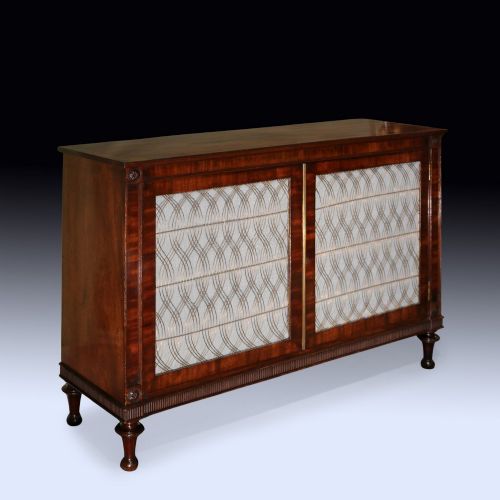
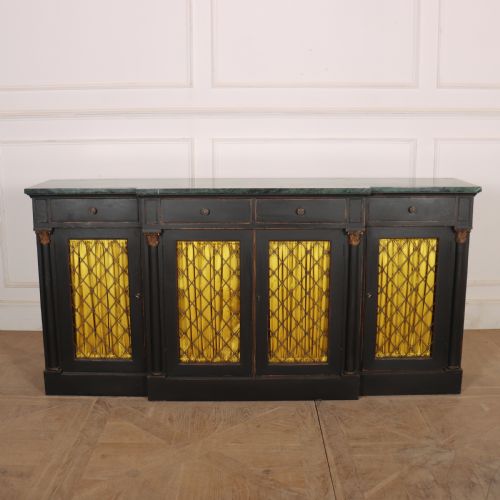
A brass wire door sideboard offers refined storage through fine timber and woven metal, bringing period elegance directly to a dining room or hall.
Brass Wire Door Sideboard
Buyers seeking a brass wire door sideboard encounter substantial wooden furniture designed for storage, frequently described in listings as side cabinets, cabinets, chiffoniers, or sideboards. These pieces predominantly date from the Regency period, the nineteenth century, and the eighteenth century, with additional examples from William IV, George III, and eighteen ninety.
The form is closely tied to domestic display and storage, incorporating specific variations such as concave side cabinets, marble top grill front sideboards, two door cabinets, breakfront dresser bases, and rosewood chiffoniers. Mahogany and rosewood form the structural backbone of these configurations, providing deep grain and sturdy frames.
Materials and construction methods
Cabinet makers utilised dense hardwoods including mahogany and rosewood to construct the primary bodies, occasionally pairing the timber with marble tops, glass, and mirror elements. These materials provided the structural weight and polished surfaces essential for formal domestic furniture.
Metalworking and textile integration define the characteristic openings, utilising brass wire, brass grilles, and brass inlay alongside fabric linings like silk. Artisans combined these decorative grilles with wooden frames to create semi-transparent cabinet doors.
Materials recorded across the inventory include mahogany, rosewood, brass, marble, glass, mirror, and silk.
Judging quality and execution
Quality rests in the precision of the timber selection and the integration of the brass wirework into the door frames. Finer examples display harmonious grain alignment across large surfaces like breakfronts and concave sides, showing deliberate planning by the maker.
The refinement of secondary materials such as marble tops, silk linings, and inlaid brass details separates standard production from superior craftsmanship. Careful proportioning in distinctive forms like chiffoniers and two door cabinets dictates the overall success of the piece.
The Brass Wire Door Sideboard Glossary
- Chiffonier
- A low cabinet or sideboard, typically featuring shelves or enclosed storage beneath. These pieces became particularly popular during the Regency period.
- Breakfront
- A cabinet or sideboard whose central section projects forward from the flanking outer sections. This architectural arrangement creates depth and visual interest in formal rooms.
- Grille
- A lattice or openwork barrier made of metal wire set into cabinet doors. It allows partial visibility of the interior while securing the contents.
- Concave
- Curved inwards like the interior of a circle, describing side cabinets that follow a curved floor plan. This uncommon shaping softens the linear geometry of a room.
Brass Wire Door Sideboard: Frequently Asked Questions
What is a brass wire door sideboard?
A brass wire door sideboard is a timber storage piece featuring cabinet doors fitted with woven metal grilles instead of solid wood. These items frequently date from the Regency and nineteenth-century periods.
They serve as decorative storage units in dining rooms and living spaces, combining timber construction with semi-transparent metalwork for displaying contents.
How do I identify a Regency period piece?
Regency items often feature specific stylistic markers such as brass inlay, rosewood or mahogany timbers, and classical proportions. Examining the joinery and material combinations helps confirm the era.
These pieces typically date from the early nineteenth century and reflect the neoclassical design influences of that time.
Where were these cabinets used?
These cabinets were traditionally placed in dining rooms, parlours, and grand hallways as functional storage for silver, linen, or glassware. Their decorative fronts suited formal entertaining areas.
Today, they function similarly in domestic interiors, providing surface space and enclosed storage while displaying books or collections behind the wire grilles.
What woods are commonly found?
Mahogany and rosewood dominate the construction of these cabinets, offering rich dark tones and strong natural grain patterns. Makers selected these durable hardwoods for high-status furniture.
Secondary materials like marble, glass, and mirror glass frequently accompany the primary timber framework to enhance the visual impact.