
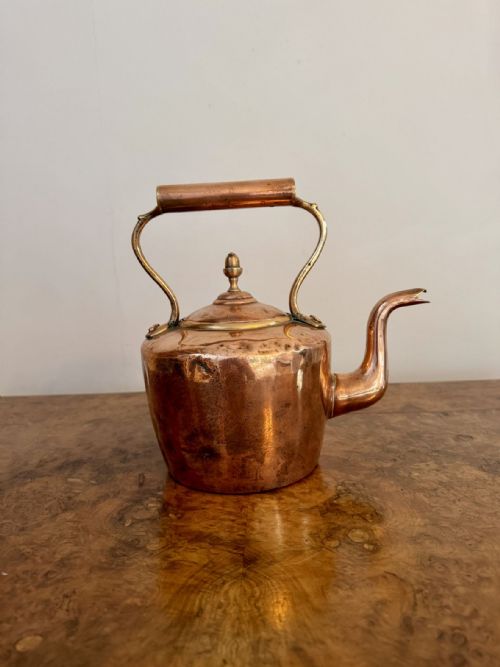
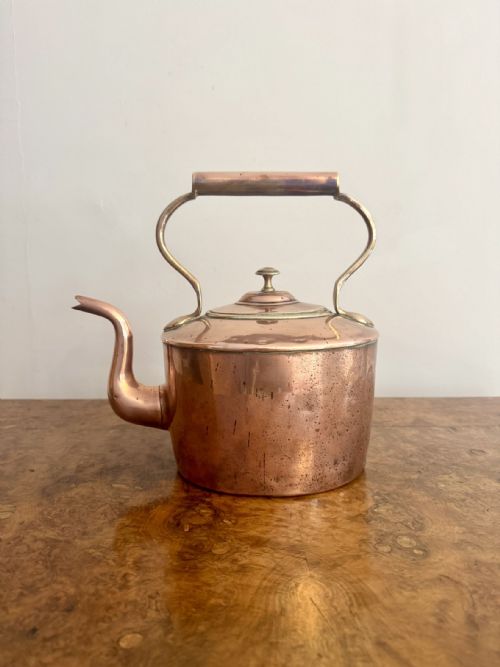
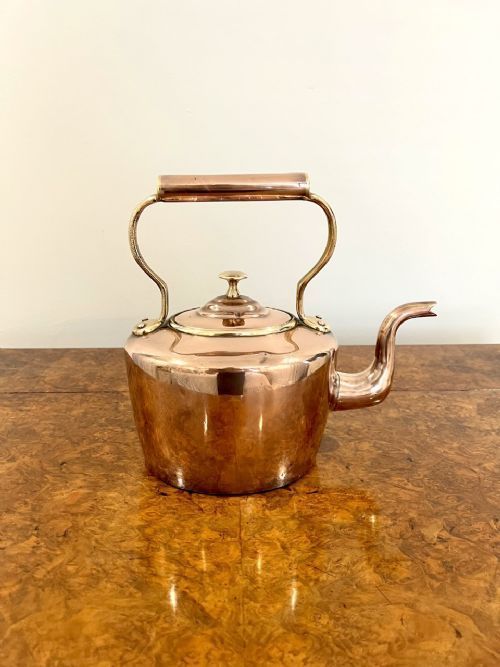


Brass Water Kettle
These brass water kettle examples bring warmth and functional utility to any fireside arrangement.
Brass Water Kettle
When you search for a brass water kettle, you examine vessels designed for heating water over a hearth or spirit burner. The items on this page span the George III period through the Victorian era, alongside Arts and Crafts and Middle Eastern designs.
How they were made
Makers utilised heavy sheet metals, predominantly combining brass and copper with elements of iron and wood for insulation on handles. Joints were typically dovetailed or brazed by hand to withstand the heat of an open fire.
Insulating spacers of bone or ebonised wood frequently appear on handles to prevent heat transfer during use. Surfaces were then polished or left in their natural state depending on the workshop tradition.
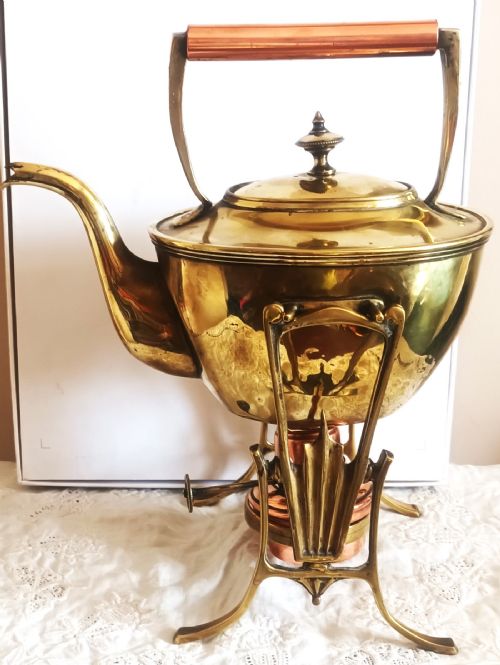
Several kettles arrive with complete stands, ready to dispense tea with proper Victorian ceremony.
What varies in quality
The weight of the metal and the precision of the handle attachments distinguish finer pieces from standard domestic examples. Thicker walls and crisper hand-hammered details indicate superior craftsmanship.
The presence of complete matching stands and original spirit burners elevates the status of spirit kettles. Maker attribution also plays a role, with documented firms commanding greater attention.
William Soutter & Sons
The Brass Water Kettle Glossary
- Spirit kettle
- A heating vessel mounted on a metal stand above a small alcohol burner. This allowed water to remain hot at the tea table.
- Samovar
- A heated metal container traditionally used to heat and boil water in Russian and Middle Eastern tea culture. These often feature an internal vertical metal tube for charcoal.
- George III
- The stylistic period spanning the reign of George III from seventeen sixty to eighteen twenty. Pieces from this era often display restrained neoclassical lines.
- Arts and Crafts
- A design movement valuing handcraftsmanship and traditional materials over mass production. Items from this style emphasise simple utility and honest construction.
Brass Water Kettle: Frequently Asked Questions
How do I clean a brass water kettle?
Traditional polishing preserves the bright metallic lustre, though many collectors prefer to leave an aged patina untouched. Gentle cleaning agents prevent damage to antique surfaces.
Avoid harsh abrasives that scratch the softer copper and brass alloys common in these vessels.
Can I still use these kettles for boiling water?
Most antique pieces serve primarily as decorative objects for the hearth or sideboard rather than daily kitchen tools. Structural soldered joints may weaken with modern heat sources.
Spirit kettles with burners are particularly suited for display rather than functional boiling.
What is the difference between a kettle and a samovar?
A standard kettle is designed to sit on a hob or fire, featuring a simple swing handle for pouring. A samovar is a much larger urn structure often equipped with a tap at the base.
Samovars function as central water heaters for large gatherings, while kettles serve smaller tea preparations.
How do I date a brass water kettle?
Examining the construction methods, such as dovetailing and handle mountings, provides the primary clue to a piece's age. George III examples generally show different handle fixtures compared to later Victorian items.
Stylistic shifts between Georgian simplicity and ornate Victorian ornamentation help narrow down the decade.