



Brass Trade Scales
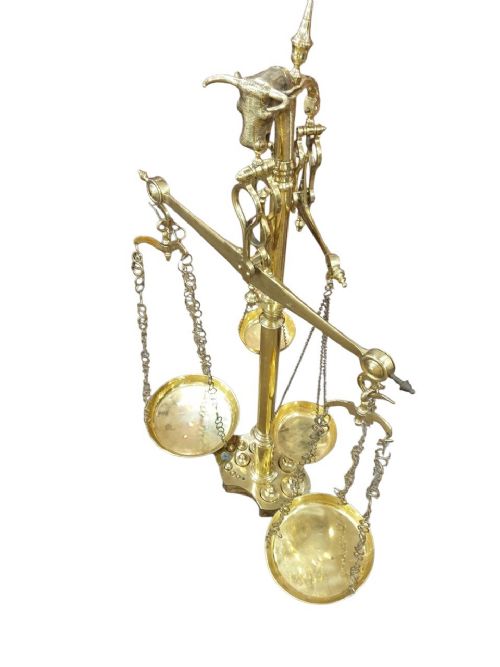
Brass trade scales are working counter weights and balances built for shops, apothecaries and official inspectors, bringing heavy brass beams and fitted timber into a room.

Brass Trade Scales
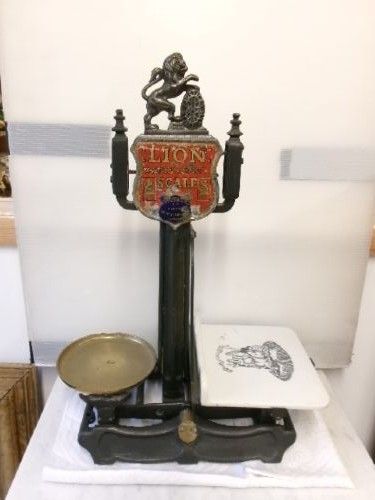
Brass trade scales encompass heavy counter balances, grocers' beams, floor-standing butcher scales and hanging balance beams designed for commercial and official weighing. These utilitarian instruments originate from the Victorian period, the Edwardian era and the early twentieth century, spanning Dutch, Chinese Export and British workshops.
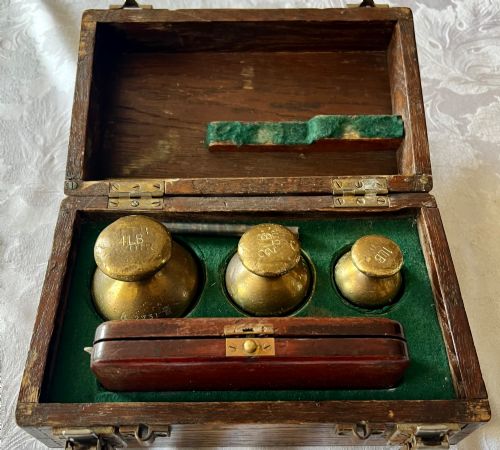
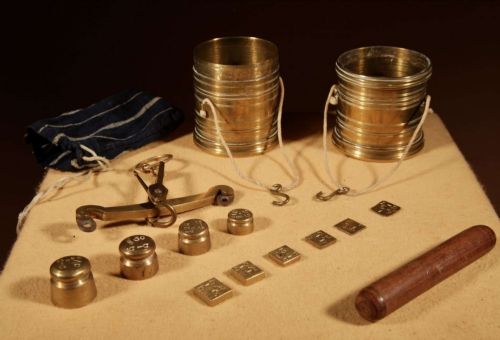
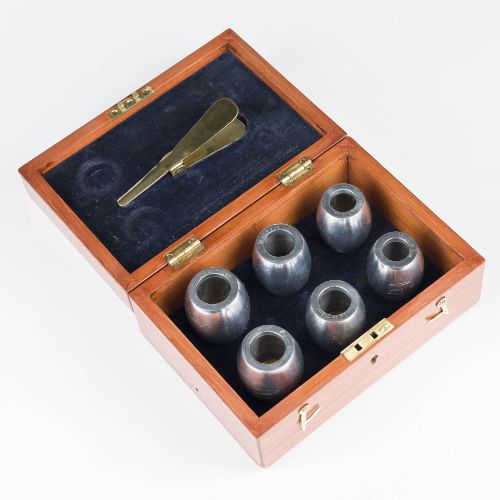
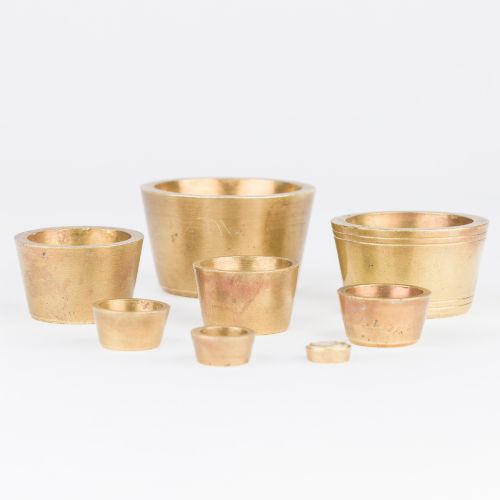
Buyers encounter everything from massive butcher scales and co-op grocers' sets to precision chemist beam scales, verification balances and associated sets of standard weights in wooden blocks. Many examples bear the stamps of specific city authorities, inspectors, and makers such as W&T Avery or Bartlett & Sons.
The materials paired with the brass include mahogany, camphor-wood, iron, velvet and glass, reflecting the robust and practical demands of nineteenth and early twentieth-century trade. These pieces serve today as striking decorative objects or focal points in domestic and commercial interiors.
Materials and Construction
The primary construction relies on cast and polished brass for the beams, pans, and adjustment fittings, paired with dense hardwoods like mahogany and camphor-wood for the bases, trunks, and weight blocks. Iron provides structural strength in floor-standing models and stick balances, while velvet and textile line storage compartments for delicate weights.
Makers utilised precision engineering for the beam pivots and knife-edge bearings to ensure accurate commercial weighing, often housing delicate instruments in glazed wooden cases. Standard weights were cast in metal and stamped with verification marks, while storage trunks featured leather bindings and polychrome painted finishes.
Brass Trade Scales Retail Price Guide 2026
Typical asking prices for brass trade scales among the pieces listed under this phrase on Sellingantiques today, from the lower quarter to the upper quarter. They describe what is for sale here now, not the wider market.
Listings feature Victorian and Edwardian brass trade scales alongside nineteenth-century Dutch balance sets and Chinese Export camphor-wood trunks.
Assessing Quality and Character
Quality in brass trade scales rests on the crispness of maker stamps, the legibility of official verification inscriptions, and the integrity of the original beam assembly. Finer examples retain their matching sets of standard weights, original wooden block stands, and unaltered surface finishes without excessive modern intervention.
The distinction between standard commercial apparatus and superior instruments lies in the refinement of the metalwork, the quality of the timber casing, and the presence of documented regional provenance such as city standard weights for Liverpool or Northamptonshire.
De Grave Short And Co·W And T Avery·Bartlett And Sons
The Brass Trade Scales Glossary
- Balance scales
- Weighing instruments utilising a central fulcrum and equal arms to determine mass by comparing an object against standard weights. They represent the foundational mechanism for most trade scales on this page.
- Avoir standard weights
- Official units manufactured according to the avoirdupois system for commercial trade verification. These sets were frequently stamped for specific cities and boroughs.
- Troy ounce weights
- Precious metal weight standards used primarily for bullion, pharmaceuticals, and high-value commodities. They appear in dedicated sets alongside precision scales.
- Verification balance
- A high-accuracy scale utilised by local government inspectors to check commercial weights and measures. These instruments often bear municipal stamps and maker signatures.
- Stick balance
- A portable weighing beam design, sometimes associated with Dutch or colonial trade traditions. It utilises a slender wooden shaft fitted with brass and iron components.
Brass Trade Scales: Frequently Asked Questions
How do you clean antique brass scales?
Dust the brass gently with a dry or slightly damp cloth to preserve the aged patina that accumulates over decades of use. Avoid harsh chemical polishes that strip the historic surface character.
For wooden bases and camphor-wood trunks, apply a traditional beeswax to nourish the grain without damaging leather bindings or painted details.
Were these scales used in shops?
Yes, many of these pieces served daily in grocers' shops, butcher counters, and co-operative stores for commercial transactions. Others fulfilled official duties as standard verification tools for local inspectors.
Heavier floor-standing models handled large quantities of meat or produce, while smaller sets measured out apothecaries' goods and Troy ounces.
How do I date an antique scale?
Dating relies on stylistic clues, stamped maker names, and official verification marks bearing Victorian or Edwardian reigns and specific municipal years. Patent dates and the style of the wooden cabinetry also provide clear chronological markers.
Makers frequently inscribed their trading names and London or regional addresses directly onto the brass beams.
Can these scales still weigh accurately?
While many retain their balanced beams and knife-edge pivots, most antique trade scales function primarily as decorative objects today. Wear on the pivots and missing fractional weights mean they require professional calibration for precise modern weighing.
Their physical presence and mechanical complexity make them exceptional focal points for interior display.