



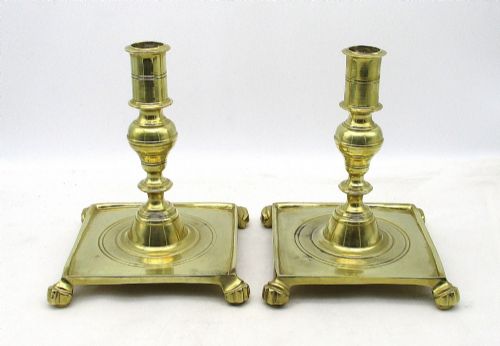
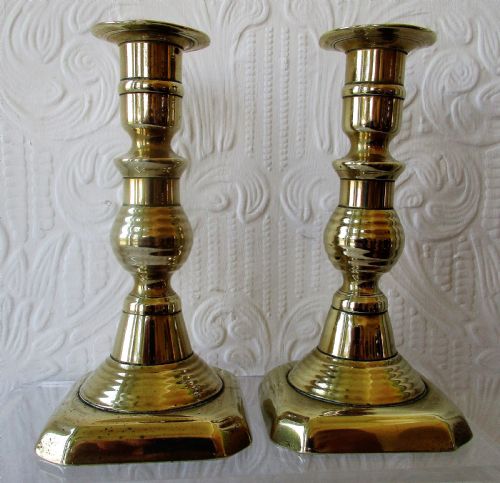
Brass Table Candleholders
These brass table candleholders bring steady candlelight to a room, cast in heavy metal across Georgian, Victorian and Edwardian periods.
Brass Table Candleholders
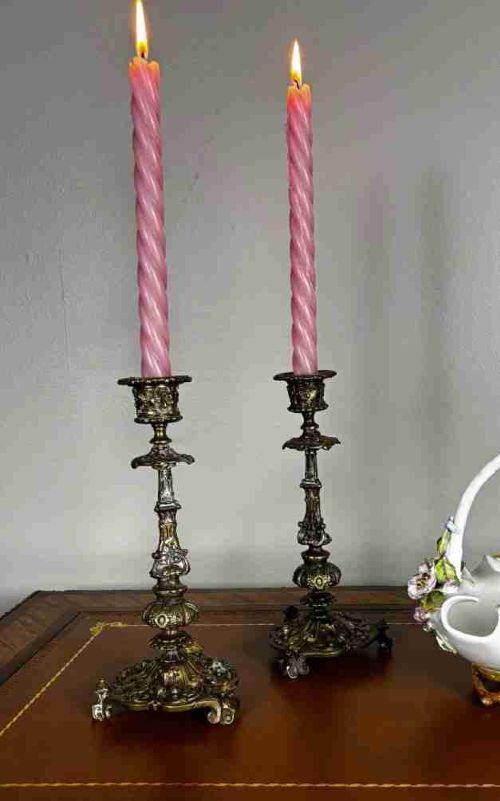
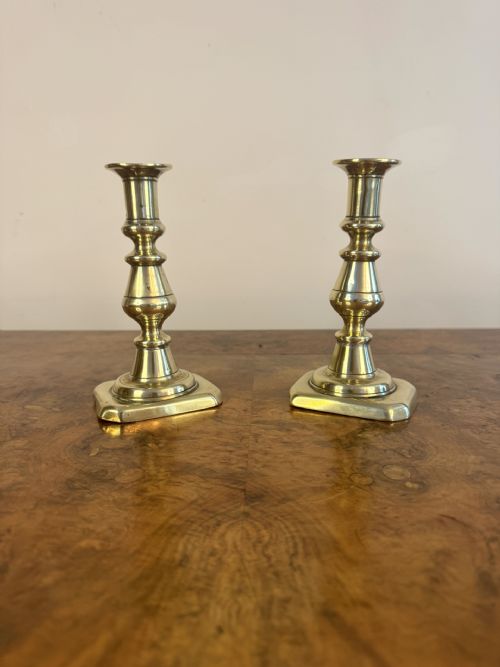
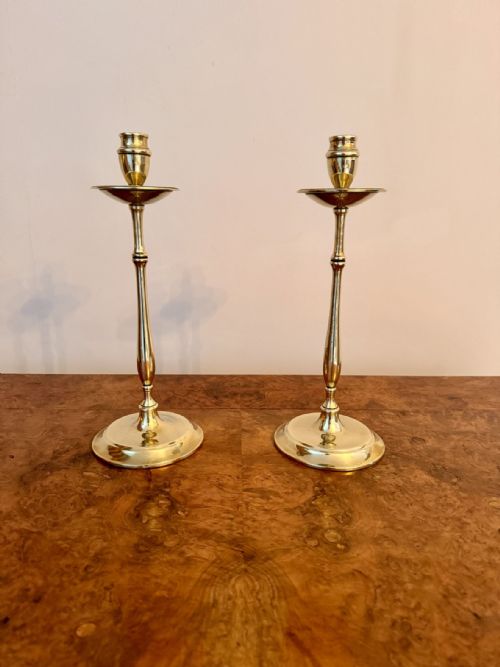
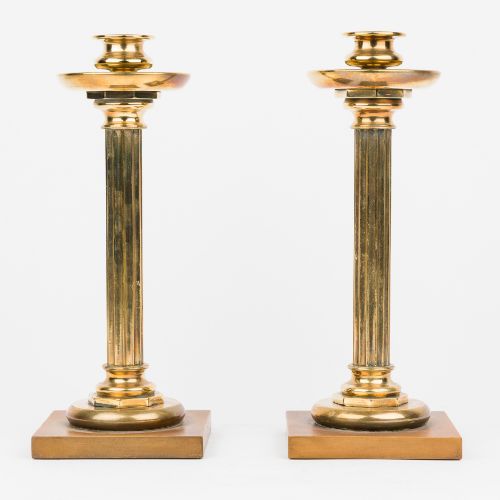
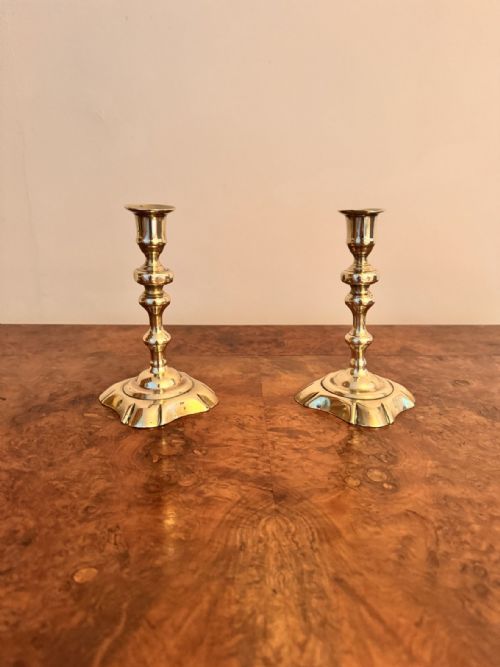
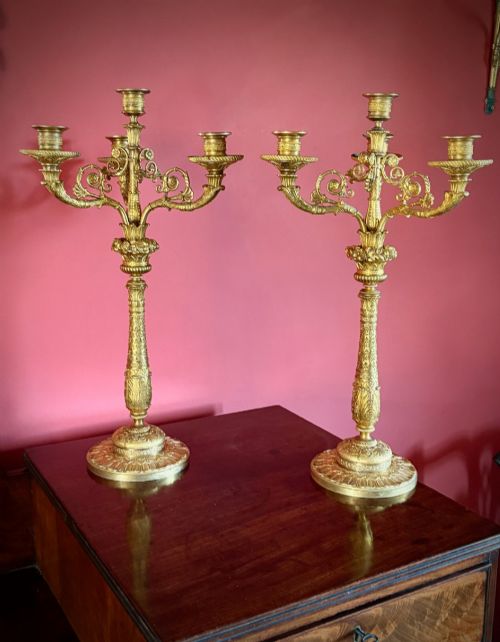
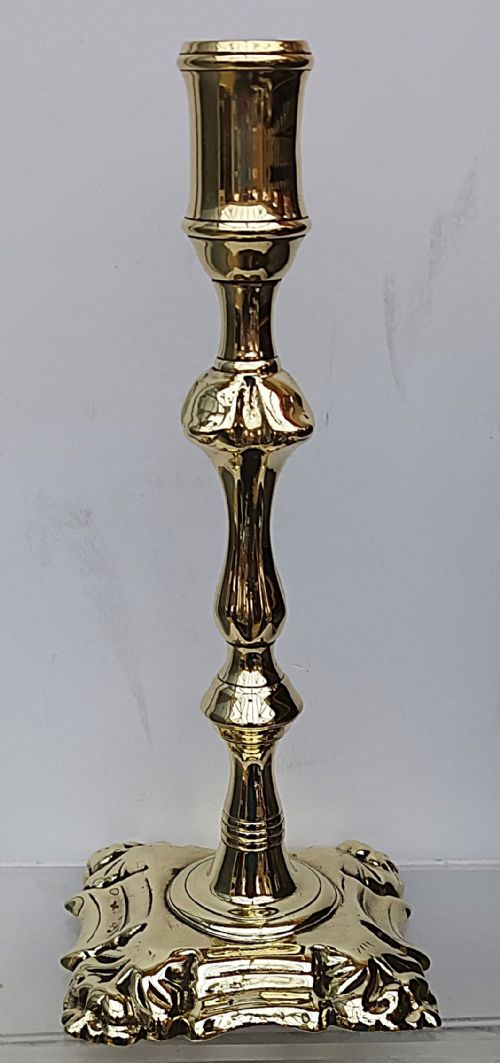
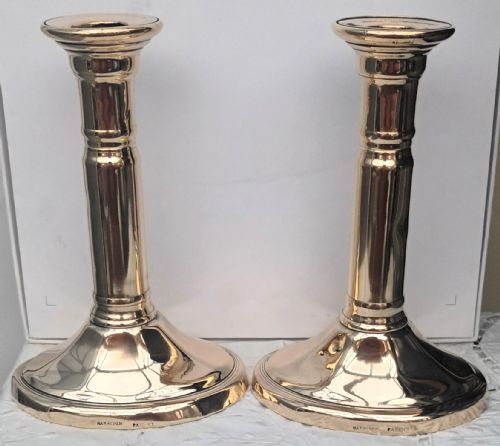
Brass table candleholders are practical domestic lighting pieces designed to hold wax candles upright on surfaces, spanning forms from simple domestic sticks to ornate French revival candelabra. You are most likely to meet pairs of Victorian or 18th-century cast and turned examples on this page, alongside occasional telescopic, ejector or figural variants.
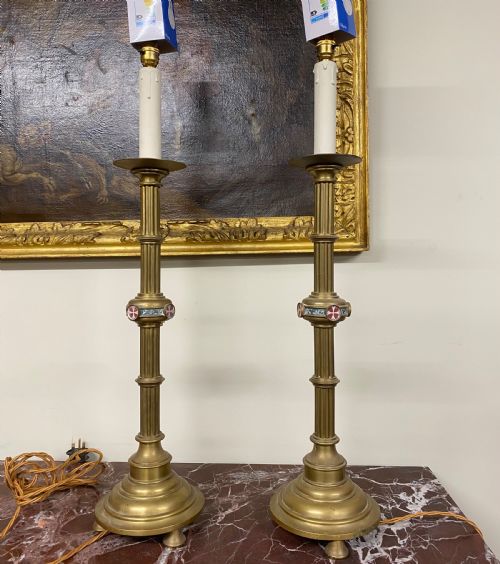
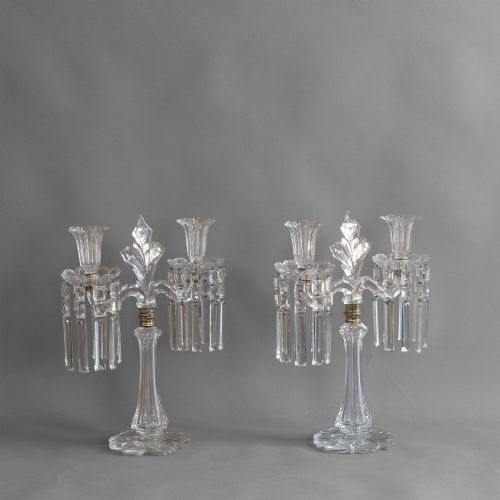
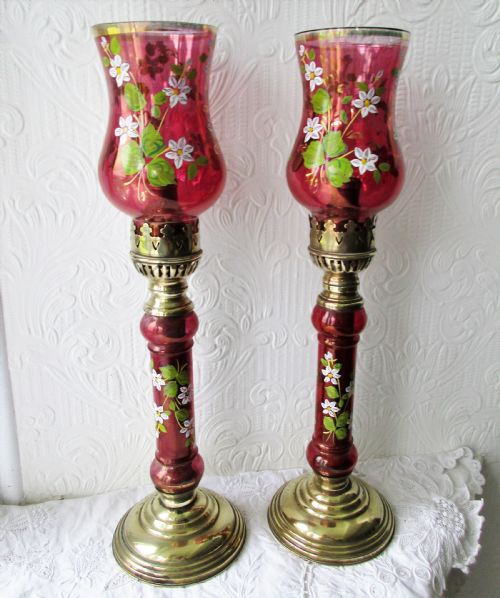
The selection here includes Georgian, Regency and Victorian periods, with styles drawing on French Rococo Revival, Louis XVI and Queen Anne design influences. Alongside standard candlesticks, the listings feature multi-branch candelabra, student lamps and candle-lamps incorporating glass and marble.
How they were made
Many early pieces utilise cast brass components, poured into sand or metal moulds before being turned on a lathe to refine the profiles. This method produces the satisfying weight and thick walls characteristic of 18th-century and Victorian production.
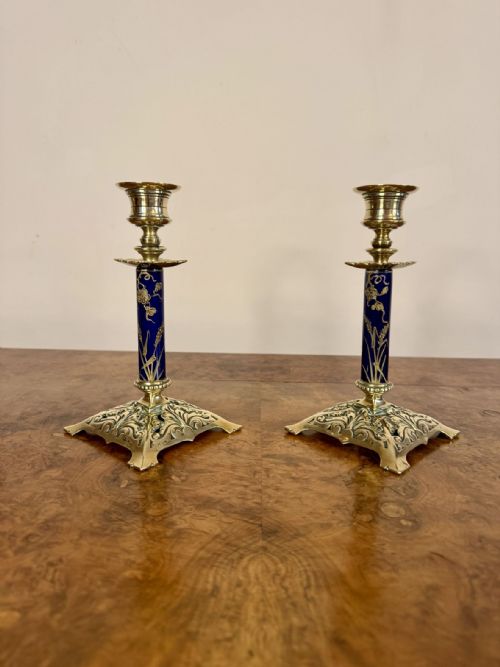
Makers also employed seaming, soldering rolled sheet metal tubes for stems, and combined brass with other materials such as gilt bronze, ormolu, marble, porcelain and glass to achieve decorative contrast.
Brass Table Candleholders Retail Price Guide 2026
Typical asking prices for brass table candleholders among the pieces listed under this phrase on Sellingantiques today, from the lower quarter to the upper quarter. They describe what is for sale here now, not the wider market.
Listings span the 18th, 19th and early 20th centuries, recording materials from basic cast brass to gilt bronze, porcelain and marble.
What varies in quality
Quality rests primarily in the crispness of the casting detail and the proportion of the components, where sharper mouldings and heavier metal gauges distinguish superior examples from plain production. Pieces featuring mechanical elements, such as working ejector mechanisms or functional telescopic stems, rely on precision engineering for their enduring operation.
The choice of secondary materials also separates the grades, with fine gilding, well-fitted marble bases or unblemished porcelain inserts elevating the decorative ambition of individual pieces above standard utility.
Frederick J Smith & Co
The Brass Table Candleholders Glossary
- Ejector candlestick
- A domestic stick fitted with an internal push-rod mechanism to raise and expel the candle stub. This clever addition prevents burnt fingers when removing the remnants of wax.
- Telescopic candlestick
- A design featuring a sliding stem that extends upwards to adjust the height of the light. Harrison Patent examples are particularly well known for this engineering.
- Candelabra
- A branched lighting fixture designed to hold multiple candles simultaneously. These often incorporate cast brass or gilt bronze in ornate revival styles.
- Lustres
- Table ornaments featuring glass drops hung around a central candle socket. The crystal prisms catch and multiply the candlelight in a room.
- Seamed brass
- Construction method where sheet brass is rolled and joined down the side seam rather than cast as a single solid piece. This technique was common in certain 19th-century manufacturing runs.
Brass Table Candleholders: Frequently Asked Questions
How do I clean brass candleholders?
Wash gently with warm soapy water and a soft cloth to remove surface dust and old wax accumulations. Avoid harsh metal polishes that strip away the natural patination built up over centuries.
Dry the metal thoroughly after washing to prevent water spotting. Allowing a dark, rich patina to remain preserves the historic character of older pieces.
What is an ejector mechanism?
An ejector mechanism is a small internal sliding plate connected to a side thumb-piece. Pushing the lever upward slides the remaining wax stub out of the socket.
This practical feature became common during the Victorian era. It saves users from digging out melted wax with a knife.
How can I date an old candlestick?
Examine the construction methods, base shapes and tool marks visible on the underside. Early 18th-century pieces often feature heavy cast petal bases, while Victorian examples show machine-turned components or stamped maker marks.
Compare the casting weight and stylistic motifs against known period designs. Georgian pieces tend to show simpler column forms compared to ornate later revivals.
Are pairs harder to find?
Matched pairs are scarcer because individual sticks often became separated over generations of use in different rooms. Surviving pairs command greater interest from collectors wishing to set a dining table or mantelpiece.
Look closely at the base dimensions and casting seams to confirm the two pieces were cast from the same period workshop.