


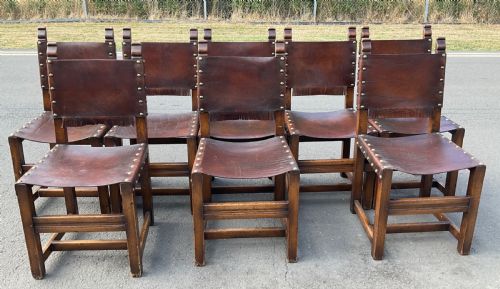


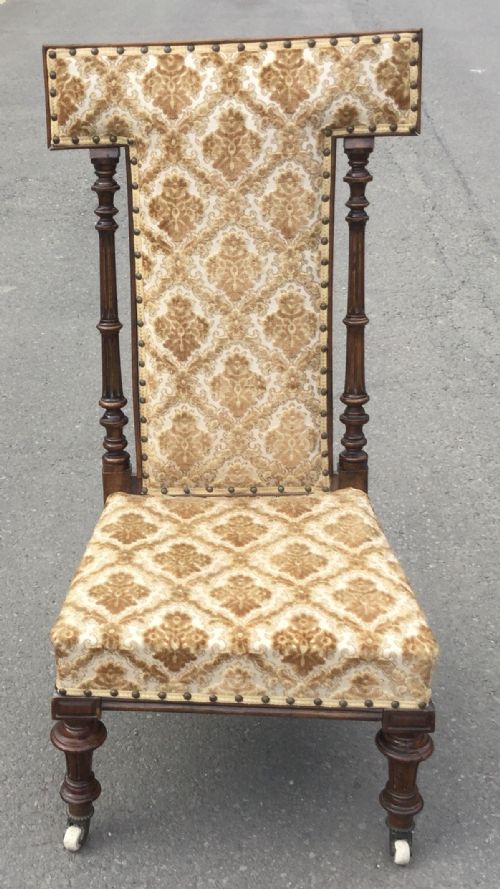

Brass Studded Side Chair
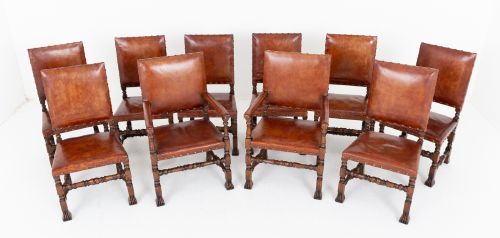
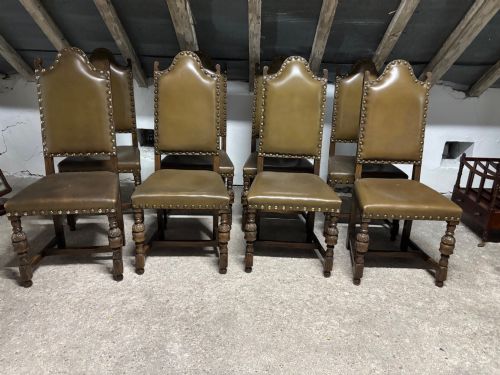
A brass studded side chair brings robust timber and tactile hide together, offering steadfast seating for dining room or hall.
Brass Studded Side Chair
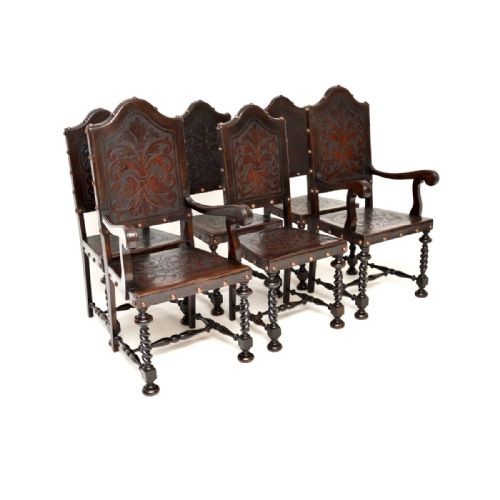
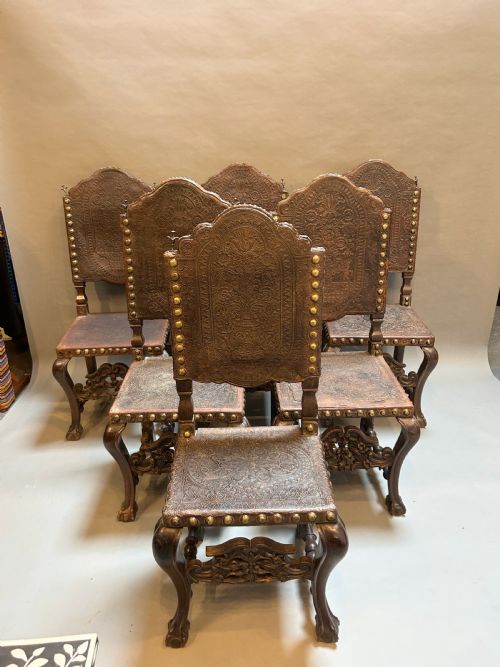
A brass studded side chair encompasses sturdy oak, mahogany and walnut dining chairs, hall chairs and prayer chairs originating from periods spanning the seventeenth century to the Edwardian era. These upright forms arrive in various historical revivals including Spanish Revival, Victorian Gothic Revival, Portuguese Baroque and Jacobean styles.
The version most commonly met on this page is the oak dining chair featuring leather or fabric upholstery secured with metal studwork. Sets ranging from pairs to groups of eight frequently appear alongside single hall chairs and prayer chairs.
How they were made
Cabinetmakers constructed these seating pieces using solid timbers such as oak, mahogany and walnut for the structural frames. Artisans then joined the components using traditional joinery methods suited to each period.
Upholsterers fixed leather, velvet, fabric or upholstery fabric to the frames, securing the material firmly in place with individual brass studs driven along the edges.
Listings span multiple eras from the seventeenth century through Victorian and Edwardian periods, utilising oak, mahogany, walnut, leather and brass studwork.
What varies in quality
The grade of timber and the depth of carving define the upper tiers of these chairs, distinguishing robust heartwood frames with crisp, hand-carved details from simpler constructions. Heavier timber scantlings and tighter joinery provide superior structural longevity.
The quality of the upholstery materials and the neatness of the brass stud placement further differentiate the work. Uniformly spaced studs and durable leather or velvet indicate skilled execution by the maker.
Howard and Co London·George Henry Walton
The Brass Studded Side Chair Glossary
- Side chair
- A chair without arms designed primarily for dining or occasional use around a room. These pieces fit neatly against walls or around dining tables.
- Hall chair
- An upright wooden seat historically placed in entrance hallways, often featuring a solid carved back and timber panel seat. Such examples display formal heraldic or decorative motifs.
- Gothic Revival
- An architectural and decorative style drawing inspiration from medieval design, characterised by pointed arches and heavy carved tracery. This aesthetic reappears frequently in nineteenth-century seating.
- Jacobean Revival
- A furniture style reviving the heavy turned legs, panelled backs and geometric ornamentation of early seventeenth-century English design. Pieces in this mode utilise dark oak and robust proportions.
- Embossed leather
- Animal hide pressed with raised decorative patterns using metal dies or rollers. This material adds rich texture to the backs and seats of period chairs.
Brass Studded Side Chair: Frequently Asked Questions
Where should I place a brass studded side chair?
These versatile seats function well as end chairs in a dining arrangement or as single accents in a hallway or bedroom. Their upright posture suits placement against panelled walls.
Ensure the timber tone complements surrounding furniture to create a cohesive interior scheme.
How do I care for the leather upholstery?
Clean the leather surfaces gently with a dry or slightly damp cloth to remove dust. Avoid placing the chair in direct sunlight to prevent the hide from drying.
Apply a suitable leather conditioner periodically to maintain suppleness across the studded edges.
Can I mix different chair styles together?
Pairing revival styles like Jacobean or Gothic Revival with simpler modern tables adds visual interest to a dining space. Similar timber tones help unify mismatched groups.
Matching heights and proportions remain more important than securing an identical design across every seat.
How do I identify the period of a chair?
Examine the timber species, construction joints and carving techniques to determine the likely era of manufacture. Seventeenth-century styles often reappear accurately in later revival pieces.
Look closely at the underside and interior joinery for tool marks and wear patterns that indicate age.