

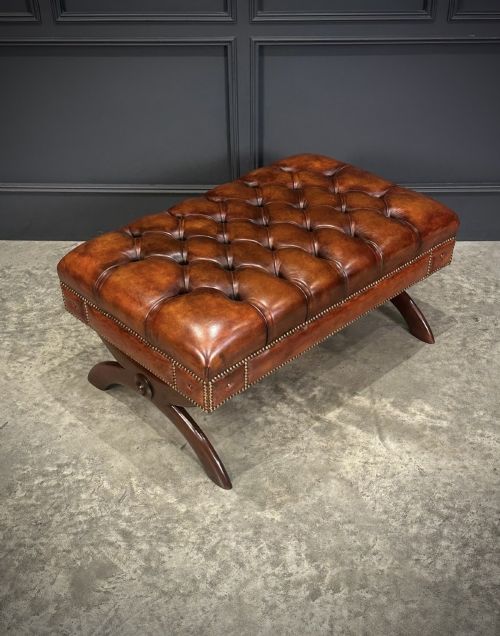


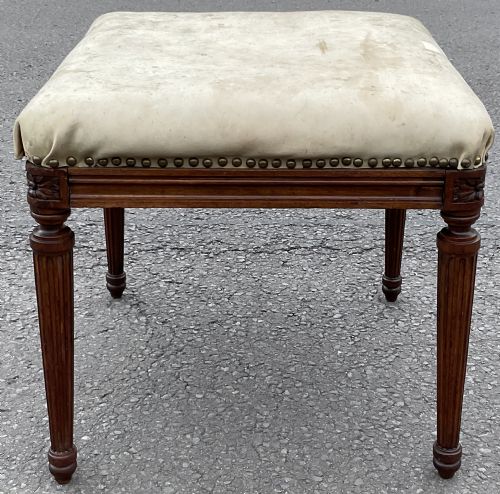


Brass Stud Upholstered Bench
These brass stud upholstered bench pieces offer enduring seating, combining sturdy timber frames with traditional decorative tacking for any traditional room.
Brass Stud Upholstered Bench
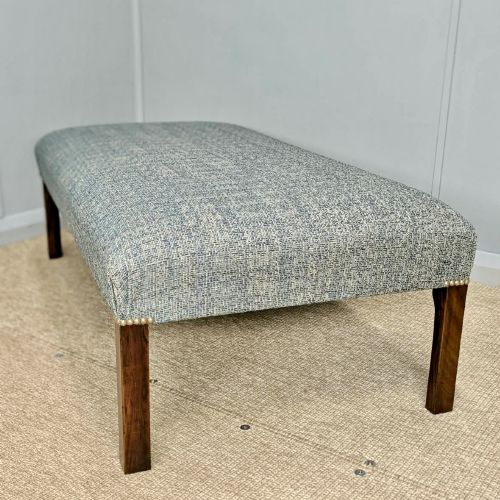
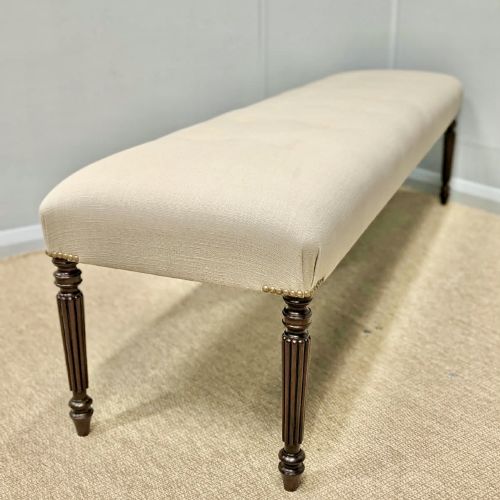
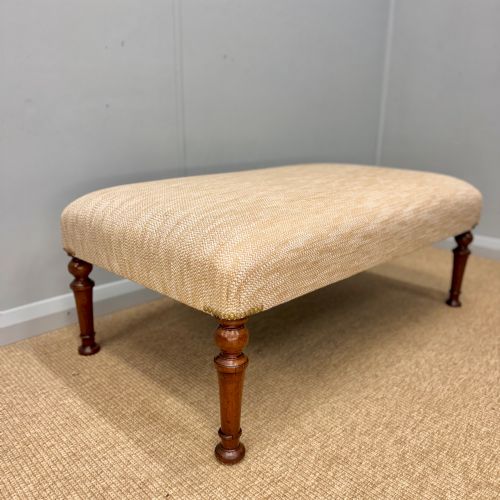
A brass stud upholstered bench brings together timber frames and padded seats finished with metal nailing, serving variously as long stools, ottomans, footstools, and club fenders. These items appear across multiple eras including the Georgian, Regency, and Victorian periods, as well as Edwardian times.
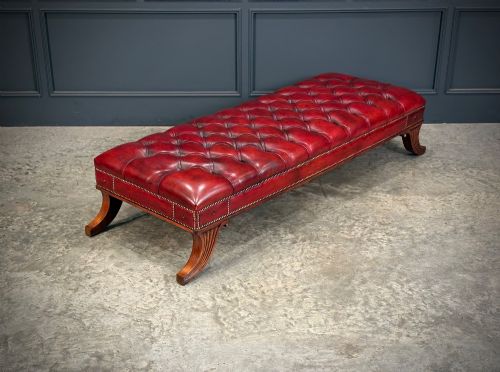
The forms range from long benches and box ottomans to low hall seats and dressing stools, constructed in woods like mahogany, walnut, rosewood, and oak. Many examples feature buttoned leather or fabric upholstery paired with brass studs, resting on cabriole, fluted, or castored supports.
How they were made
Cabinetmakers utilised hardwoods such as mahogany, walnut, rosewood, and oak to build the structural frames, often incorporating carved details like cabriole legs or fluting. Timber components were joined securely to support the weight of seating.
Upholsterers applied padding covered in leather or fabric, securing the material edges by hand with individual brass studs driven carefully into the wood. Additional hardware such as brass castors or steel frames appeared on specific mobility-focused or fireside designs.
Brass Stud Upholstered Bench Retail Price Guide 2026
Typical asking prices for brass stud upholstered bench among the pieces listed under this phrase on Sellingantiques today, from the lower quarter to the upper quarter. They describe what is for sale here now, not the wider market.
Materials appearing across these pieces include tan leather, hardwood, fabric, and brass, formed into stools, ottomans, and club fenders.
What varies in quality
The standard of timber selection and depth of carving set individual pieces apart, with finer examples displaying well-drawn proportions and careful shaping to legs and frames. Richer grain patterns in woods like rosewood and mahogany indicate superior material choice.
Execution of the upholstery work also dictates the grade of the piece, visible in the even spacing of brass studs and the resilience of the buttoning or padding. Original integration of period castors and hardware adds distinction to surviving items.
The Brass Stud Upholstered Bench Glossary
- Cabriole leg
- A furniture leg that curves outward at the knee and tapers inward toward the foot, inspired by animal limbs. This form is frequently seen on Victorian and revival seating frames.
- Buttoned
- An upholstery technique where depressions are formed in the padding by pulling deep threads tight and securing them with buttons. This creates a diamond pattern across leather or fabric surfaces.
- Box ottoman
- A type of seated furniture featuring a hinged top that opens to reveal internal storage space. These pieces are often finished with leather upholstery and brass stud detailing.
- Club fender
- A low, padded metal or leather-topped seat designed to fit around a fireplace hearth. Nineteenth-century examples often utilise steel or brass frameworks combined with upholstered seating.
- Castor
- A small wheel attached to the base of furniture legs to ease movement across floors. Brass versions commonly appear on nineteenth-century footstools and large ottomans.
Brass Stud Upholstered Bench: Frequently Asked Questions
What is a brass stud upholstered bench used for?
These versatile pieces serve primarily as seating, footrests, or low tables depending on their height and proportions. Longer formats function well at the foot of a bed or along a hallway.
Shorter ottomans and footstools provide supplementary seating in living spaces while offering concealed storage in box formats. Their sturdy timber frames and padded tops accommodate daily domestic use.
How do I identify a Victorian footstool?
Victorian examples typically feature substantial mahogany or walnut frames combined with deep buttoned leather and turned legs on castors. Proportions tend to be generous and heavy.
They frequently employ dark hardwoods and pronounced padding compared to lighter eighteenth-century forms. Brass studding appears regularly along the border of the upholstery.
Where should I place a long bench?
Long benches suit wide hallways, entryways, or placement at the end of a bed where their length balances surrounding furniture. They provide a convenient spot for sitting while dressing.
Their decorative timber frames and studded leather edges also anchor open spaces in traditional sitting rooms. Ensure clearance around the piece for ease of movement.
How do I care for antique leather upholstery?
Antique leather requires gentle cleaning with a dry or slightly damp cloth to remove dust without stripping natural oils. Avoid harsh chemical cleaners that might damage the surface.
Keep leather pieces away from direct sunlight and heat sources to prevent the material from drying or cracking. Regular light conditioning helps maintain the suppleness of the hide.