


Brass Stud Blanket Chest
A brass stud blanket chest is a substantial storage box secured with metal nails and hide or wood, prized for both utility and decorative presence.
Brass Stud Blanket Chest
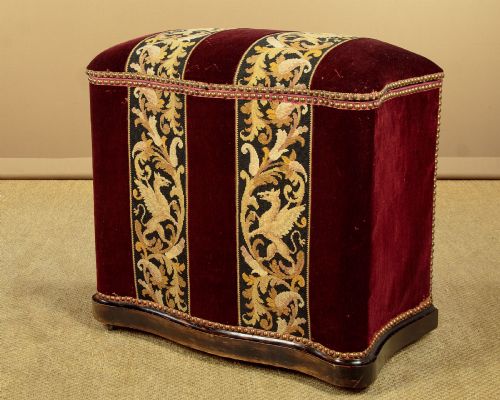
When you search for a brass stud blanket chest, you encounter a variety of substantial storage furniture designed for travel and domestic use. The selection spans centuries of craftsmanship, taking forms such as trunks, coffers, and ottomans.
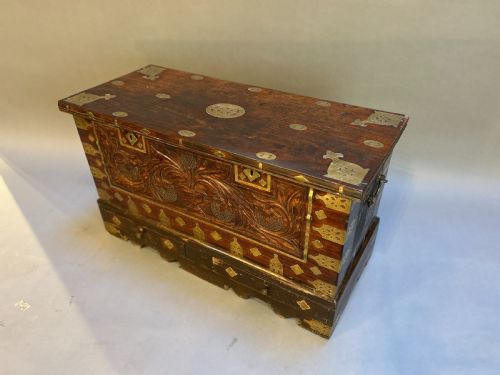
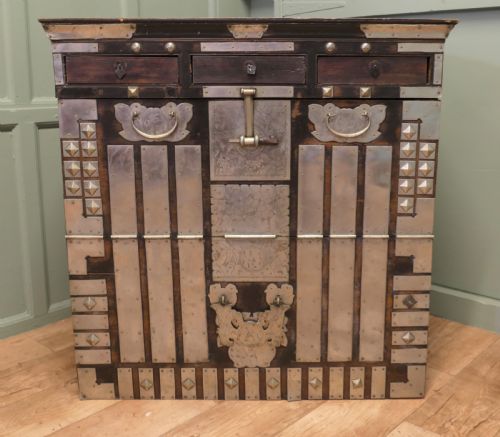
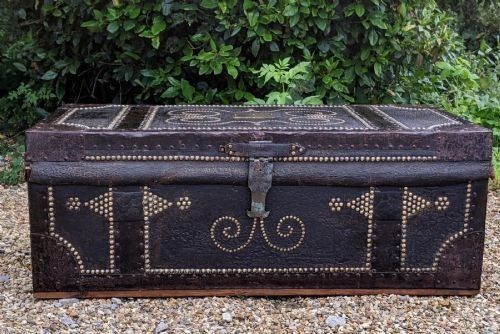
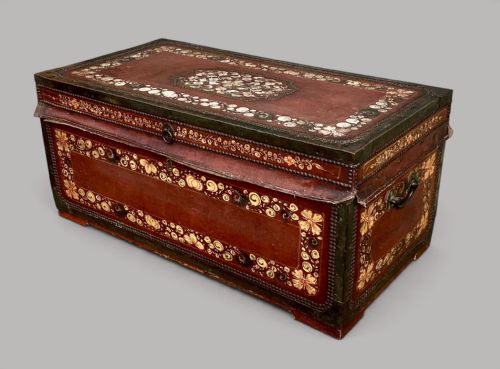
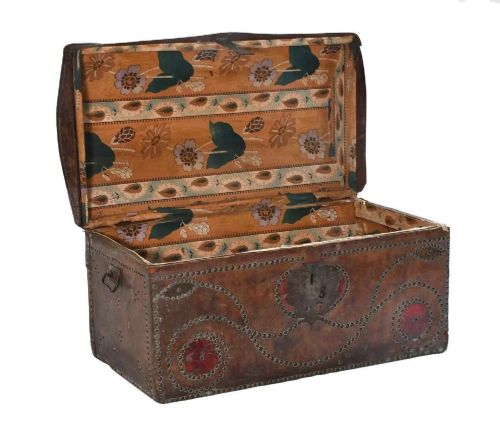
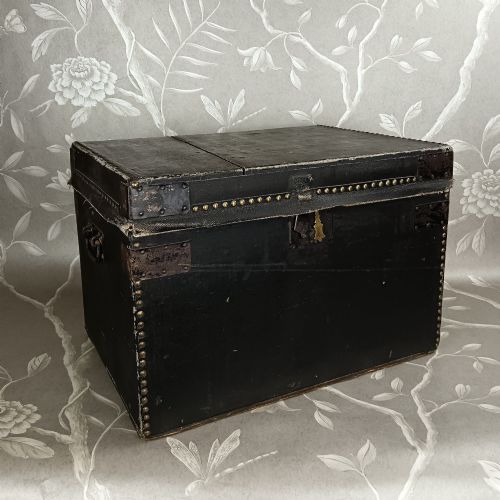
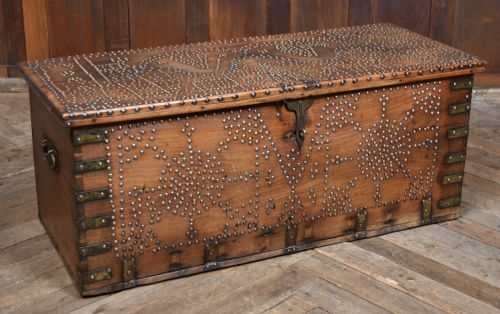
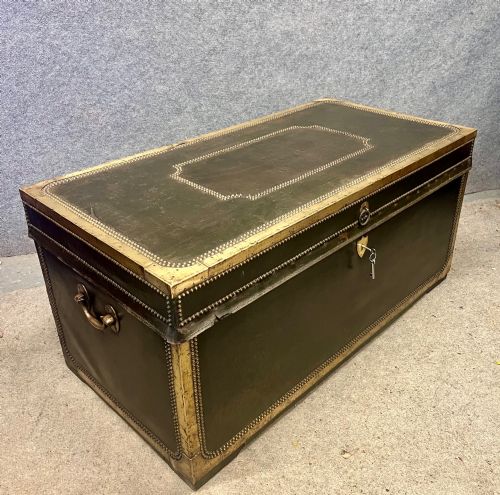
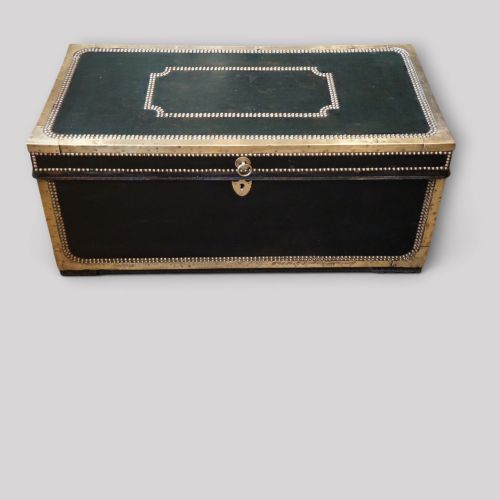
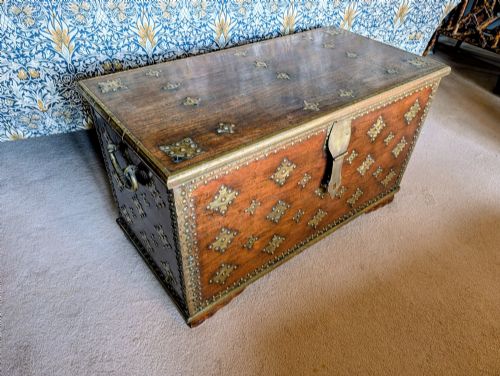
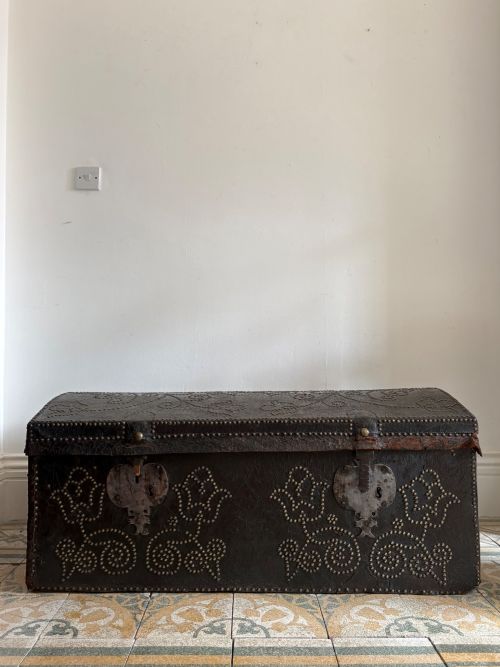
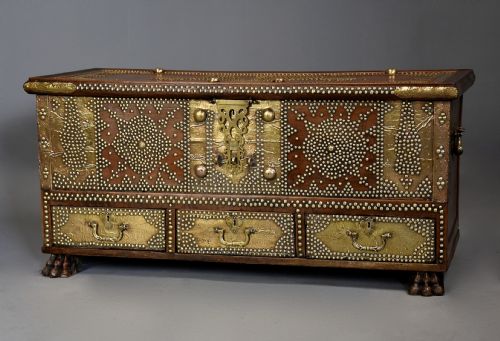
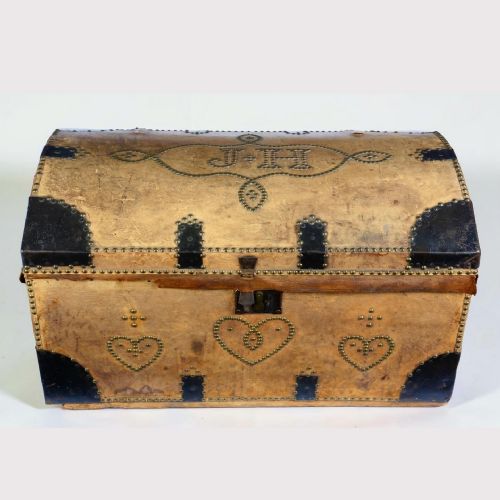
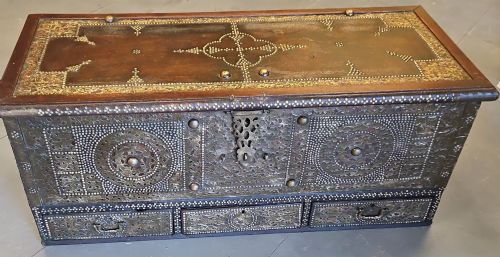
The versions most commonly met on this page include nineteenth-century leather-clad travel trunks and campaign chests embellished with decorative brass studs. These pieces originate from diverse traditions, ranging from English coaching workshops to Dutch and Spanish ateliers, alongside China Trade and Zanzibar imports.
Makers stamp or sign their travel trunks and strong boxes to record their trade. Examples on record include Samuel Pratt, Wm. Insall of Bristol, Arthur Wannop, and Seabrook of St.Pauls, London.
How They Were Made
Makers built these pieces using sturdy timbers like mahogany, teak, camphor wood, and general hardwoods, often cladding the wooden carcasses in hide or leather. Metal bindings, iron fittings, and brass studwork provided structural reinforcement for rigorous travel.
Individual brass studs and nailheads were applied by hand to secure the leather coverings while forming intricate geometric or decorative patterns across the lids and panels. Carry handles and locking mechanisms in iron or brass were integrated to withstand the demands of coaching and maritime journeys.
Brass Stud Blanket Chest Retail Price Guide 2026
Typical asking prices for brass stud blanket chest among the pieces listed under this phrase on Sellingantiques today, from the lower quarter to the upper quarter. They describe what is for sale here now, not the wider market.
Listings feature periods spanning from the pre-sixteenth century up to the twentieth century, with nineteenth-century examples predominating.
What Varies in Quality
The distinction between standard utility boxes and finer examples rests on the selection of primary timbers and the precision of the metalwork. Hardwoods like padouk and camphor wood combined with meticulous leather work and complete brass stud patterns denote superior origin.
Provenance and maker attribution elevate certain pieces significantly. Trunks bearing the recorded signatures of established nineteenth-century makers or demonstrating specific regional trade routes command greater attention from collectors.
Samuel Pratt·Wm. Insall of Bristol·Arthur Wannop·Seabrook of St.Pauls, London
The Brass Stud Blanket Chest Glossary
- Campaign trunk
- A portable storage chest designed for military or travel use, typically fitted with carrying handles and reinforced corners. These boxes were constructed to endure long journeys by sea and carriage.
- Coffer
- A heavy wooden chest, often domed and covered in leather or hide, used historically for storing valuables and garments. They frequently display dense brass studwork across the exterior.
- Zanzibar chest
- A distinct type of dowry or storage box originating from East African trade routes, constructed from hardwoods like teak or padouk. They feature characteristic brass studding and heavy metal strapwork.
- Ottoman
- A padded upholstered storage box or footstool, sometimes built on a mahogany or hardwood frame. These pieces combine comfortable seating surfaces with concealed internal compartments.
- Studwork
- The decorative application of brass nails or tacks driven into leather-covered wooden chests. This technique serves both to secure the hide covering and to create ornamental surface patterns.
Brass Stud Blanket Chest: Frequently Asked Questions
What is a brass stud blanket chest used for?
These boxes serve as practical storage solutions for blankets, linens, and garments while functioning as decorative furniture in living spaces. Their sturdy construction makes them suitable for holding household items out of sight.
Historically, many of these pieces functioned as travel luggage or campaign trunks for officers and merchants. Today, they transition easily into modern interiors as coffee tables, ottomans, or bedroom storage.
How do I care for leather and brass on a chest?
Leather surfaces benefit from gentle cleaning and occasional conditioning to prevent the hide from drying out over time. Avoid harsh chemical cleaners that might strip the original finish or discolour the material.
Brass studs and bindings require minimal intervention, often only needing soft dusting. Polishing the metal depends on personal preference, though many collectors prefer to leave the natural aged patina untouched.
How can I tell the age of a blanket chest?
Dating relies on examining the construction methods, such as dovetail joints in the wood and the style of the hardware. Earlier pieces from the seventeenth and eighteenth centuries often feature hand-forged iron and simpler box frames.
Nineteenth-century examples frequently exhibit more elaborate brass stud patterns, manufacturer labels, and specific regional characteristics like those found on camphor wood trade trunks.
Where were these chests manufactured?
Production spans domestic English workshops as well as international trade hubs across Europe and Asia. British cabinetmakers and trunk makers produced numerous coaching and travel trunks for domestic use.
Other pieces originate from China Trade routes, Dutch colonial workshops, Spanish traditions, and East African coastal trading centres like Zanzibar, utilising local exotic hardwoods.