
Brass Storage Box
When you handle a brass storage box, you hold a sturdy container designed for travel, domestic organisation or holding precious commodities.
Brass Storage Box
A brass storage box encompasses utilitarian pieces ranging from heavy campaign chests and blanket boxes to smaller tea caddies, games boxes and document boxes. These containers emerge from periods spanning the seventeenth century through to the early twentieth century, including Georgian, Victorian and Regency eras.
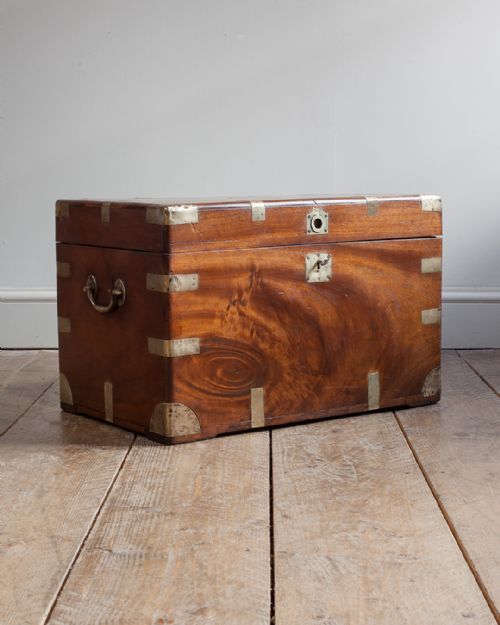
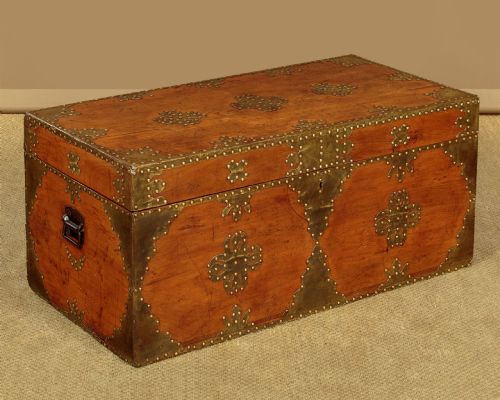
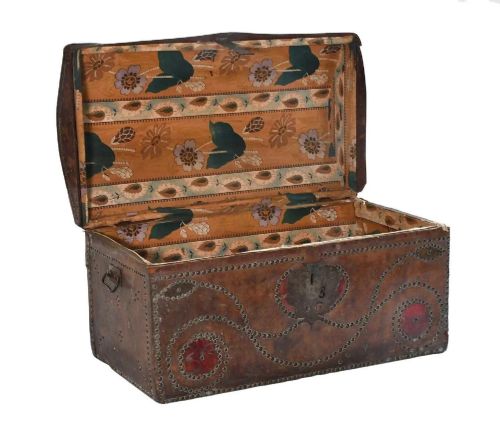
The materials paired with metal mounts and brackets include timbers such as camphor wood, mahogany, teak, oak, walnut and padouk, alongside leather and iron. Many examples bear colonial, military campaign, Anglo-Indian or Dutch trade origins, built to withstand long journeys at sea or rigorous overland transit.
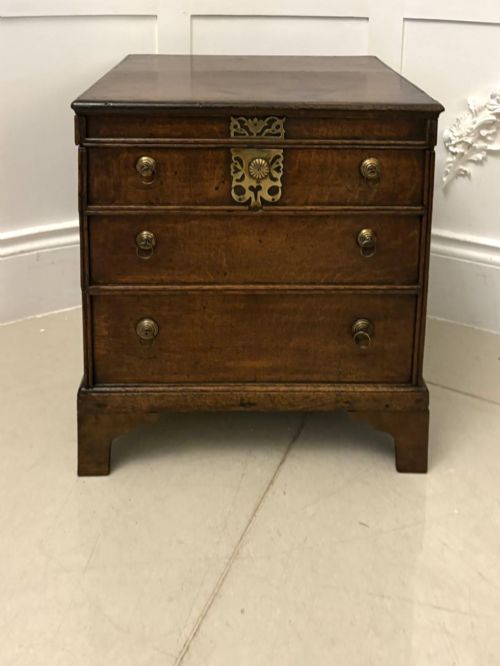
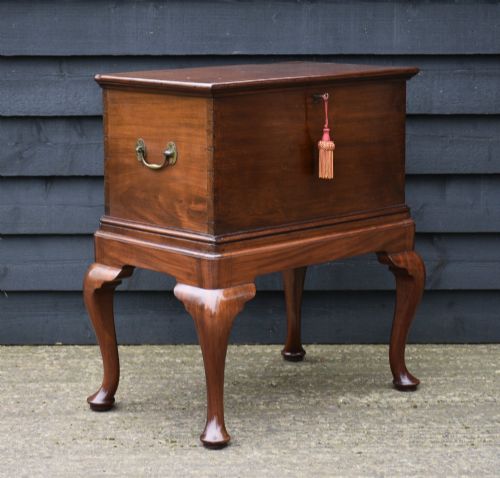
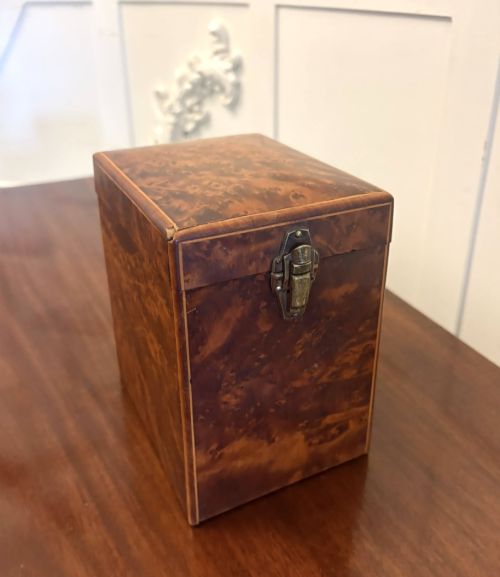
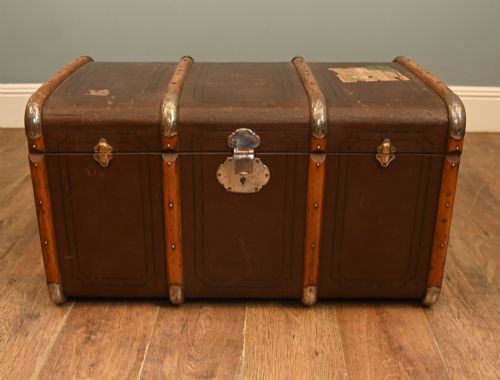
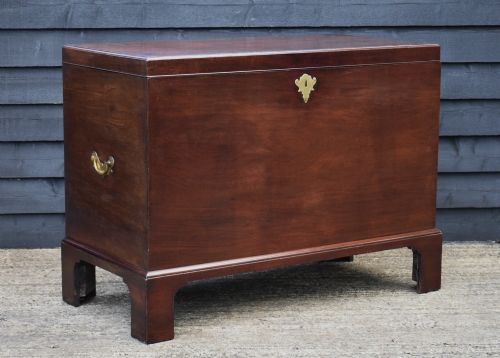
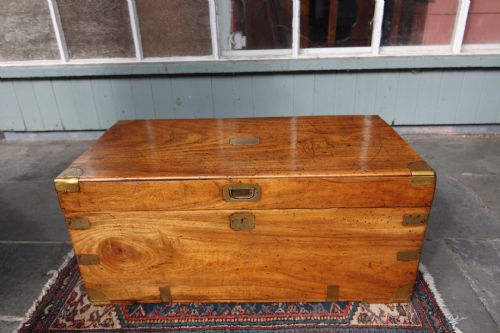
Buyers seeking a brass storage box will frequently encounter nineteenth-century camphor wood trunks and mahogany campaign boxes fitted with corner brackets and carrying handles. Smaller tabletop versions, such as amboyna tea caddies and walnut card boxes, also populate the selection alongside larger log scuttles and mule chests.
Materials and Technique
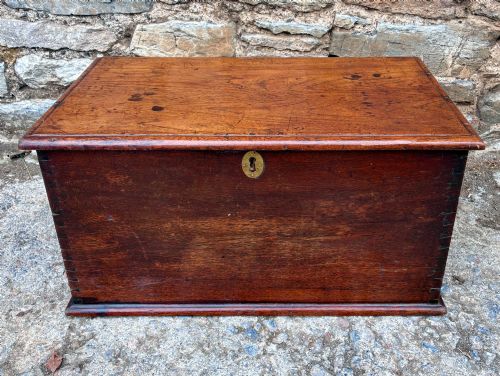
Construction relies on durable timbers selected for stability and resilience, notably camphor wood for its insect-repelling qualities and dense hardwoods like mahogany, teak and padouk for structural strength. Joinery frequently incorporates dovetailed corners and reinforced panels designed to endure shifting climates and heavy handling.
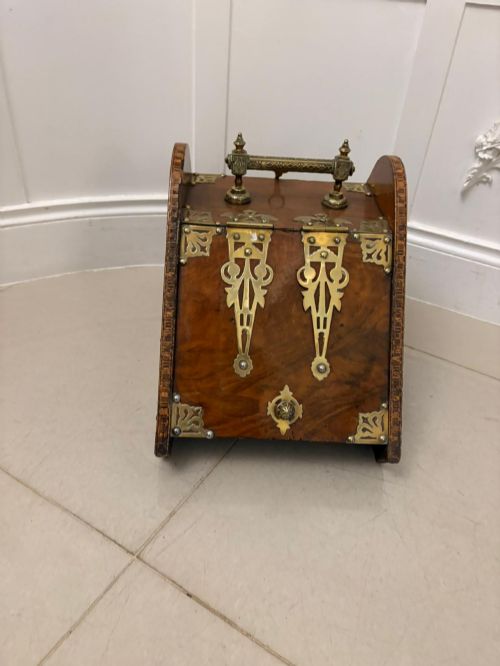
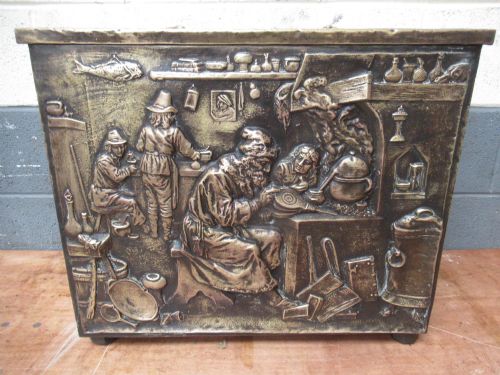
Brass provides both structural reinforcement and decorative accent through flush-fitting corner plates, strapwork, carrying handles and key escutcheons. Additional protective elements include studded leather, iron bands and mother-of-pearl inlay, securing joints while adding ornamental contrast to the dark wood surfaces.
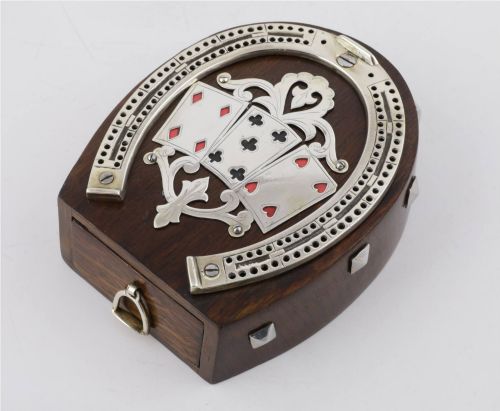
Several boxes still retain old playing cards, poker dice and cribbage boards tucked inside their fitted compartments.
Distinctions in Execution
Quality rests upon the integrity of the timber selection and the precision of the metalwork integration. Superior examples display flush-fitted brass mounts countersunk neatly into the wood, robust dovetailed joints and original locking mechanisms that remain functional.
The grade of a piece also depends on the preservation of secondary materials like interior leather linings, compartment dividers and original carrying hardware. Finer boxes maintain balanced proportions and crisp decorative brasswork without mismatched replacement fittings.
Samuel Pratt·Wm. Insall of Bristol·J C Vickery
The Brass Storage Box Glossary
- Campaign chest
- A sectional storage box made in two or more parts for easy transport by military officers during the eighteenth and nineteenth centuries, typically fitted with recessed brass handles and corner braces.
- Camphor wood
- An aromatic hardwood native to Asia, utilised extensively for nineteenth-century maritime trunks because its natural scent deters moths and insects from damaging stored textiles.
- Cellarette
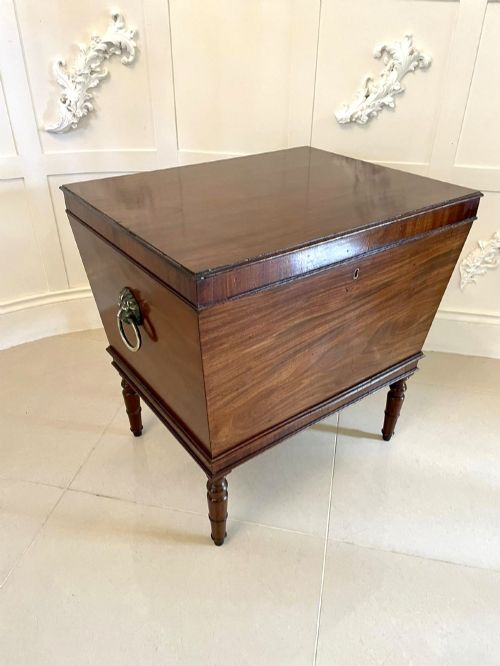
- A lockable container or cabinet designed to hold bottles of wine and spirits, often lined and partitioned for safe transport and storage.
- Mule chest
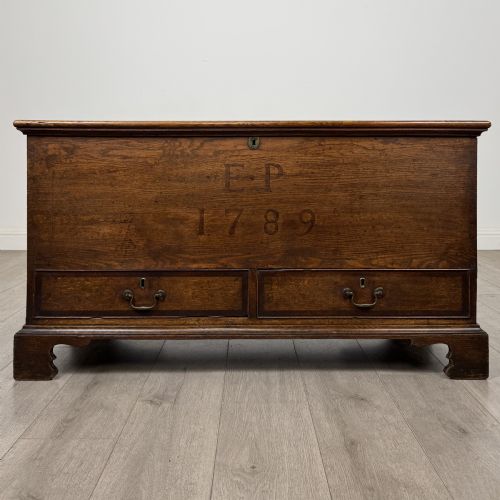
- A traditional storage chest featuring one or more drawers at the base beneath a hinged lid compartment, common in eighteenth-century domestic settings.
- Escutcheon
- A protective metal plate surrounding a keyhole, frequently cast in brass to reinforce the wood and ornament the face of the box.
Brass Storage Box: Frequently Asked Questions
What is a campaign box?
A campaign box is a portable container built for military officers on active service, designed with flush brass mounts to prevent snagging during transit.
These pieces break down or feature folding elements, prioritising rugged durability and compact organisation.
Why use camphor wood?
Camphor wood emits a natural oil and distinct aroma that repels insects, protecting stored uniforms and blankets from moth damage.
Its stable grain also resists warping in humid maritime climates.
How do I date a brass-bound chest?
Dating relies on timber choice, construction techniques like hand-cut dovetails, and the style of the brass hardware.
Earlier eighteenth-century pieces often feature oak or mahogany with heavy iron bindings, while nineteenth-century campaign items favour camphor wood and precise recessed brass brackets.
Where were these boxes used?
These containers travelled across the British Empire on merchant ships, military campaigns and colonial outposts to safeguard personal valuables.
Domestic variants remained in European country houses and town residences for storing tea, games and household linens.