







Brass Scale Set
A brass scale set brings functional precision and gleaming metalwork into a room, serving as a handsome reminder of Victorian and Edwardian utility.
Brass Scale Set
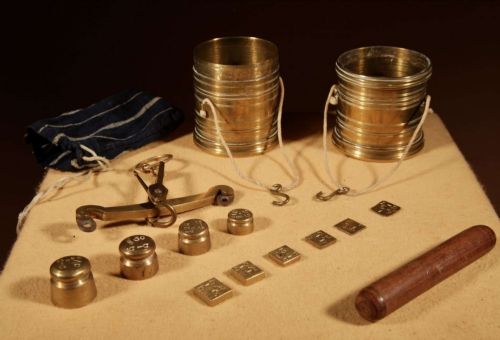
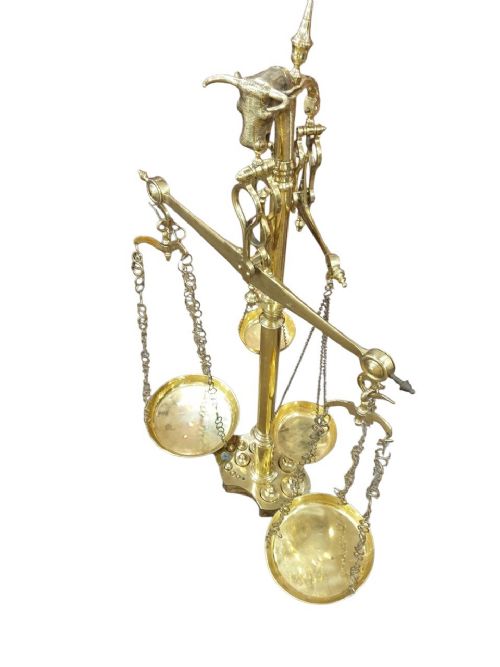
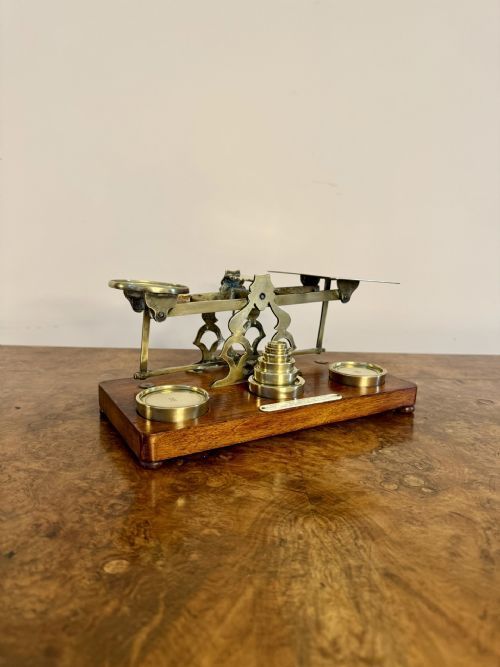
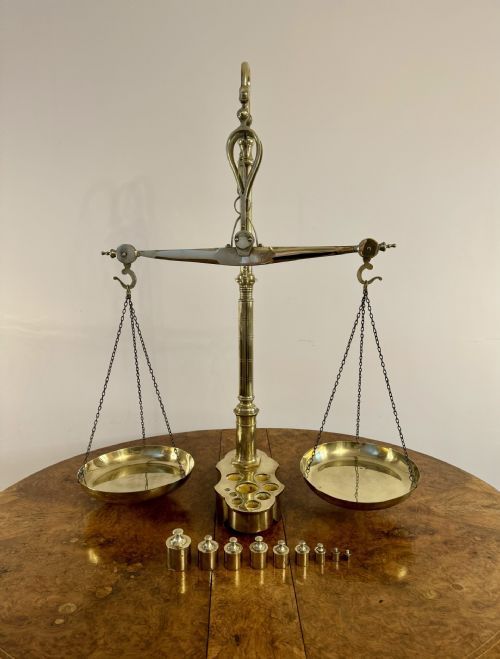
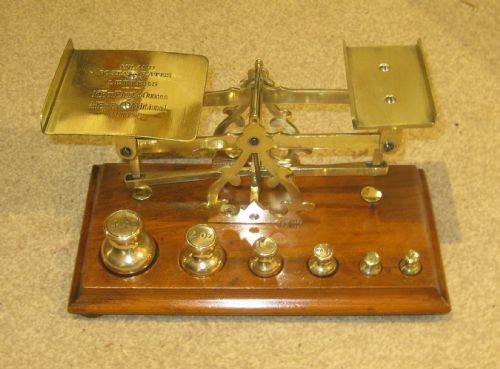
A brass scale set comprises various weighing instruments and associated weights, spanning domestic, commercial, and scientific applications from the nineteenth and early twentieth centuries. Collectors encounter everything from compact postal and letter scales mounted on wooden bases to massive butcher, grocer, and personal weighing machines.
The domestic varieties frequently include postal and kitchen formats designed for daily desktop or pantry use, often paired with matching brass weights. Commercial and medical editions, such as doctor, chemist, and dairy beam scales, offer heavier construction designed for professional trade and dispensary work.
Originating predominantly from Victorian and Edwardian periods, these sets reflect the rigorous standardisation of weights and measures during the nineteenth century. Pieces often bear regional stamps or maker inscriptions, linking them directly to specific British boroughs, co-operatives, and commercial enterprises.
Materials and construction
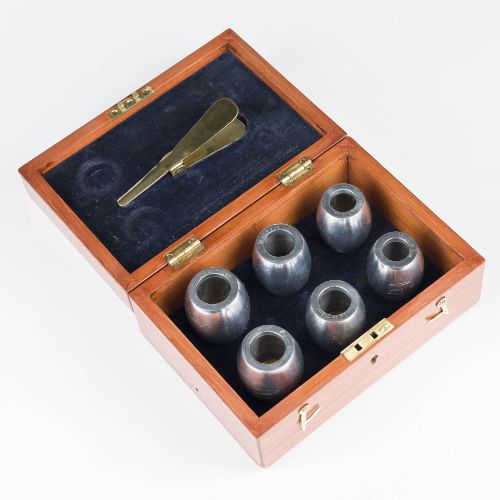
Many domestic and commercial sets incorporate fitted wooden boxes, velvet linings, or iron structural components to reinforce the mechanism. Finer scientific and apothecary sets utilise enclosed glass elements and precise calibration components alongside the dominant brass and wood structures.
Brass Scale Set Retail Price Guide 2026
Typical asking prices for brass scale set among the pieces listed under this phrase on Sellingantiques today, from the lower quarter to the upper quarter. They describe what is for sale here now, not the wider market.
Object forms range from postal and grocer scales to apothecary balances and standard weight sets.
Variations in quality
Quality in a brass scale set rests upon the crispness of the maker engraving, the integrity of the fitted wooden base, and the completeness of the matching weight set. Superior examples retain their original calibrated weights, often stamped with period inspection marks or regional government ciphers.
Engineering refinement separates standard utilitarian pieces from high-grade scientific or commercial instruments, evident in the smoothness of the beam action and the retention of original surface patination. Finer iterations display careful joinery on mahogany or oak plinths and clear, legible maker signatures from notable weighing firms.
De Grave Short and Co·W and T Avery·S Mordan and Co·Oertling·Young and Son
The Brass Scale Set Glossary
- Beam scale
- A weighing device utilising a central fulcrum and two suspended pans to determine mass by equilibrium. The horizontal beam swings freely to compare the object weighed against standard weights.
- Avoirdupois
- The system of weights commonly used for general goods and commerce in Britain. Sets employing this standard include pounds and ounces rather than troy measurements.
- Troy ounce
- A unit of mass traditionally utilised for precious metals and apothecary preparations. Sets featuring these weights often accompany specialist chemist or jeweller instruments.
- Bell weight
- A traditional shape of standard weight resembling a small handbell with an integrated loop handle. These are frequently found accompanying kitchen, grocer, and dairy scales.
- Postal scale
- A compact desktop balance specifically calibrated for weighing letters and parcels. They frequently sit upon shaped mahogany or oak bases equipped with stepped slots for individual weights.
Brass Scale Set: Frequently Asked Questions
How do I date a brass scale set?
Dating relies heavily on style indicators such as the shape of the wooden base, the presence of Victorian or Edwardian crown inspection stamps, and maker signatures. Commercial sets often feature engraved registry dates or local authority stamps that narrow down the exact period of manufacture.
Changes in cabinetry styles, from heavy carved Victorian mahogany to simpler Edwardian oak platforms, also help determine the decade of production. Examining the typography of the maker name or sign-writing provides further chronological clues.
Are original weights usually included?
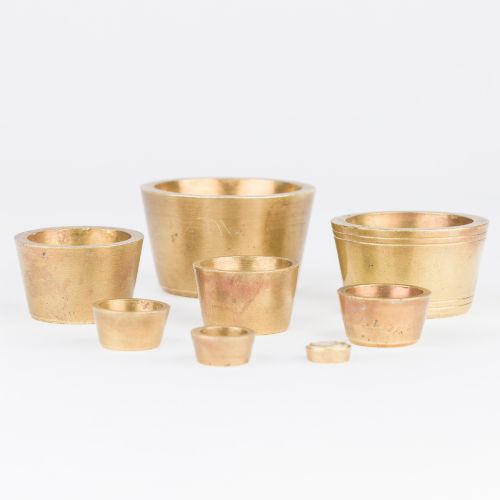
Many surviving sets retain their original matched weights, whether housed in fitted wooden blocks, lined compartments, or arranged on the scale base itself. Complete sets of bell weights or flat standard weights significantly enhance the historical integrity of the piece.
When weights are missing, finding correct period replacements requires matching the specific standard, such as avoirdupois or troy, used by the original scale maker. Regional stamps on the weights often correspond to the geographical area where the scale was deployed.
Where were these scales used originally?
These instruments served a wide variety of environments, ranging from household writing desks and kitchens to post offices, grocery co-operatives, and chemists' shops. Larger floor-standing and beam versions operated in commercial trade houses, personal consulting rooms, and municipal inspection offices.
Specialist variants like jockey scales or apothecary balances fulfilled niche professional requirements where precise weight limits governed sport or medicine. This diversity of function means domestic interiors require different scale formats than larger commercial spaces.
How should I clean polished brass?
Maintaining brass surfaces involves gentle dusting and occasional wiping with a soft cloth to preserve the natural paturation built up over decades. Aggressive chemical polishing can strip away the historical character and softening that collectors value in antique metalwork.
Wooden bases benefit from standard furniture maintenance using appropriate wax or oils to nourish the mahogany or oak without affecting adjacent metal parts. Keeping the instruments away from damp environments protects both the timber housing and the delicate balance mechanism.