


Brass Rail Bed Frame
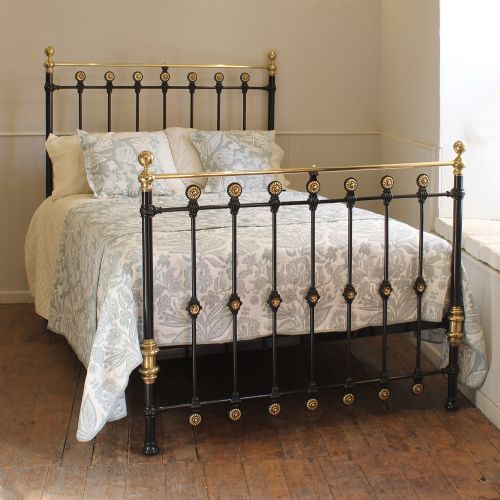
A brass rail bed frame brings substantial presence and mixed metallic warmth into a bedroom.
Brass Rail Bed Frame
When you search for a brass rail bed frame, you are looking at nineteenth and early twentieth century sleeping furniture combining metal frames with polished alloy components. These pieces bridge the Victorian and Edwardian eras, offering sturdy construction alongside decorative metalwork.
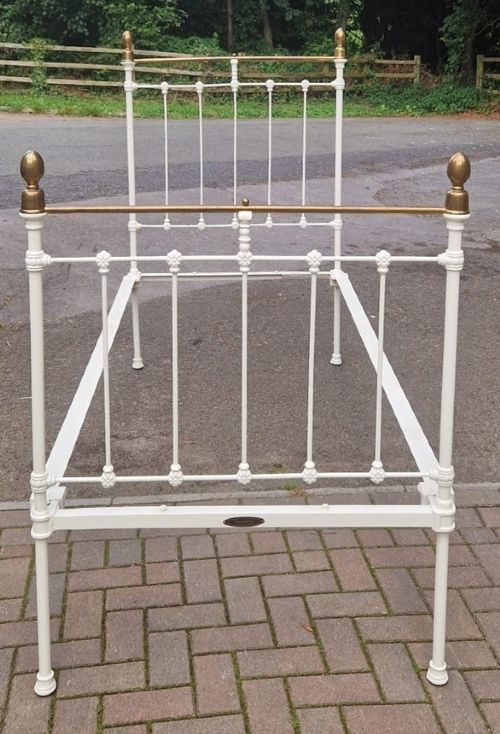
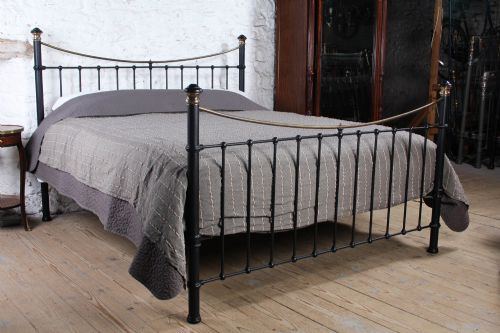
The versions you meet most frequently on this page pair dark painted iron structures with gleaming brass top rails and finials. They appear in double, king, and super king sizes, often featuring either straight rails or dipping top profiles.
Origins trace across the nineteenth century into the early 1900s, encompassing Victorian and Edwardian manufacturing traditions. The forms range from simple single beds to large super king frames with detailed castings and original castors.
How they were made
Manufacturers built these bed frames using a combination of cast iron, wrought iron, and brass. The structural body typically consists of heavy iron painted in black, providing the necessary rigidity and weight for daily use.
Brass elements such as top rails, mounts, and finials were fitted to the iron framework using mechanical joints and decorative castings. Many examples incorporate brass detail work along the foot and head boards, complemented by functional castors on the legs.
The listings span from 1880 through Victorian and Edwardian eras up to 1910, utilising brass, cast iron, and wrought iron.
What varies in quality
The distinction at the upper end of the range lies in the crispness of the iron castings and the substantial gauge of the brass tubing used for the rails. Better examples display careful finishing around the joints and retain their original castors.
Simpler configurations with straight rails often show more utilitarian construction, whereas ornate Victorian and Edwardian pieces invest heavily in decorative brass detail work and substantial metal framing.
The Brass Rail Bed Frame Glossary
- Dip rail
- A top rail on a bedstead that curves downwards toward the centre. This style appears frequently on Edwardian and Victorian frames.
- Straight rail
- A horizontal top rail maintaining a uniform height across the width of the head or foot board. It provides a clean, architectural silhouette.
- Castor
- A small wheel fitted to the base of the bed legs to allow movement. Many period pieces retain these original rolling supports.
- Cast iron
- A strong, heavy alloy used for the main structural components of these beds. It provides the foundational support before being painted.
Brass Rail Bed Frame: Frequently Asked Questions
What sizes do these beds come in?
These beds appear in single, double, king, and super king dimensions. The sizing follows historical standards adapted to modern proportions.
Larger formats like super king often feature more elaborate Victorian or Edwardian brass detailing.
Are modern mattresses compatible with them?
Most standard modern mattresses fit within the historical width and length dimensions of these frames. Supporting slats or bases are typically added to suit contemporary comfort.
The sturdy iron and brass construction easily supports modern mattress weights.
How do I care for the brass?
The brass components require occasional dusting and gentle cleaning to maintain their polish. A soft cloth prevents scratching the historic metal surfaces.
Avoid harsh chemical abrasives that can strip the natural ageing from Victorian or Edwardian brass.
How do I date these bed frames?
Dating relies on stylistic clues like dip rails, straight profiles, and the complexity of the brass castings. Victorian pieces often lean towards heavy ornamentation, while Edwardian examples show refined restraint.
The listed periods span from 1880 through to 1910.