


Brass Porch Light
A brass porch light brings a welcoming glow to an entrance, combining solid metalwork with protective glass panels to shelter a bulb from the weather.
Brass Porch Light
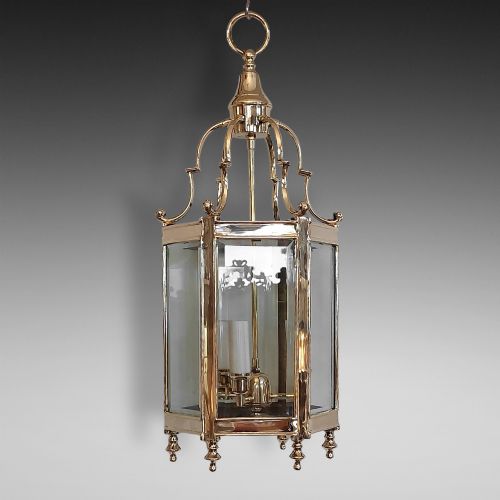
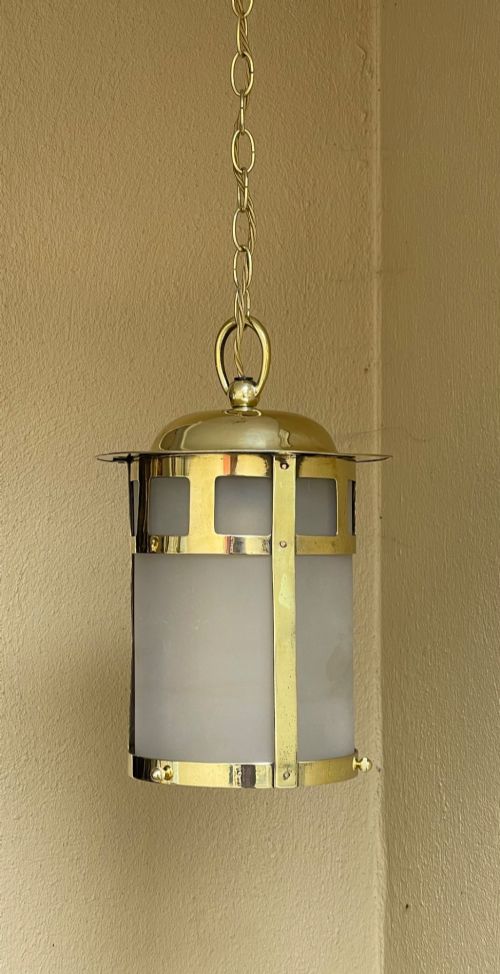
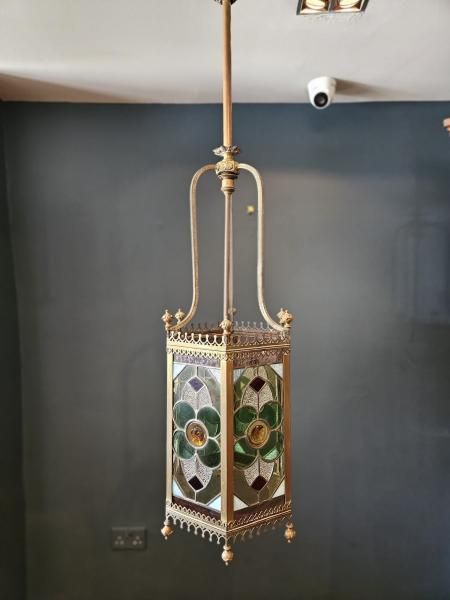
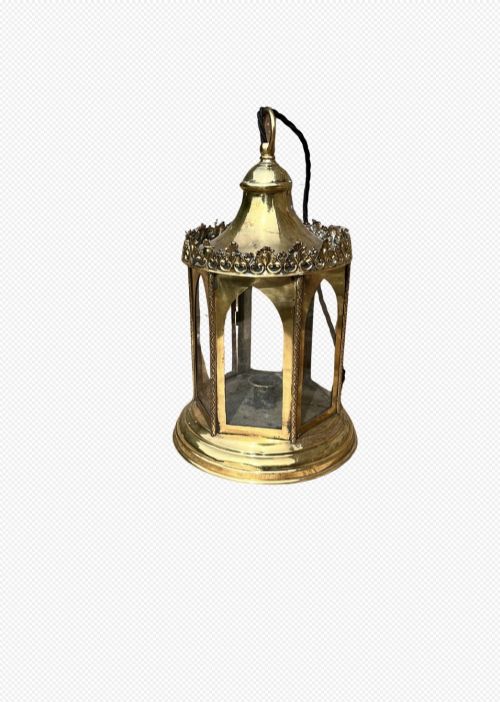
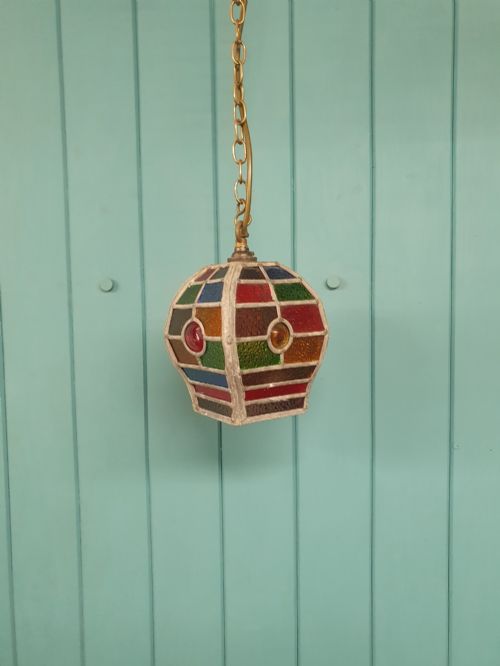
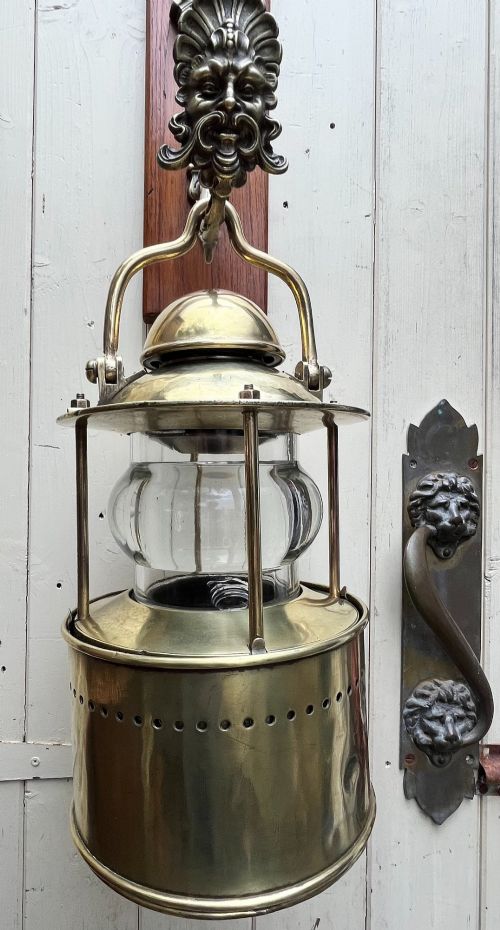
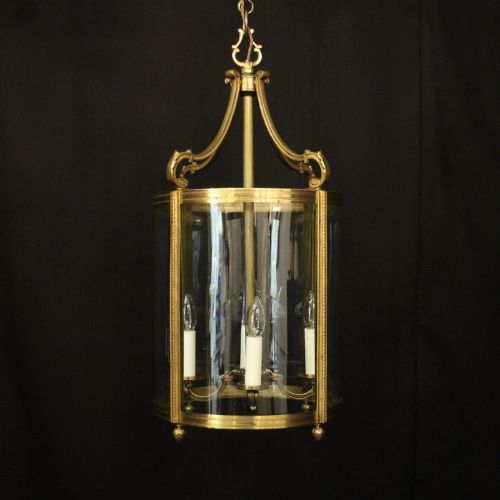
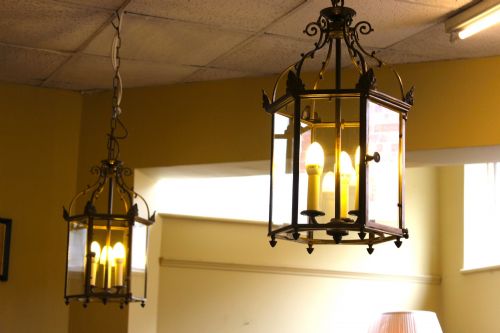
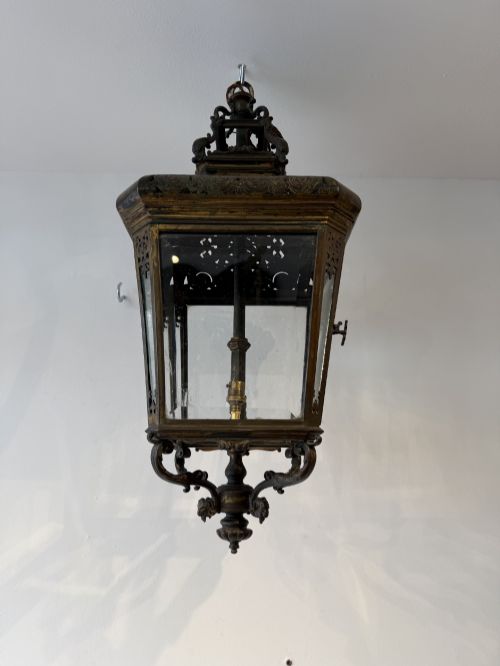
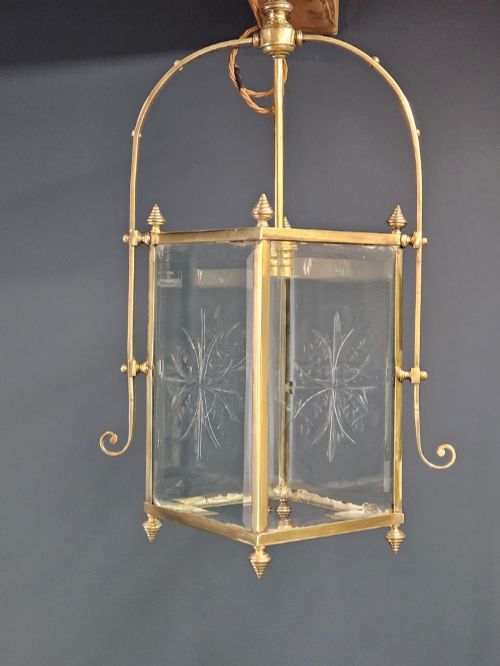
A brass porch light takes several forms, appearing most commonly on this page as hanging hall lanterns, hexagonal pendant lights, and wall-mounted carriage lanterns. These pieces span periods from the nineteenth century through the Edwardian era and into the Art Deco style of the 1930s.
The domestic entryway and exterior hall provide the natural home for these fixtures, which range from small, compact hallway lights to grand, multi-light country house coaching lanterns. Buyers encounter variations that include single-light wall brackets, pair configurations, and ceiling-hung pendants.
Origins stretch across English workshops and French foundries, encompassing distinct design vocabularies like Gothic Revival, Arts and Crafts, and the Aesthetic Movement. Each piece reflects the architectural ambitions of its period, from strict Victorian utility to decorative early twentieth-century flair.
Materials and construction
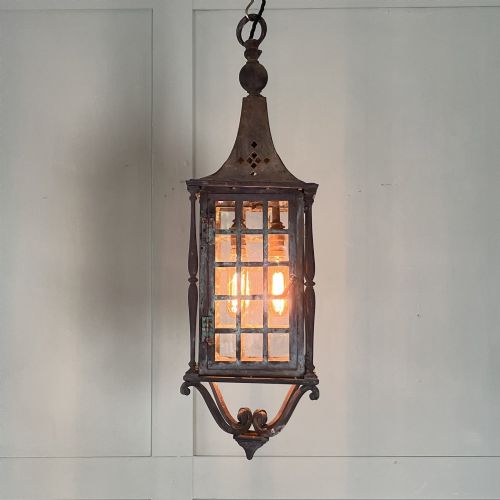
Construction relies heavily on brass frames, frequently paired with copper, bronze, or steel to form the structural housing for lighting elements. Metals are shaped into hexagonal, rounded, or framed profiles designed to withstand exterior environments.
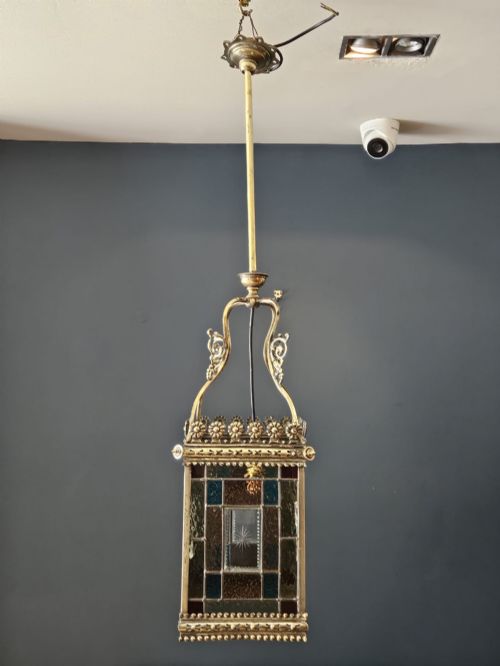
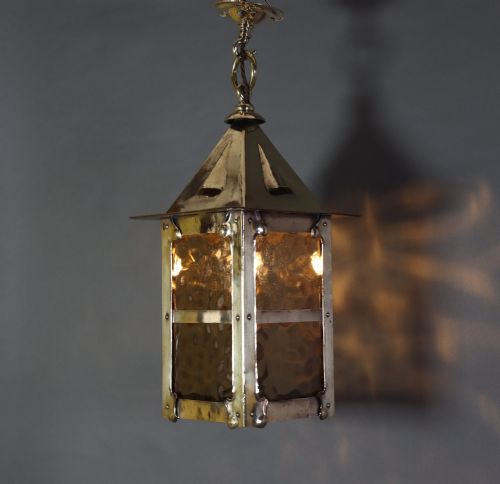
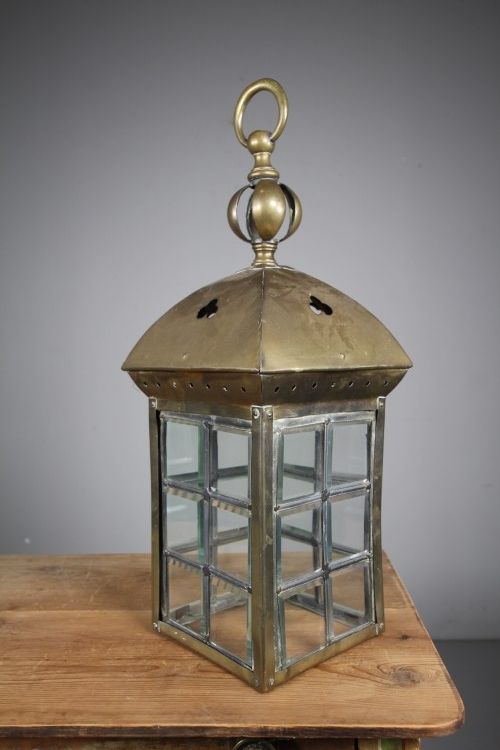
Glazing forms a central component, utilising plain glass, leaded glass, and leaded stained glass panels held securely within metal channels. Certain examples incorporate specialised coloured glass shades in red and yellow tones to alter the quality of illumination.
Assembly techniques range from soldered lead came holding intricate stained glass segments to riveted and bolted brass frameworks on robust coaching and hall lanterns. Many older pieces show evidence of later electrical adaptation.
One surviving pair of outside brass porch lights bears the mysterious initials V R, whispering of royal post or very rainy arrivals.
Judging the work
Quality reveals itself in the substantial gauge of the metalwork and the precision with which frames and glazing bars are joined. Heavier castings and thick, well-soldered leaded glass indicate superior construction that endures exterior placement.
Artistic execution distinguishes standard utilitarian hardware from pieces influenced by specific design movements like Arts and Crafts or Gothic Revival. Refined proportions, hand-finished metal surfaces, and thoughtful integration of decorative glass elevate a fixture's standing.
The Brass Porch Light Glossary
- Hexagonal lantern
- A lighting fixture featuring a six-sided glazed frame constructed from brass or copper. This geometric form remains common among Edwardian and Victorian porch lights.
- Leaded glass
- Small panes of glass held together by strips of lead, known as came, soldered at the joints. This technique creates patterned windows for exterior lanterns.
- Carriage light
- A wall-mounted lantern originally designed to illuminate the exterior of carriages or the entrances of stables and coaching inns. They often adopt robust metal construction for weather resistance.
- Aesthetic Movement
- A late nineteenth-century design style emphasising visual and decorative qualities over strict narrative purpose. Pieces from this movement often display refined, stylized metalwork.
- Gothic Revival
- An architectural and decorative style drawing inspiration from medieval forms, featuring pointed arches and structural tracery. Lanterns in this style frequently mimic ecclesiastical metalwork.
Brass Porch Light: Frequently Asked Questions
Where should I hang a porch lantern?
These fixtures suit sheltered exterior entryways, vestibules, and entrance halls where they provide immediate illumination upon arrival. Their weather-resistant metal and glass construction helps protect the internal bulb from outdoor elements.
Consider the scale of the entrance when choosing a pendant or wall-mounted version. Larger coaching lanterns suit expansive doorways, while compact hexagonal designs fit modest hallways.
Are these lights ready for modern wiring?
Many antique lanterns have already been electrified during their working life to accommodate modern electrical standards. Buyers should inspect the internal wiring of any prospective purchase to confirm its suitability for current installation.
Rewiring can typically be undertaken by a qualified electrician if the existing internal fittings do not meet modern requirements. The primary frame and glass generally remain untouched during this process.
How do I identify an Edwardian brass lantern?
Edwardian pieces often display lighter, more refined brass framing compared to heavy Victorian designs, frequently utilising hexagonal or rounded geometries. They frequently date from the period around 1900 to 1910.
Arts and Crafts influences also appear during this era, showing simple, honest construction methods and thoughtful attention to the metal frame's profile.
What is the difference between a pendant and a wall lantern?
Pendant lights hang downward from a ceiling or porch roof by a chain, cord, or rigid brass rod. They cast light downwards and outwards from a central point.
Wall lanterns, including carriage lights and side lanterns, mount directly onto vertical surfaces beside a door. They project outward to illuminate the threshold and approach.