
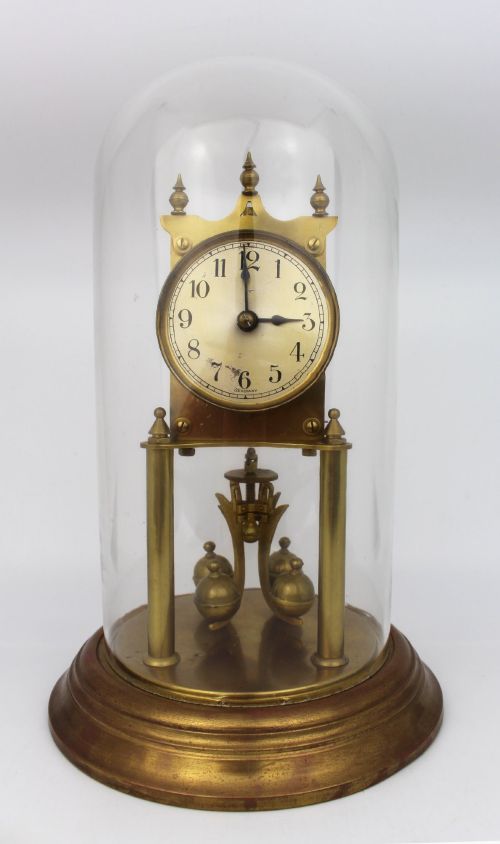
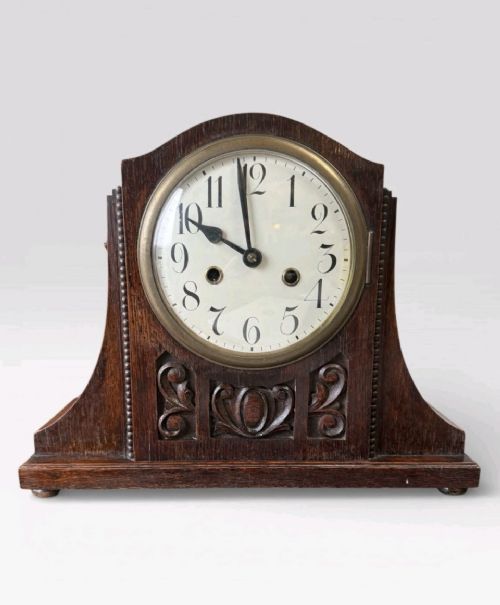


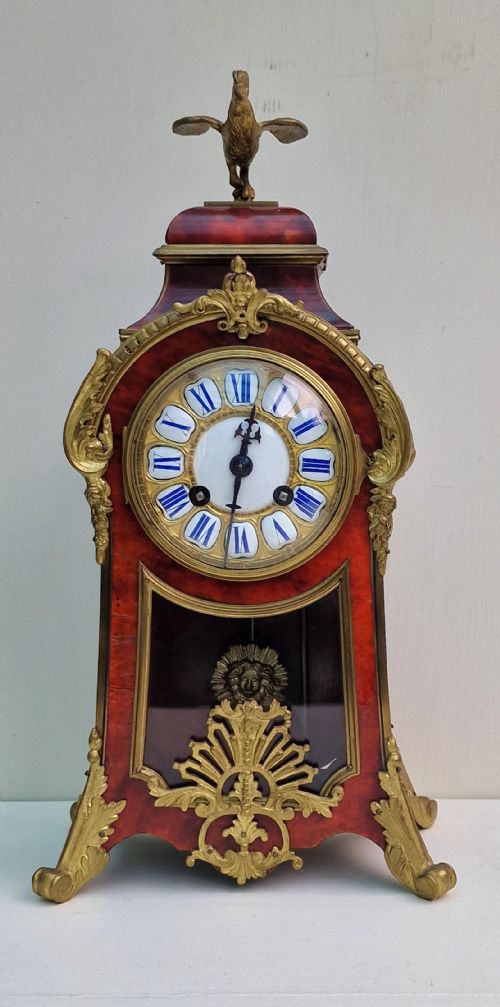


Brass Pendulum Shelf Clock
A brass pendulum shelf clock sits firmly upon domestic mantelpieces, measuring time through the steady swing of its pendulum.
Brass Pendulum Shelf Clock
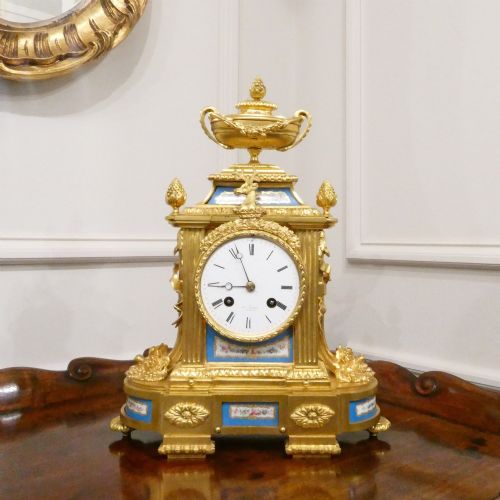
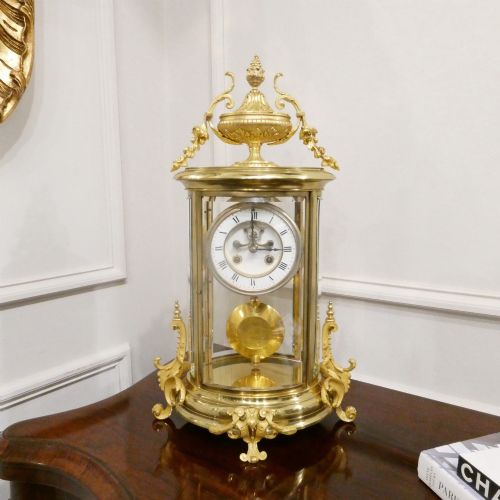
A brass pendulum shelf clock brings mechanical timekeeping into domestic interiors, combining functional dial work with decorative casing. You encounter various forms here, ranging from French crystal regulators to Victorian marble and mahogany architectural cases.
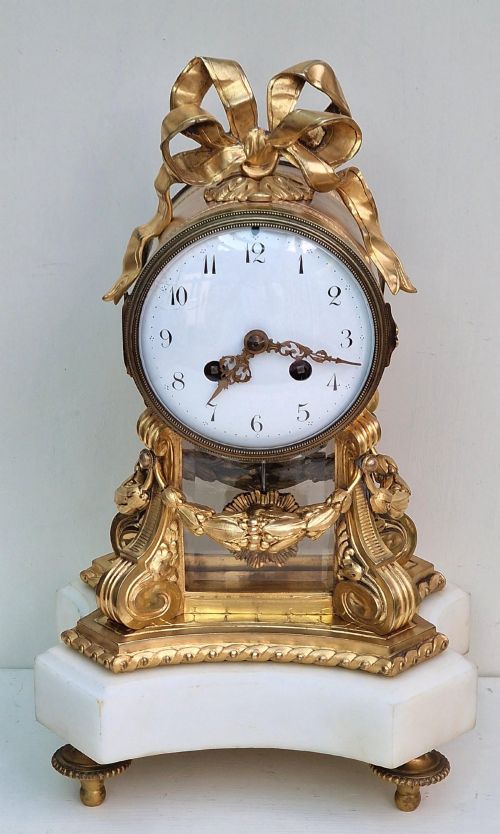
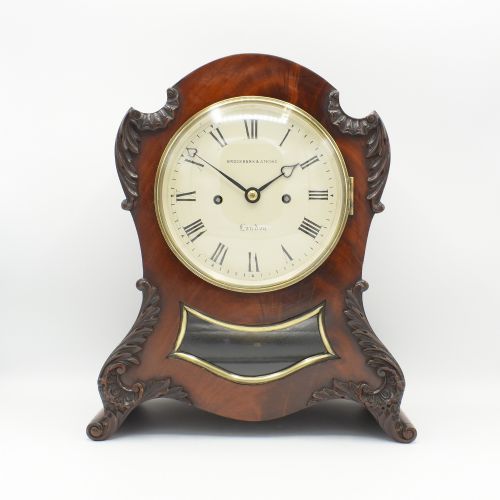
The selection leans heavily toward nineteenth-century production, particularly French gilt bronze and brass four-glass mantel clocks alongside English wooden bracket clocks. These objects served both as reliable timepieces and as central ornaments for the parlour or drawing room shelf.
Materials and construction
Cases combine structural timber, such as mahogany, rosewood, walnut, and oak, with cast brass, gilt bronze, or ormolu mounts. Marble and black slate also form substantial architectural bodies designed to house mechanical movements.
Enamel dials feature painted numerals, while glass panels protect the internal escapement and swinging pendulum. Intricate marquetry, porcelain plaques, and carved details complete the exterior presentation of these mechanical works.
Certain nineteenth-century French models keep track of atmospheric conditions by tucking a working thermometer directly into the dial surround.
Distinctions in manufacture
Quality separates mass-produced workshop output from pieces bearing the signature of notable makers. The crispness of the gilt bronze chasing, the weight of the marble or slate, and the fineness of the dial painting mark the upper tier.
The complexity of the movement influences standing, with eight-day striking mechanisms and specialised additions like thermometers marking more ambitious production. Casing materials also differentiate examples, from plain timber to elaborate marquetry inlay.
Henry Marc·Samuel Marti·Delettrez·Baby and Jannings·Thomas A Paris·D Munsey of Cambridge·Savory and Fils A Paris·L Epee·Seikosha Seiko·Brockbanks and Atkins
The Brass Pendulum Shelf Clock Glossary
- Pendulum
- A suspended weight that swings back and forth to regulate the speed of a clock movement. Its steady oscillation governs the escapement.
- Ormolu
- Gilded bronze produced by applying a mercury and gold amalgam to cast bronze. This technique creates a rich golden finish on decorative mounts.
- Escapement
- The internal mechanical linkage that converts rotational force from the gear train into impulses to sustain the pendulum's swing. It controls the release of power.
- Bracket clock
- A portable table or shelf clock historically designed to sit upon a wall bracket. Many examples feature substantial wooden or brass cases with carrying handles.
- Four-glass clock
- A mantel clock housed in a brass frame with glass panels on all four sides. This construction allows full visual access to the moving pendulum and gear train.
Brass Pendulum Shelf Clock: Frequently Asked Questions
How do I wind the clock?
A key fits into winding squares on the dial face to tension the internal springs. Turn the key gently until resistance signals the spring is fully wound.
Take care not to overwind the movement, as this can damage the internal mechanism. Regular winding keeps the pendulum swinging at a consistent rate.
Where should I place the clock?
Position the piece on a level mantelpiece, shelf, or bracket to ensure the pendulum hangs truly vertical. Uneven surfaces cause the beat to become irregular and the clock may stop.
Keep the clock away from direct sunlight, dampness, and draughts to protect the wooden or gilt casing and the delicate internal steel components.
What period do these clocks belong to?
The selection spans the nineteenth and early twentieth centuries, capturing Victorian, Edwardian, and various continental revival styles. Dates range from early nineteenth-century mahogany cases to later crystal regulators.
Maker signatures, case timbers, and stylistic motifs such as Louis XVI or Egyptian Revival help pinpoint the era of manufacture.