




Brass Pendant Lighting
Brass pendant lighting brings focused illumination and period character to a room, spanning grand chandeliers and glass-sheathed lanterns.
Brass Pendant Lighting
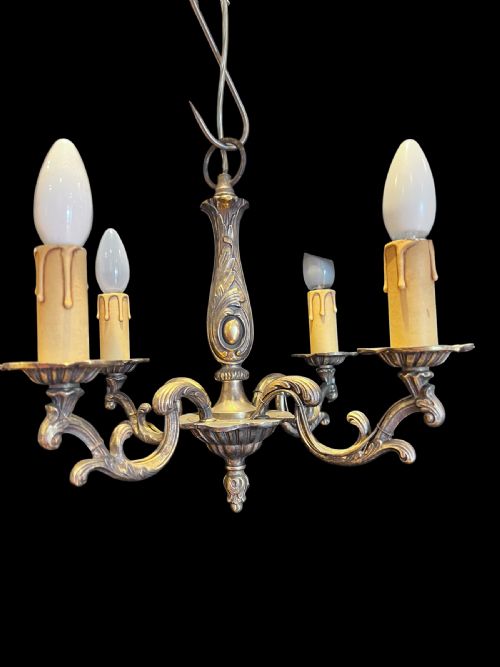
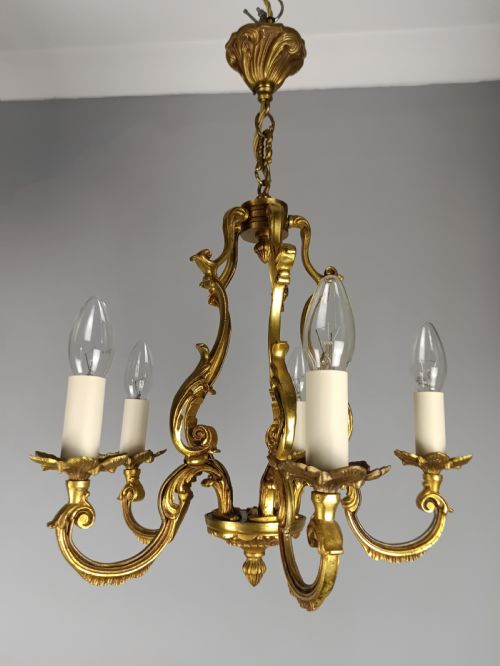
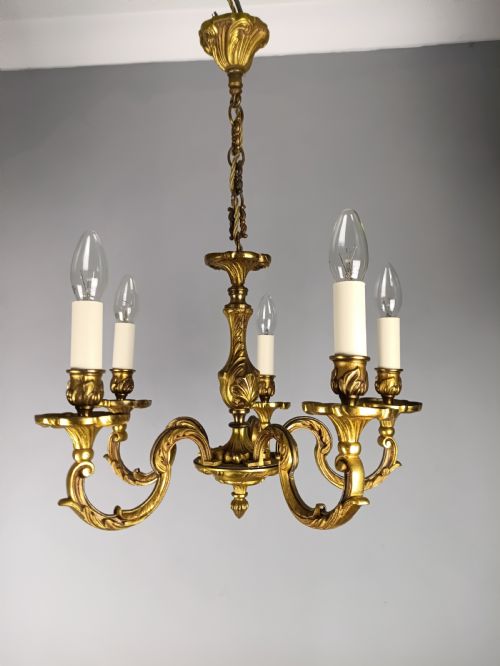
Brass pendant lighting encompasses hanging fixtures designed to illuminate interiors from above, drawing on forms produced across the nineteenth and twentieth centuries. Buyers searching for this phrase encounter a broad assortment of ceiling-hung objects, from multi-armed chandeliers to enclosed hall lanterns.
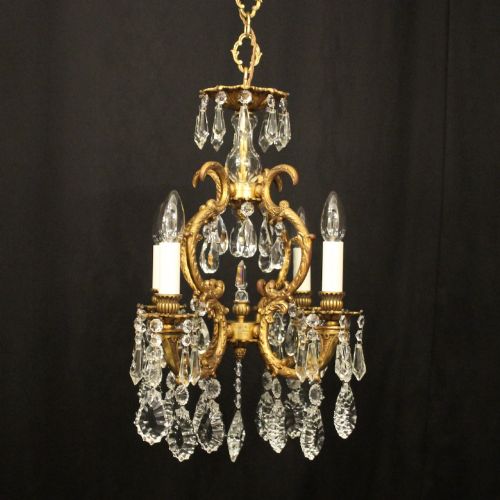
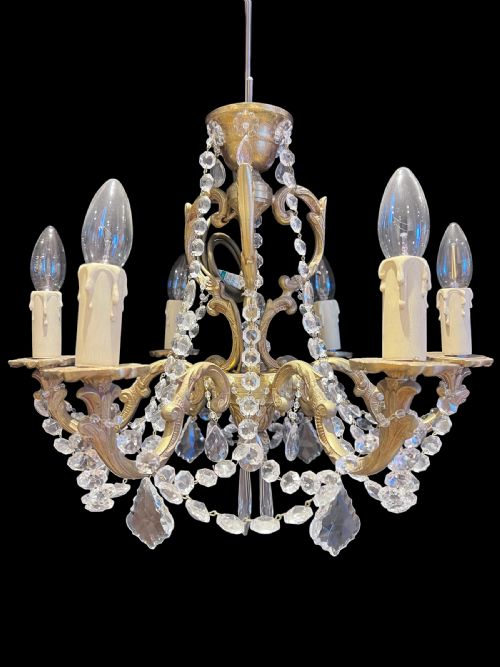
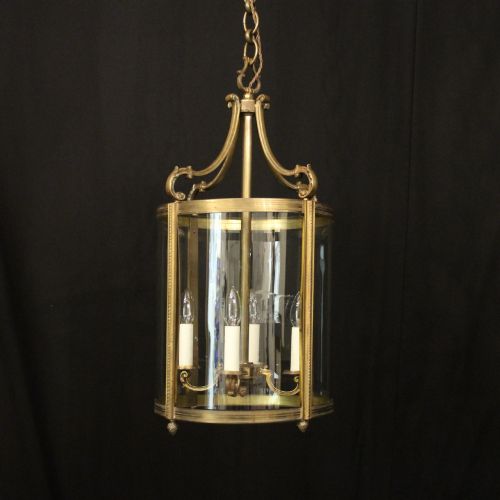
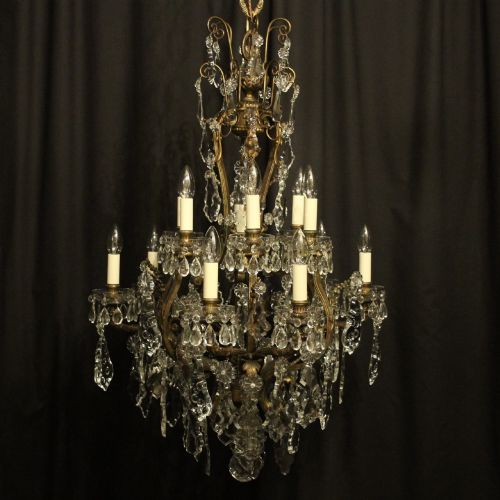
The selection on this page relies heavily on French output, alongside English, Italian, and American examples, spanning periods from the Victorian era through the Art Deco epoch. Common configurations include basket chandeliers, multi-light fixtures hung with crystal lustres, and glazed lanterns suspended by chains.
Specific stylistic currents emerge throughout the inventory, ranging from ornate French Rococo and Empire revivals to geometric Arts and Crafts designs. These pieces functioned historically in grand halls, billiard rooms, and town houses, offering both utility and decorative presence.
How they were made
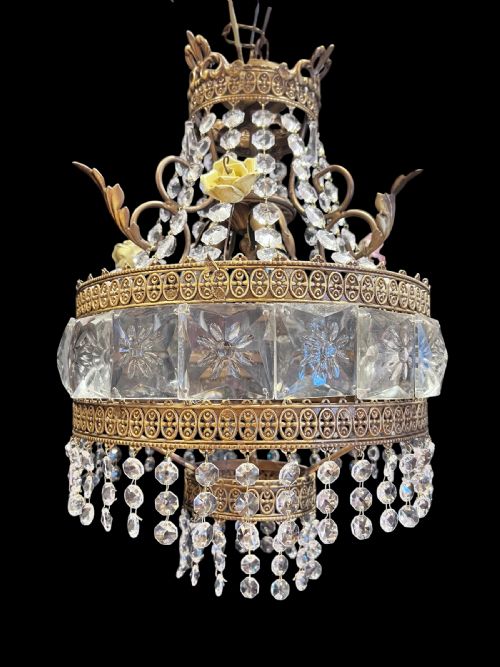
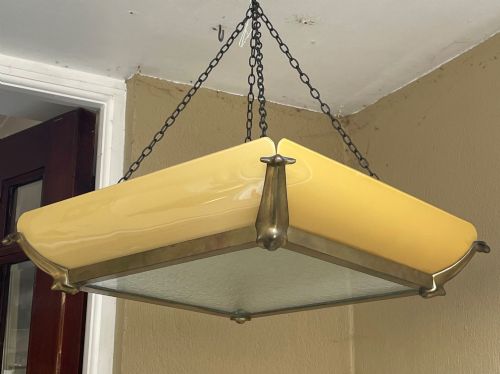
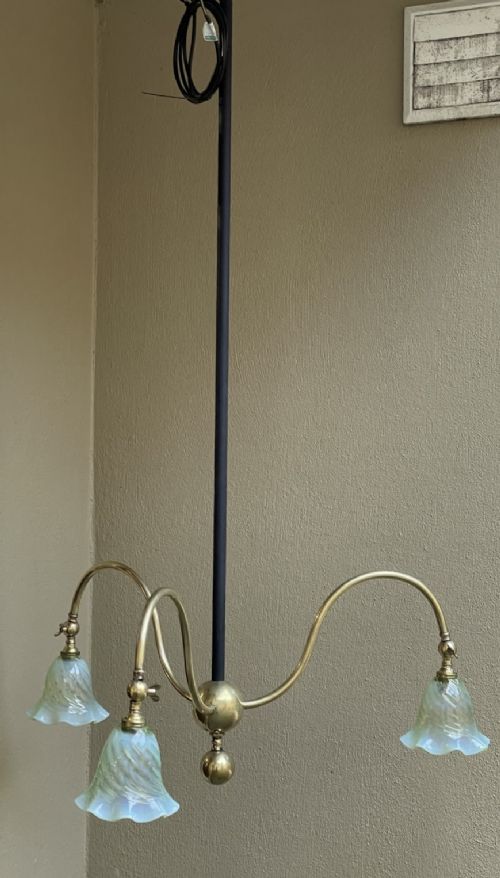
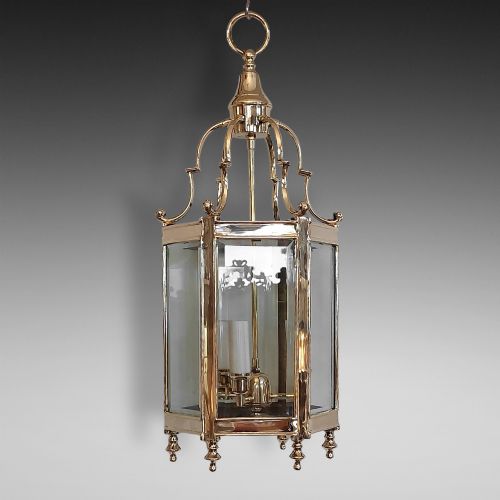
Makers constructed these fixtures using cast and beaten brass, bronze, and gilt bronze, often pairing metal frameworks with transparent elements. Glass components take the form of cut crystal lustres, bevelled panes, lead glass, and moulded slip shades.
Artisans employed metalworking techniques such as piercing, casting, and gilding to enrich the surfaces of frames and lanterns. Structural components support multi-light configurations, incorporating gasolier adaptations or electrical fittings housed within decorative brass bodies.
One twenty-th century piece arrives shaped precisely as a Moravian star, ensuring your hallway doubles as an indoor constellation.
What varies in quality
The distinction between standard and superior pieces rests on the crispness of metal casting and the complexity of the decorative scheme. Elaborate chasing on gilt bronze surfaces and the inclusion of extensive cut crystal or opalescent glass elements elevate a fixture's visual weight.
Provenance and stylistic coherence also influence the standing of an item, as seen in pieces linked to municipal commissions or specific design movements like Arts and Crafts. Original glass shades, intact crystal lustres, and unified period hardware define the higher reaches of the range.
The Brass Pendant Lighting Glossary
- Chandelier
- A branched decorative ceiling fixture designed to hold multiple lamps or candles. These units often feature arms arranged symmetrically around a central axis.
- Hall Lantern
- An enclosed hanging light fixture featuring glazed panels set within a metal frame. They were traditionally positioned in entrance halls and corridors.
- Crystal Lustre
- A cut glass pendant drop hung from chandelier arms or crowns to refract light. They catch and disperse illumination across the room.
- Slip Shade
- A piece of moulded glass that fits directly into a metal frame to diffuse light from the bulbs behind it. This technique is prominent in Art Deco fixtures.
- Gasolier
- A multi-burner lighting fixture designed for gas illumination before the widespread adoption of electricity. Many survive converted to electric operation.
Brass Pendant Lighting: Frequently Asked Questions
What periods do these lights cover?
The available lighting spans from the nineteenth century through the early twentieth century, taking in Victorian, Edwardian, and Art Deco eras.
Specific decades represented include the 1890s, 1900s, 1910s, 1920s, and 1930s, alongside broader Victorian and Edwardian designations.
Where were these fixtures used?
Historically, these hanging lights illuminated grand domestic spaces, civic buildings, and corridors.
Specific contexts recorded in the evidence include town halls, billiard rooms, and entrance halls where ambient or focused overhead illumination was required.
What materials are common in these lanterns?
Brass and bronze form the structural core of most pieces, often enhanced with gilding or gilt bronze finishes.
Transparent elements such as cut glass, crystal lustres, bevelled glass, and opalescent shades are frequently integrated into the metal frames.