
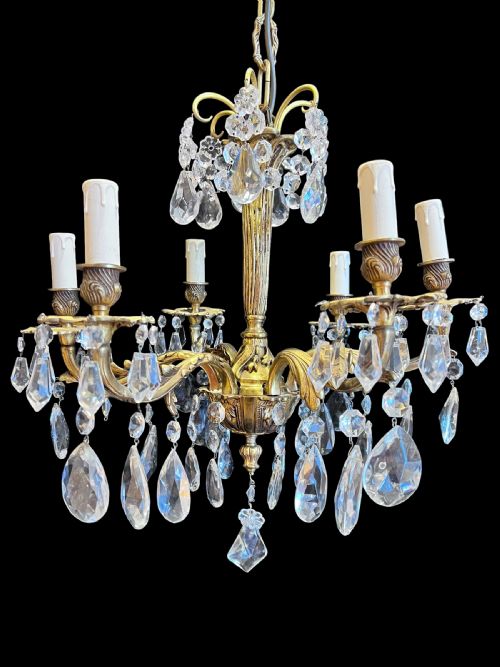
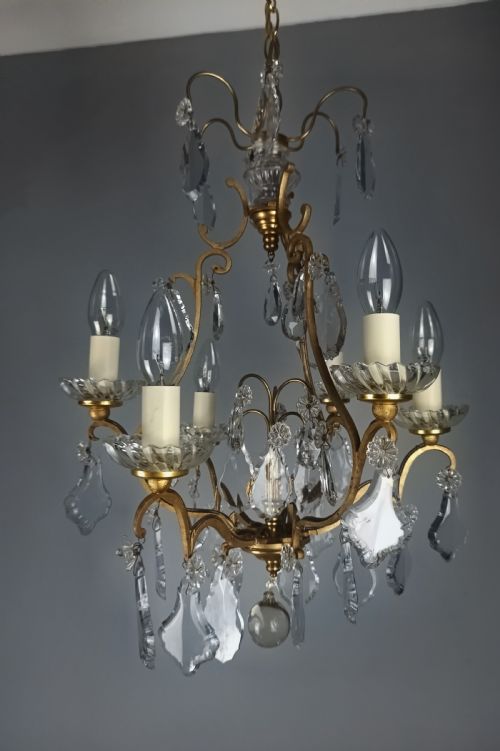
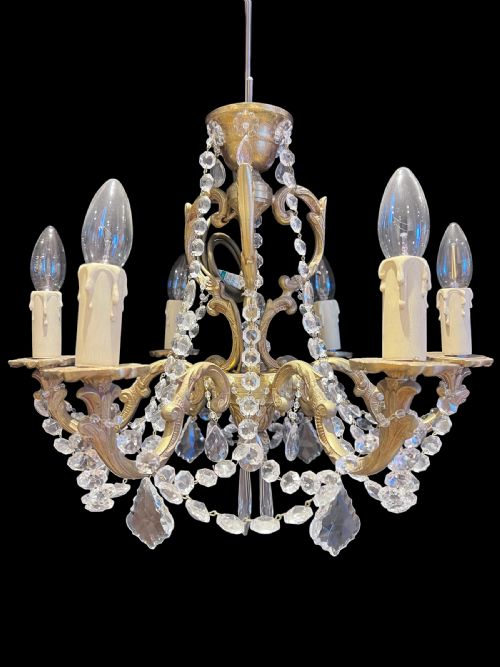
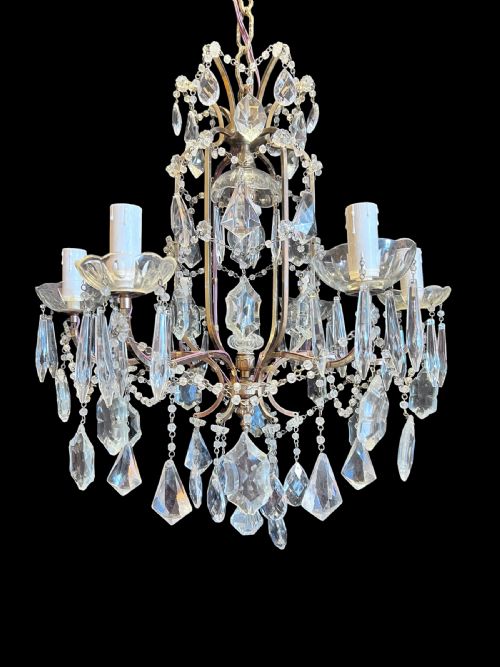
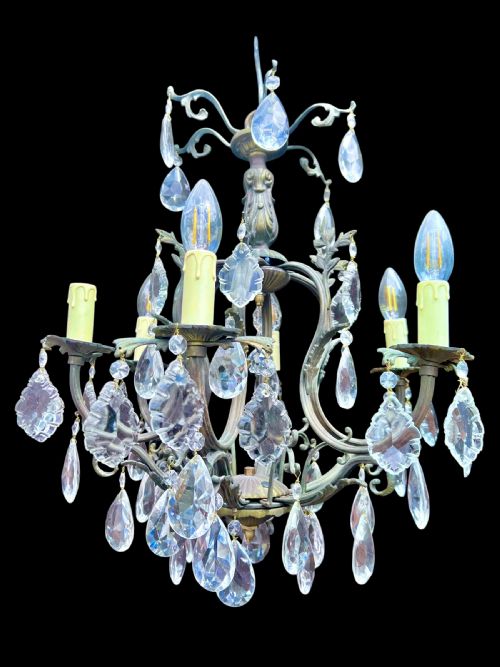
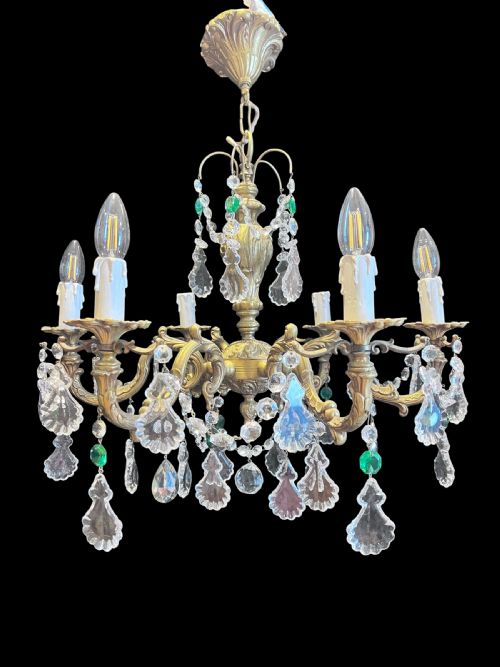
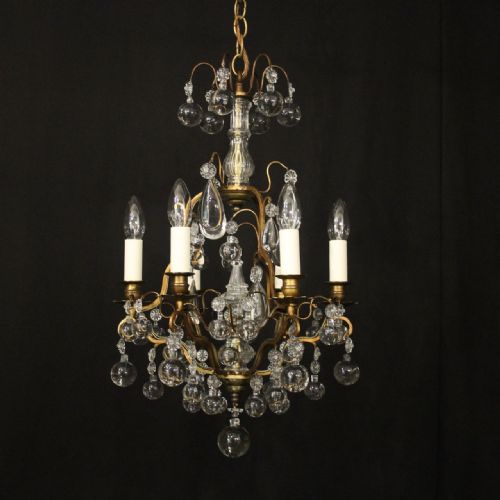

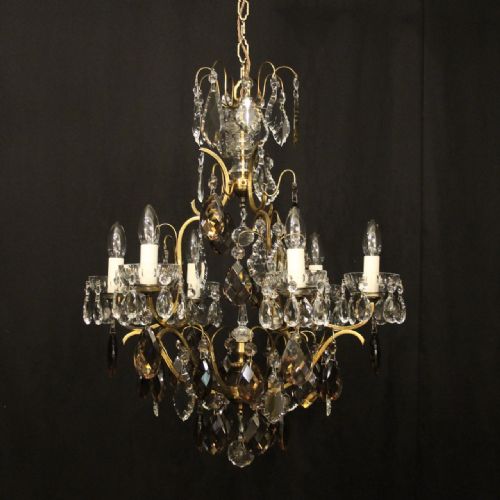
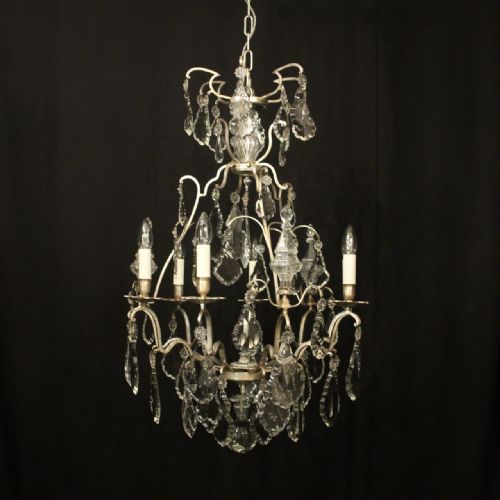


Six Light Crystal Chandelier
A six light crystal chandelier brings unmistakable sparkle to a room, offering grand illumination through tiers of cut glass and polished metal.
Six Light Crystal Chandelier
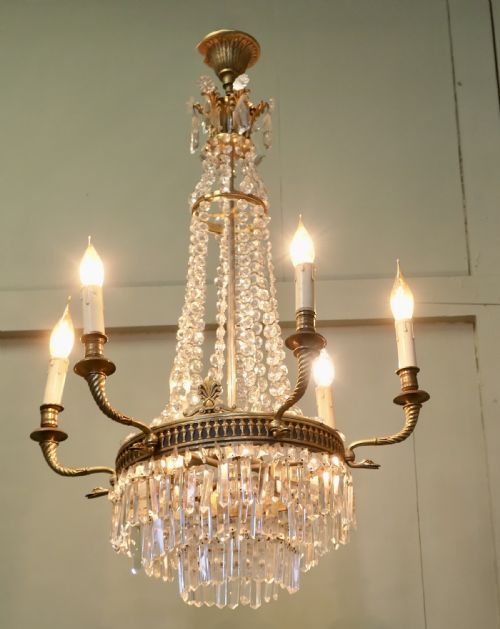
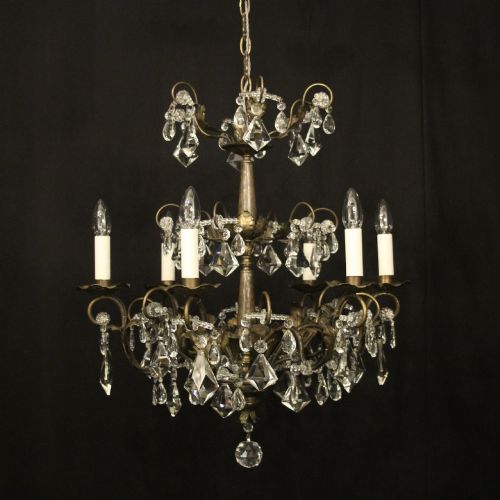
A six light crystal chandelier stands as a prominent ceiling fixture designed to distribute light across a space via six distinct arms or branches. When searching for a six light crystal chandelier, buyers typically encounter examples stretching from the late nineteenth century through to the interwar decades of the twentieth century.
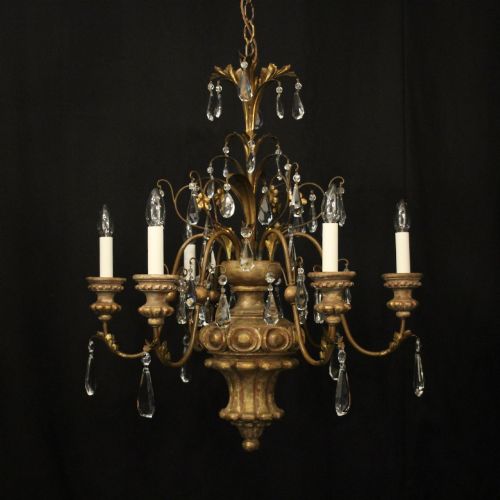
The selections span distinct regional traditions, most notably French chateau and Rococo revival models alongside Italian Florentine and Neo-Classical designs. Forms range from traditional birdcage frames and tent-and-waterfall drops to open-cage bronzes and occasional table lamps configured as girandoles.
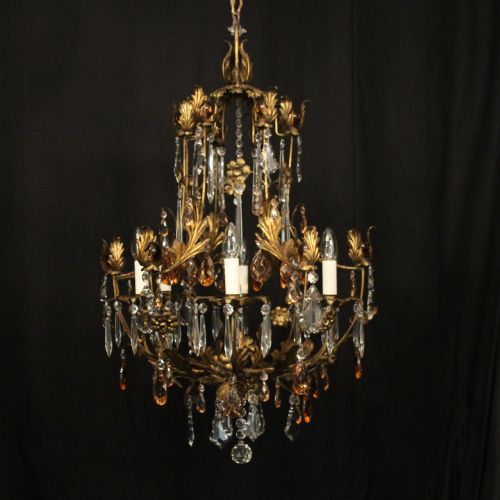
Many specimens incorporate specific decorative flourishes such as coloured crystals, amethyst glass, polychrome metalwork, or fruit ornaments suspended from the arms. These variations reflect the diverse interior tastes of nineteenth-century drawing rooms and twentieth-century salons alike.
How they were made
Frameworks rely heavily on cast and wrought metals, utilising brass, bronze, gilded metal, silvered metal, and occasionally iron to form the structural skeleton and arms. These metal components are frequently gilded or silvered to enhance the reflective properties of the fixture.
Prisms, drops, and beads are fashioned from clear cut glass and crystal, often wired or pinned together by hand to drape gracefully around the central stem. Specialised pieces integrate coloured crystals or amethyst glass elements to introduce contrasting hues into the light refraction.
Certain antique specimens come unexpectedly adorned with suspended crystal fruits, adding a touch of botanical whimsy to the parlour.
What varies in quality
The calibre of a fixture is largely determined by the precision of the glass cutting and the clarity of the crystal drops, which dictate how brilliantly light disperses through the room. Hand-cut glass elements display crisp facets and substantial weight compared to simpler, moulded alternatives.
The Six Light Crystal Chandelier Glossary
- Birdcage chandelier
- A lighting fixture featuring a curved metal framework resembling an open birdcage, typically draped with strings of crystal beads.
- Tent and waterfall
- A configuration where crystal strands form an upper tent shape above a lower cascade of glass drops falling towards the arms.
- Girandole
- A branched candleholder or electrified light fixture, sometimes produced in matching pairs or adapted as a table lamp.
- Cut glass
- Glass that has been decoratively shaped and faceted by grinding on a wheel to maximise light refraction.
- Gilt metal
- Base metal treated with a thin layer of gold or gold-coloured finish to simulate solid gold enrichment.
Six Light Crystal Chandelier: Frequently Asked Questions
How do I hang a six light crystal chandelier?
Suspension requires securing the fixture to a ceiling joist using an appropriate weight-bearing hook and chain suited to the metal frame.
Electrical wiring must be routed carefully through the central stem, often consulting a professional to ensure safe connection to the domestic supply.
Which rooms suit a six light crystal chandelier?
These fixtures fit grand dining rooms, high-ceilinged drawing rooms, and spacious hallways where the six branches provide balanced ambient illumination.
Smaller iterations can also be positioned in bedrooms or studies to introduce a decorative focal point without overwhelming the floor plan.
How do French and Italian styles differ?
French models frequently showcase Rococo revival curves, gilded birdcage frames, or tent-and-waterfall crystal drops characteristic of nineteenth-century chateaux.
Italian pieces often lean towards Florentine or Neo-Classical motifs, employing open gilt frames and distinct floral or classical metal embellishments.
How do I clean a crystal chandelier?
Routine maintenance involves dusting the glass drops gently in situ using a soft mitt or specialised non-drip spray cleaner.
For thorough restoration, individual crystals can be unclipped, washed in warm soapy water, dried carefully, and reattached to the metal arms.