
Vintage Crystal Drop Light
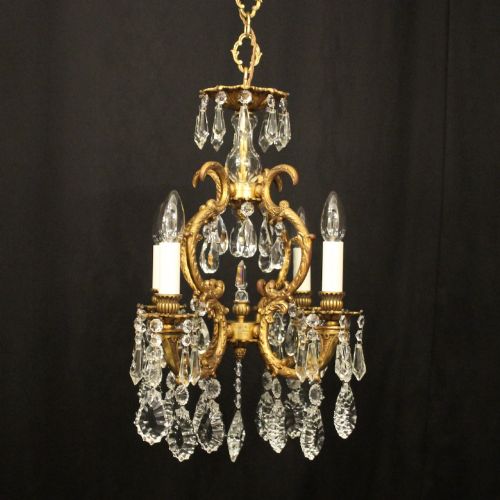
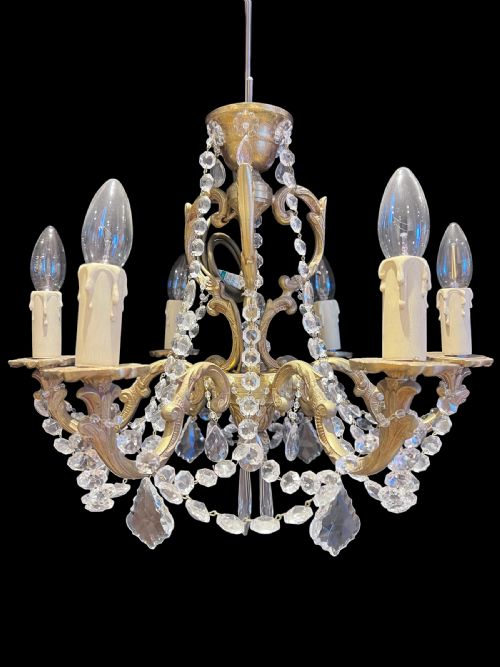
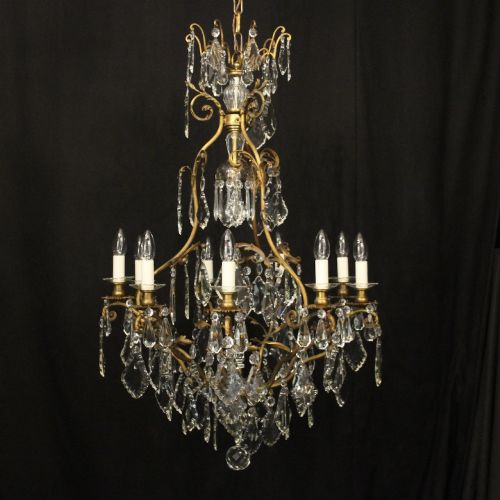
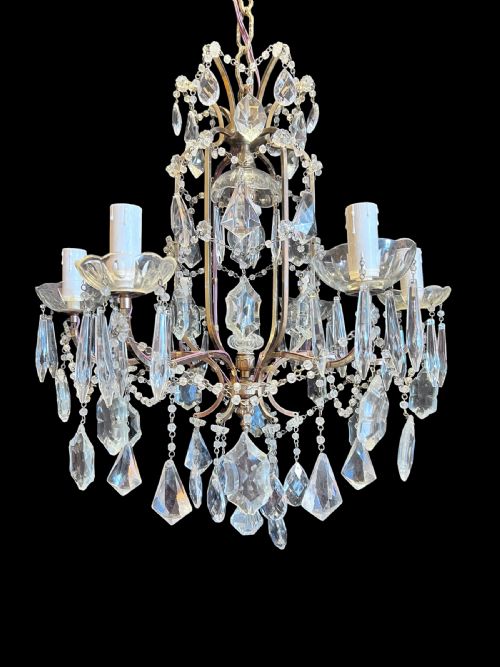
A vintage crystal drop light brings brilliant refraction and period elegance into a room through cut glass pendants suspended from brass and gilt metal frames.
Vintage Crystal Drop Light
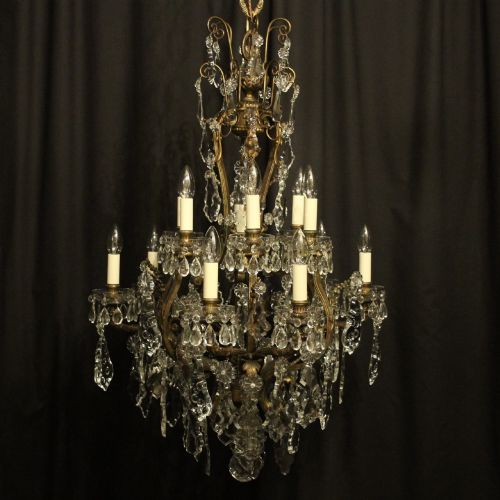
A vintage crystal drop light encompasses multi-arm chandeliers, wall sconces, ceiling lights, and mantel lustres designed to scatter light across a space. These pieces emerge predominantly from the nineteenth century, the Edwardian era, and the 1910s, 1920s, and 1930s.
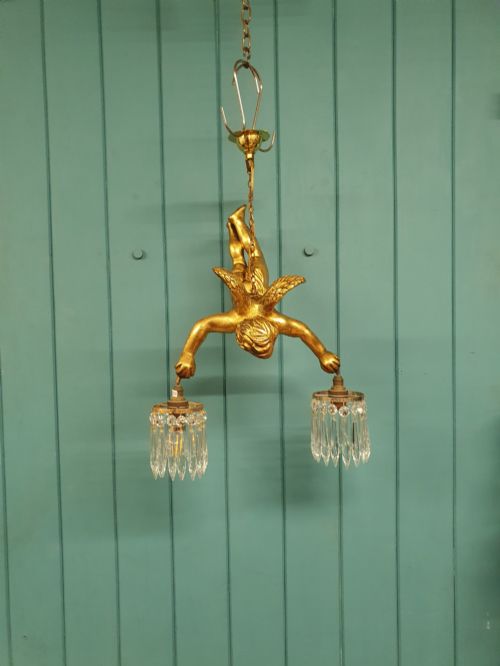
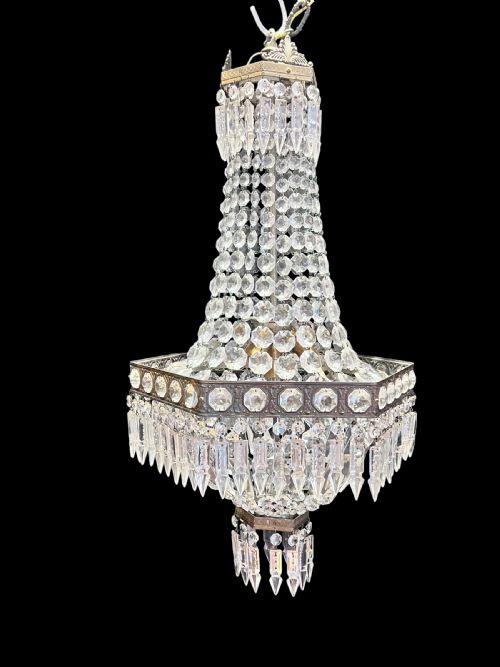
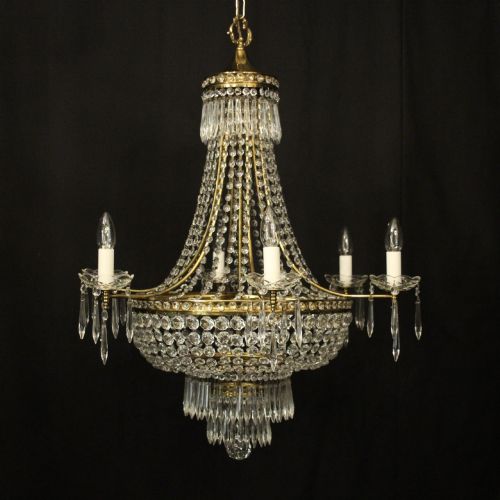
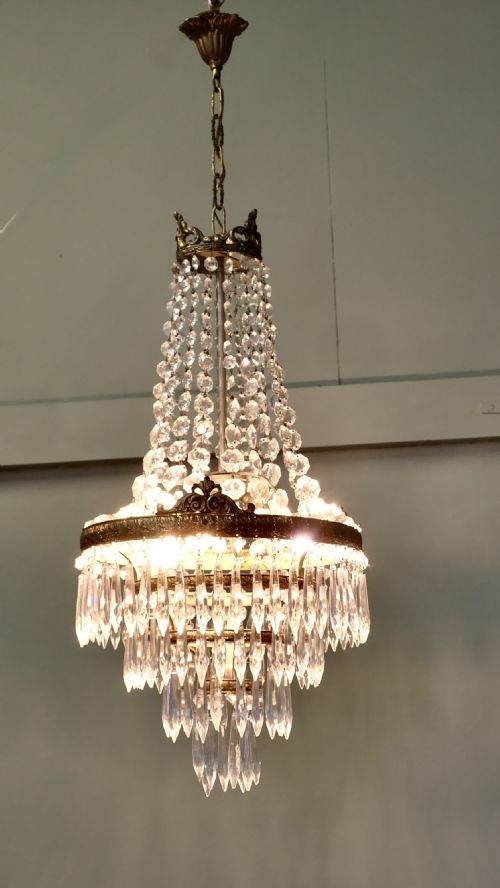
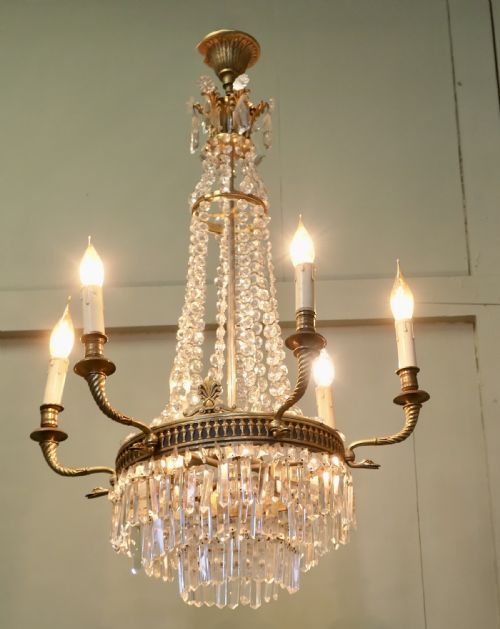
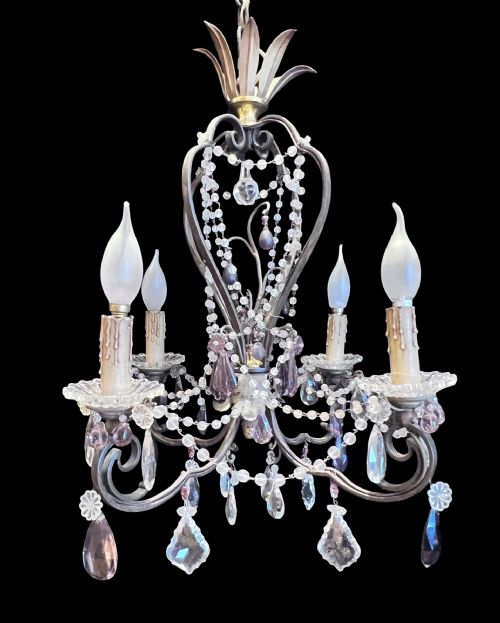
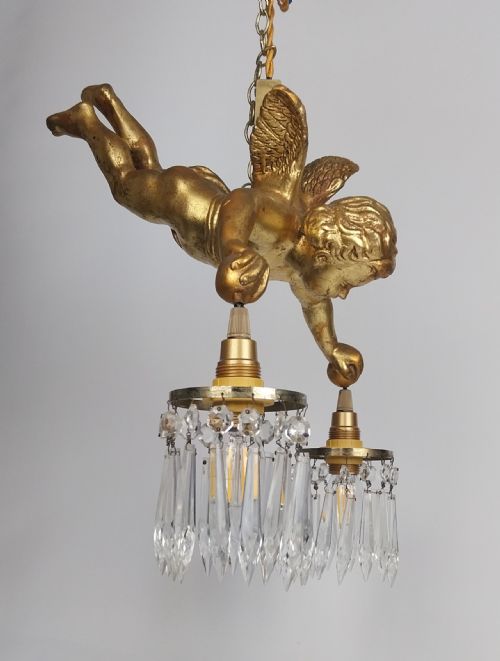
French and Italian workshops dominate the forms, yielding elaborate variations like tent and waterfall configurations, basket chandeliers, and winged cherub mounts. Buyers encounter fixtures featuring coloured crystals, amethyst glass, turquoise crystal, and ruby glass alongside standard clear glass drops.
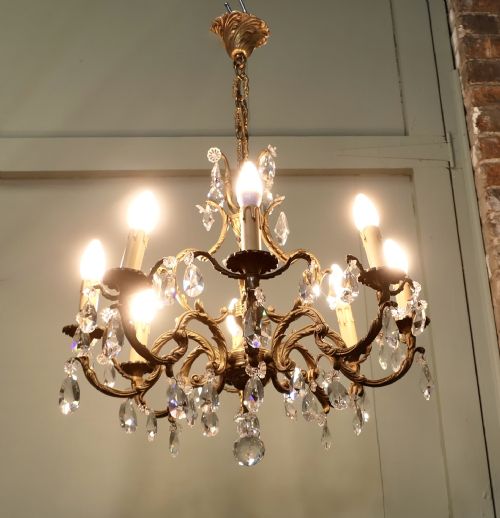
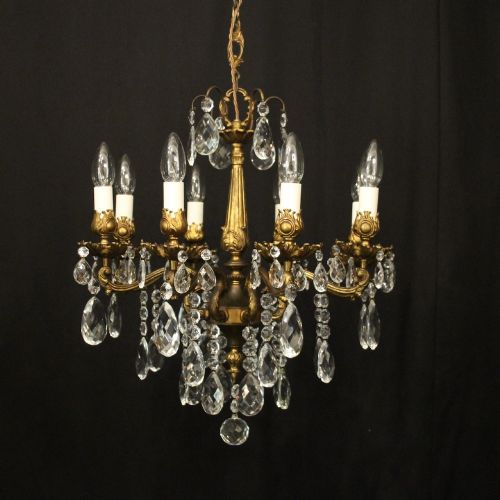
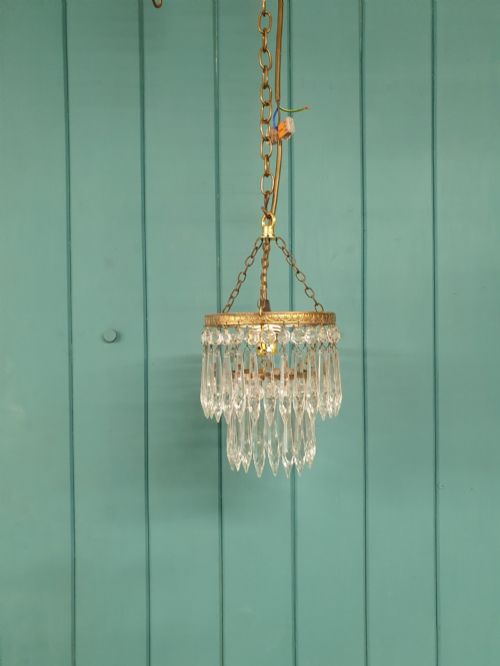
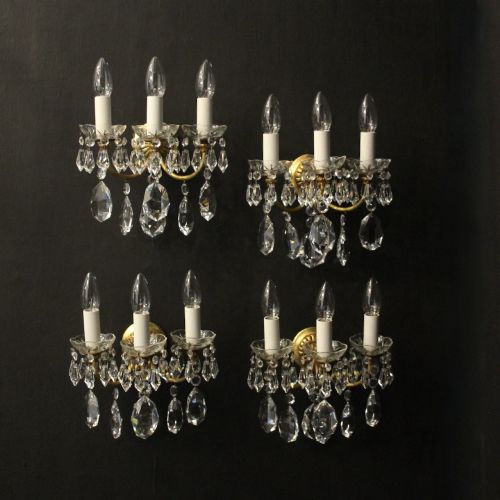
The selection ranges from grand multi-light ceiling suspensions down to compact single-light pendants and matching pairs of wall sconces. Brass, gilt bronze, gilt brass, and silver gilded frames support the faceted glass elements across diverse decorative styles.
How they were made
Metalworkers cast and chased brass, bronze, spelter, and gilt metal to form the structural arms, bands, and decorative motifs such as leaf decoration and flying cherubs. Frames then received gilding or silver plating to enhance their reflective properties before assembly.
Glassmakers blew and cut crystal glass, creating individual pendants, spikes, coffin prisms, and lustres that refract light. Artisans wired these glass drops onto the metal frames by hand using small metal pins or rings.
Listings feature pieces spanning from the nineteenth century through the Edwardian era up to the 1930s, constructed in brass, gilt metal, and cut glass.
What varies in quality
The clarity and depth of the glass cutting dictate how effectively a drop light scatters illumination. Heavy hand-cut crystal and coloured glass elements provide superior brilliance compared to simpler pressed glass alternatives.
The density and detail of the metalwork set apart different tiers of production. Finely chased gilt bronze and substantial brass frames with intricate leaf or figural ornamentation reflect a higher standard of craftsmanship than plain or lightweight metal structures.
The Vintage Crystal Drop Light Glossary
- Tent and waterfall
- A chandelier style featuring an upper conical section of beads draped like a tent, descending into cascading strands of crystal drops. This arrangement maximises light refraction across the fixture.
- Coffin prisms
- Long, narrow glass drops with a flat front and bevelled edges resembling the shape of a traditional coffin. They hang closely together to catch and disperse ambient light.
- Mantel lustres
- Decorative ornamental vases or candlesticks hung with long glass crystal drops, traditionally placed on mantelpieces. They provide visual sparkle without necessarily serving as primary light sources.
- Spelter
- An alloy of zinc and lead used as a base metal for cast decorative figures like cherubs and putti on lighting fixtures. It was often gilt or painted to imitate bronze.
- Tolewear
- Painted or lacquered sheet metal utilised in lighting design to add colourful decorative accents to the frame. It introduces contrasting hues alongside brass and crystal.
Vintage Crystal Drop Light: Frequently Asked Questions
How do I clean a crystal drop light?
Maintenance involves gentle cleaning of individual glass drops and prisms using a mild solution of warm water and dish soap. Technicians often clean the pieces in place or carefully remove the crystals to avoid disturbing the internal wiring.
After washing, each glass piece requires careful drying with a lint-free cloth to restore maximum sparkle before reattachment to the brass or gilt frame.
What rooms suit a basket chandelier?
Basket chandeliers suit spaces with moderate ceiling heights where a flush or semi-flush profile provides adequate clearance while maintaining decorative impact. Their compact, rounded silhouette directs illumination downward effectively.
These fixtures fit dining areas, hallways, or bedrooms where large multi-tier pendant lights might overwhelm the proportions of the interior space.
How do I date an Edwardian drop light?
Dating relies on examining the construction methods, metal alloys, and specific glass cutting styles characteristic of the early twentieth century. Edwardian pieces often incorporate lighter brass frames and distinctive drop forms like coffin prisms.
Comparing the decorative motifs against documented examples from the 1900s to the 1910s helps confirm the period of manufacture.
Can these lights handle modern wiring?
Most antique lighting requires professional rewiring to meet contemporary electrical safety standards before installation in a home. Qualified electricians can adapt old brass and bronze frames to accept standard modern bulb fittings.
This process preserves the historical integrity of the metalwork and crystal drops while ensuring safe daily operation.