

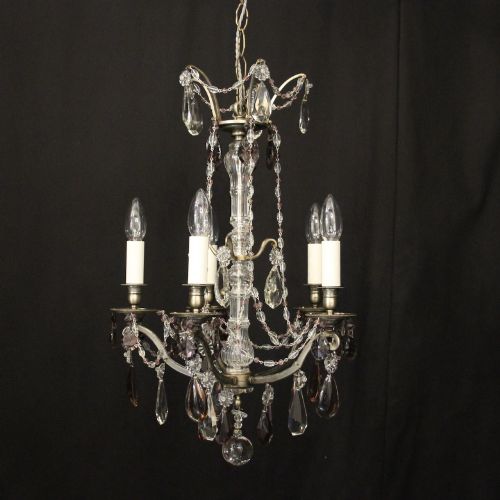
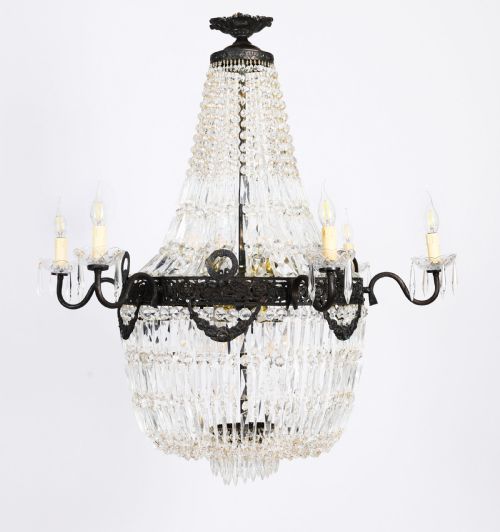
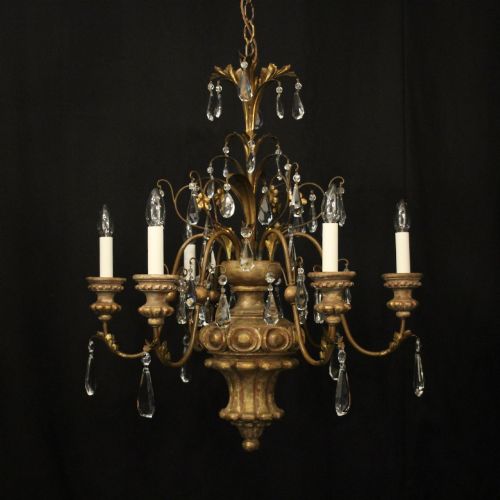
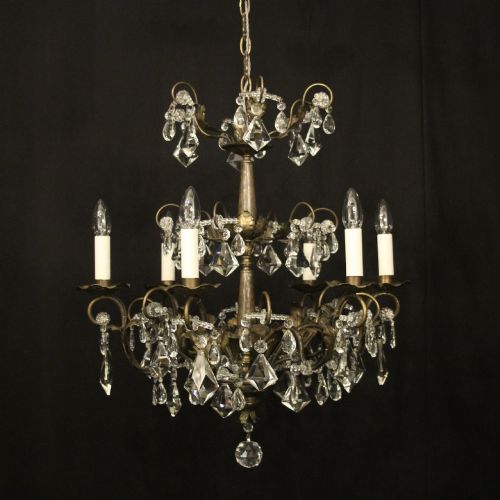
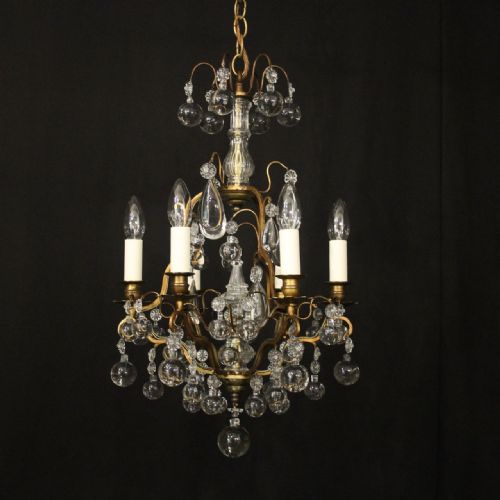

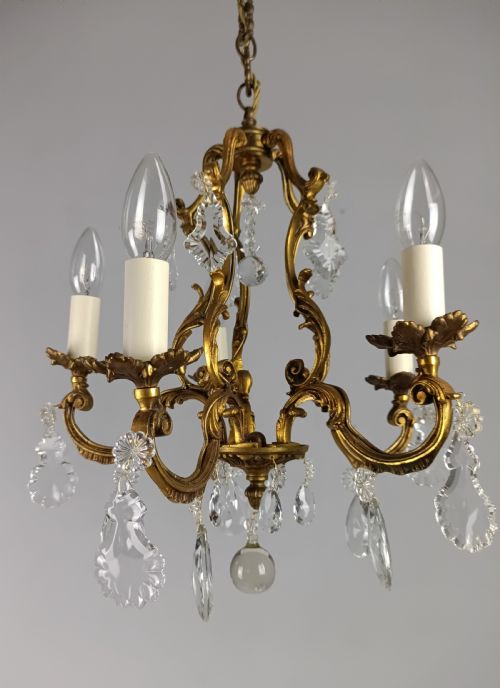
Traditional Crystal Ceiling Fitting
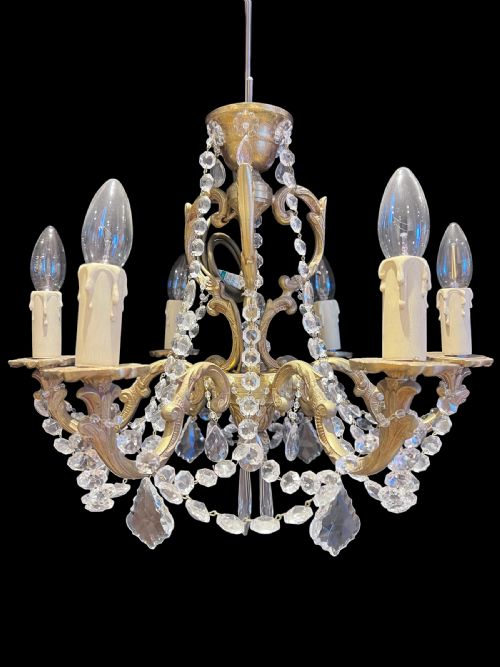
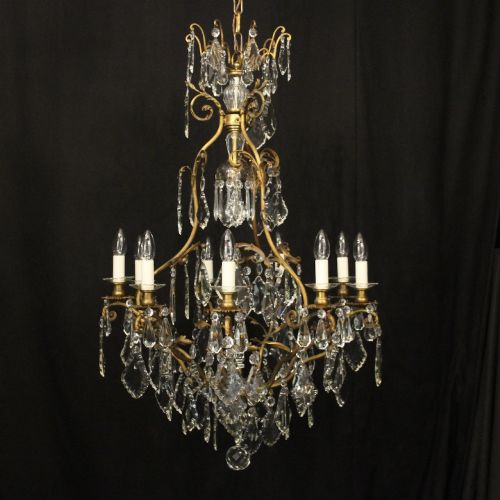
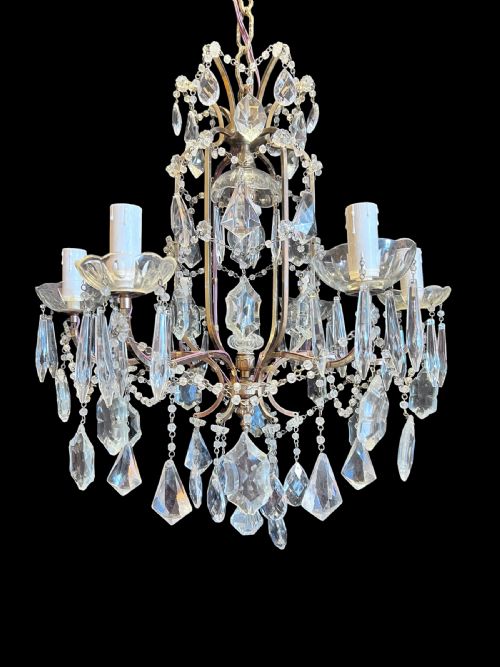
These traditional crystal ceiling fitting examples bring genuine period illumination to a room, spanning French chateau styles to Italian Florentine designs.
Traditional Crystal Ceiling Fitting
When you search for a traditional crystal ceiling fitting, you encounter diverse lighting forms primarily created as chandeliers, pendant lights, and ceiling lights. These pieces originate across the late nineteenth and early twentieth centuries, including Edwardian examples and nineteenth-century pieces.
The selections you meet most frequently on this page lean heavily towards French and Italian aesthetics. You will find French Empire, Louis Revival, and French Rococo designs sitting alongside Italian Florentine and English Georgian manner pieces.
Materials and construction
Makers built these fixtures using robust metal frames formed from brass, bronze, gilded bronze, gilt bronze, silver gilded metal, and wrought iron. These structural skeletons support generous quantities of cut glass, cut crystal, and plain glass elements.
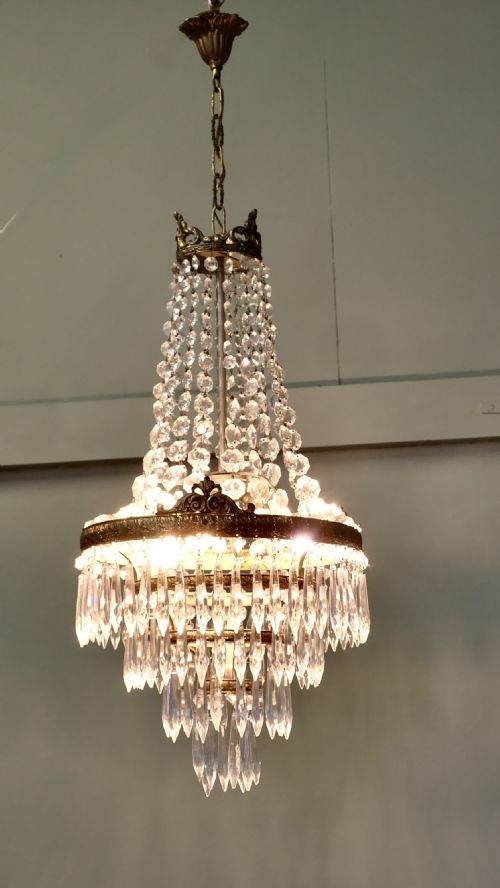
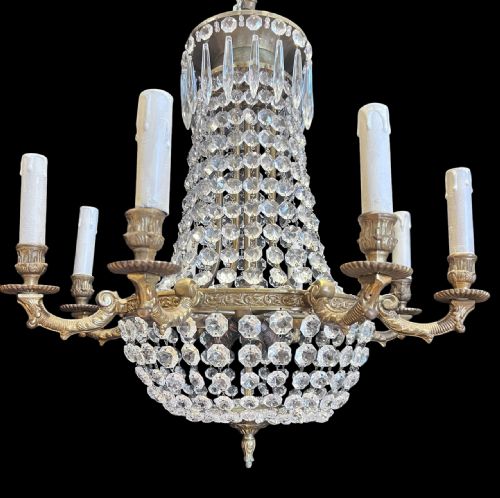
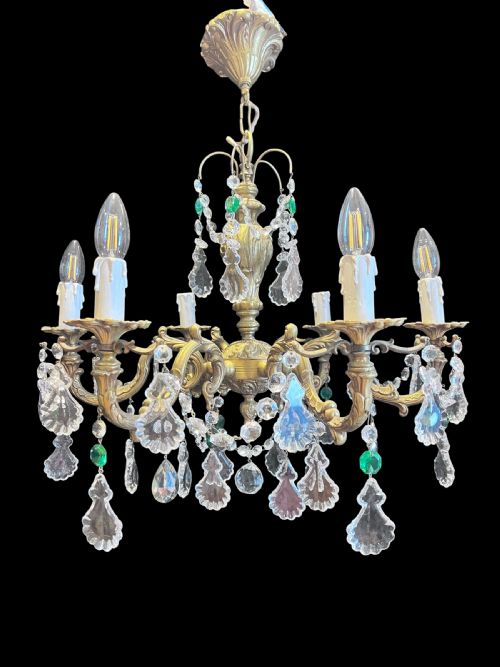
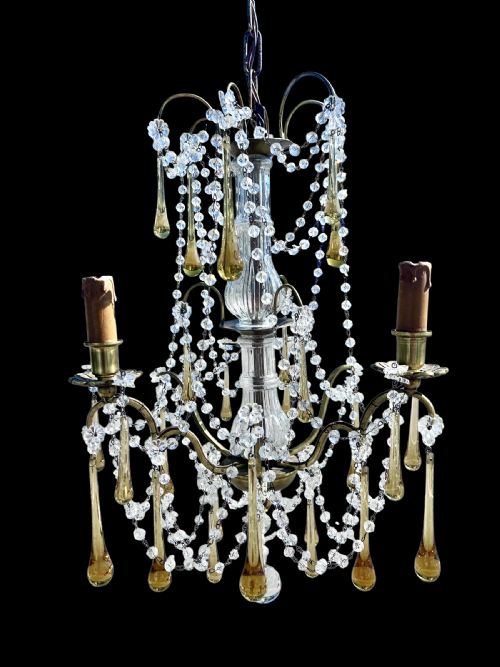
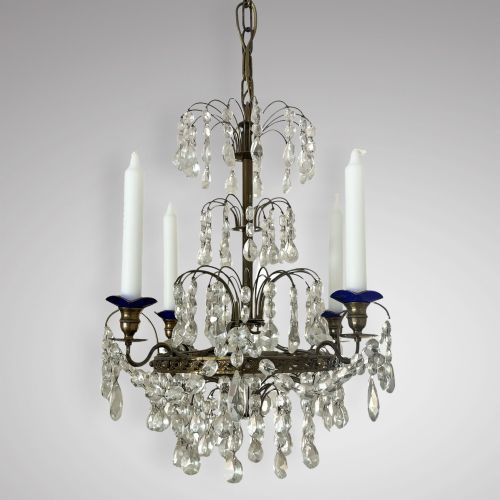
Lighting configuration relies on multiple arms and tiers, incorporating specialised forms such as bag chandeliers, tent and waterfall structures, and birdcage frames. Details often include beaded arms, coloured crystals, and drop pendants.
Listings feature pieces spanning the late nineteenth century through the nineteen-thirties, incorporating Edwardian designs alongside French and Italian revival styles.
Factors of quality
Quality depends upon the purity and depth of the crystal work, alongside the finesse of the metal casting. Heavier bronze frames and intricately cut glass prisms separate standard commercial output from finer workshop productions.
The complexity of the armature also defines the tier of the piece. Large multi-tiered arrangements with numerous light arms and integrated beaded drapery require significantly greater labour than simpler three-arm or six-arm configurations.
The Traditional Crystal Ceiling Fitting Glossary
- Bag chandelier
- A lighting fixture featuring a flattened bowl or bag shape formed from hanging glass beads that conceals the internal burners or bulbs. This form creates a distinctive cascading silhouette.
- Tent and waterfall chandelier
- A design style where crystals string upward to form a tent-like canopy before cascading down in a wide skirt around the lower tier of lights. It creates intense refraction across the room.
- Gilded bronze
- A metal base of bronze coated with a thin layer of gold leaf or gold powder. This technique provides a durable, lustrous finish that resists tarnishing over decades.
- Birdcage chandelier
- An open-frame lighting structure constructed with curved metal arms resembling the ribs of an avian enclosure. Crystal drops typically drape throughout the interior and exterior of this cage framework.
- Marie Theresa chandelier
- A distinctive style characterised by flat metal arms covered entirely in glass strips and rosettes. Originating in Central Europe, it displays dense arrangements of crystal drops.
Traditional Crystal Ceiling Fitting: Frequently Asked Questions
How do I date a crystal chandelier?
Dating relies on examining the metal composition, the wiring methods if original, and the specific cut of the glass prisms. Earlier pieces often display hand-cut facets rather than machine-standardised edges.
stylistic clues like Edwardian proportions or French Empire motifs also help anchor the manufacturing period between the late nineteenth and early twentieth centuries.
How are these chandeliers cleaned?
Cleaning requires removing dust with a soft brush and wiping individual crystal drops with a mild water and vinegar solution. Technicians often clean complex fixtures while they remain suspended from the ceiling to avoid damaging the armature.
Harsh chemical cleaners should be avoided to protect the gilded bronze and brass surfaces from corrosion.
Can these antique lights use modern bulbs?
Most antique fixtures can accommodate modern LED candelabra bulbs provided the original socket wiring meets current safety standards. A qualified electrician should inspect the internal wiring before installation.
Lower wattage LED bulbs also protect delicate antique glass and crystal from excessive heat exposure.