

Vintage Crystal Ceiling Fixture
A vintage crystal ceiling fixture brings light and atmosphere to a room, spanning Edwardian and early twentieth-century designs.
Vintage Crystal Ceiling Fixture
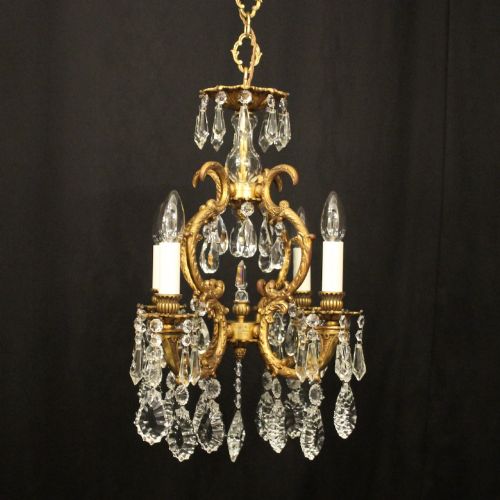
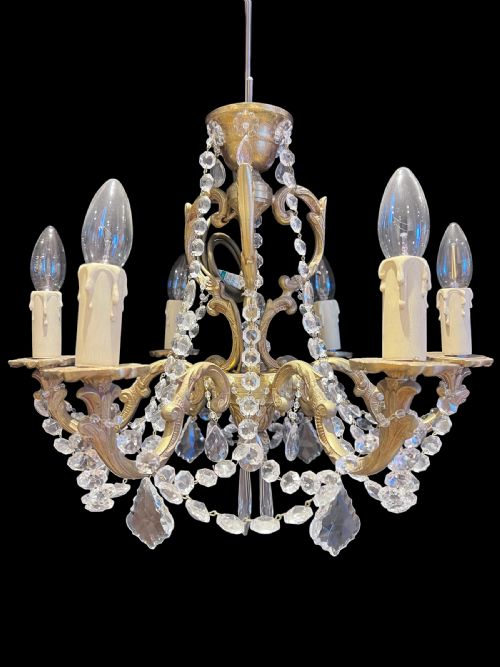
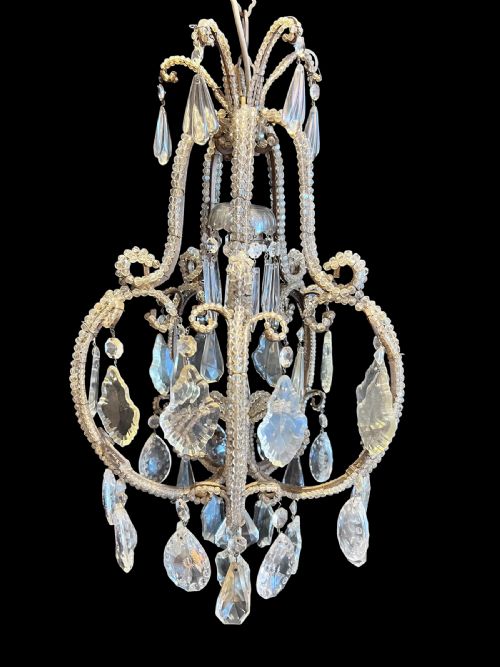
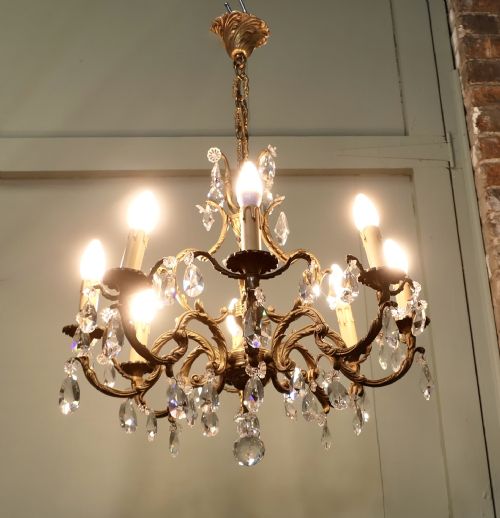
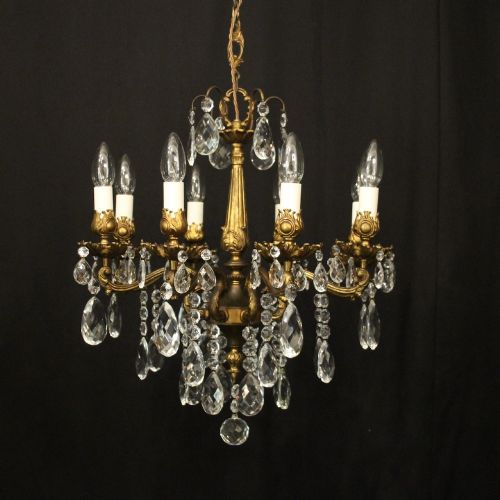
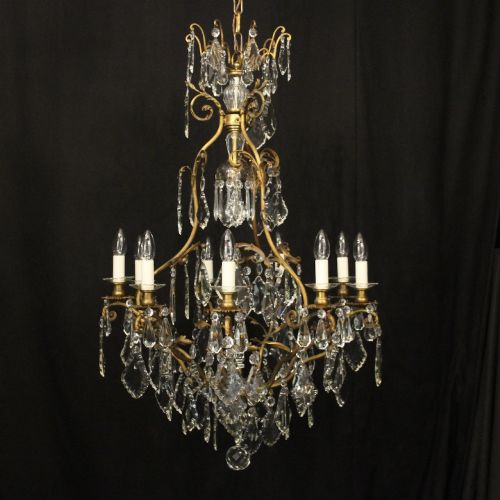
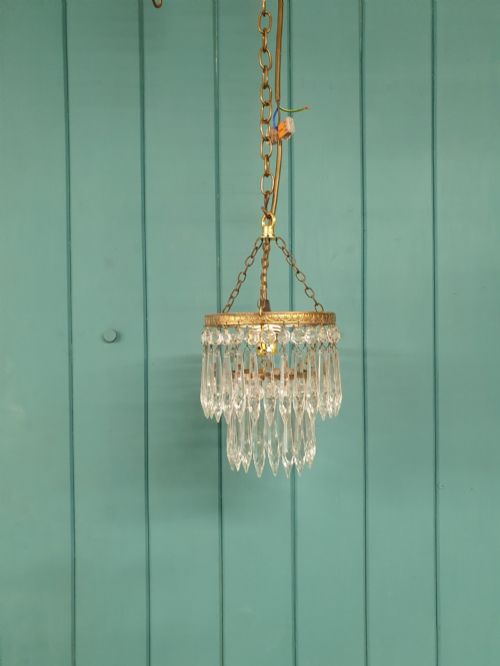
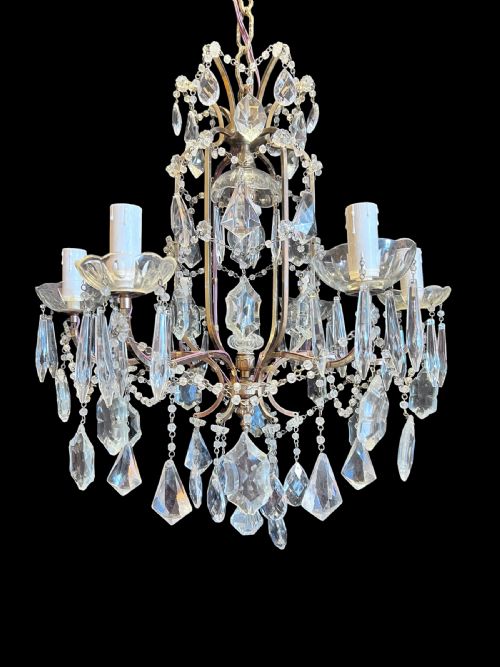
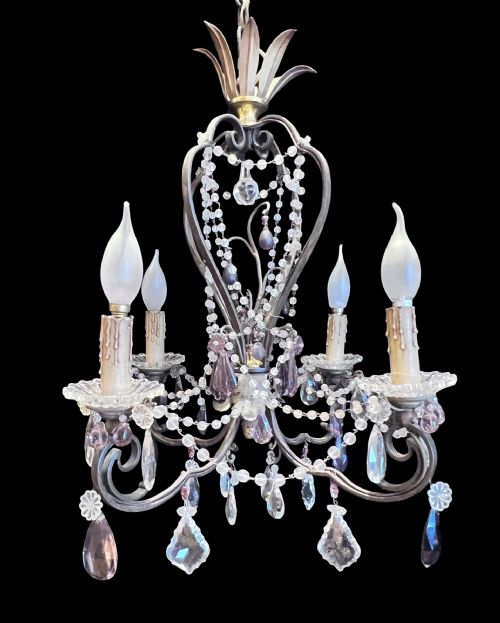
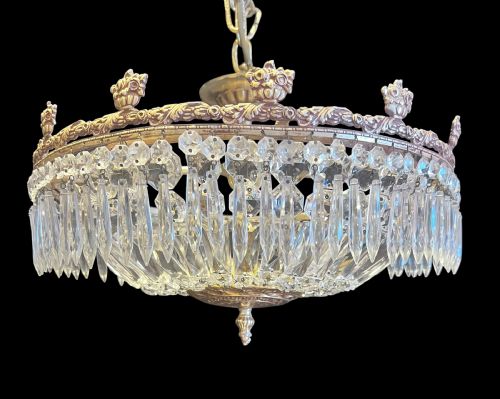
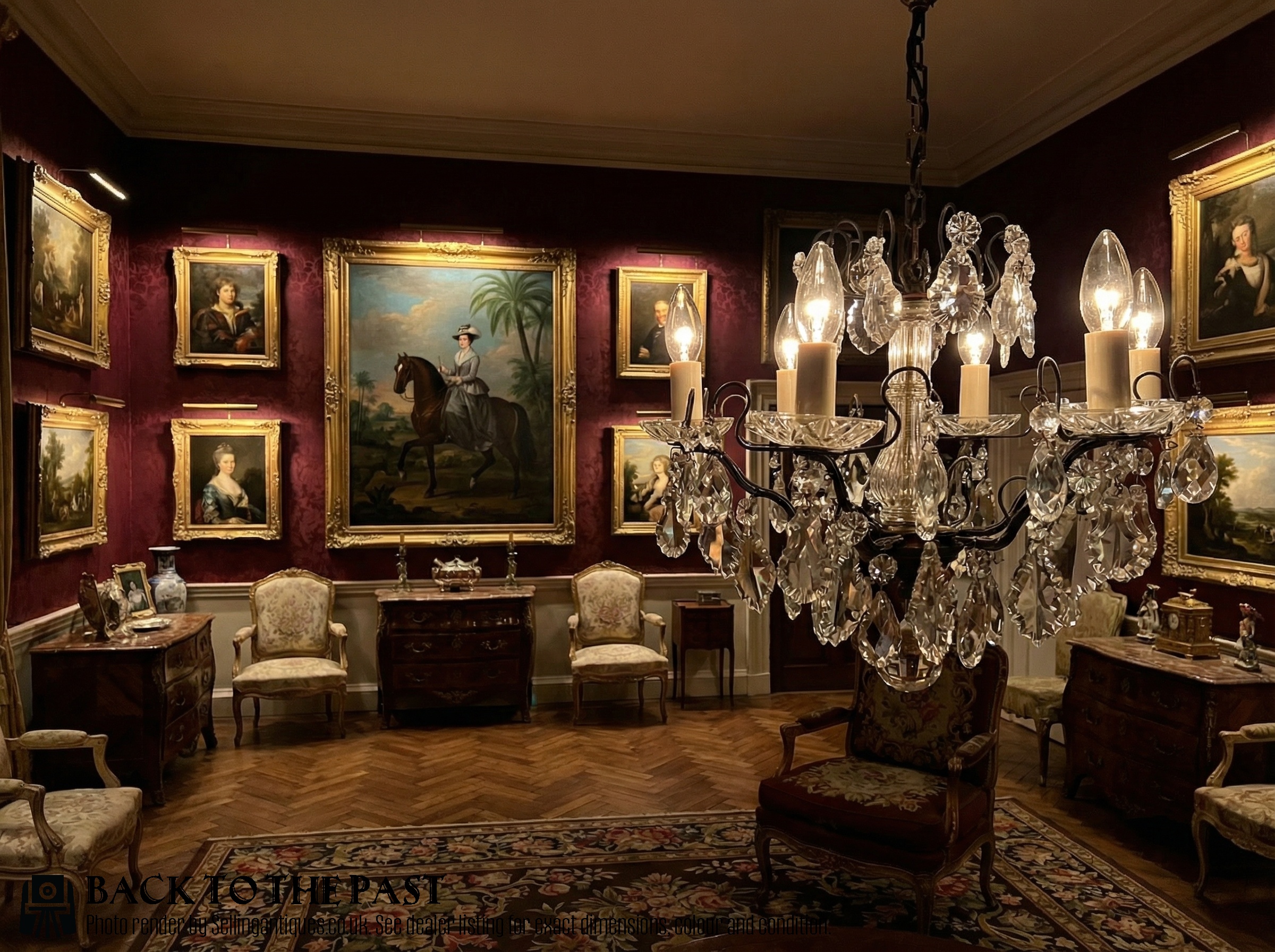
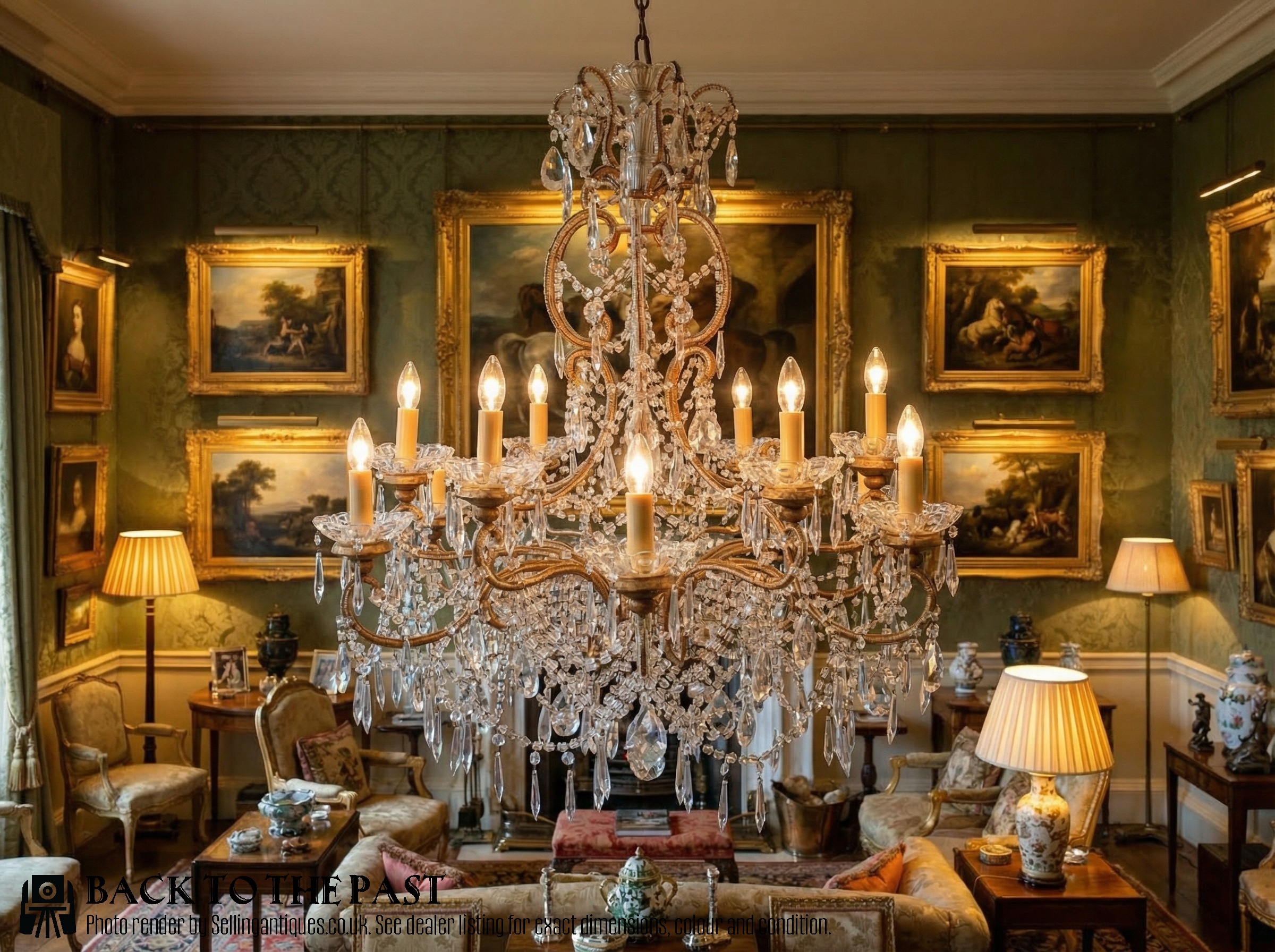
When you search for a vintage crystal ceiling fixture, you encounter a variety of multi-arm chandeliers, flush-mounted plafonniers, and pendant lights originating from the late nineteenth century through the nineteen-thirties. The selection is dominated by French and Italian examples, ranging from compact dome-top Edwardian hall lights to large ballroom chandeliers carrying multiple tiers of illumination.
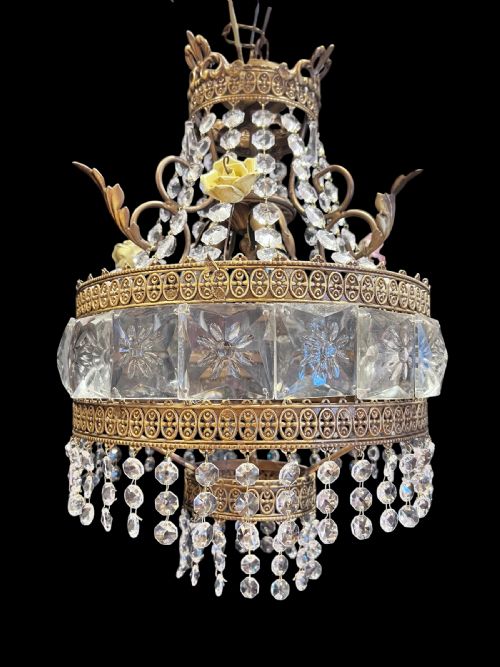
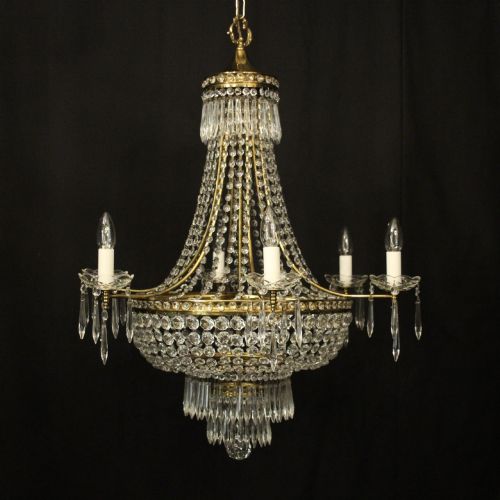
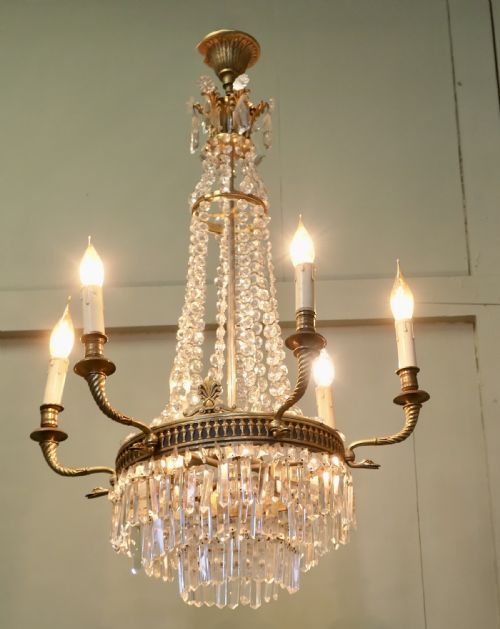
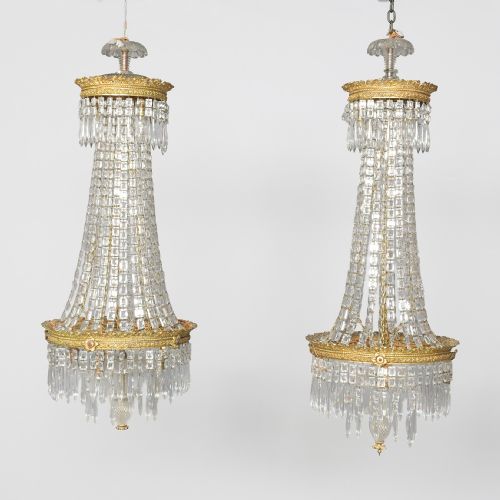
Forms follow classical European decorative traditions, including French Empire tent and waterfall configurations, Rococo revival scrolls, and Italian Florentine floral motifs. You find fixtures scaled for domestic rooms as well as grander multi-light pieces designed for high ceilings, often combining brass, gilt metal, or bronze frameworks with dense arrangements of cut glass elements.
Materials and construction
Metalwork forms the structural skeleton of these pieces, utilising cast brass, gilt bronze, spelter, and silver-gilded frames that support the weight of the glass components. Many workshops applied surface gilding or painted finishes to the metal armatures, occasionally incorporating decorative elements such as porcelain flowers or toleware leaves.
The optical effects rely on glass and crystal elements shaped as cut drops, prisms, beads, lustres, and teardrops, suspended from the frames by wire links. These components catch and refract light from the internal bulb holders, creating the characteristic sparkle associated with period lighting.
Vintage Crystal Ceiling Fixture Retail Price Guide 2026
Typical asking prices for vintage crystal ceiling fixture among the pieces listed under this phrase on Sellingantiques today, from the lower quarter to the upper quarter. They describe what is for sale here now, not the wider market.
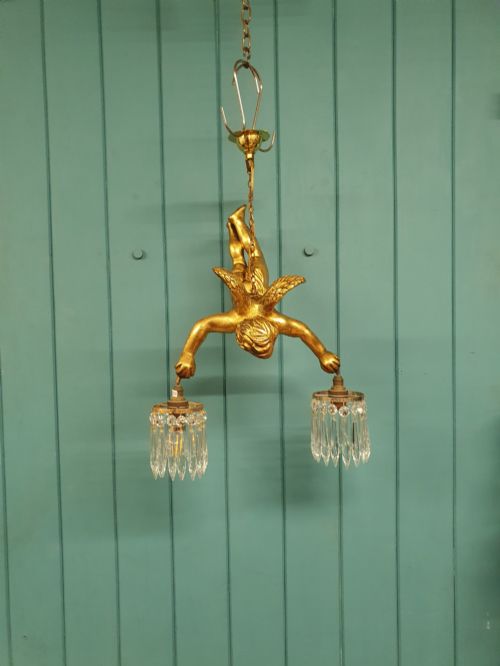
Flying cherubs occasionally share ceiling space with cut glass spikes, proving that Edwardian lighting designers took decoration very seriously indeed.
Assessing quality and craftsmanship
Quality reveals itself in the weight and precision of the cast metal frame, where crisper detailing in the chasing and casting distinguishes superior examples from simpler production. The density and cut of the crystal components also determine the visual brilliance of the piece, with sharper facet cuts producing superior light refraction.
Originality of components matters significantly, as matched sets of lustres and uniform glass drops indicate a cohesive piece rather than a later assembly. The complexity of the design, such as multi-tiered tent and waterfall constructions with numerous light arms, reflects greater ambition in the original workshop.
The Vintage Crystal Ceiling Fixture Glossary
- Plafonnier
- A ceiling light mounted directly against the surface rather than suspended on a chain or drop. These often feature dome-shaped glass bowls or basket frames.
- Tent and waterfall
- A chandelier style featuring an upper conical section of strung beads above a wider cascading fall of crystal drops and prisms.
- Lustre
- A cut glass pendant or hanging prism suspended from a chandelier to reflect light. These are typically attached by small brass pins or wire loops.
- Spelter
- An alloy of zinc and lead used as a cheaper substitute for bronze in casting decorative figures and mounts. It takes gilding well but is softer than brass.
- Toleware
- Painted or lacquered sheet metal used for decorative foliage and decorative accents on light fittings. It often introduces colour such as turquoise or amber into the design.
Vintage Crystal Ceiling Fixture: Frequently Asked Questions
How do I choose the right size?
Consider the ceiling height and floor area of the room where you plan to hang the fitting. Compact dome-top fixtures suit lower ceilings, while multi-arm chandeliers require adequate vertical drop to clear walking space.
Measure the width of the room to determine a balanced diameter for the chandelier. A larger space absorbs the visual weight of multi-tier fixtures, whereas smaller rooms benefit from flush plafonniers or fewer light arms.
Can these lights be wired for modern use?
Most antique fixtures accept modern electrical wiring, though they frequently require professional rewiring to meet current safety standards. Electricians can usually adapt existing internal channels to take contemporary bulb fittings.
Old brass and gilt frames should be handled with care during installation to protect the patination. It is advisable to consult a specialist lighting restorer for safe mounting methods.
How can I date an antique chandelier?
Dating relies on stylistic markers, construction methods, and materials typical of specific periods like the Edwardian era or the nineteen-twenties. French Empire revival and Rococo styles often indicate the early decades of the twentieth century.
Examine the wiring holes, metal casting quality, and the cut of the glass prisms for period characteristics. Surviving manufacturer stamps or assembly marks on the metalwork can also provide clues.