
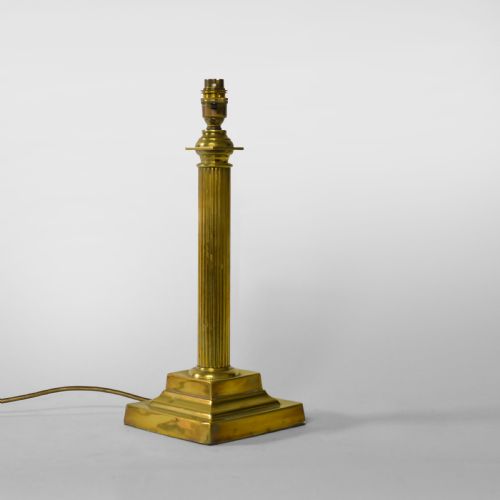
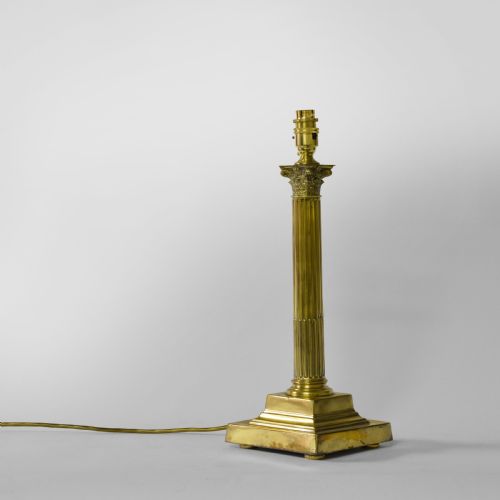


Brass Pedestal Desk Lamp
A brass pedestal desk lamp brings functional warmth and classical dignity to a workspace, offering solid metal construction and period character.
Brass Pedestal Desk Lamp
When you search for a brass pedestal desk lamp, you are examining a category defined primarily by column forms, classical orders, and sturdy metal bases. The pieces available range from tall architectural column designs to heavier table and oil lamps adapted for modern utility.
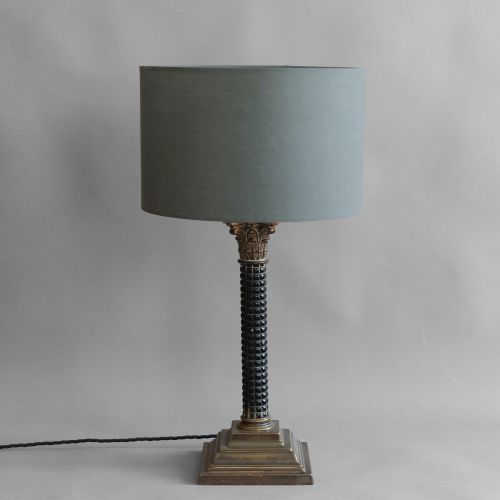
Victorian and Edwardian examples dominate the selection, frequently drawing on Neoclassical, Corinthian, or Doric architectural vocabulary. You will also encounter converted oil lamps and slender classical columns that serve equally well on a substantial writing desk or side table.
Origin and period vary across the nineteenth and early twentieth centuries, encompassing traditional English workshop pieces as well as Continental interpretations. The core of the selection relies on solid metal casting and classical proportions rather than delicate ornamentation.
Materials and construction methods
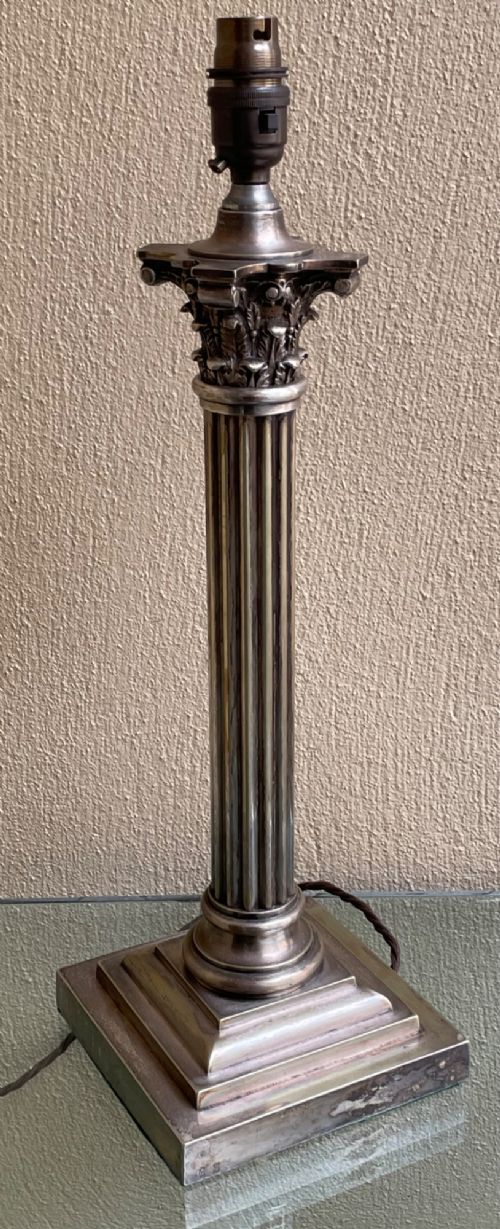
Construction relies heavily on cast and turned brass, sometimes augmented by bronze, gilt bronze, silver plate, or copper. Metal components were cast in sections, then hand-finished and polished to create sharp architectural details like fluted shafts and acanthus capitals.
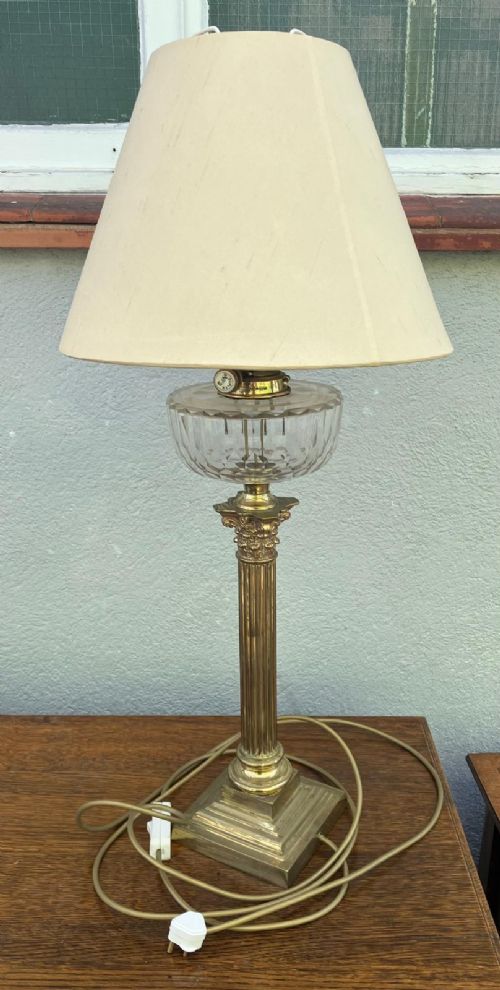
Many survivors began life as oil or paraffin lamps before conversion to electricity, retaining weighted bases and occasionally original glass or ceramic reservoirs. Shading materials commonly paired with these heavy metal bases include opaline glass, silk, fabric, and hand-painted glass elements.
Listings span the nineteenth and early twentieth centuries, featuring materials from standard brass to silver plate, bronze, and opaline glass.
Distinguishing quality in period lighting
Quality rests upon the crispness of the casting and the gauge of the metal used in the column and base. Finer examples display deep, sharp relief on Corinthian capitals and substantial weight that anchors the lamp securely to a desk.
Proportion and scale separate ordinary production from distinguished examples, particularly in how the fluting aligns with the stepped plinth. Maker marks or stamps, when present, indicate workshop standards that elevate the piece above anonymous commercial lighting.
Messenger
The Brass Pedestal Desk Lamp Glossary
- Corinthian column
- A classical architectural order featuring an ornate capital decorated with rows of acanthus leaves. This style appears frequently on nineteenth-century table lamps.
- Opaline glass
- A translucent, milky-white glass popular for Victorian and Edwardian lamp shades. It diffuses light evenly across a workspace.
- Neoclassical Revival
- A design movement drawing inspiration from classical Greek and Roman architecture. It prioritises symmetry, columns, and restrained ornamentation.
- Silver plate
- A thin layer of pure silver applied to a base metal core such as brass or copper. It provides the visual appeal of solid silver with greater durability for daily use.
Brass Pedestal Desk Lamp: Frequently Asked Questions
How do I date a brass column lamp?
Dating relies on stylistic clues like the specific architectural order, base construction, and weight of the metal casting. Victorian and Edwardian examples often exhibit distinct proportions compared to later twentieth-century reproductions.
Examine any stamps, screw threads, and wiring channels for manufacturing techniques characteristic of the nineteenth century. Patina and wear patterns on the brass also provide reliable indicators of age.
Were these always electric lamps?
Many examples began as oil or paraffin burners before being professionally converted to electricity during the twentieth century. This transition preserves the original metal reservoir and column while accommodating modern bulbs.
Converted oil lamps often retain heavy weighted bases designed to stabilise tall glass chimneys and shades. These conversions do not diminish historical interest if the structural integrity remains intact.
What shade styles suit these lamps?
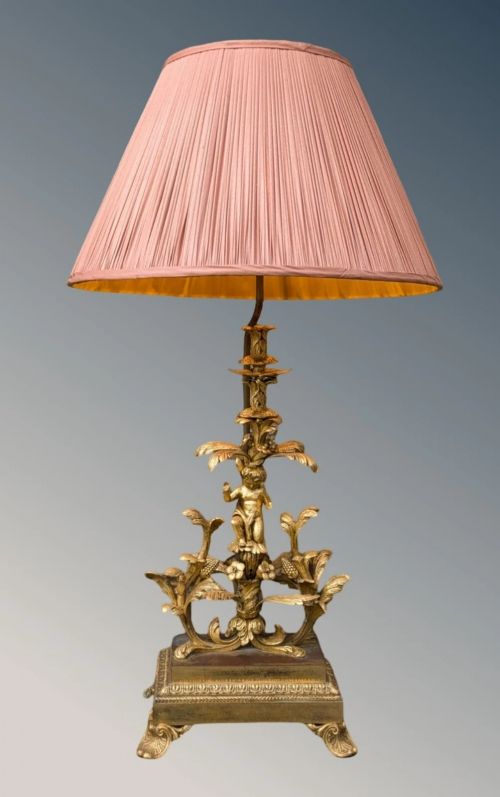
Traditional opaline glass shades, fabric cylinders, and pleated silk designs complement the classical proportions of column lamps. The choice depends on whether the piece leans toward a strict Victorian aesthetic or an Edwardian desk setup.
Proportion is essential when selecting a shade to ensure it does not overwhelm the brass pedestal. A balanced diameter maintains the architectural dignity of the column.
How do I care for antique brass?
Preserve the natural patina by dusting the metal regularly with a soft, dry cloth rather than applying aggressive chemical cleaners. Heavy polishing removes the historical surface oxidation that develops over decades.
Protect the brass from excessive moisture and handle the base by the metal rather than fragile decorative elements. Periodic checks of the weighted base ensure stability on a desk.