
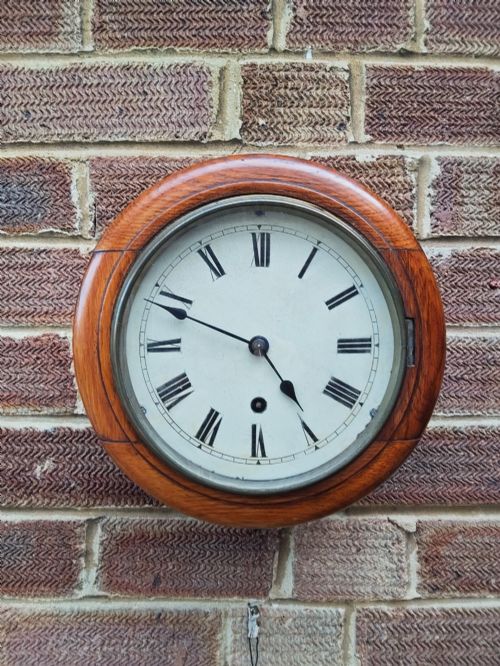
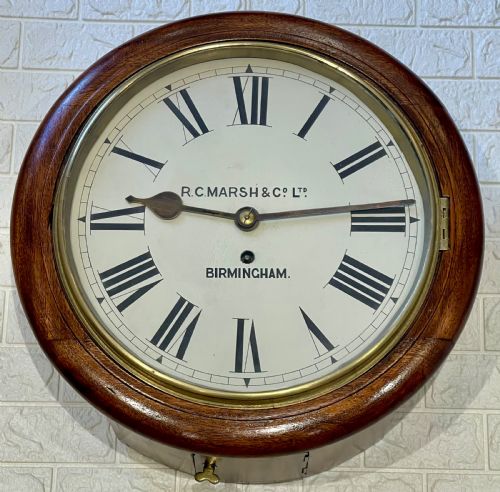
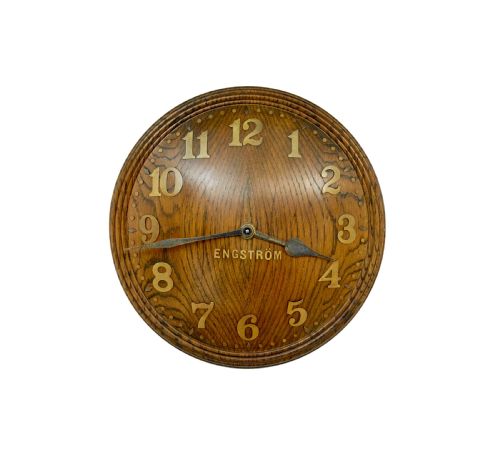


Brass Oak Wall Clock
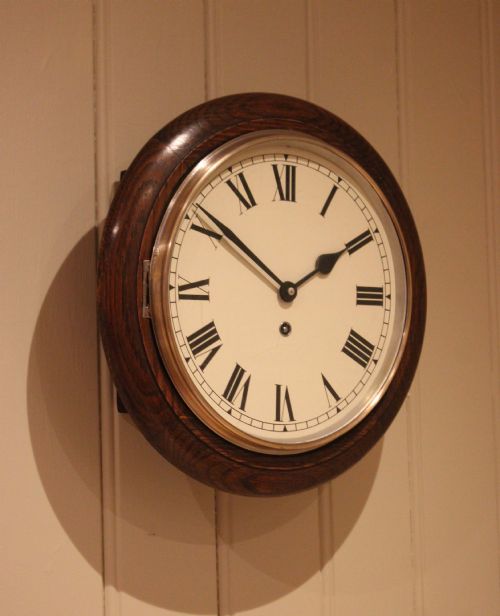
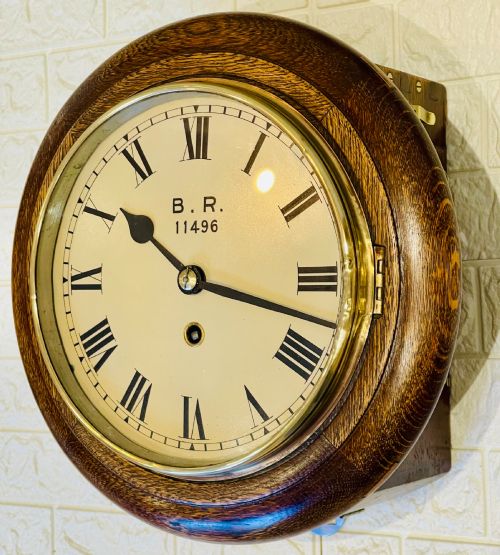
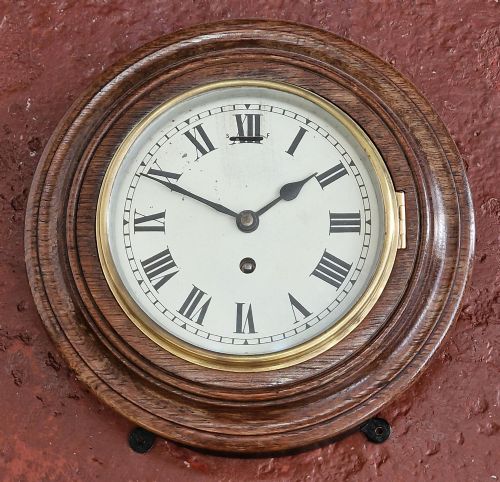
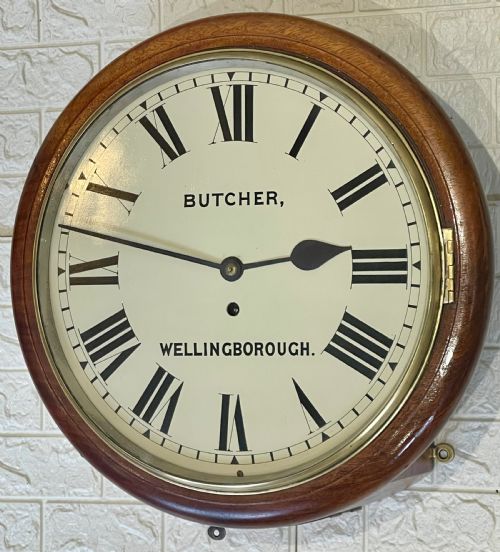
A brass oak wall clock brings solid timber and metal dial furniture into domestic and working spaces alike.
Brass Oak Wall Clock
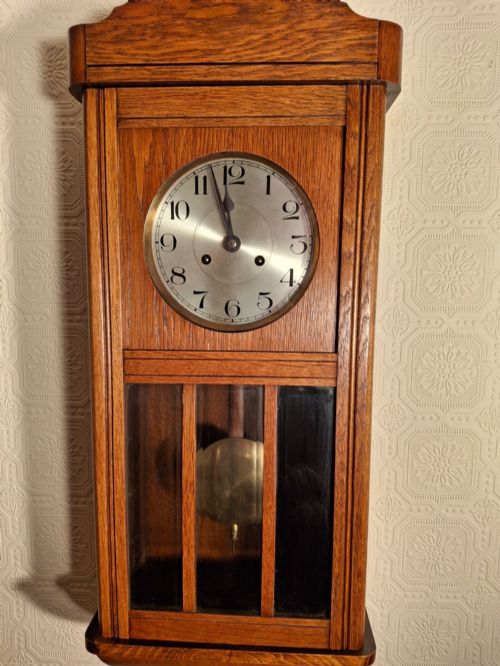
A brass oak wall clock combines a timber housing with a metal bezel and dial, designed to hang securely in offices, hallways, and functional rooms. These pieces originate across the nineteenth and twentieth centuries, spanning periods from the Victorian era through the interwar years and the mid-twentieth century.
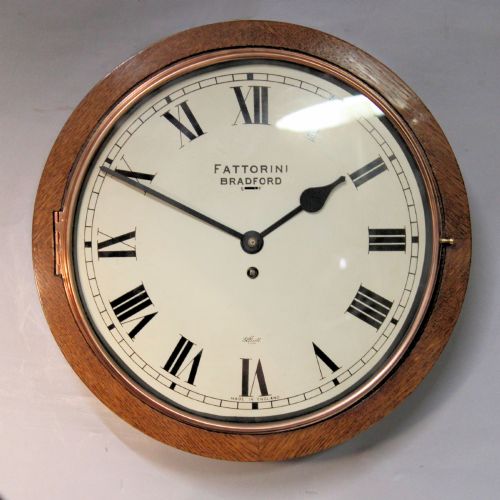
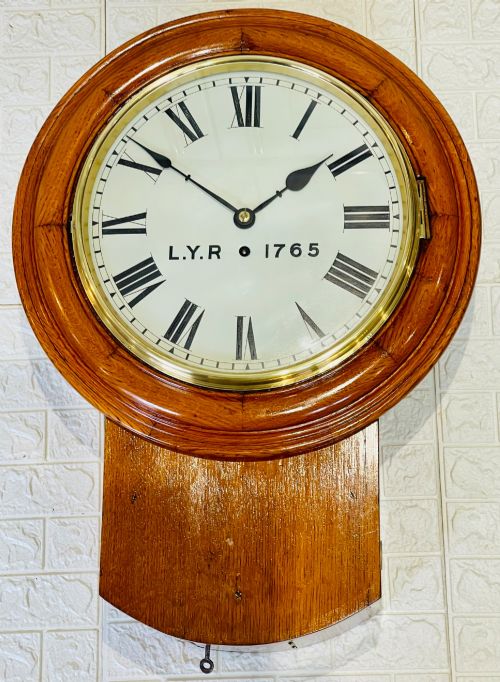
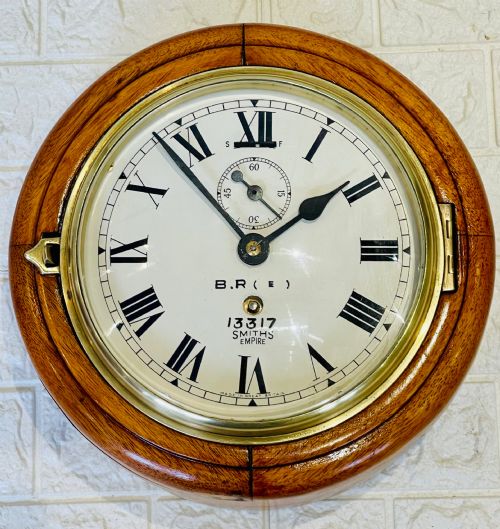
The selection here draws heavily on practical forms such as railway, school, and dial clocks, alongside decorative Arts and Crafts and Vienna wall clocks. Golden oak cases and lighter timber housings appear frequently alongside darker nineteenth-century examples and robust industrial variants.
Buyers encounter everything from chain-driven fusee movements housed in compact circular frames to drop-dial variants with convex glass. Each piece reflects the functional requirements of its original setting, whether a Victorian railway station, a signal box, or a domestic parlour.
How they were made
Cases rely on sturdy oak timbers, sometimes complemented by mahogany or walnut veneers, joined to house heavy mechanical movements securely. Brass forms the bezels, numerals, and internal plates, while glass protects the delicate enamel or painted dials from dust and damage.
Movements utilise brass gears and escapements, predominantly chain-driven fusee systems or eight-day striking mechanisms designed for reliable timekeeping. Craftsmen mounted these works within timber boxes featuring side doors or bottom access boxes for easy winding and regulation.
Listings span the nineteenth century through the 1950s, featuring oak timber housings paired with brass fittings and glass-fronted dials.
What varies in quality
The refinement of the movement dictates much of the standard, moving from simple timepieces to complex double-fusee striking mechanisms or lever escapements. Finer examples exhibit crisp brass casting, clean enamel dials with well-defined numerals, and well-proportioned timber cases with minimal alteration.
Cabinetwork quality shows in the selection of the oak, whether figured golden oak or simple utilitarian framing, and the preservation of original bezels and convex glass. Clocks originating from official networks like railways or the general post office often demonstrate rigorous institutional standards of construction.
Elliott·Engström by Zenith·Philipp Haas·Dent of London·Henry Deykin Worcester·Harrods·Smith·Gledhill Brook
The Brass Oak Wall Clock Glossary
- Fusee
- A conical pulley used in spring-driven clocks to equalise the torque of the mainspring as it unwinds. This mechanism helps maintain consistent timekeeping throughout the eight-day running period.
- Dial clock
- A wall clock featuring a prominent circular face, often set within a round wooden frame. These pieces were standard in public buildings, offices, and railway platforms.
- Drop dial
- A wall clock design where the circular dial sits atop a vertical wooden trunk or box. This lower section accommodates the pendulum swing and weight drop.
- Lever escapement
- A mechanical linkage that controls the release of the gear train, allowing the clock to operate reliably in environments subject to vibration. It replaces a traditional pendulum in certain wall clocks.
Brass Oak Wall Clock: Frequently Asked Questions
How do I wind an eight day fusee clock?
Insert the winding key into the dial aperture and turn it clockwise until the chain or line reaches its limit. Take care not to overwind the mechanism.
Ensure you support the clock case if necessary and keep the key turning smoothly to avoid putting undue strain on the fusee chain.
What is a railway wall clock?
A railway wall clock is a robust timekeeper built for stations, offices, and signal boxes to keep strict timetables. They typically feature clear dials and sturdy oak frames designed to withstand busy environments.
These pieces often bear markings or stamps relating to specific transport companies or routes, adding historical context to their utility.
How do I hang a heavy oak wall clock?
Suspend the clock from a sturdy screw or heavy-duty fixing secured directly into a wall stud or masonry anchor. Avoid hanging heavy timber cases from plasterboard alone.
Ensure the back of the case sits flush against the wall so the pendulum can swing freely without catching on the interior woodwork.
Why does my dial clock gain or lose time?
Clock movements respond to temperature changes and environmental settling, which can alter the effective length of the pendulum. Regulation is usually adjusted via a small nut on the pendulum bob.
Turning the nut up speeds the clock up, while lowering it slows the movement down until accurate timekeeping is achieved.