
Brass Neoclassical Desk Lamps
These brass neoclassical desk lamps bring classical order and bright metalwork to a study, drawing on architectural columns and French periods.
Brass Neoclassical Desk Lamps
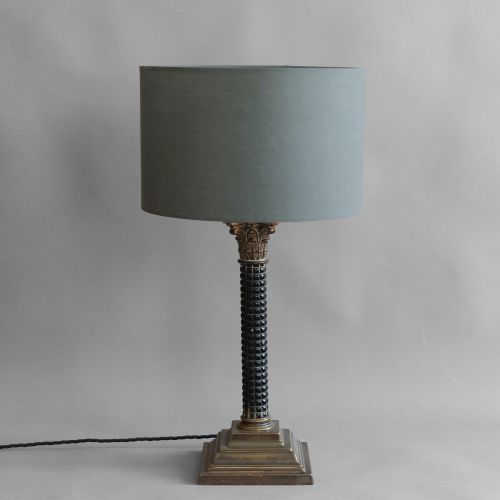
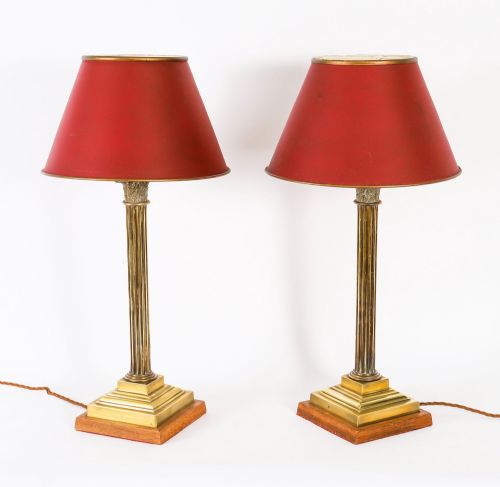
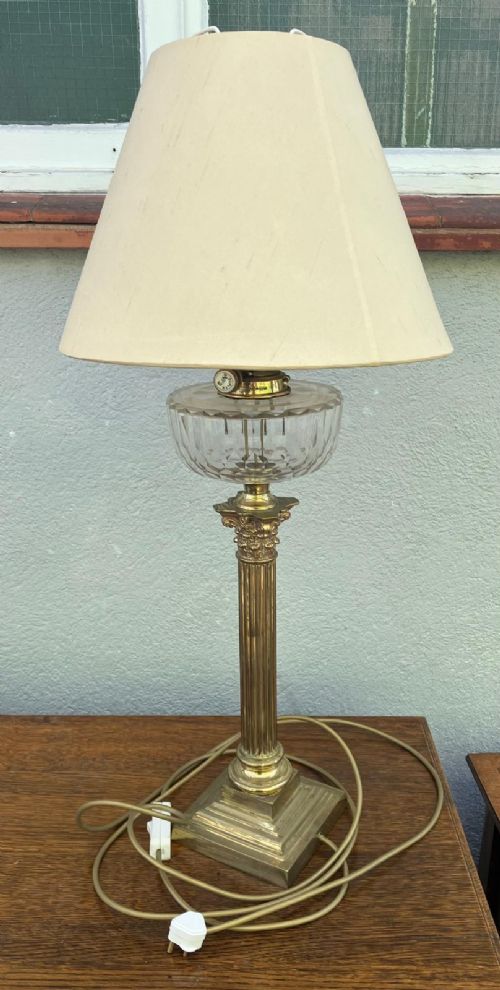
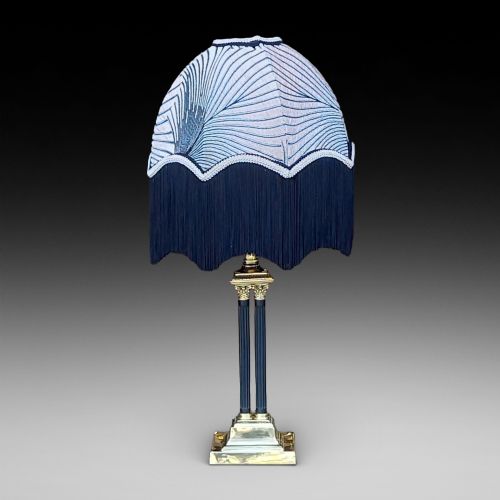
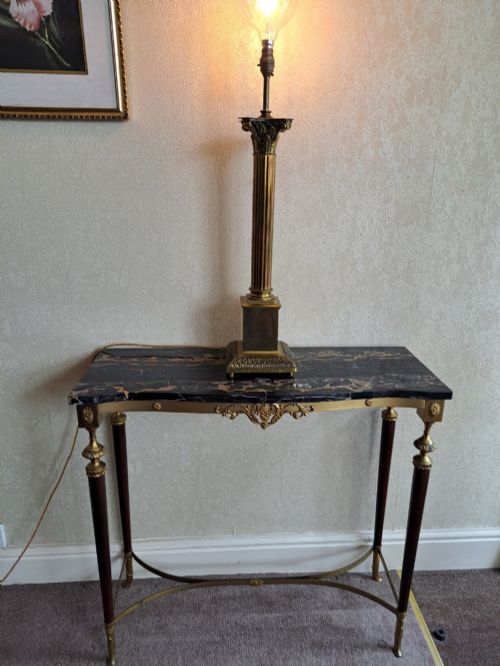
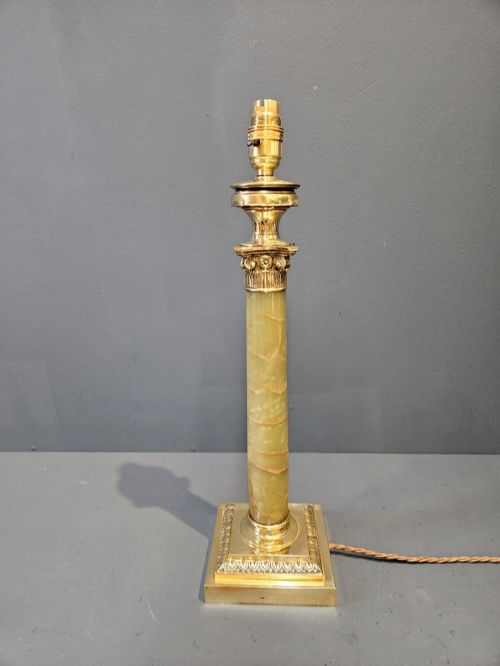
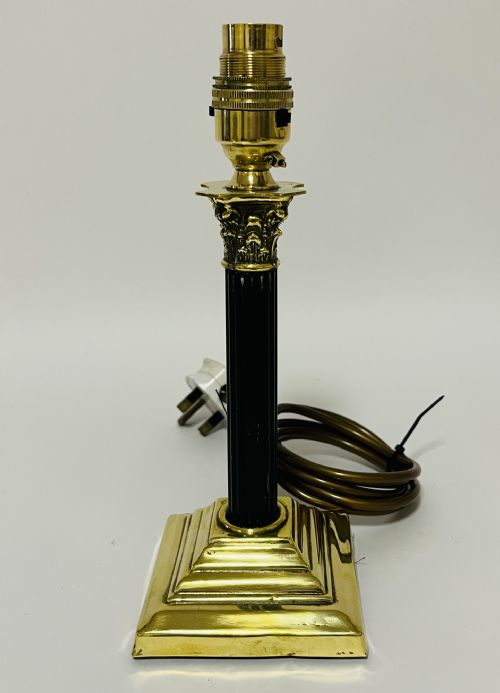
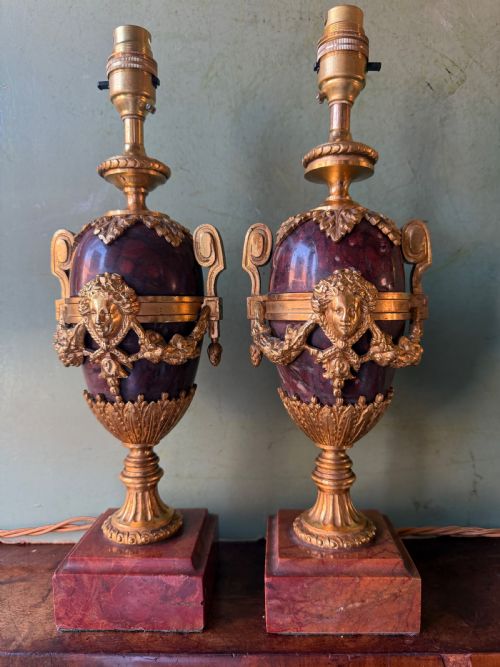
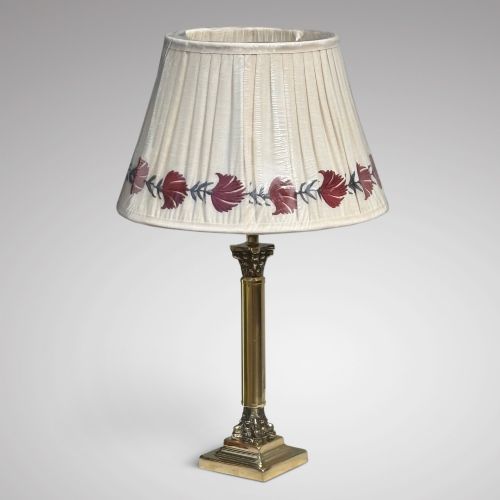
Brass neoclassical desk lamps draw on classical architectural orders and eighteenth-century French design, taking the form of table lamps, desk lamps, and lamp bases. The most common version met on this page is the Corinthian or ionic column lamp in brass, often paired with marble or ormolu.
The selection spans the nineteenth century, the Victorian and Edwardian eras, and into the early twentieth century up to nineteen thirty. Pieces appear in French Empire, Louis XVI, and Neoclassical Revival styles, alongside English interpretations utilising classical columns and bronze.
Materials and Construction
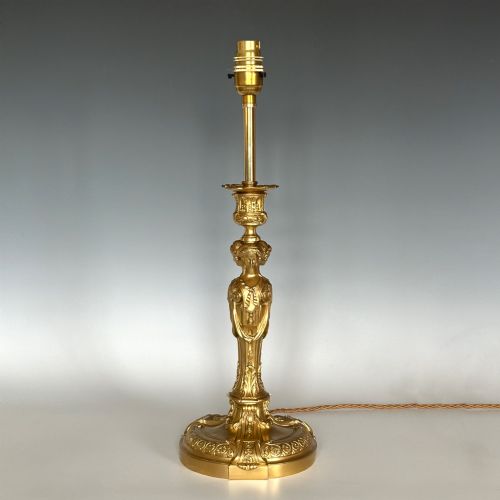
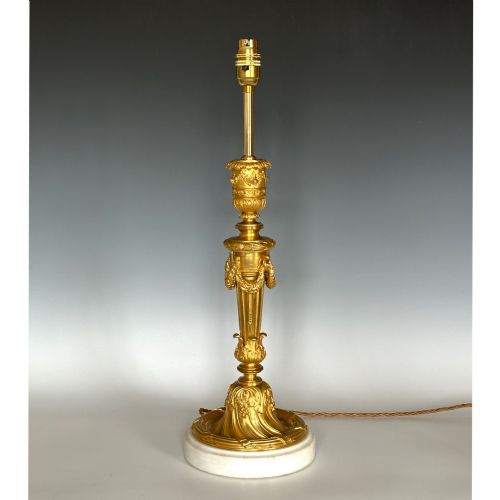
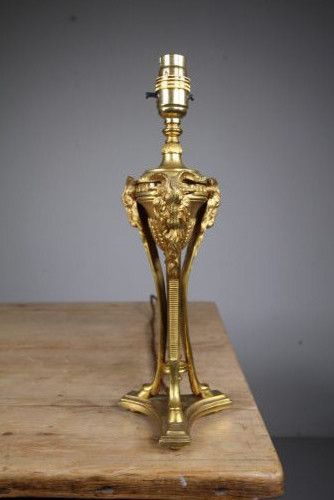
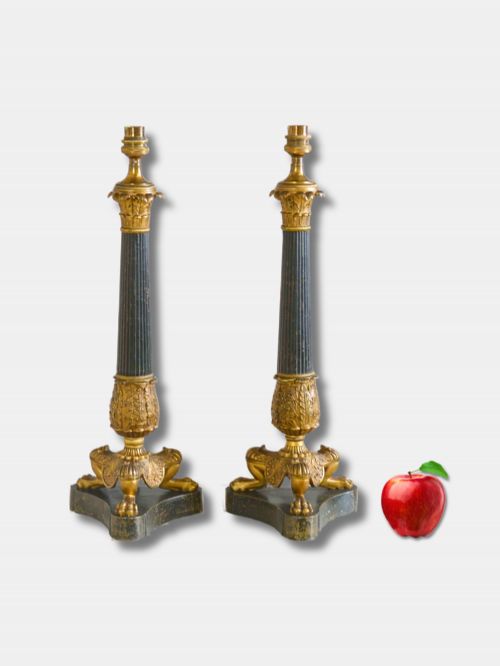
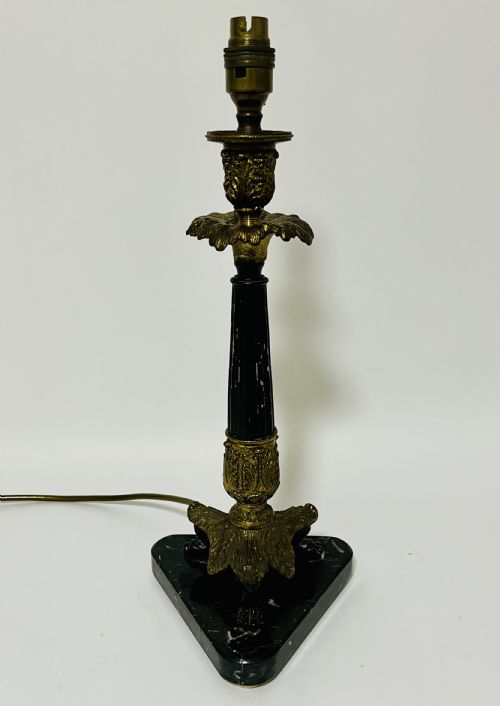
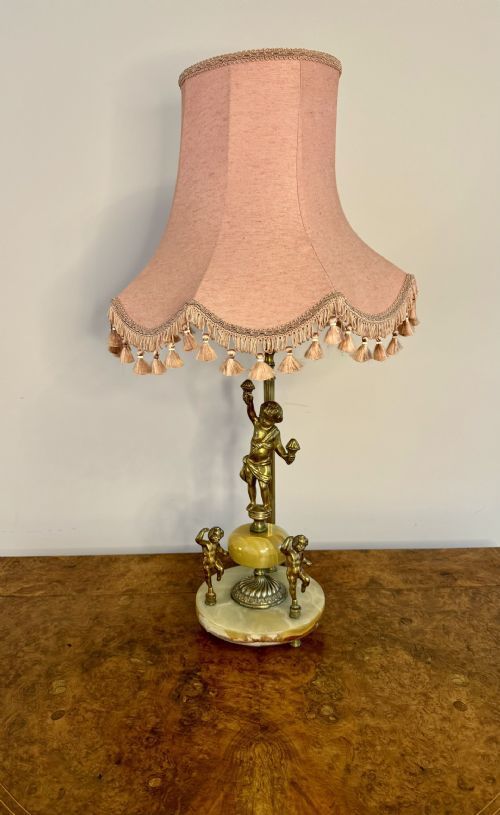
Makers utilised brass, ormolu, and gilt bronze for the primary structures, casting columns and mounts with classical detail such as rams' heads and lions' paw feet. These metal elements are frequently combined with rouge marble, onyx, glass, and fabric components.
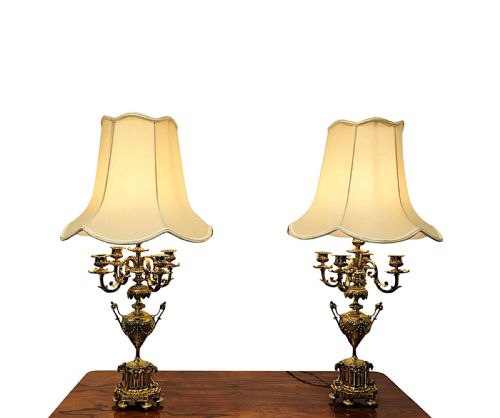
Conversion from earlier candlesticks and candelabra occurs among nineteenth-century examples, adapting lighting technology while retaining the original cast metal bases and classical capitals.
Several heavy metal columns stand upon sculpted lions' paw feet, ready to prowl off the desk.
Quality and Execution
The distinction between tiers rests in the crispness of the metal casting and the quality of the materials used in the columns and bases. Finer examples display deeply chased ormolu, heavy gauge brass, and solid polished marble or onyx rather than plated substitutes.
Proportion and scale dictate the visual weight of a piece, with superior specimens maintaining classical architectural balance across the capital, shaft, and plinth.
Dugourc
The Brass Neoclassical Desk Lamps Glossary
- Ormolu
- Gilt bronze produced by applying a finely ground high-carat gold-mercury amalgam to a bronze object, creating a rich golden surface. This technique was widely employed in French neoclassical lighting.
- Corinthian column
- A classical architectural order featuring a capital decorated with acanthus leaves and scrolls. It forms the most frequent column design seen on these brass lamps.
- Louis XVI style
- A neoclassical style drawing on the revival of classical antiquity during the reign of Louis the Sixteenth. It is characterised by symmetrical geometry and restrained ornamentation.
- French Empire
- A style spanning the early nineteenth century influenced by the art of classical Greece and Rome. Pieces in this manner often incorporate military motifs, sphinxes, and lions' paw feet.
Brass Neoclassical Desk Lamps: Frequently Asked Questions
What periods do these lamps come from?
The pieces originate from the nineteenth and early twentieth centuries, including Victorian, Edwardian, and Regency periods. They draw heavily on earlier eighteenth-century French designs.
Dates span from around eighteen hundred up to nineteen thirty, encompassing both English manufacture and French neoclassical revivals.
How do I identify a column lamp?
Column lamps mimic ancient architectural supports, typically using Doric, ionic, or Corinthian capitals at the top of a metal shaft. The base often rests on a square plinth or lions' paw feet.
Materials commonly include polished brass, gilt bronze, or marble, reflecting classical building techniques translated to domestic lighting.
Were these originally electric lamps?
Many examples began as oil lamps, candlesticks, or candelabra before conversion to electricity during later rewiring projects. This evolution explains the structural integrity found in the heavy metal bases.
Converted pieces retain their original nineteenth-century or early twentieth-century metalwork while accommodating modern internal wiring for daily desk use.
How do I style a brass lamp?
These lamps suit traditional studies, libraries, and formal desk spaces where classical lines and polished metal complement timber furniture. Their architectural presence anchors a workspace.
Pair them with simple fabric shades that allow the brass, onyx, and marble columns to remain the visual focus of the arrangement.