

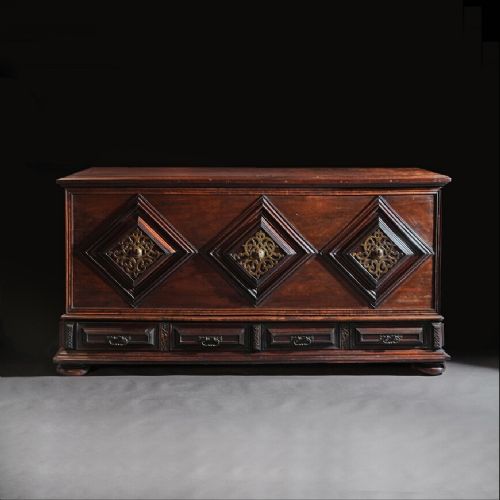
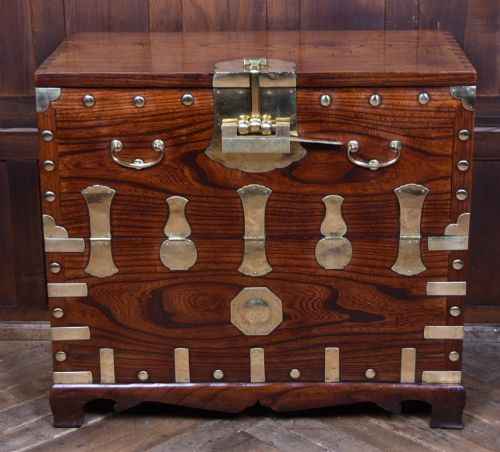
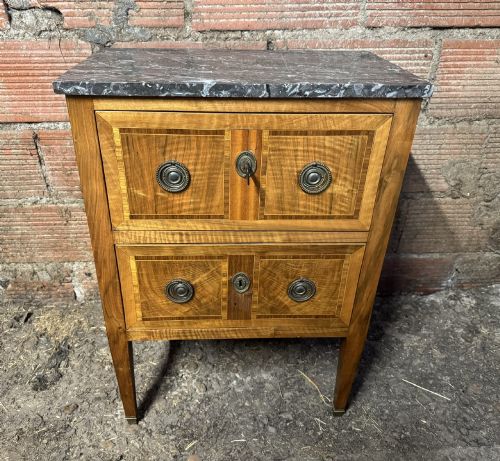
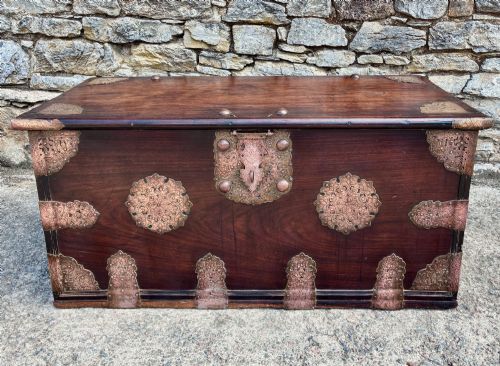
Brass Mounted Storage Chest
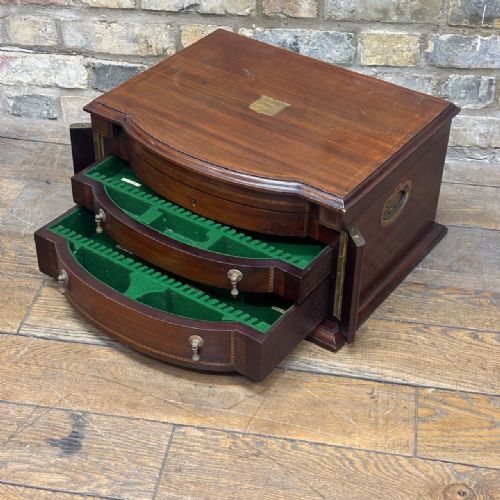
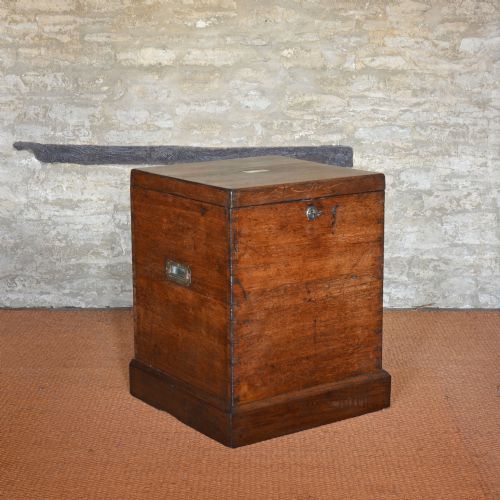
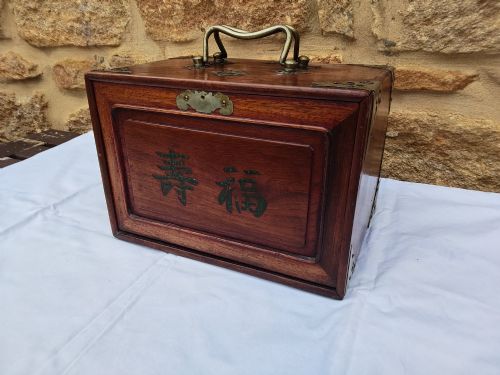
A brass mounted storage chest brings heavy timber and bright metal together for utility and travel, spanning centuries of global trade.
Brass Mounted Storage Chest
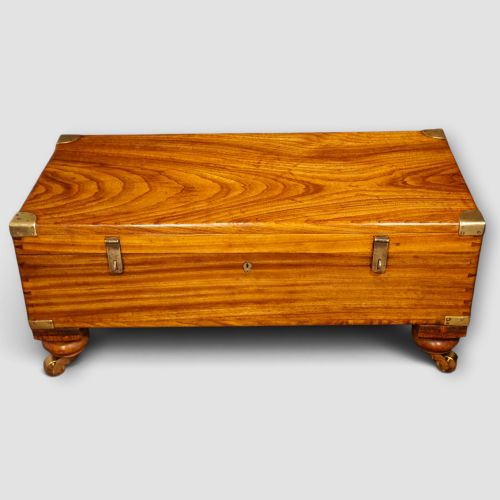
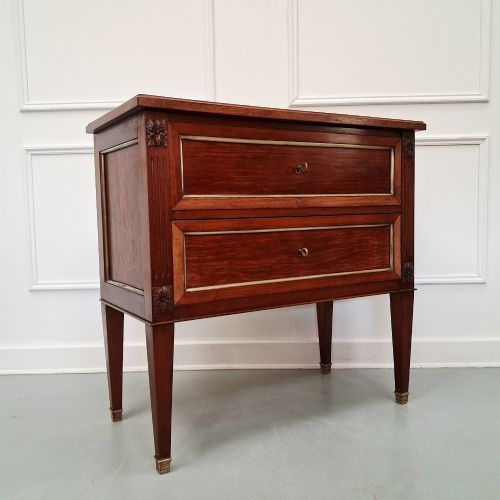
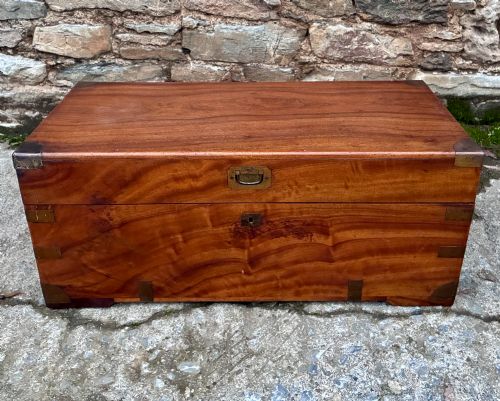
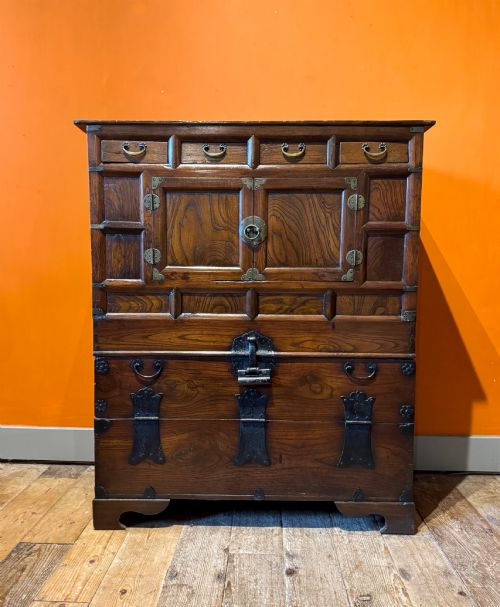
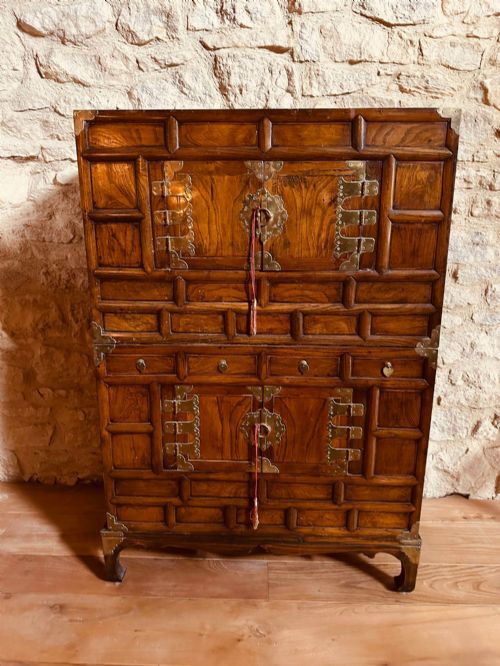
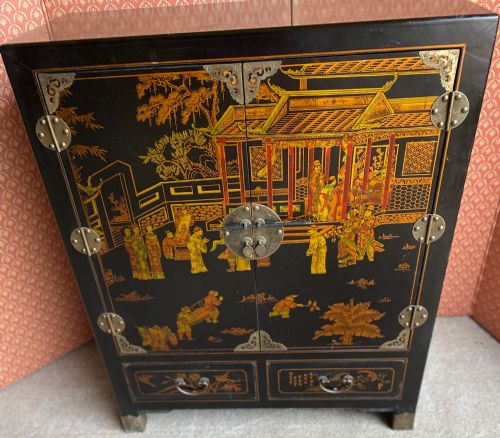
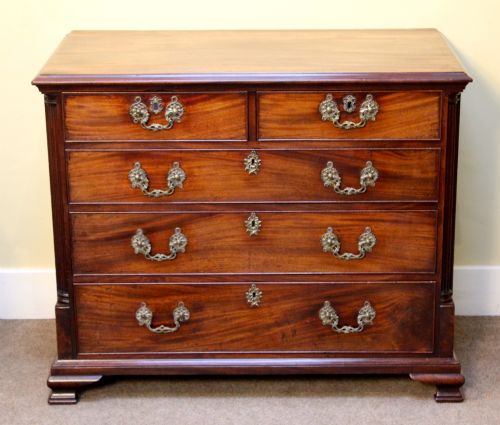
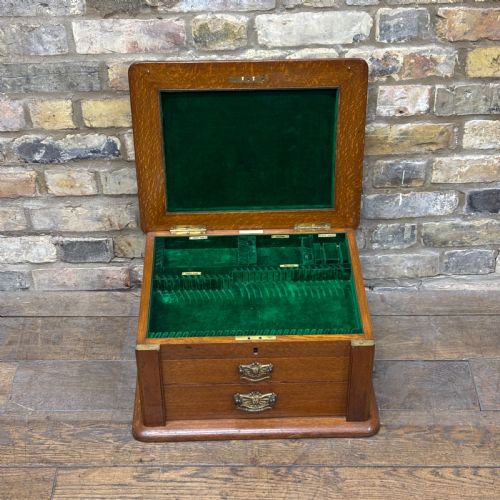
When you search for a brass mounted storage chest, you encounter sturdy utilitarian vessels designed for security and transit across distant trade routes. The examples gathered here range from campaign trunks and travelling boxes to heavy oak coffers and Dutch Colonial chests.
Most pieces date from the seventeenth century through to the early twentieth century, showing influences from English, French, Dutch Colonial, and East Asian workshops. They appear in diverse timber forms, including mahogany, camphor wood, elm, and oak, often reinforced with substantial metalwork.
Buyers find everything from compact document boxes and tea caddies to large Zanzibar traders chests and military campaign chests. These objects served military officers, merchants, and households requiring secure storage that could withstand rigorous journeys.
Materials and Construction
Cabinetmakers constructed these chests from dense tropical hardwoods and domestic timbers such as mahogany, walnut, oak, and camphor wood. These woods provided the necessary structural strength to endure long maritime voyages and overland transport without warping excessively.
Brass straps, corner brackets, hinges, and studs were fastened directly to the exterior to reinforce vulnerable joints and protect edges from heavy impacts. Lockplates and carrying handles were countersunk or secured with heavy screws and pins to ensure longevity under strenuous conditions.
Brass Mounted Storage Chest Retail Price Guide 2026
Typical asking prices for brass mounted storage chest among the pieces listed under this phrase on Sellingantiques today, from the lower quarter to the upper quarter. They describe what is for sale here now, not the wider market.
Travellers stored everything from court documents to playing card sets inside brass bound chests.
Distinctions in Quality
The standard of a brass mounted storage chest depends on the integration of its metal hardware with the underlying woodwork. Superior pieces demonstrate crisp joinery, hand-beaten or cast brass work that fits flush against the timber, and original locking mechanisms.
Attention to secondary timbers, interior compartment design, and the retention of original surface patination distinguish finer examples from standard utilitarian boxes. The crispness of carved details or the complexity of engraved brass strapping further separate workshop output.
The Brass Mounted Storage Chest Glossary
- Campaign chest
- A sectional storage chest designed to dismantle into parts for military transport. These units use brass recessed handles and corner brackets to protect the edges during travel.
- Camphor wood
- An aromatic timber frequently utilised in maritime chests for its natural insect-repellent properties. It protected textiles and documents on long sea voyages.
- Coffer
- A heavy wooden chest traditionally used for storing valuables, linens, or documents. Early examples often exhibit hand-carved panels and iron or brass reinforcement.
- Straphook
- A metal band fixed across the exterior of a trunk or chest to reinforce structural integrity. In these pieces, brass strapwork provides both strength and decorative contrast.
- Cellarette
- A lockable container designed for holding bottles of wine or spirits. They frequently incorporate lead linings or partitioned interiors.
Brass Mounted Storage Chest: Frequently Asked Questions
What is a campaign chest?
A campaign chest is a modular piece of furniture built in stacked sections with inset brass pulls. Officers in the British military used them because the chests separated easily for transport on mules or ships.
These pieces typically feature reinforced brass corners to withstand rough handling during military expeditions. The drawers often contain secret compartments or writing ledges for field use.
How do I care for camphor wood?
Camphor wood requires stable indoor humidity and protection from direct sunlight to prevent the timber from drying out. Clean the surface periodically with a soft, dry cloth rather than harsh liquid polishes.
Keep the interior clean and avoid applying heavy waxes to the inside of the chest so the natural aroma remains intact. Proper ventilation ensures the timber retains its condition over decades of domestic use.
Were these chests used at sea?
Many of these chests travelled extensively on merchant ships, naval vessels, and overland trade routes. Camphor wood and teak versions resisted tropical humidity and salt air during long voyages.
Metal mountings prevented the corners from splitting when shifting in cargo holds during rough weather. Their sturdy construction made them essential baggage for traders and explorers.
How do I distinguish campaign furniture?
Campaign furniture relies on flush brass fittings, drop handles, and removable sections designed to minimise bulk during transit. The hardware sits level with the wood surface so nothing catches on ropes or packing cases.
Look for side carrying handles, screw-in feet, and brass plates that join separate cabinet sections together. These mechanical details reveal a piece built specifically for a mobile lifestyle.