



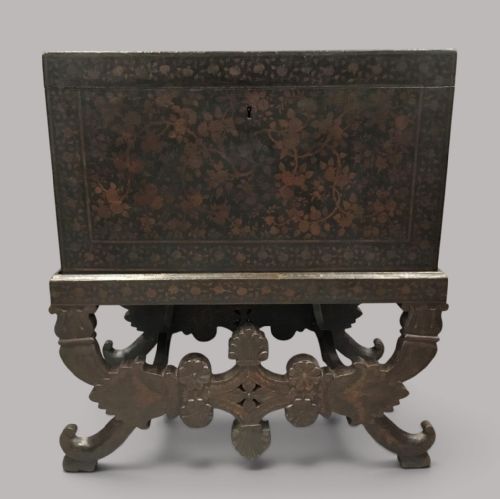

Colonial Hardwood Trunk
These heavy, travelled colonial hardwood trunk examples combine robust storage with rich regional carving, built for long ocean passages and exotic interiors.
Colonial Hardwood Trunk
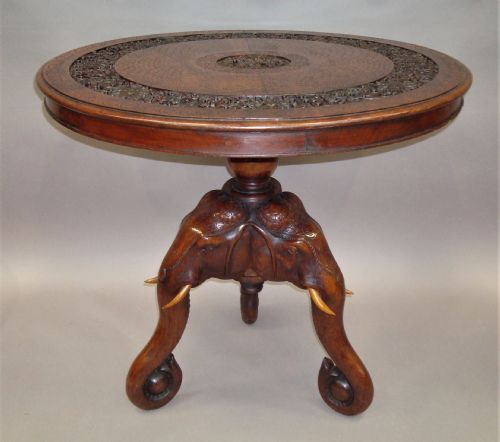
A colonial hardwood trunk serves as a tangible link to global maritime trade and domestic life in nineteenth century territories. Buyers examining this category encounter robust storage chests and travel trunks alongside occasional tables derived from trunk forms.
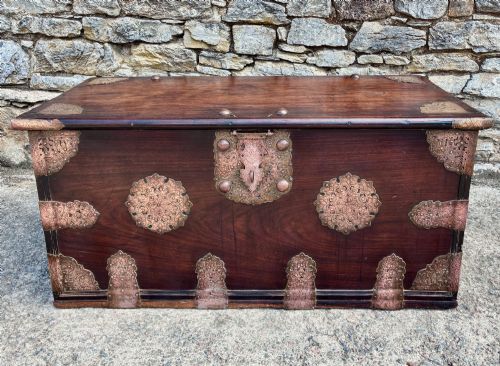
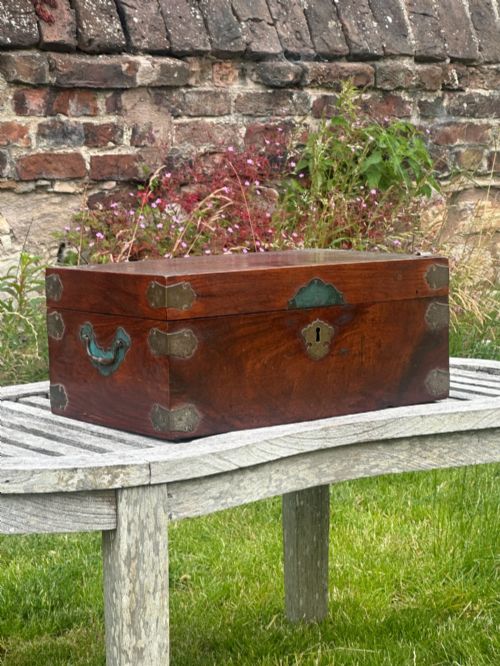
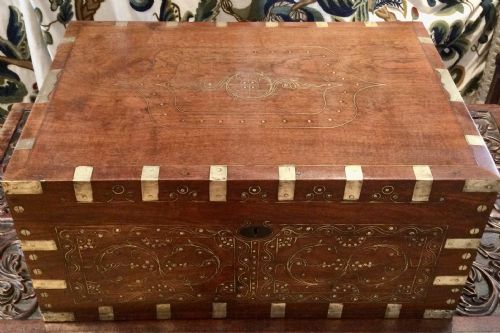
The pieces on this page span the Victorian era back to the year eighteen hundred, representing diverse regional aesthetics such as Dutch Colonial, Anglo-Indian, and Zanzibar origins. The most frequent survivors are brass bound chests and carved teak or padouk trunks intended for secure transport.
Makers utilised dense timbers native to tropical colonies, creating functional furniture that doubled as personal security vaults for valuables during lengthy sea voyages. Surviving examples often display the marks of heavy transit alongside intricate hand carving applied in local workshops.
Materials and construction methods
Construction relies heavily on durable tropical timbers including teak, padouk, and general lacquered hardwood selected for resistance to humidity and insect damage. Carpenters joined heavy planks using robust joinery techniques designed to endure the stresses of carriage transport.
Metal reinforcement defines the structure of many pieces, utilising brass straps, iron bands, and copper studs to protect corners and secure the lid against rough handling. Artisans frequently integrated decorative bone inlay or fine surface carving directly into the primary hardwood body.
Colonial Hardwood Trunk Retail Price Guide 2026
Typical asking prices for colonial hardwood trunk among the pieces listed under this phrase on Sellingantiques today, from the lower quarter to the upper quarter. They describe what is for sale here now, not the wider market.
Listings feature items spanning the nineteenth century, including specific dates from eighteen hundred up to nineteen twenty.
Assessing quality in regional chests
Quality reveals itself in the weight and selection of the primary timber, where dense padouk or teak outperforms softer secondary woods. The precision of the brass binding and the security of the original iron or brass fixings indicate the intended status of the piece.
Carving depth and clarity distinguish superior workshop output from simpler utilitarian boxes. Pieces retaining original surface finishes and intact metal mounts command greater appreciation among collectors than heavily restored examples.
The Colonial Hardwood Trunk Glossary
- Anglo-Indian
- Describes furniture made in India during the British colonial period, combining British furniture forms with local Indian carving traditions. This style frequently employs dense native timbers and elaborate floral or figural motifs.
- Padouk
- A heavy, durable tropical hardwood with a distinctive reddish-brown colour that darkens with age. Cabinetmakers favoured this timber for high-status export furniture due to its stability and resistance to splitting.
- Zanzibar chest
- A distinct type of heavy storage chest featuring brass studding, strapwork, and elaborate metal corner plates. Originating on the East African coast, these chests were produced for maritime trade and local elites.
- Deed box
- A small, secure storage container designed specifically for legal documents and valuable papers. These boxes often feature internal compartmentalisation and heavy brass carrying handles.
Colonial Hardwood Trunk: Frequently Asked Questions
What were colonial trunks used for?
These trunks served primarily as secure containers for clothing, valuables, and documents during long sea voyages across the empire. Their robust construction protected contents from moisture, pests, and the rough conditions of carriage transport.
Upon reaching their destination, they functioned as stationary storage furniture within colonial homes. Many were later adapted or repurposed as low tables or decorative centrepieces.
How do I date a trunk?
Dating relies on examining the construction methods, fastener types, and timber choice alongside any visible regional style markers. Pieces from the early nineteenth century often feature heavy brass binding and hand-forged ironwork.
Later Victorian examples may incorporate denser surface carving or machine-made components. Comparing the wear patterns on the base and handles provides further clues to its age.
How do I care for hardwood furniture?
Maintain stable indoor humidity levels to prevent the dense tropical hardwoods from drying out and splitting over time. Avoid placing the chest in direct sunlight or near heat sources that could damage the timber and original lacquered surfaces.
Dust regularly with a soft cloth and apply appropriate natural waxes sparingly if the wood appears dry. Avoid harsh chemical cleaners that can degrade brass mounts and delicate bone inlay.
What is a Zanzibar chest?
A Zanzibar chest is a specific form of heavy storage trunk characterised by dense brass studding and geometric strapwork. These pieces reflect the maritime trade networks connecting the East African coast with India and the Middle East.
They are easily identified by their domed or flat lids and elaborate brass plate decoration. Collectors prize them for their striking visual presence and robust maritime history.