

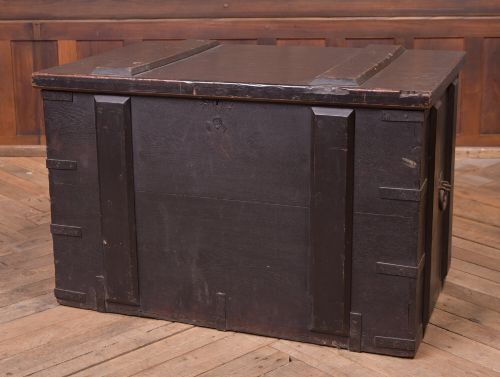


Large Teak Blanket Trunk
These large teak blanket trunk examples offer sturdy historic storage rooted in colonial workshops.
Large Teak Blanket Trunk
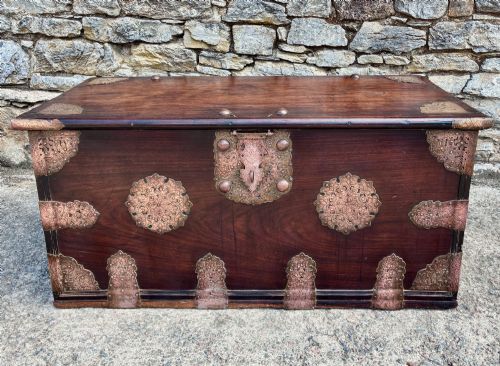
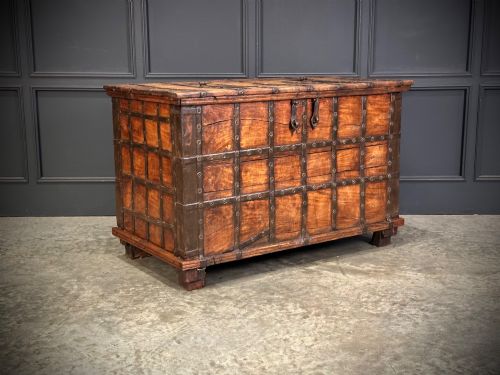
A large teak blanket trunk provides substantial storage space with deep historical provenance reaching back across the nineteenth and eighteenth centuries. These pieces encompass various colonial styles including Dutch Colonial, Anglo-Indian, and Indian Colonial forms.
Buyers encounter robust vessels such as dowry chests, merchants chests, marriage chests on wheels, and heavy coffers. The most common survivals on this page date from the nineteenth century, including Victorian examples and items from around eighteen fifty.
The primary function remains secure storage for blankets and textiles, executed on a monumental or large scale. Their origins span diverse regions influenced by European trade and local woodworking traditions.
How they were made
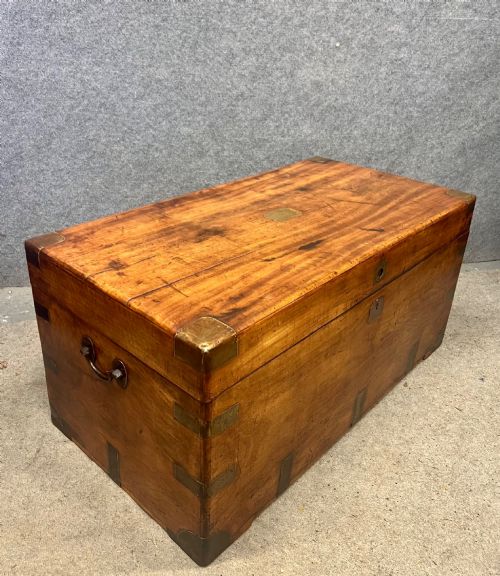
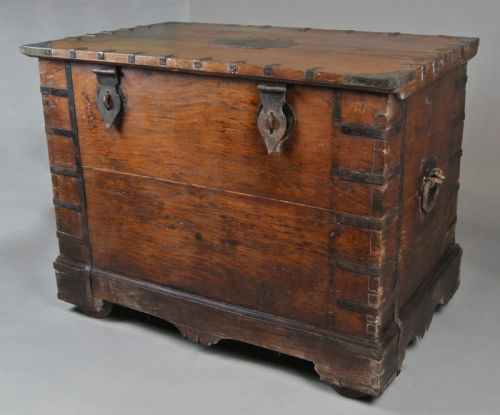
Makers constructed these trunks primarily using dense tropical hardwood teak, chosen for its durability and resistance to humidity. The heavy timber construction is frequently reinforced with structural metalwork.
Metal components play a major role in their assembly, featuring heavy brass bindings, iron bands, and copper elements. Some specialised forms incorporate ripple moulding or wheels for mobility.
Large Teak Blanket Trunk Retail Price Guide 2026
Typical asking prices for large teak blanket trunk among the pieces listed under this phrase on Sellingantiques today, from the lower quarter to the upper quarter. They describe what is for sale here now, not the wider market.
Listings feature pieces spanning the eighteenth century, nineteenth century, and the Victorian era, constructed from teak with iron and brass.
What varies in quality
The distinction between standard utility storage and finer examples rests on the complexity of the metalwork and framing. Elaborate brass binding, robust iron banding, and sophisticated ripple moulding elevate certain pieces above plain utilitarian boxes.
Proportion and scale dictate the visual impact, ranging from straightforward provincial trunks to monumental dowry chests. The preservation of original mounting hardware and internal fittings alters the character of each piece.
The Large Teak Blanket Trunk Glossary
- Teak
- A dense, durable tropical hardwood highly valued for furniture making due to its natural oils and strength. It resists warping and decay effectively in varied climates.
- Cofer
- A traditional term for a chest or strongbox, often used for storing valuables or textiles. These pieces typically feature sturdy wooden construction.
- Dowry chest
- A large storage box traditionally prepared for a bride, often richly decorated or solidly built to house household linens and goods. They represent significant cultural traditions.
- Ripple moulding
- A decorative woodworking profile featuring undulating wave-like patterns carved or shaped into the timber surface. This technique adds texture and visual depth to furniture frames.
- Campaign chest
- Portable furniture designed to be easily packed and transported by military officers or merchants on the move. They often feature recessed handles and reinforced corners.
Large Teak Blanket Trunk: Frequently Asked Questions
What were large teak blanket trunks used for originally?
These large chests served primarily to store textiles, blankets, and personal valuables in domestic and merchant settings. Many specific variants functioned as dowry chests or marriage chests.
Their robust construction also suited them for transport during travel and trade across colonial shipping routes.
How do I care for a historic teak chest?
Keep the wood conditioned with appropriate natural waxes and avoid placing the chest near direct heat sources or strong sunlight. Maintaining stable room humidity protects the dense teak and any historic metal bindings.
Clean surfaces gently with a soft, dry cloth rather than harsh modern chemical polishes.
Are these trunks suitable for modern living rooms?
Their substantial size makes them ideal as coffee tables, end-of-bed storage, or statement focal points in large living spaces. The interior provides practical concealment for modern clutter while adding historic character.
The sturdy construction allows them to function reliably under daily domestic use.