




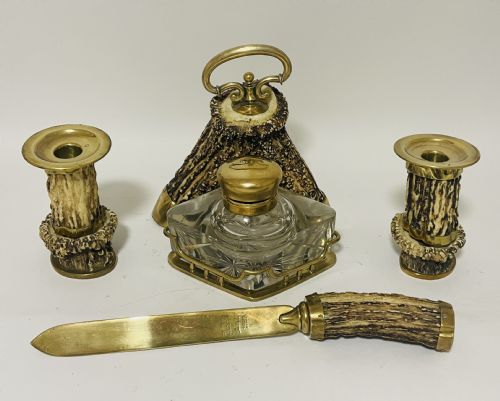


Brass Mounted Inkstand
Brass mounted inkstand pieces bring the structured elegance of past writing desks into modern rooms with heavy timber and gleaming metal.
Brass Mounted Inkstand
When you search for a brass mounted inkstand, you are looking at functional desk accessories designed to hold writing equipment, inkwells and pens in orderly fashion. These pieces serve as centrepieces for writing desks, offering compartments for stationery alongside secure glass or metal inkwells.
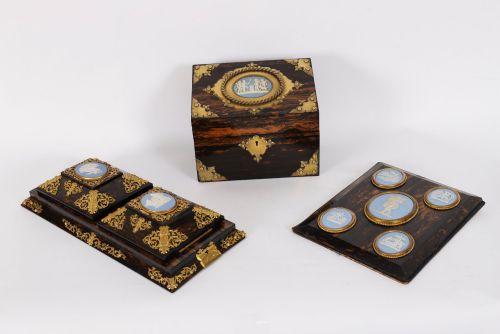
The most common versions on this page date from the nineteenth century, particularly the Victorian era, combining rich timbers with bright metal mounts. You will frequently find them formed from coromandel wood, walnut, or oak, embellished with brass hinges, edges, and handles.
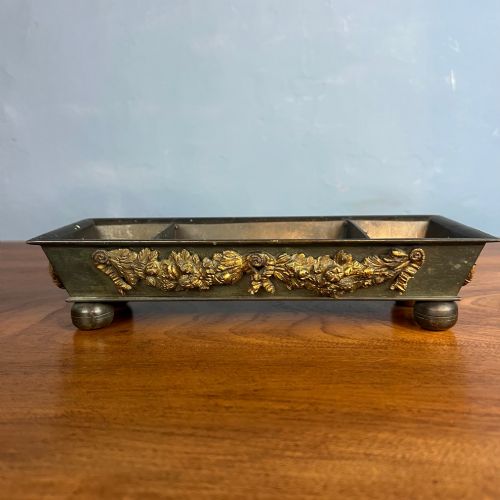
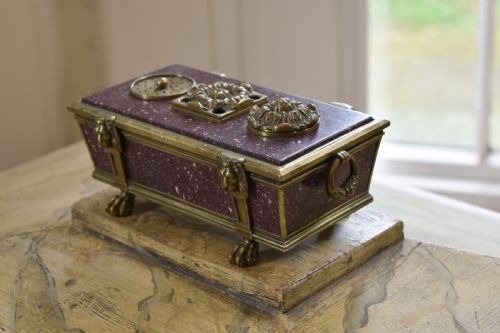
Beyond standard wooden stands, the selection includes desk sets incorporating materials like tortoiseshell, agate cabochons, and ormolu. Certain pieces adopt specific forms such as double-sided desk sets or naturalistic motifs including boar feet and horse hooves.
How they were made
Cabinet makers constructed the foundational bodies of these desk stands using dense timbers like walnut, coromandel, and oak, often applying fine veneers. Brass mounts, hinges, and edgings were then painstakingly fitted to reinforce the corners and frame the inkwell recesses.
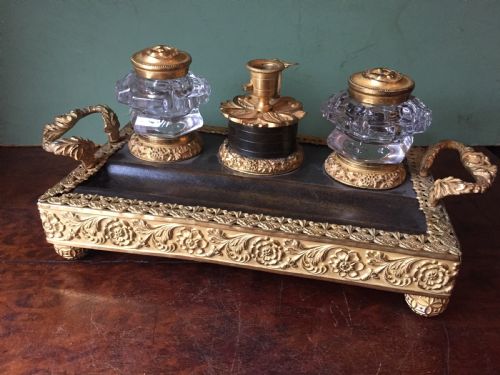
Glassmakers produced heavy cut or moulded glass inserts for the inkwells, sometimes pairing them with hinged metal lids to prevent the ink from drying. Decorative elements such as ormolu, tortoiseshell inlays, and agate cabochons were integrated into the wooden frameworks to elevate the visual richness of the desk accessories.
Brass Mounted Inkstand Retail Price Guide 2026
Typical asking prices for brass mounted inkstand among the pieces listed under this phrase on Sellingantiques today, from the lower quarter to the upper quarter. They describe what is for sale here now, not the wider market.
Listings feature eighteenth-century French items alongside nineteenth-century English coromandel, walnut, and oak desk stands.
What varies in quality
The degree of material selection largely dictates the standing of a piece, with dense exotic timbers like coromandel and tortoiseshell marking the upper tiers. Simpler oak constructions offer sturdy utility, whereas complex double-sided configurations demand greater joinery skill.
The execution of the metalwork also separates standard items from exceptional ones. Finely cast ormolu, intricate brass inlay, and robustly hinged mounts demonstrate superior workshop standards compared to plain sheet brass applications.
The Brass Mounted Inkstand Glossary
- Coromandel wood
- A dense, heavily figured timber imported from Asia, prized for its dark brown colour and contrasting stripes. It frequently forms the body of high-end nineteenth-century desk stands.
- Ormolu
- Gilded bronze applied to furniture and desk accessories, known for its warm metallic lustre. French makers utilised this technique extensively during the nineteenth century.
- Cabochon
- A gemstone or mineral, such as agate, polished into a smooth convex shape rather than faceted. These stones appear mounted onto desk sets for decorative contrast.
- Tortoiseshell
- The mottled brown and amber shell material used for inlay work on luxury desk boxes. It provides a glossy, translucent surface beneath brass mounts.
- Gothic Revival
- An architectural and decorative style drawing on medieval forms, visible in certain Victorian inkstands. This aesthetic favours pointed arches, heavy tracery, and robust proportions.
Brass Mounted Inkstand: Frequently Asked Questions
What is a brass mounted inkstand used for?
These pieces held inkwells, pens, and paper-related accessories on nineteenth-century writing desks. They kept writing materials organised and ready for correspondence.
Today, they function as decorative desk objects or tidy storage for small items in a study.
How do I date a Victorian desk stand?
Dating relies on identifying timber choices, brass mounting techniques, and stylistic influences like Gothic Revival or Napoleon III. Examining the construction of the glass inkwells also helps establish the era.
Makers often integrated specific woods like coromandel during peak Victorian manufacturing periods around eighteen sixty to eighteen eighty.
What is the difference between an inkstand and a desk set?
An inkstand typically refers to a single tray or stand housing one or more inkwells and pen recesses. A desk set often includes matching auxiliary pieces like stationery racks or blotters alongside the main inkstand.
Both categories utilise similar brass mountings and timber foundations.
Can I still use antique inkwells for writing?
Antique glass inkwells can hold ink, but collectors generally display them rather than use them daily. Dried ink residues can stain the original glass or corrode metal mounts if left uncleaned.
Many buyers prefer to keep them empty as historical desk ornaments.