

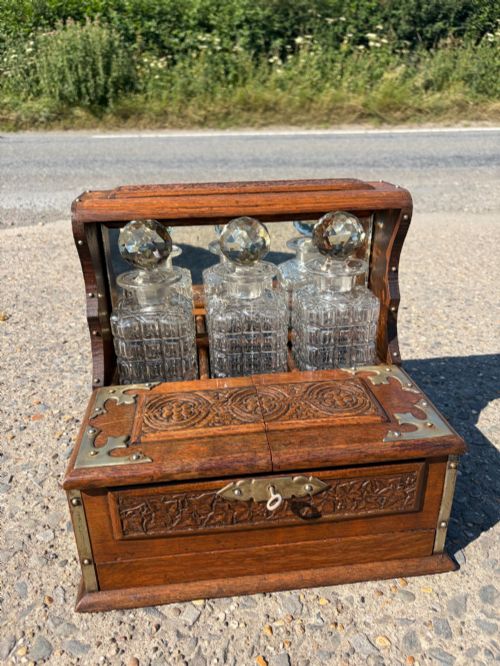
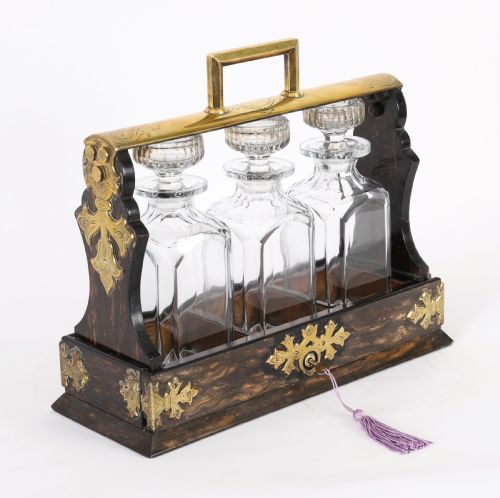


Brass Mounted Decanter
A brass mounted decanter brings together heavy crystal and secure metalwork, offering a practical way to display and lock fine spirits.
Brass Mounted Decanter
A brass mounted decanter often appears within fitted boxes, tantalus frames, or cellarettes, designed to protect and lock away valuable spirits. The selection spans the 18th century, Regency, and Victorian periods, with later Edwardian iterations frequently combining drink storage with games compendiums.
The most common formats on this page are Victorian oak and coromandel tantalus sets, alongside earlier mahogany decanter boxes and cellarettes. These pieces reflect domestic habits of the 19th century, where locking mechanisms kept expensive contents secure from household staff.
Makers and craftsmen utilised robust timbers to house cut glass and crystal bottles, securing the lids and corners with cast or stamped brass mounts. Such items range from simple single-bottle holders to elaborate multi-decanter units incorporating mirrors and secret drawers.
Materials and construction
Cabinetmakers constructed the outer cases using dense hardwoods such as oak, mahogany, coromandel, and padouk, often lining the interiors with velvet or silk. Brass was utilised for structural corner brackets, carrying handles, escutcheons, and the locking bars characteristic of tantalus frames.
The glass elements consist of heavy cut crystal or clear and overlaid glass, shaped into decanters, claret jugs, or scent bottles. Metal mounts were cast and hand-finished before being screwed into the timber carcass to reinforce joints and secure the locking mechanisms.
Brass Mounted Decanter Retail Price Guide 2026
Typical asking prices for brass mounted decanter among the pieces listed under this phrase on Sellingantiques today, from the lower quarter to the upper quarter. They describe what is for sale here now, not the wider market.
Victorian hosts locked their gin away not from thieves, but from thirsty parlourmaids.
Indicators of quality
Quality rests upon the choice of timber, the precision of the brass mounts, and the integration of internal fittings. Dense grains in coromandel or well-figured mahogany indicate better stock selection by the maker.
Superior examples feature fully operational original locks with functioning keys, cleanly cut crystal without chips, and robust brass work that sits flush to the wood. The complexity of the interior arrangement, such as combined games compartments or matched sets of decanters, further separates standard pieces from the finest work.
The Brass Mounted Decanter Glossary
- Tantalus
- A locking frame that holds decanters by their stoppers to prevent removal of the liquid without a key. The name derives from the mythological figure, as the contents are visible yet tantalisingly out of reach.
- Cellarette
- A lockable container or cabinet designed to hold wine bottles, often fitted with metal liners for ice or water. They sit on the floor or on short legs beneath a sideboard.
- Coromandel
- A dense, heavy timber imported from Asia, highly prized by 19th-century cabinetmakers for its dark brown colour and dramatic contrasting black grain.
- Escutcheon
- A protective metal plate surrounding a keyhole, usually made of brass on these pieces to prevent the surrounding wood from wearing down.
- Compendium
- A multi-functional box housing various pastimes alongside a drinks service, combining games boards and cards with decanters.
Brass Mounted Decanter: Frequently Asked Questions
What is a tantalus?
A tantalus is a locking wooden frame that secures decanters by their necks and stoppers, preventing the contents from being poured without a key. This invention allowed hosts to safely display expensive spirits in public rooms while restricting access.
They typically appear in oak or coromandel, fitted with brass locking bars that slide down to trap the glass stoppers firmly in place.
How do I date a decanter box?
Dating relies upon the timber choice, the style of the brass hardware, and the construction methods used inside the carcass. Earlier Georgian pieces favour mahogany with simpler mounts, while Victorian examples often employ coromandel, heavy cast brass, and complex internal mechanisms.
Looking at the construction of the dovetails and the type of lock used provides further chronological clues.
Were these made for wine or spirits?
These pieces were primarily built to house heavy spirits like whisky, brandy, and gin, which were decanted from large barrels into crystal bottles. Wine was more commonly kept in cellarettes or separate coolers.
The inclusion of multiple cut crystal decanters points directly to the storage of different liquor types.
How should I clean the brass?
Brass mounts should be left with their natural aged patina, avoiding harsh metal polishes that remove historic character and stain the surrounding wood. A gentle wipe with a dry or slightly damp cloth removes surface dust safely.
If cleaning is necessary, ensure the wood and glass are fully protected from any chemical contact.
Are the keys usually original?
Original keys are uncommon because locks were frequently changed or keys were lost over generations of domestic use. Many surviving boxes and tantalus frames now operate with replacement keys fitted by locksmiths to match the original period mechanism.
The presence of a working original key adds to the completeness of the object.