

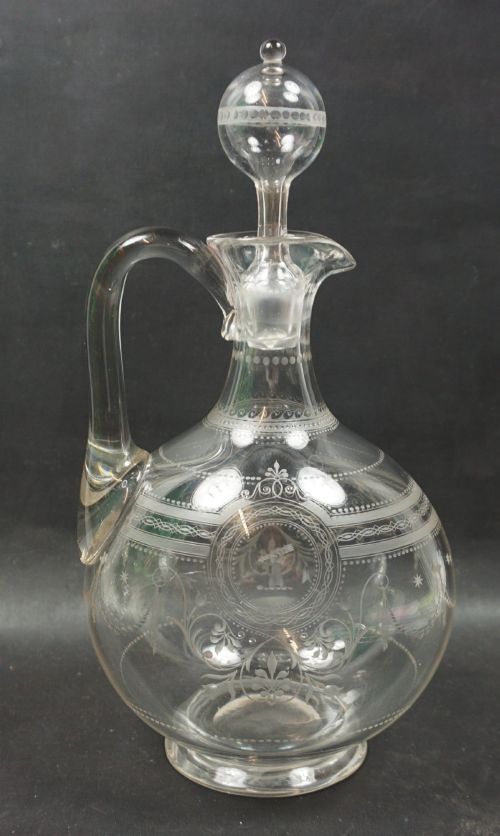
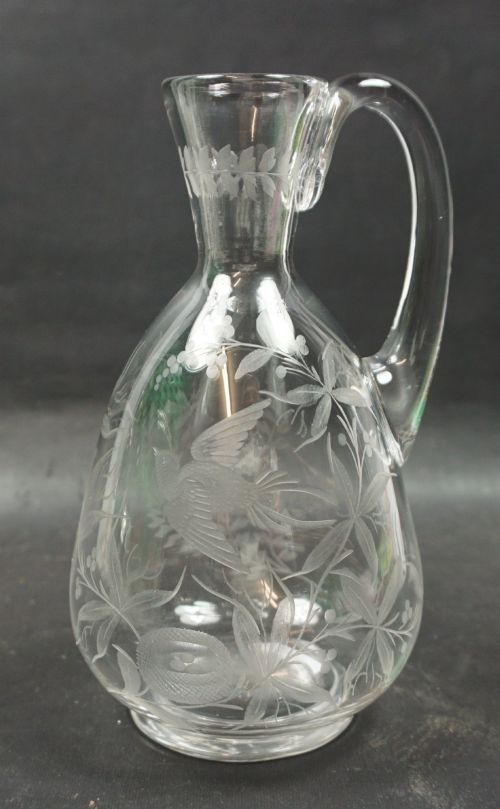
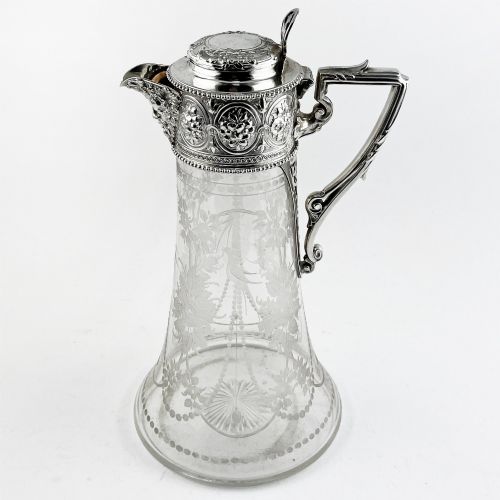

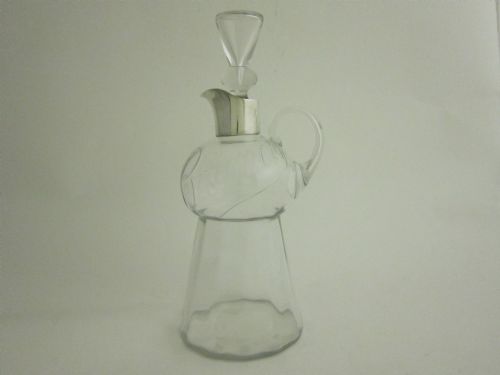
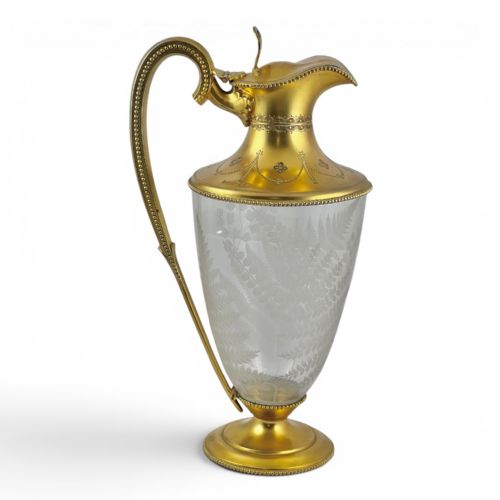


Etched Glass Jug
An etched glass jug brings the decorative craft of the nineteenth and early twentieth centuries directly to the table.
Etched Glass Jug
When you search for an etched glass jug, you encounter functional vessels designed for serving wine, claret, water, and lemonade during formal dining and social occasions. These objects combine transparent or coloured vessel bodies with decorative surface ornamentation achieved through acid or wheel techniques.
You are most likely to meet Victorian and Edwardian examples on this page, originating predominantly from English workshops, Stourbridge, and continental makers. The forms range from tall claret jugs with hinged metal mounts to smaller water pitchers and decanters.
The decorative motifs on these vessels often feature botanical patterns such as grapes, vines, and birds, alongside classical or naturalistic scenes. They serve as both functional tableware and representative examples of period glass artistry.
How they were made
Makers formed the bodies of these vessels using clear glass, lead crystal, or overlaid coloured glass, often shaped by blowing into moulds or free-blowing. Craftsmen then applied surface decoration using acid etching or hand wheel engraving to cut intricate designs into the material.
Mounts, handles, and hinged lids made from sterling silver, silver gilt, or silver plate were securely fitted to the glass necks and rims. These metal components were frequently worked with cast details like masks or foliate scrolls before being attached to the finished vessel.
Etched Glass Jug Retail Price Guide 2026
Typical asking prices for etched glass jug among the pieces listed under this phrase on Sellingantiques today, from the lower quarter to the upper quarter. They describe what is for sale here now, not the wider market.
Some Victorian wine jugs feature watchful glass birds perched permanently among etched branches, quietly supervising the claret.
What varies in quality
The depth and clarity of the surface etching or engraving distinguish standard production from superior work. Deeper, crisper lines and more complex pictorial motifs demonstrate greater skill from the artisan who decorated the glass.
The weight and purity of the metal mounts, such as heavy sterling silver versus thinner silver plating, separate utilitarian vessels from luxury pieces. Furthermore, the integration between the glass body and the fitted metal collar dictates the overall stability and proportion of the piece.
Asprey and Co Ltd·Elkington and Co·The Sheffield Silver Co·Webb and Son·Daum
The Etched Glass Jug Glossary
- Claret jug
- A specialised pouring vessel created specifically for serving red wine at the dining table. These typically feature a hinged metal lid and handle.
- Acid etching
- A decorative technique where wax resists are applied to the glass surface before acid eats away the exposed areas to form a design.
- Stourbridge
- An English town renowned for its glass manufacturing industry, particularly during the nineteenth century when intricate wheel-engraved pieces were produced.
- Silver plate
- A layer of silver fused to a base metal foundation, frequently utilised for the handles, collars, and lids of nineteenth-century jugs.
- Overlay glass
- A method where a layer of coloured glass is cased over a clear glass body, allowing the decorator to cut through the outer layer to expose the contrasting colour beneath.
Etched Glass Jug: Frequently Asked Questions
What were etched glass jugs used for?
These vessels were primarily utilised at the dining table for serving claret, wine, water, or lemonade during formal meals and gatherings.
Their decorative designs also allowed them to function as ornamental display items on sideboards when not actively serving drinks.
How do I date an etched glass jug?
Dating relies on examining the style of the metal mounts, hallmarks on the silver components, and the specific decorative motifs used on the glass body.
Victorian and Edwardian pieces often display distinct stylistic indicators, such as naturalistic foliage or classical Revival forms, that align with specific decades.
Are the stoppers original?
Many surviving jugs retain their matching or period-correct stoppers, particularly those configured as decanters or specific wine ewers.
Because stoppers were easily misplaced or broken over time, finding a piece with its original fitted component is a notable attribute.
How should I clean my jug?
Careful hand washing in lukewarm water using mild detergent is recommended to protect both the glass surface and any delicate silver mounts.
Harsh abrasives and immersion in boiling water should be strictly avoided to preserve the integrity of the silver plating and the etched details.