
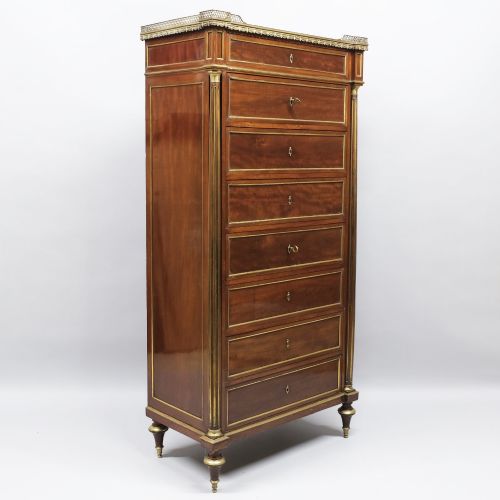
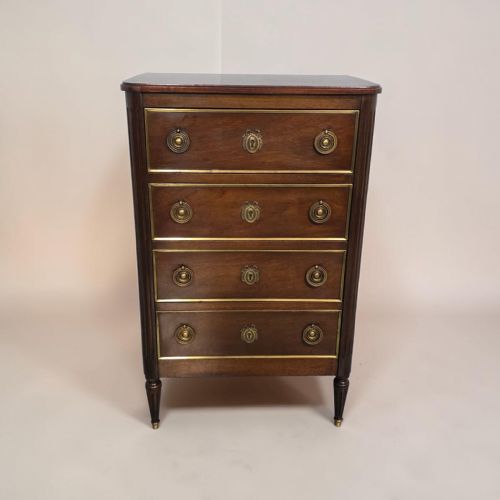


Brass Mounted Chiffonier
A brass mounted chiffonier brings low storage and display surface together in polished rosewood or mahogany, anchored by fine metalwork.
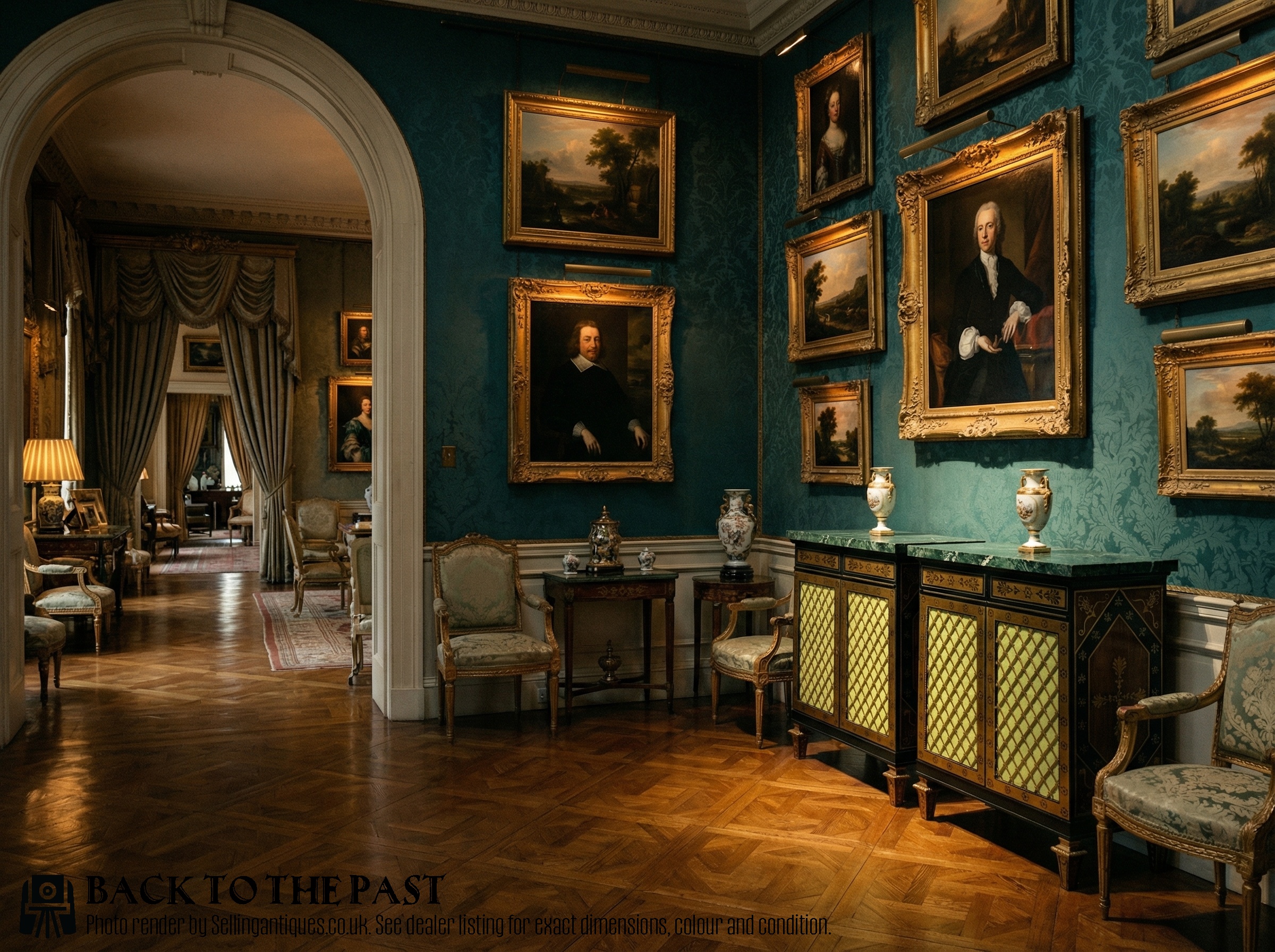
Brass Mounted Chiffonier
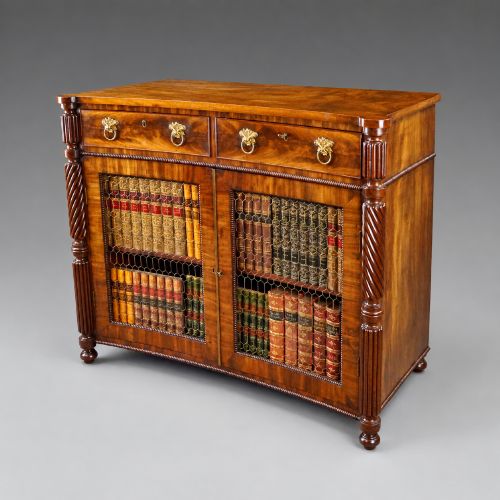
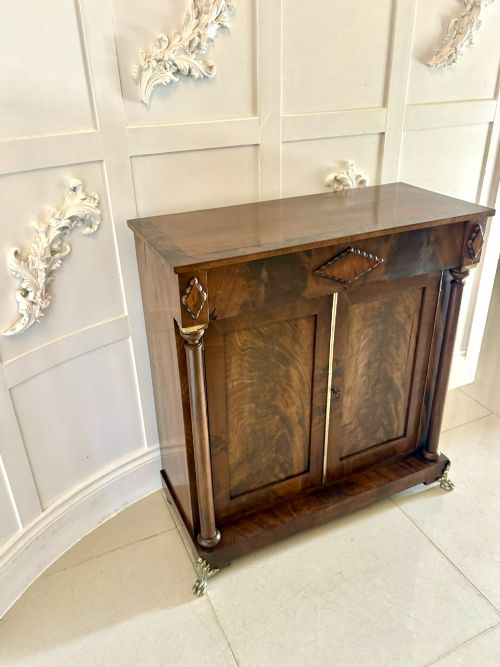
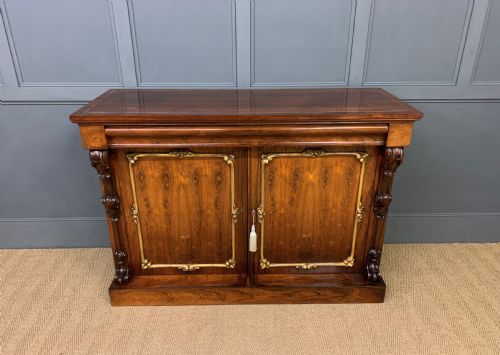
A brass mounted chiffonier combines a low sideboard base with upper shelves or simple enclosed storage, emerging principally from the Regency and William IV periods into the mid nineteenth century. These cabinets function as compact storage pieces for dining rooms and drawing rooms, often displaying books, silver, or decorative objects upon their timber surfaces.
The pieces on this page appear predominantly in rich rosewood and mahogany, frequently carrying the characteristic gilt brass stringing, inlay, or mounts that define the style. Buyers frequently encounter examples displaying classical architectural lines alongside glazed or fabric-backed lower doors.

How they were made
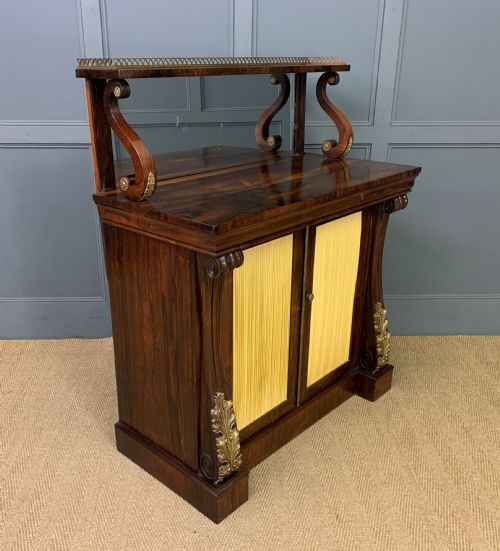
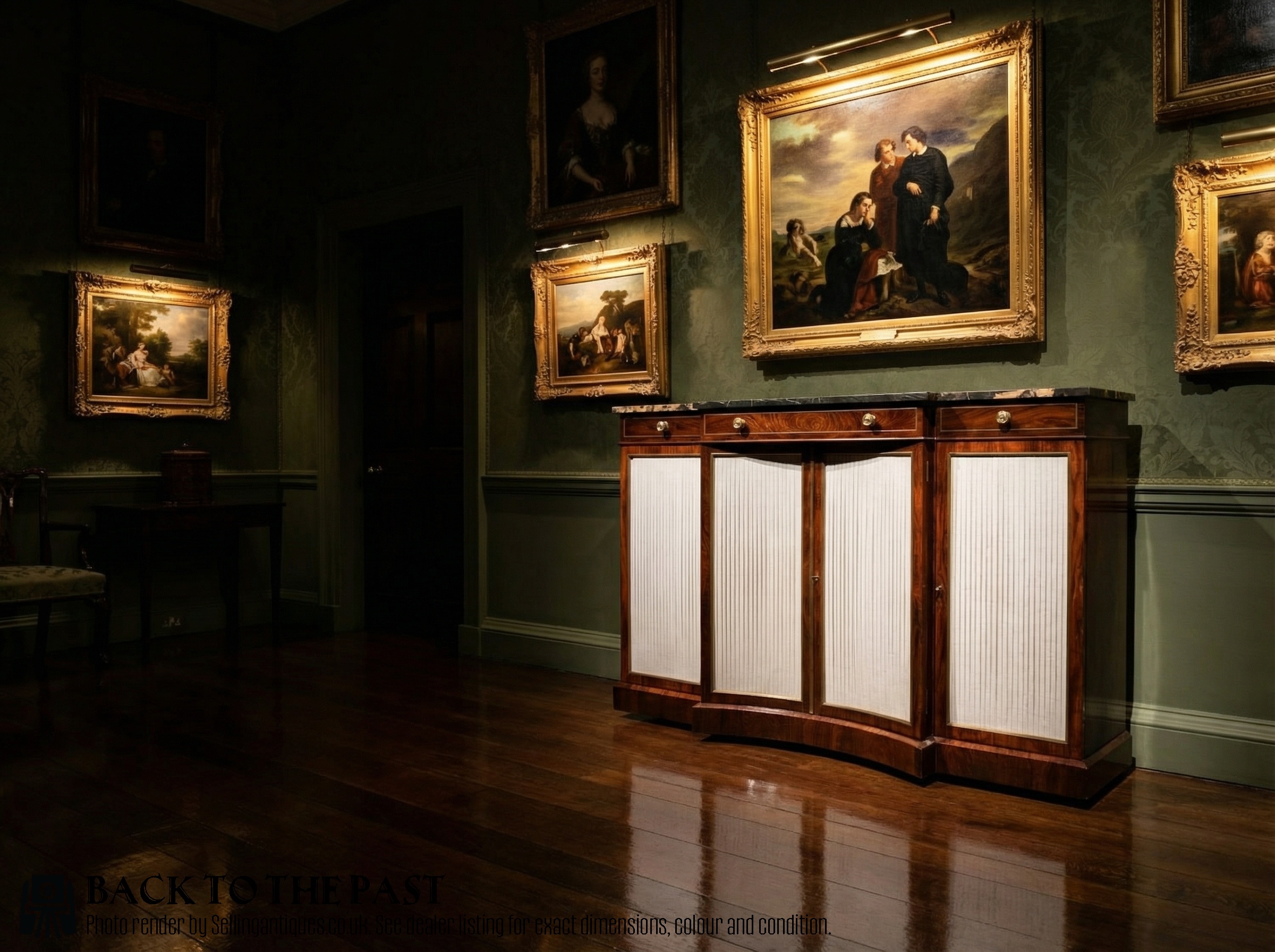
Cabinetmakers constructed these pieces using solid and veneered timbers such as rosewood, figured mahogany, and oak, applying brass inlay and ormolu mounts to accentuate structural lines. Panels often incorporate pleated fabric or brass grilles behind glazed or open framework.
Surface ornamentation relies on precision cutting of boxwood and brass stringing into the primary timber ground, complemented by marble tops on selected nineteenth century examples.
Brass Mounted Chiffonier Retail Price Guide 2026
Typical asking prices for brass mounted chiffonier among the pieces listed under this phrase on Sellingantiques today, from the lower quarter to the upper quarter. They describe what is for sale here now, not the wider market.
Pleated silk panels behind brass grilles kept the contents of the cabinet hidden from view while letting remote warmth circulate.
What varies in quality
Quality rests upon the selection of timber figures, such as highly grained rosewood or figured mahogany, and the precision with which brass inlay and mounts integrate into the woodwork. Finer workshop production shows in crisper cast ormolu details and balanced proportions.
The integrity of internal secondary timbers, such as mahogany linings, and the survival of original brass grilles or pleated silk panels separate standard workshop output from exceptional cabinet work.
Gillows·John McClean·S Jamar
The Brass Mounted Chiffonier Glossary
- Chiffonier
- A low cabinet featuring cupboards below, sometimes surmounted by a shelf with small supports. This form evolved during the Regency period to hold plate and books.
- Ormolu
- Gilded bronze used for decorative mounts and accents on furniture. It provides a bright metallic contrast against dark rosewood and mahogany.
- Stringing
- Thin inlay lines of contrasting wood or brass set flush into the surface of a cabinet. It outlines drawers, doors, and panels.
- Semainier
- A tall, narrow chest of drawers designed with seven drawers, one for each day of the week. Originating in France, it appears alongside side cabinets in nineteenth century rooms.
Brass Mounted Chiffonier: Frequently Asked Questions
What is a brass mounted chiffonier used for?
These cabinets serve as low sideboards or credenzas, providing enclosed cupboard storage below a flat surface suitable for lamps and decorative objects. They fit well in dining rooms or sitting rooms where tall storage proves too heavy.
Historically, they held dining silver, linens, or books close to hand without dominating the wall space of a formal room.
How do I date a Regency chiffonier?
Dating relies on timber selection, brass inlay techniques, and structural proportions typical of the early nineteenth century. Regency and William IV examples often feature rosewood veneers with gilt brass stringing and turned feet.
Later Victorian interpretations tend toward heavier proportions and different internal construction methods while retaining the basic low cabinet format.
Are marble tops original on these cabinets?
Marble tops appear on selected nineteenth century French and English pieces, providing a durable and decorative surface. They were factory fitted to specific models designed to hold heavy objects or plants.
Checking the rebate and edge finish helps confirm whether a marble slab belongs to the original cabinet construction.
How do I care for rosewood furniture?
Rosewood surfaces require stable indoor humidity and protection from direct sunlight to prevent timber splitting and fading. Gentle dusting with a dry cloth preserves the polished finish.
Avoid commercial silicone sprays and excess moisture, applying traditional wax sparingly only when the timber appears dry.