



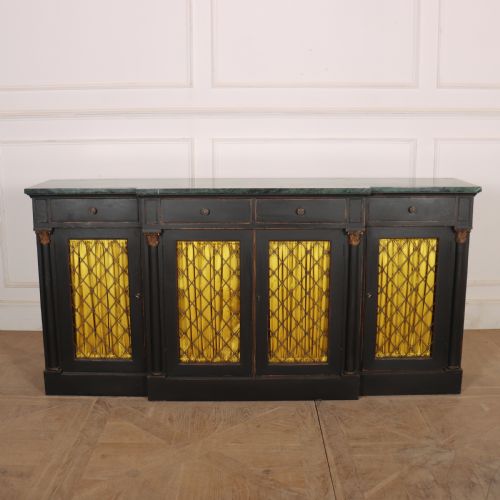
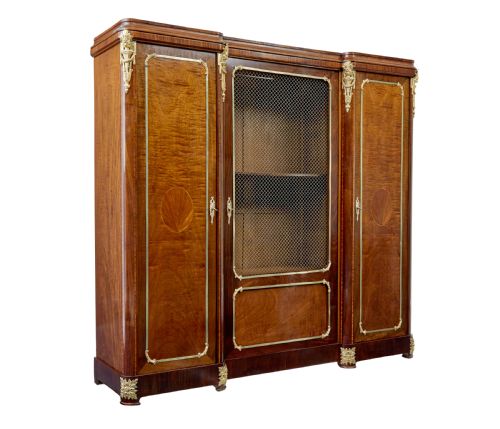


Brass Mesh Door Cabinet
A brass mesh door cabinet brings warmth and texture to a room, offering functional display space through woven metal grilles.

Brass Mesh Door Cabinet
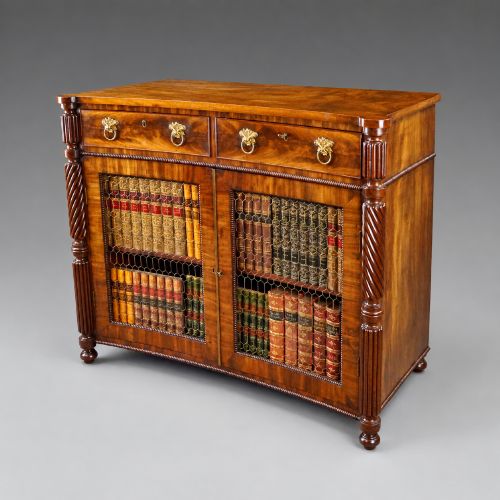
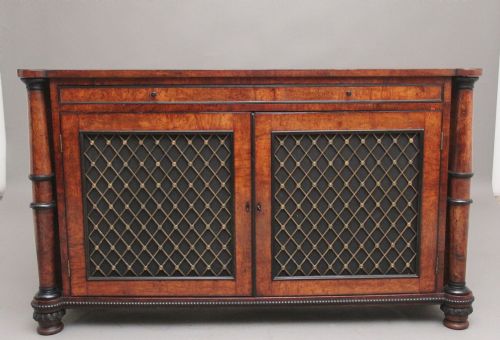
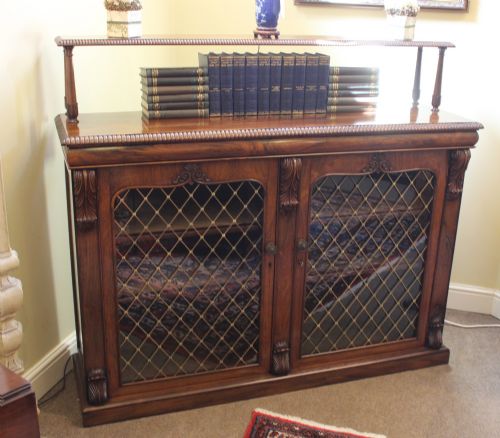
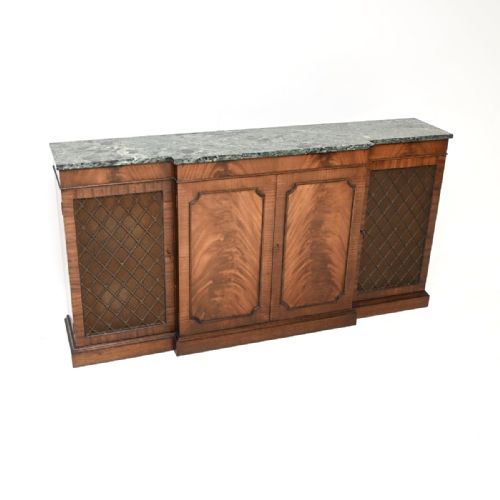
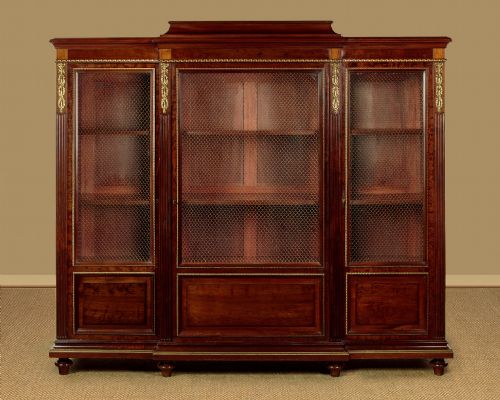
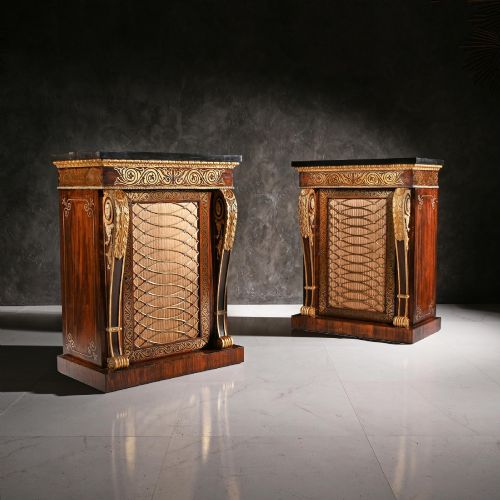
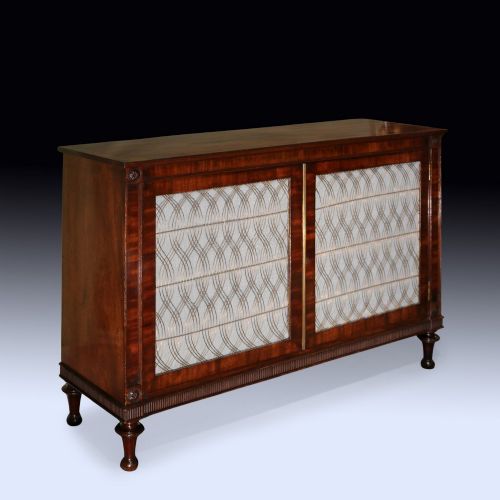
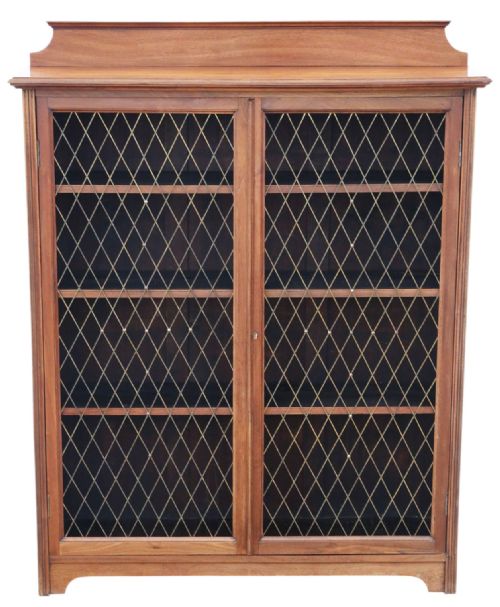
When you search for a brass mesh door cabinet, you encounter a variety of side cabinets, bookcases, and sideboards designed for refined storage and display. These items span the eighteenth, nineteenth, and early twentieth centuries, reflecting diverse periods such as Regency, Victorian, and Edwardian. The forms range from compact side cabinets to substantial library bookcases and breakfront designs.
The materials utilised in these pieces include mahogany, rosewood, walnut, pollard oak, and satinwood, often paired with marble tops and fabric linings. You are likely to meet examples featuring distinct brass grilles or wire mesh panels set into timber doors. Originating from various periods, these cabinets combine practical storage with decorative presence.
How they were made
Cabinet makers constructed these pieces using dense hardwoods such as mahogany, rosewood, and walnut, frequently enhancing the timber with brass inlay and mounts. The signature mesh or grille work was woven from brass wire and fitted securely into wooden door frames to protect contents while maintaining visibility. Selected pieces incorporate contrasting veneers like ebony and satinwood to accentuate the architectural lines.
Structural integrity relied on traditional joinery methods suited to large bookcases and sideboards, while marble tops added a durable and heavy surface. Interior shelving was often made adjustable to accommodate books and display items of varying heights. Fabric backing behind the mesh was occasionally introduced to soften the interior view.
The listings show nineteenth-century pieces dominating the selection, with Regency and Victorian examples appearing alongside earlier George III forms.
What varies in quality
The distinction between standard examples and exceptional pieces rests upon the choice of timber and the precision of the brass work. Finer items exhibit striking grain patterns in woods like Gonçalo Alves and pollard oak, paired with meticulous brass inlay rather than simple wire mesh. The weight and substance of the overall construction further indicate the tier of craftsmanship.
Proportion and decorative restraint dictate the desirability of a cabinet, with balanced breakfront forms commanding greater attention. The integration of period-specific details, such as Neoclassical or French Empire influences, elevates the character of the piece. Quality is evident in how harmoniously the brass mesh interacts with the surrounding timber framework.
Louis Constantin Le Gaigneur
The Brass Mesh Door Cabinet Glossary
- Breakfront
- A piece of furniture where the central section projects forward from the flanking sides. This architectural arrangement creates depth and visual interest in large bookcases and sideboards.
- Grille
- A lattice or openwork barrier made of metal wire set into furniture doors. In these cabinets, brass grilles allow ventilation and visibility while securing the contents.
- Chiffonier
- A small sideboard or cabinet popular in the nineteenth century, typically featuring shelves or enclosed storage below. It serves as a versatile piece for living spaces.
- Gonçalo Alves
- A dense exotic hardwood prized for its rich colouring and dramatic figuring. Furniture makers utilised this timber to achieve striking visual impact on Regency cabinets.
- Inlay
- A decorative technique where contrasting materials are embedded into the surface of a primary wood. Brass is frequently used for linear stringing and intricate motifs on these pieces.
Brass Mesh Door Cabinet: Frequently Asked Questions
What rooms suit a brass mesh door cabinet?
These cabinets suit libraries, living rooms, and dining spaces where refined storage is required. Their glass or mesh doors allow books and collections to remain visible while protected from dust.
The versatile forms, ranging from low sideboards to tall bookcases, integrate easily into traditional and contemporary interiors alike.
How do I care for the brass mesh?
Maintenance involves gentle dusting with a soft brush to prevent accumulation within the woven wire apertures. Avoid harsh chemical cleaners that might discolour the metal or damage the surrounding timber.
Regular care preserves the subtle sheen of the brass and keeps the delicate mesh structure intact over time.
How do I distinguish Regency periods?
Regency pieces often display classical architectural influences, crisp brass inlay, and exotic timbers like rosewood and Gonçalo Alves. The proportions tend to be clean and balanced, drawing inspiration from ancient Greek and Roman design.
Comparing the joinery details and hardware styles helps separate this period from later Victorian revivals.
Were these cabinets originally used for books?
Many larger examples served as library bookcases to house valuable volumes while keeping them secure behind mesh or glass doors. Smaller side cabinets were utilised for displaying ceramics, silver, or linens.
The inclusion of adjustable shelving in several pieces reflects their original purpose for storing varied collections.