
Brass Mantle Timepiece
A brass mantle timepiece brings mechanical precision and burnished metal warmth to a room, offering portable or stationary timekeeping from past centuries.
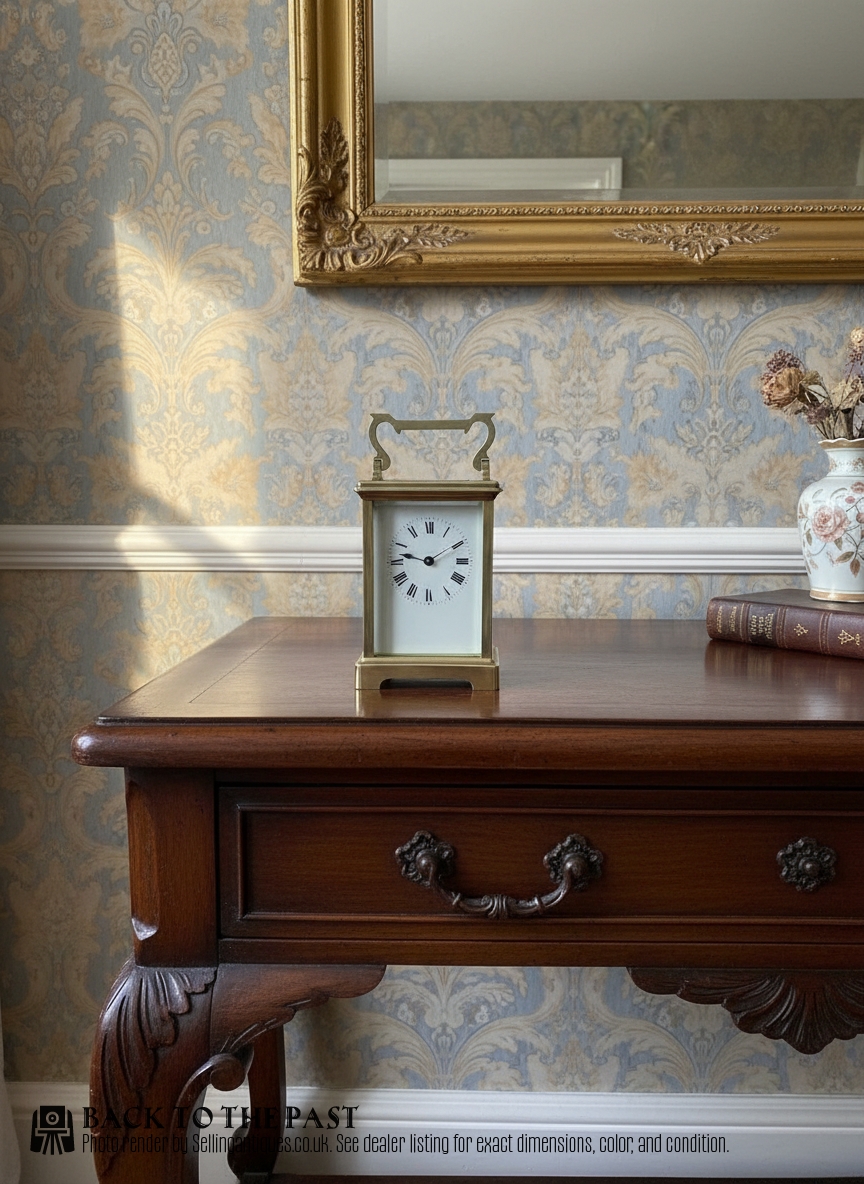
Brass Mantle Timepiece
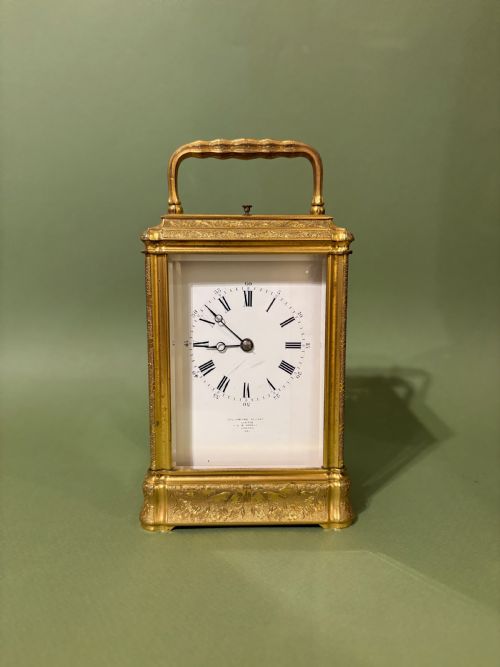
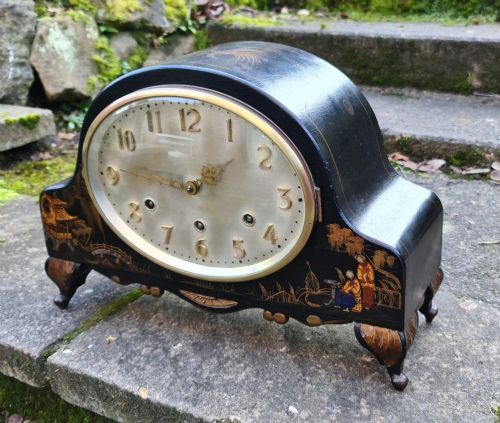
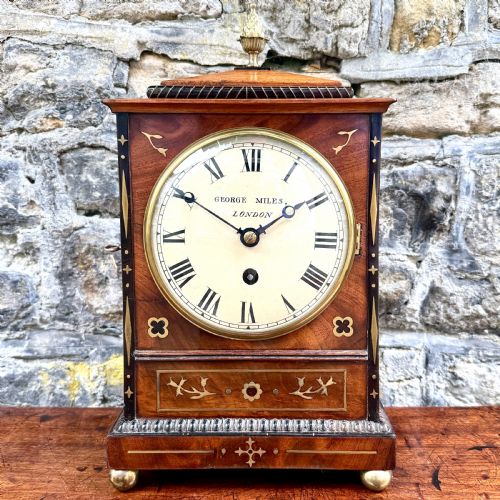
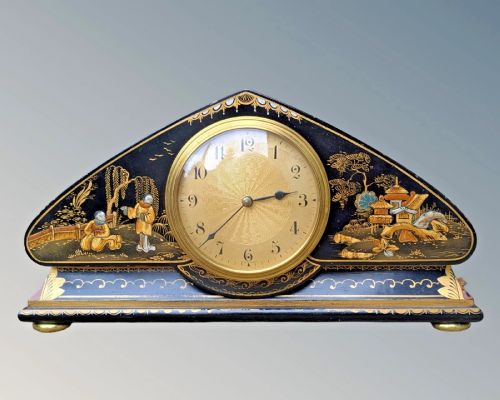
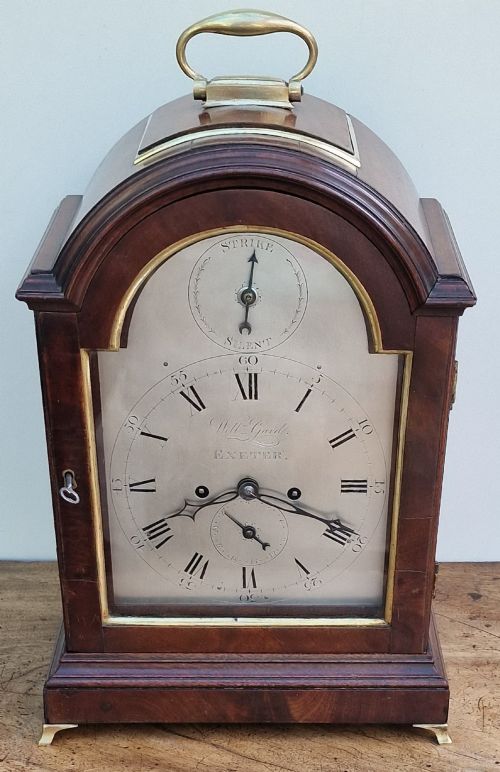
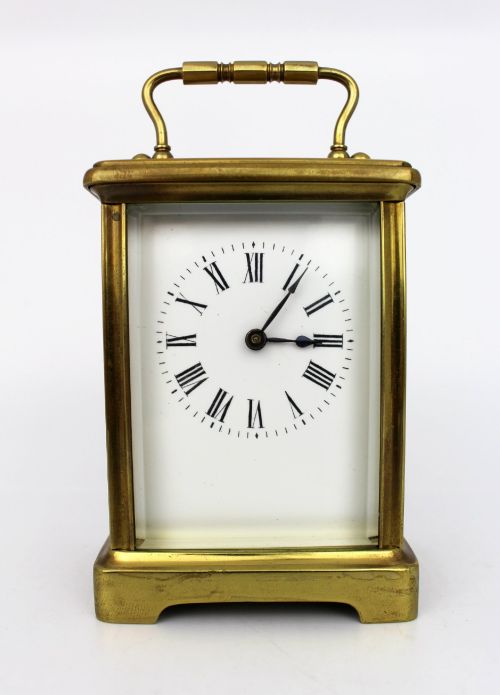
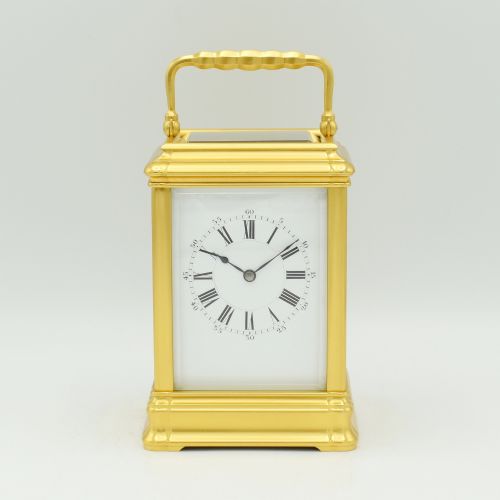
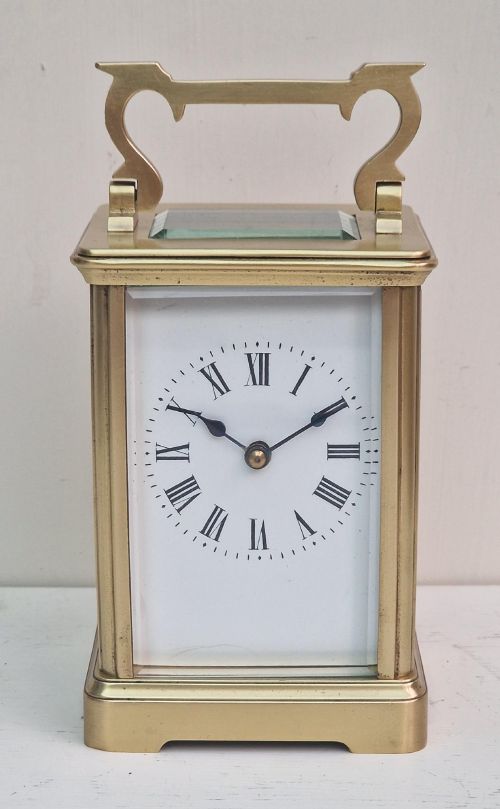
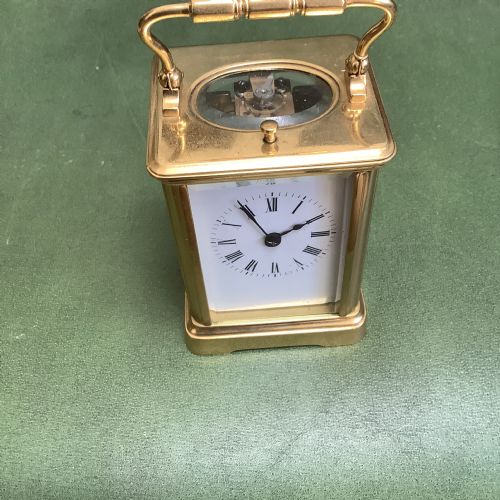
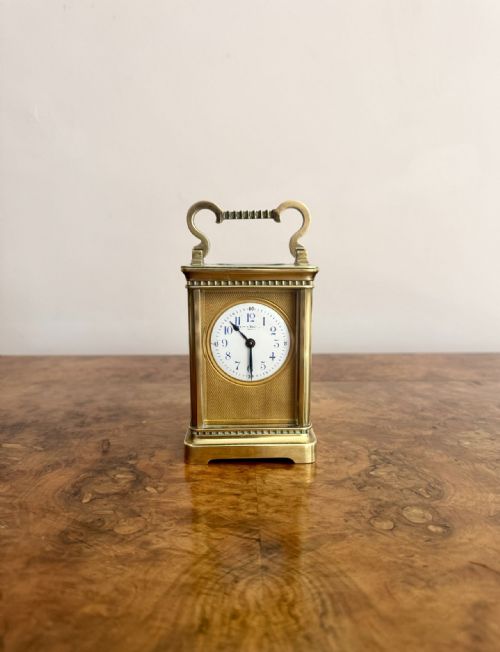
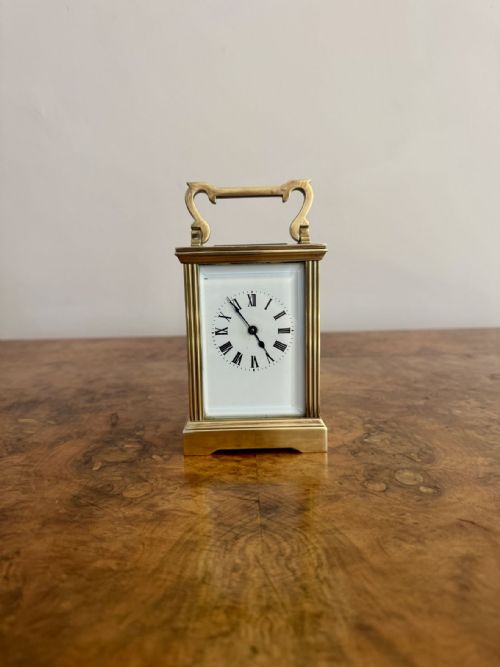
A brass mantle timepiece is a portable or shelf-standing clock housed primarily in brass, often paired with glass panels or marble bases. When buyers search for a brass mantle timepiece, they encounter Victorian, Regency, and Edwardian examples alongside French nineteenth-century carriage and mantel designs.
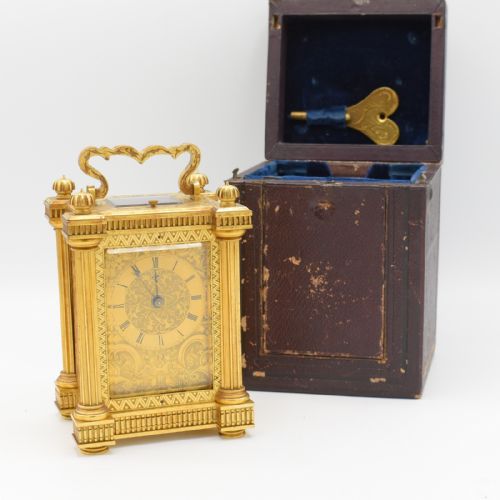
The most common formats on this page include carriage clocks with integrated travel cases, miniature brass timepieces, and heavier marble or mahogany cased clocks incorporating brass mounts. These pieces span production periods from the nineteenth century into the early twentieth century.
Makers and retailers such as Henri Jacot, Howell & James, and Tiffany appear among the offerings, reflecting both French workshop production and English retail distribution. The variety encompasses simple brass cases and complex mechanical movements featuring enamel dials or repeater functions.
Materials and Construction
Makers constructed these timepieces using solid brass, gilt brass, or ormolu for the structural framework and exterior mountings, frequently combining them with bevelled glass panels to reveal the internal movement. Dials were commonly produced in white enamel with painted Roman or Arabic numerals, sometimes embellished with miniature enamel paintings or Delft designs.
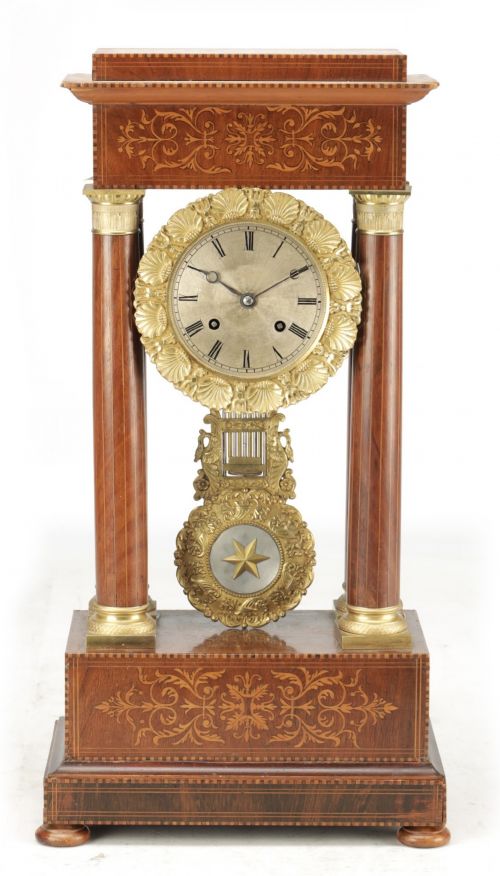
Heavier models integrate materials like Sienna marble, mahogany, or faux tortoiseshell into the chassis to provide stability and visual contrast against the polished metal. Movements utilise brass gear trains, escapements, and springs, powered by eight-day mechanisms, fusee movements, or Swiss platforms.
Some travel cases survived the journey better than the clocks inside them.
Evaluating Quality and Finish
Quality in a brass mantle timepiece rests upon the crispness of the cast brass or ormolu mounts and the finish applied to the metal surfaces. Finer examples display sharp chasing, heavy gauge brass plates, and robust movement construction by noted makers rather than mass-produced uniformity.
The sophistication of the movement dictates distinction at the upper end of the range, such as fully restored repeater mechanisms, alarm complications, or complex enamel dial artwork. Integration of high-grade auxiliary materials like solid marble or figured mahogany further separates superior pieces from standard domestic production.
Henri Jacot·Howell And James·Richard Winter Of Chieveley·Baetens London·C Detouche Paris·John Morley·Philippes Paris·Duverdrey And Bloquel·Tiffany
The Brass Mantle Timepiece Glossary
- Carriage clock
- A small, portable spring-driven clock originally designed for travel, typically featuring a brass case with glass panels and a swing handle on top.
- Repeater
- A mechanical complication that sounds the hours and quarters on demand when a lever or button on the case is activated.
- Fusee
- A conical pulley used in mechanical clocks to maintain an even tension on the gear train as the mainspring unwinds.
- Ormolu
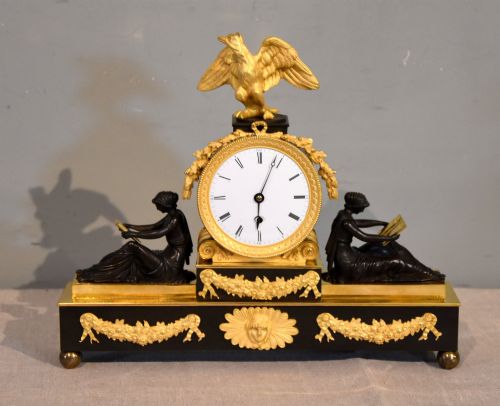
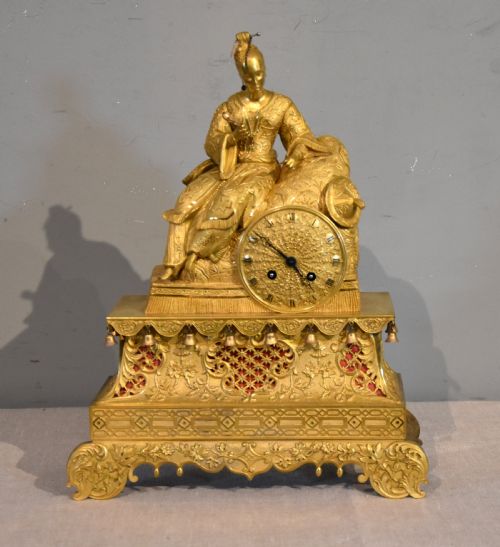
- Gilded bronze produced by applying a mercury-gilding process to a bronze base, creating a rich golden finish seen on nineteenth-century clock mounts.
- Skeleton clock
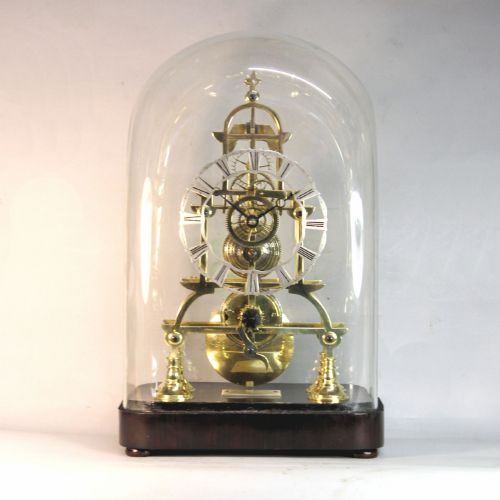
- A timepiece designed with an open framework that exposes the entire gear train and movement to view.
Brass Mantle Timepiece: Frequently Asked Questions
What is a carriage clock?
A carriage clock is a portable spring-driven timepiece enclosed in a brass and glass case, traditionally fitted with a handle on top for travel.
These pieces were originally designed for nineteenth-century travellers who required reliable timekeeping on coaches and trains.
How do I wind my clock?
Most antique brass timepieces use a dedicated winding key inserted into arbors on the dial or backplate.
Turn the key gently until resistance is felt, avoiding overwinding to preserve the historical mainspring.
What is a repeater mechanism?
A repeater is an internal complication that strikes the last hour and quarters audibly when a small lever is pressed.
This function allowed owners to check the time in darkness without needing to light a candle.
How do I date a brass timepiece?
Dating relies on stylistic clues, maker signatures, patent marks, and the evolution of escapement types visible within the movement.
Victorian and Edwardian pieces often bear retailer stamps or registration numbers that help narrow down their period of manufacture.